
Choosing a usb audio interface for streaming comes down to clean voice capture, low latency, and the right inputs for your setup. The best models make it easy to sound polished without adding complexity.
In this roundup, we focused on reliable performance, useful streaming features like loopback and direct monitoring, and strong value across beginner and pro-friendly options.
Best 10 USB Audio Interface for Streaming Picks for 2026
Creator-Focused Streaming Interface

- 24-bit/192kHz recording with 106dB dynamic range
- Loopback, routing software, and ASIO support for streaming
- Supports condenser and dynamic mics with 48V phantom power
Best For: Streamers and beginners who need a flexible, compact interface
Value-Packed Studio Starter
PreSonus AudioBox 96 2-Channel Interface
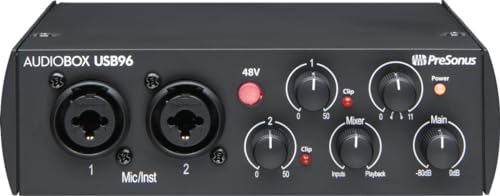
- Two Class-A mic preamps and two instrument inputs
- 24-bit/96 kHz recording with zero-latency monitoring
- USB bus-powered with a large software bundle
Best For: Creators who want an affordable, portable, software-included interface
Compact All-Rounder for Voice
M-AUDIO M-Track Solo Compact Interface

- 48 kHz audio resolution for streaming and recording
- Combo XLR/line input plus separate instrument input
- USB/Direct switch enables zero-latency monitoring
Best For: Solo streamers and podcasters who want a simple portable interface
Premium Monitoring Hub

- 32-bit/192kHz conversion with 120dB+ dynamic range
- Four mic preamps plus ADAT and MIDI I/O
- Two headphone outs and up to four foldback mixes
Best For: Creators who want premium monitoring and expansion options
Entry-Level All-Rounder
M-Audio M-Track Duo for Streaming

- Two combo XLR/line/instrument inputs
- Zero-latency monitoring with USB/Direct switch
- Includes MPC Beats software bundle
Best For: Beginner streamers and podcasters needing a simple two-input interface
Studio-Quality Solo Pick
Focusrite Scarlett Solo for Streaming

- 24-bit/192kHz conversion with Air mode
- One XLR mic preamp plus one Hi-Z input
- Low-noise balanced outputs for playback
Best For: Solo creators streaming voice and guitar with a simple setup
Compact Stream-Ready USB-C Pick
Yamaha UR22MK3 W 2x2 USB-C Audio Interface
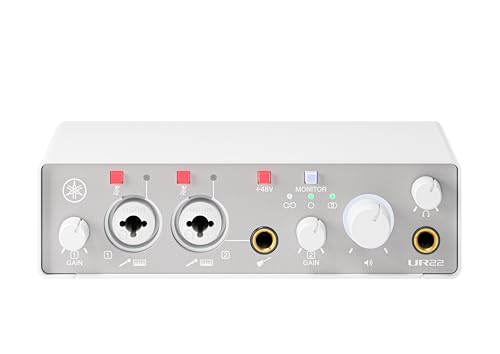
- 24-bit/192kHz 2-in/2-out design
- Loopback and direct monitoring included
- Works with Windows, macOS, and iOS
Best For: Streamers who need a compact interface with loopback and simple monitoring
Simple Solo Creator Interface
Focusrite Scarlett Solo 4th Gen USB Audio Interface

- 1 XLR mic preamp and 1 Hi-Z input
- 24-bit/192kHz with 120dB dynamic range
- Includes software and plugin bundle
Best For: Solo streamers and vocalists who want a simple, high-quality interface
Most Flexible 2-Input Creator Pick
Focusrite Scarlett 2i2 4th Gen USB Audio Interface

- 2 mic pres plus 2 instrument/line inputs
- Auto Gain, Clip Safe, and loopback support
- 24-bit/192kHz with 120dB dynamic range
Best For: Streamers and podcasters who want two inputs with easy level control
Creator-Focused Streaming Interface – MAONO PS22 Lite USB Interface
If you want a USB audio interface for streaming that can also handle recording, the MAONO PS22 Lite is built for flexible creator setups. It offers 24-bit/192kHz recording, low-noise preamp performance, loopback support, ASIO driver compatibility, and routing software for live broadcasts, podcasts, and home studio work.
Best For: Streamers, podcasters, and beginners who want an easy interface that can switch between voice, guitar, and broadcast use.
Pros:
- 24-bit/192kHz recording with 106dB dynamic range for detailed audio capture
- Supports condenser and dynamic mics with up to 56 dB preamp gain and 48V phantom power
- Includes ProStudio routing software, loopback, and ASIO driver support for streaming
- Compact, plug-and-play design with direct monitoring and clear input-status lighting
Cons:
- Designed as a 2-channel unit, so it is not ideal for larger recording setups
- Best experience depends on selecting the MAONO ASIO driver in supported software
Overall, the PS22 Lite is a practical pick if you want streaming features first and studio flexibility second. It covers the essentials for live voice, guitar, and desktop recording without adding much setup complexity.
Value-Packed Studio Starter – PreSonus AudioBox 96 2-Channel Interface
The PreSonus AudioBox 96 is a straightforward USB audio interface for streaming, recording, and portable use when you want a simple two-channel setup. It combines Class-A mic preamps, 24-bit/96 kHz conversion, MIDI I/O, and zero-latency monitoring in a bus-powered design that is easy to take anywhere.
Best For: Creators who want an affordable, portable interface with bundled software and dependable all-around recording features.
Pros:
- Two Class-A mic preamps and two instrument inputs for flexible basic recording
- 24-bit/96 kHz converters plus zero-latency mixer control for monitoring
- USB bus-powered, so it does not need a separate power supply
- Includes a large software bundle with Studio One Artist, Ableton Live Lite, and plug-ins
Cons:
- Only a 2-channel interface, so it is not built for bigger input counts
- Top sample rate is 96 kHz rather than the higher-resolution options found on some competitors
If you want a reliable entry-level interface with useful extras, the AudioBox 96 offers strong value. It is especially appealing for users who want portable hardware and software included from day one.
Compact All-Rounder for Voice – M-AUDIO M-Track Solo Compact Interface
The M-AUDIO M-Track Solo is a compact USB audio interface for streaming, podcasting, and basic recording when you need a simple setup. It delivers 48 kHz audio, a combo XLR/line input with phantom power, a separate line/instrument input, and direct monitoring options that make it easy to use with microphones or instruments.
Best For: Solo streamers, podcasters, and home users who want a portable interface with straightforward monitoring and inputs.
Pros:
- 48 kHz audio resolution for clean everyday recording and streaming
- One combo XLR/Line input and one line/instrument input for flexible capture
- USB/Direct switch provides zero-latency monitoring
- Transparent Crystal Preamp supports condenser microphones with phantom power
Cons:
- Limited to two channels, so it is best suited to simple setups
- 48 kHz maximum sample rate is lower than higher-end interfaces
For basic streaming and recording, the M-Track Solo keeps the feature set focused and easy to manage. It is a sensible choice when you want dependable inputs and direct monitoring without extra complexity.
Premium Monitoring Hub – SSL 12 USB-C Audio Interface
If you are shopping for a premium USB audio interface for streaming, the SSL 12 stands out for its monitoring and conversion features. It offers 32-bit/192kHz conversion, four SSL mic preamps, ADAT and MIDI I/O, two headphone outputs, and up to four near-zero-latency foldback mixes for more advanced creator workflows.
Best For: Streamers and creators who want high-end conversion, strong monitoring control, and room to grow.
Pros:
- 32-bit/192kHz converters with more than 120dB dynamic range
- Four SSL mic preamps plus ADAT and MIDI I/O for expanded setups
- Up to four near-zero-latency foldback mixes from the software mixer
- Built-in talkback mic and two headphone outputs for monitoring flexibility
Cons:
- More advanced than basic streaming interfaces, so it may be overkill for simple solo use
- Windows operating system support is listed in the supplied details
The SSL 12 is best viewed as a serious monitoring and recording hub rather than a minimal starter interface. If your stream or studio setup needs more routing control and higher-end audio specs, it is a strong contender.
Entry-Level All-Rounder – M-Audio M-Track Duo for Streaming
If you want a usb audio interface for streaming that also handles recording and podcasting, the M-Audio M-Track Duo is a simple, flexible pick. It offers two combo XLR/line/instrument inputs, zero-latency direct monitoring, and 48kHz resolution for clean everyday use on Mac, PC, and mobile setups.
Best For: Streamers, podcasters, and beginners who want a compact two-input interface with basic monitoring flexibility.
Pros:
- Two combo XLR/Line/Instrument inputs with phantom power
- USB/Direct switch supports zero-latency monitoring
- Transparent Crystal Preamps help microphones sound clean
- Includes MPC Beats software and setup extras
Cons:
- Maximum sample rate is 48kHz, which is lower than some rivals
- Limited to 2 channels, so it is not built for bigger setups
The M-Track Duo is best viewed as a straightforward, do-it-all starter interface rather than a feature-heavy studio hub. If your priority is getting reliable streaming audio with room for a mic and an instrument, it covers the essentials well.
Studio-Quality Solo Pick – Focusrite Scarlett Solo for Streaming
The Focusrite Scarlett Solo is a strong usb audio interface for streaming if you mainly use one microphone and one instrument. Its 24-bit/192kHz conversion, Air mode, and low-noise balanced outputs make it a polished option for vocal streams, podcasts, and small recording setups.
Best For: Solo streamers, vocalists, and guitarists who want cleaner mic input and studio-style playback.
Pros:
- High-performance mic preamp with switchable Air mode
- 24-bit/192kHz recording for detailed audio capture
- Low-noise balanced outputs for clean playback
- Includes a software bundle with Pro Tools Intro+, Ableton Live Lite, and Cubase LE
Cons:
- Only one XLR mic preamp and one instrument input
- Best suited to smaller, simpler setups rather than multi-mic streams
For creators who want dependable audio quality without unnecessary complexity, the Scarlett Solo remains an easy recommendation. It is especially appealing when your stream setup centers on a single voice or instrument and you want that signal to sound polished right away.
Smart Mobile Interface – Shure MVX2U for Streaming
If you need a usb audio interface for streaming that works cleanly with an XLR mic and USB-C device, the Shure MVX2U is built for portability and control. It adds onboard processing like auto level, denoising, and pop suppression, making it useful for creators who want consistent sound without much manual tweaking.
Best For: Mobile streamers and podcasters using a single XLR microphone with a phone, tablet, or computer.
Pros:
- Converts any XLR microphone to USB-C for desktop or mobile use
- Onboard DSP includes auto level, denoiser, and pop stopper
- Provides up to +60 dB clean gain plus 48V phantom power
- App support lets you adjust tone, EQ, compression, and limiter
Cons:
- Single-channel design limits it to one XLR mic at a time
- No separate line or instrument inputs for broader routing options
The MVX2U stands out for streamers who value compactness and smart onboard processing over I/O variety. If you already have an XLR mic and want a neat, noise-controlled path into a modern USB-C device, it is an efficient solution.
Compact Stream-Ready USB-C Pick – Yamaha UR22MK3 W 2×2 USB-C Audio Interface
If you want a usb audio interface for streaming that stays simple while still offering useful creator features, the Yamaha UR22MK3 W is built around a compact 2-in/2-out layout with USB-C connectivity. Its direct monitoring and loopback function make it practical for live content, while the 24-bit/192kHz support gives you plenty of headroom for recording voice or instruments.
Best For: Streamers who want a small, cross-platform interface with loopback and direct monitoring.
Pros:
- 2 combo inputs plus one Hi-Z input for mic and instrument use
- Loopback function is useful for streaming and desktop audio routing
- Direct monitoring helps reduce latency while tracking
- Cross-platform support for Windows, macOS, and iOS
Cons:
- Only a 2-in/2-out design, so it is not meant for larger setups
- Limited to the included 1-year manufacturer warranty
- May be more interface than needed if you only record a single mic
Overall, the UR22MK3 W is a sensible pick if you value portability, loopback streaming support, and straightforward operation. It is a compact option that focuses on core features rather than extras, which can be a good fit for creators who want reliability and a clean signal path.
Simple Solo Creator Interface – Focusrite Scarlett Solo 4th Gen USB Audio Interface
The Focusrite Scarlett Solo 4th Gen is a streamlined usb audio interface for streaming if you only need one mic and one instrument input. It offers 24-bit/192kHz recording, a 120dB dynamic range, and Air mode, making it a practical choice for solo creators who want a polished sound without a complicated control layout.
Best For: Solo streamers, vocalists, and guitarists who want an easy two-input interface.
Pros:
- 1 XLR mic preamp plus 1 Hi-Z instrument input
- 120dB dynamic range for high-fidelity recording
- Air mode adds presence and harmonic character to vocals and guitars
- Includes recording software and plugin bundle
Cons:
- Only two inputs total, so it is not built for multi-mic sessions
- No loopback feature listed in the supplied notes
- Better suited to simple setups than expanding studio rigs
As a beginner-friendly interface, the Scarlett Solo 4th Gen keeps the focus on clean audio and an easy workflow. If your streaming or recording setup centers on a single voice and guitar, it offers the essentials plus a software bundle to get started quickly.
Most Flexible 2-Input Creator Pick – Focusrite Scarlett 2i2 4th Gen USB Audio Interface
If you need a usb audio interface for streaming that is built for both recording and live use, the Scarlett 2i2 4th Gen adds features that make setup easier. Its two ultra-low-noise mic preamps, Auto Gain, Clip Safe, and loopback support are all aimed at helping you capture cleaner audio with less guesswork.
Best For: Streamers, podcasters, and songwriters who want two inputs and helpful automatic level tools.
Pros:
- 2 ultra-low-noise mic preamps and 2 instrument/line inputs
- Auto Gain and Clip Safe help prevent bad levels and clipping
- Loopback support is useful for streaming and content creation
- 120dB dynamic range and 24-bit/192kHz support
Cons:
- More expensive and larger than a single-input interface
- Still limited to 2 channels, so it is not for bigger recording sessions
- Included software may be more than casual users need
The Scarlett 2i2 4th Gen stands out as the most flexible option here for creators who want room to grow. With automatic gain staging tools and loopback built in, it is especially appealing if you want a compact interface that can handle both streaming and general recording duties.
How We Picked the Best USB Audio Interface for Streaming
We prioritized interfaces that deliver clean preamps, dependable drivers, and practical streaming features such as loopback, direct monitoring, and easy gain control. We also considered input flexibility, portability, and how well each unit fits common creator workflows.
Because a USB Audio Interface for Streaming often doubles as a recording or podcasting tool, we looked for models that balance sound quality with everyday usability rather than chasing specs alone.
Quick Comparison
Solo creators and vocal streamers can usually get by with a compact 1-in/2-out interface. If you need a mic plus instrument input, or expect to expand later, a 2-in/2-out model is a safer choice. More advanced users should look at units with extra I/O, ADAT, MIDI, or stronger routing options.
Key Buying Factors for a USB Audio Interface for Streaming
Inputs and Channel Count
Match the interface to your setup. A single XLR input works for basic voice streams, while dual combo inputs are better for guests, instruments, or simultaneous mic and line sources.
Loopback and Monitoring
Loopback is especially helpful for streaming music, game audio, or system sounds into your broadcast. Direct monitoring lets you hear yourself without distracting delay, which is important for live commentary and vocal work.
Sound Quality and Preamps
Look for low-noise preamps, solid gain range, and modern conversion quality. These features matter more than flashy software when you want a clear, consistent on-air voice.
Connectivity and Platform Support
USB-C models are convenient, but compatibility with your computer and software matters more than the connector type. Check for driver support on your operating system, plus any special routing tools you may need.
Form Factor and Workflow
Smaller interfaces are ideal for limited desks and travel, while larger desktop units can offer more control and expansion. Think about whether you want a simple plug-and-play device or a more flexible production hub.
Who Should Buy Which USB Audio Interface for Streaming?
If you are new to streaming, choose a straightforward single- or dual-input model with direct monitoring and loopback. If you want better vocal quality and future-proofing, step up to a 2-in/2-out interface from a trusted brand.
For multi-mic shows, advanced routing, or a more studio-like workflow, consider higher-end options with extra outputs, MIDI, or ADAT expansion. The best USB Audio Interface for Streaming is the one that matches your current setup while leaving a little room to grow.
