
A student laptop should be easy to carry between classes and capable of handling the work your courses require. A compact size helps, but the operating system, memory, storage, and ports matter just as much.
These 10 picks range from small Windows laptops to Chromebooks and a 2-in-1. Use the guide below to narrow them down by coursework, budget, and how you like to study.
Best 10 Ultraportable Laptops for Students Picks for 2026
Windows Essentials

- 3.24 lb Windows laptop
- 128GB internal storage
- USB-C, HDMI, and SD reader
Best For: Light coursework on Windows
ChromeOS Basics

- 14-inch anti-glare HD screen
- 4GB RAM and 64GB eMMC
- Listed USB and HDMI ports
Best For: Browser-based schoolwork
Extra Local Storage

- 256GB SSD plus 128GB UFS
- 3.11 lb carry weight
- Privacy shutter and mic mute
Best For: Portable Windows work with more local storage
Touchscreen Pick
Lenovo IdeaPad Slim 3 Chromebook

- 14-inch Full HD touchscreen
- Approximately 2.87 lb
- Wi-Fi 6 and microSD reader
Best For: Lightweight ChromeOS work with a sharper screen
Best Convertible
Dell 11-Inch Touchscreen Laptop

- 11-inch touchscreen with 360-degree hinge
- 8GB RAM and 128GB SSD
- Renewed; listed 30-day warranty
Best For: Students wanting a compact Windows convertible
Best Colorful Everyday Pick

- 3.24 pounds with a 14-inch anti-glare screen
- Intel N150 and 128GB UFS storage
- One year of Microsoft 365 Personal included
Best For: Basic coursework and online classes in a colorful design
Best Silver Essentials Pick

- 3.24-pound Natural Silver design
- 14-inch anti-glare 1366 × 768 display
- Up to 7.5 hours of listed mixed use
Best For: Routine assignments and remote learning
Budget Basics
HP Ultrabook 2026 14-Inch Laptop
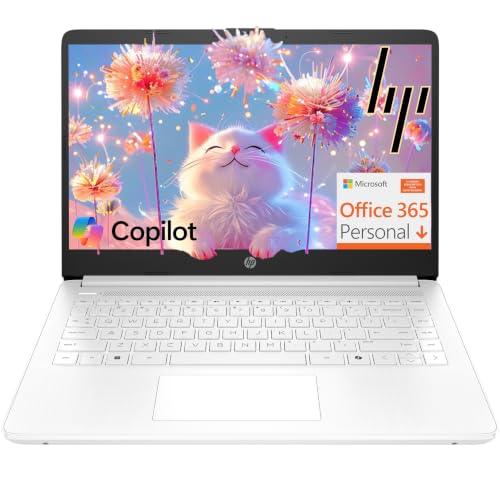
- 3.24 lb with a 14-inch anti-glare display
- One year of Microsoft 365 Personal included
- 4GB RAM and 64GB eMMC suit basic tasks
Best For: Cloud-based coursework and everyday Office use
Accessory Bundle
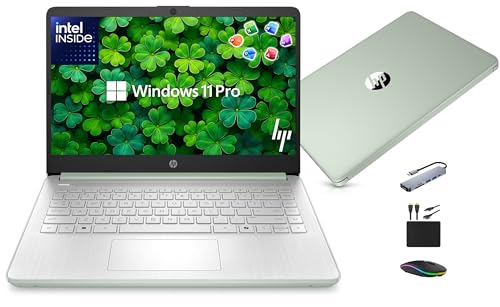
- 3.2 lb with an Intel N150 processor
- 128GB built in plus a 500GB external drive
- Includes a USB-C hub and wireless mouse
Best For: Coursework with bundled desk accessories
Compact Convertible
CHUWI MiniBook X 10.51-Inch 2-in-1

- 10.51-inch 1920 × 1200 touchscreen
- 16GB RAM and 512GB SSD
- Tablet, tent, and stand modes
Best For: Travel-friendly touchscreen study and reading
Windows Essentials – HP 14-Inch N150 Laptop
Among ultraportable laptops for students, this 3.24 lb HP offers Windows 11 Home, an Intel N150 processor, and the ports needed for everyday coursework. Its 128GB internal storage is separate from the cloud storage included with its one-year Microsoft 365 Personal subscription.
Best For: Students who want a portable Windows laptop for documents, browsing, and video calls.
Pros:
- Includes one year of Microsoft 365 Personal.
- USB-C, two USB-A ports, HDMI, and an SD card reader support common accessories.
- Wi-Fi 6 and a 720p webcam with noise-reduction features suit online classes.
Cons:
- 4GB RAM limits heavier multitasking.
- The 1366 × 768 display is less sharp than Full HD.
This is a practical choice for light schoolwork, provided its modest memory and display resolution meet your needs.
For students comparing ultraportable laptops for students, this HP Chromebook pairs a 14-inch anti-glare HD screen with a quad-core Intel Celeron N4120. Its ChromeOS setup, 4GB RAM, and 64GB eMMC storage fit browser-based assignments better than storage-heavy projects.
Best For: Students whose coursework runs mainly in a browser or ChromeOS apps.
Pros:
- 3.4 lb weight makes it manageable to carry between classes.
- Anti-glare 14-inch display helps with everyday reading.
- Listed USB-A, USB-C, and HDMI connectivity accommodates common peripherals.
Cons:
- 64GB eMMC leaves limited local space.
- 4GB RAM and an HD-resolution screen are basic specifications.
Choose it for straightforward ChromeOS work; verify any required school software runs on ChromeOS before buying.
This pink HP is one of the ultraportable laptops for students worth considering when local storage matters: its listing specifies a 256GB PCIe SSD plus 128GB UFS storage. At 3.11 lb, it combines an Intel N150 processor with a 14-inch anti-glare HD display.
Best For: Students who want a light Windows laptop with more local storage for files and downloads.
Pros:
- 256GB PCIe SSD plus 128GB UFS provides two forms of local storage.
- Includes one year of Microsoft 365 Personal with 1TB cloud storage.
- Camera privacy shutter, mic mute key, USB-C, and HDMI add everyday convenience.
Cons:
- 4GB RAM is best suited to light multitasking.
- The 1366 × 768 display is not Full HD.
- Windows 11 Home in S mode may require consideration for software needs.
Its storage and portability are the draw, but check that its S mode setup works with the applications your classes require.
Among ultraportable laptops for students, this Lenovo Chromebook stands out for its 14-inch Full HD IPS touchscreen and approximately 2.87 lb weight. The MediaTek Kompanio 520, 4GB RAM, and 64GB eMMC storage suit ChromeOS-based coursework and streaming.
Best For: Students who prioritize a sharper touchscreen and a lightweight ChromeOS device.
Pros:
- 1920 × 1080 touchscreen offers more detail than an HD panel.
- Approximately 2.87 lb and 18.6mm thin for easy carrying.
- Wi-Fi 6, USB-C, microSD reader, and a camera privacy shutter add useful flexibility.
Cons:
- 64GB eMMC limits built-in storage.
- 4GB RAM is suited to lighter workloads.
- No HDMI port is listed.
It’s the strongest display-focused option here for ChromeOS users, as long as your required apps are compatible and local storage needs are modest.
Best Convertible – Dell 11-Inch Touchscreen Laptop
Among ultraportable laptops for students, this renewed Dell stands out for its 11-inch touchscreen and 360-degree hinge. Its 8GB of RAM and 128GB SSD suit everyday coursework, while Windows 11 gives students a familiar desktop environment.
Best For: Students who want a compact Windows laptop that can also be used in tablet-style positions.
Pros:
- 360-degree hinge and touchscreen offer flexible ways to read and work.
- 8GB of RAM and a 128GB SSD cover basic school tasks.
- USB-C, two USB-A ports, HDMI, and Wi-Fi 6 offer useful connectivity.
Cons:
- 1366 × 768 display resolution is modest.
- Renewed condition and a listed 30-day warranty may not suit every buyer.
Choose this model for its small, adaptable form factor rather than a high-resolution screen; confirm that the renewed condition meets your expectations before ordering.
Best Colorful Everyday Pick – HP 14-Inch Everyday Laptop
This Honey Lavender HP is a straightforward option among ultraportable laptops for students who prefer a 14-inch screen. It pairs an Intel N150 processor with 128GB UFS storage and includes a one-year Microsoft 365 Personal subscription for school documents.
Best For: Students who want a light, colorful laptop for writing, browsing, and online classes.
Pros:
- Weighs 3.24 pounds and has a 0.71-inch profile.
- Includes Wi-Fi 6, USB-C, two USB-A ports, HDMI, and an SD card reader.
- 720p webcam, dual-array microphones, and a stated battery life of up to 11 hours of video playback support remote classes.
Cons:
- 4GB of RAM leaves limited headroom for heavier multitasking.
- 14-inch display has a modest listed native resolution of 1366 × 768.
Its ports and included software make it convenient for basic coursework, but students who keep many demanding apps open should consider a laptop with more memory.
Best Silver Essentials Pick – HP 14-Inch Essential Laptop
For students comparing ultraportable laptops for students, this Natural Silver HP covers the basics in a 3.24-pound package. Its Intel N150 processor, 4GB of RAM, and 128GB UFS storage are aimed at browsing, document editing, and video calls rather than intensive workloads.
Best For: Students who need a portable Windows laptop for routine assignments and remote learning.
Pros:
- 14-inch anti-glare screen offers more workspace than smaller models.
- Wi-Fi 6, Bluetooth 5.4, USB-C, two USB-A ports, HDMI, and an SD card reader provide varied connections.
- Includes a 720p webcam, dual-array microphones, and one year of Microsoft 365 Personal.
Cons:
- 4GB of RAM may constrain multitasking.
- 1366 × 768 screen resolution is relatively low for a 14-inch display.
The listed battery estimates reach up to 11 hours for video playback but 7.5 hours for mixed use, so plan around the shorter figure for a typical school day.
Budget Basics – HP Ultrabook 2026 14-Inch Laptop
Among ultraportable laptops for students, this 3.24-pound HP is a practical choice for essays, web research, and online classes. Its Celeron N4500, 4GB of RAM, and 64GB eMMC storage suit essential work rather than demanding multitasking.
Best For: Students who primarily use Microsoft 365, a browser, and cloud storage.
Pros:
- Includes a one-year Microsoft 365 Personal subscription and 1TB of OneDrive storage.
- 14-inch anti-glare screen, 720p webcam, and dual-array microphones support everyday coursework and calls.
- Wi-Fi 6, HDMI, two USB-A ports, an SD card reader, and a USB-C data port provide useful connectivity.
Cons:
- 4GB RAM and 64GB eMMC leave limited room for heavier workloads and local files.
- The 1366 × 768 display is less sharp than Full HD alternatives.
- Windows 11 Home in S mode limits app installation to Microsoft Store apps unless you switch out of S mode.
Choose this HP if the included software and familiar 14-inch layout matter more than speed or storage; note that its USB-C port is specified for data transfer only.
Accessory Bundle – HP 14-Inch N150 Laptop
This HP stands out among ultraportable laptops for students who want a ready-made desk setup alongside a 3.2-pound computer. Its Intel N150, 4GB of RAM, and 128GB of built-in UFS storage cover routine coursework; the advertised 628GB total includes a separate 500GB external drive.
Best For: Students who want a portable Windows 11 Pro laptop with bundled peripherals and external storage.
Pros:
- Quad-core Intel N150 and 128GB of built-in storage support everyday applications.
- Bundle lists a 500GB external drive, USB-C hub, wireless mouse, HDMI cable, and other accessories.
- 14-inch screen, 720p camera, and dual-array microphones are suited to online classes.
Cons:
- Only 4GB of RAM may constrain multitasking.
- The 14-inch display has a modest 1366 × 768 resolution.
- Most of the advertised 628GB storage is on an external drive, not inside the laptop.
The bundle is the main draw here. Check that the included accessories and stated Office 2024 installation match your needs before choosing it over a laptop with more built-in memory or storage.
Compact Convertible – CHUWI MiniBook X 10.51-Inch 2-in-1
For students prioritizing a tiny footprint, the CHUWI MiniBook X is a distinctive pick among ultraportable laptops for students. Its 10.51-inch touchscreen folds into tablet, tent, and stand modes, while 16GB of RAM and a 512GB SSD offer more room for apps and files than the other models here.
Best For: Students who want a small touchscreen convertible for travel, reading, and everyday multitasking.
Pros:
- 1920 × 1200 touchscreen with a 16:10 aspect ratio and stated 100% sRGB coverage.
- 16GB LPDDR5 RAM, 512GB SSD, and support for M.2 SSD expansion up to 2TB.
- Backlit keyboard, Wi-Fi 6, and two USB-C ports supporting charging, data, and 4K video output.
Cons:
- The 10.51-inch display and compact keyboard may feel cramped for long writing sessions.
- No USB-A or HDMI port is listed, so some accessories may need adapters.
- The seller notes that rare units may require contacting them for a Windows activation key.
Pick the MiniBook X when flexible tablet-style use and a sharp small screen outweigh the comfort of a larger laptop. Its full-function USB-C ports also make an external monitor a practical option.
How We Picked the Best Ultraportable Laptops for Students
We focused on compact models that could suit daily travel between home, class, and the library. The shortlist includes Windows laptops, Chromebooks, touchscreens, and small convertibles at different specification levels. We compared the listed processors, memory, storage, screen sizes, and connectivity, while treating claims such as battery life and bundled software as details to verify before purchase. The right choice depends less on a single headline specification than on whether the laptop supports your course requirements.
Quick Comparison of Ultraportable Laptops for Students
For browser-based assignments, a 14-inch Chromebook can be a straightforward choice if your school’s apps run in ChromeOS. The 14-inch Windows options offer a more familiar route for students who need desktop applications, though their memory and storage vary. An 11-inch convertible or 10.51-inch 2-in-1 saves desk and bag space and adds touch input, but its smaller display may feel cramped during long writing or spreadsheet sessions. Compare the exact configuration in the listing: similarly named models can have different specifications.
Key Buying Factors for Ultraportable Laptops for Students
Software and Operating System
Check your department’s required apps first. ChromeOS works well for web tools but may not run required Windows or macOS software. If a Windows laptop ships in S mode, confirm whether you’ll need to switch out of it to install apps from outside the Microsoft Store. Also check what any advertised Microsoft Office or Microsoft 365 offer includes and how long it lasts.
Memory, Storage, and Screen
For frequent multitasking, 8GB of RAM is a more comfortable target than 4GB; 16GB offers more room for demanding workloads. Local SSD storage is useful for downloaded files and offline work. Don’t mistake cloud storage for space on the device, and check whether an eMMC-based model has enough local capacity for your needs. A 14-inch display provides more working room, while a roughly 10- or 11-inch device favors portability. Look for screen resolution and keyboard dimensions you can live with for extended assignments.
Battery, Ports, and Carrying Weight
Manufacturer battery claims are useful for comparison, not a guarantee of a full school day. Check charging requirements and whether the laptop has the USB, video, and headphone connections you need without adapters. Confirm the listed weight if you carry your laptop every day.
Who Should Buy Which Ultraportable Laptops for Students?
Choose a Chromebook if your coursework is browser-first and your school supports ChromeOS. Choose a 14-inch Windows laptop if you need Windows programs or prefer more screen and keyboard space. Consider a small convertible or 2-in-1 if touch input and minimal bag space matter most. Before ordering, verify the exact model’s RAM, local storage, software terms, and return policy—especially when a listing makes unusually broad claims.
