
Thunderbolt audio interfaces remain a top choice for creators who want ultra-low latency, reliable performance, and serious expansion options for recording, mixing, and production.
This roundup highlights the best 10 picks for 2026, from compact desktop units to high-I/O studio workhorses, so you can match the right interface to your workflow.
Best 10 Thunderbolt Audio Interfaces Picks for 2026
Premium DSP Recording Pick
Universal Audio Apollo Twin X DUO Gen 2

- Unison preamps for realtime analog-style tracking
- 200+ UAD DSP and Native plug-ins included
- Apollo Monitor Correction and Auto-Gain for easier sessions
Best For: solo producers and engineers who want Apollo tone and plug-in power
High-I/O Networked Workhorse

- 32 x 34 I/O with 66 simultaneous audio channels
- AVB networking and patchbay routing for expansion
- 64-channel mixing plus ESS Sabre32 conversion
Best For: large studios and power users needing dense I/O and networked routing
Premium Dual-Channel Choice
Universal Audio Apollo Twin X QUAD Gen 2
- Widest dynamic range and lowest distortion of any Apollo
- QUAD DSP for more plug-in headroom
- Unison preamps and Apollo Monitor Correction included
Best For: producers who want Apollo sound quality with extra DSP power
Expanded Desktop Studio Hub
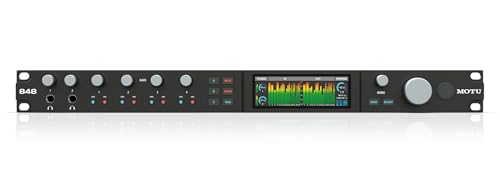
- 28 x 32 I/O with 60 simultaneous audio channels
- Advanced mic channels with detailed front-panel control
- AVB networking, mixing effects, and dual headphone outs
Best For: engineers who want flexible I/O and a feature-rich studio hub
Flagship DSP Tracking
Universal Audio Apollo x6 Gen 2

- Widest dynamic range and lowest distortion in the Apollo line
- Access to 200+ UAD DSP and Native plug-ins
- Auto-Gain and bass management streamline studio workflow
Best For: project and professional studios needing premium Apollo conversion and DSP
High-Channel Workhorse
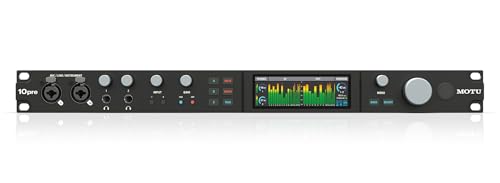
- 26 x 28 Thunderbolt 4 / USB4 interface with 10 mic inputs
- Up to 1.8 ms round-trip latency at 96 kHz
- 64-channel mixing plus AVB networking support
Best For: large studios and multi-input setups that need lots of channels
Compact Apollo Monitor Hub
Universal Audio Apollo x4 Gen 2

- Apollo conversion with widest dynamic range and lowest distortion
- Unison preamps for real-time modeling of classic gear
- Apollo Monitor Correction and Auto-Gain simplify setup
Best For: small studios and desktop setups that want Apollo sound and monitoring tools
Studio Workhorse
32-Channel Thunderbolt Studio Interface

- 32x32 analog I/O with 130dB dynamic range
- Thunderbolt 3 support up to 128 channels at 192kHz
- Routing matrix plus MADI, ADAT, and S/PDIF expansion
Best For: High-channel-count studio recording and complex routing
Premium DSP Choice
Apollo x8p Gen 2 Thunderbolt 3 Interface

- Eight-channel interface with next-gen conversion
- 200+ UAD DSP and Native plug-ins included
- Auto-Gain and bass management for faster setup
Best For: Apollo users who want premium conversion and UAD processing
Compact Starter Pick
Zoom TAC-2 Native Thunderbolt Interface

- 2-in/2-out interface with 24-bit/192kHz conversion
- Native Thunderbolt design with extremely low latency
- LED meters and MixEfx software mixer included
Best For: Simple desktop recording and solo setups
Premium DSP Recording Pick – Universal Audio Apollo Twin X DUO Gen 2
Universal Audio Apollo Twin X DUO Gen 2 with UAD Analog Classics Thunderbolt 3 Audio Interface
Check Price On AmazonIf you want Thunderbolt audio interfaces that bring classic studio color into a compact desktop format, the Apollo Twin X DUO Gen 2 is built around real-time Unison preamps, high-end conversion, and deep UAD processing. It’s a strong fit for recording and mixing when you want polished sound right from the input stage.
Best For: Solo producers and engineers who want Apollo conversion, Unison tone, and UAD plug-ins in a desktop interface.
Pros:
- Unison preamps let you track through emulations of Neve, API, Avalon, Manley, Fender, and more.
- Includes access to 200+ UAD DSP and Native plug-ins, such as Capitol Chambers, Sound City Studios, and EL8 Distressor.
- Apollo Monitor Correction powered by Sonarworks helps you make mix decisions in different rooms or on headphones.
- Auto-Gain speeds up level setting across multiple inputs.
Cons:
- It’s a desktop, two-input style solution rather than a high-channel-count interface.
- Much of the plug-in value depends on using the UAD ecosystem.
Overall, this is a premium choice if your priority is tracking through modeled analog front-end character and mixing with Apollo’s software tools. It’s especially appealing for smaller project studios that value sound quality and workflow over I/O count.
High-I/O Networked Workhorse – MOTU 16A Thunderbolt 4/USB4
Among Thunderbolt audio interfaces, the MOTU 16A stands out when you need serious channel count, flexible routing, and modern connectivity for Mac, Windows, or iOS. With 32 x 34 I/O, AVB networking, and onboard mixing effects, it’s aimed at studios that need one interface to handle a lot of routing and expansion.
Best For: Large studios and advanced users who need lots of I/O, AVB networking, and flexible routing.
Pros:
- 32 x 34 Thunderbolt 4 / USB4 design with 66 simultaneous audio channels.
- ESS Sabre32 DAC technology and up to 192 kHz sample-rate support.
- Built-in 64-channel mixing with effects, plus patchbay-style routing and splitting.
- AVB networking and dual Gigabit ports make expansion straightforward.
Cons:
- Its size and feature set are more than many simple home setups need.
- Best suited to users who will actually take advantage of its routing and networking depth.
The 16A is a strong choice if you want a central hub for a complex studio system rather than a basic recording box. It combines high channel counts, low-latency performance, and flexible connectivity in a format designed for demanding sessions.
Premium Dual-Channel Choice – Universal Audio Apollo Twin X QUAD Gen 2
Universal Audio Apollo Twin X QUAD Gen 2 with UAD Analog Classics Thunderbolt 3 Audio Interface
Check Price On AmazonIf you’re comparing Thunderbolt audio interfaces for a compact studio setup, the Apollo Twin X QUAD Gen 2 is built for users who want the Apollo workflow with more onboard DSP headroom. It adds next-generation conversion, Unison preamps, and the same UAD plug-in ecosystem in a desktop format that favors serious recording and mixing.
Best For: Producers and engineers who want premium Apollo conversion, Unison tracking, and extra DSP for plug-in-heavy sessions.
Pros:
- Next-generation audio conversion with the widest dynamic range and lowest distortion of any Apollo.
- Unison preamps support real-time tracking through classic modeled hardware tones.
- Access to 200+ UAD DSP and Native plug-ins for recording and mixing.
- Apollo Monitor Correction powered by Sonarworks helps you mix more confidently in different listening environments.
Cons:
- It remains a compact interface, so it’s not the right fit if you need lots of I/O.
- The full value is strongest for users invested in UAD workflows and plug-ins.
This version makes sense if you like the Apollo platform and want more processing headroom than the DUO model. It’s a practical step up for sessions that rely on tracked processing and premium monitoring tools in a small-footprint interface.
Expanded Desktop Studio Hub – MOTU 848 Thunderbolt 4/USB4
The MOTU 848 is one of the more ambitious Thunderbolt audio interfaces for users who need lots of connectivity without moving up to a full rack of separate gear. With 28 x 32 I/O, front-panel headphone outs, advanced mic channels, and AVB networking, it’s designed for flexible studio control and expansion.
Best For: Engineers and creators who want a feature-rich interface with strong mic channels, flexible I/O, and networking.
Pros:
- 28 x 32 Thunderbolt 4 / USB4 connectivity with 60 simultaneous audio channels.
- Advanced mic channels with +74 dB gain, pad, phantom power, and phase invert.
- ESS Sabre32 DAC technology and up to 192 kHz sample-rate support.
- Two front-panel headphone outputs and AVB networking add useful studio flexibility.
Cons:
- Its depth of features may be more than a simple recording setup needs.
- The interface is most compelling when you can use its routing, monitoring, and networking tools fully.
The 848 is a strong pick if you want a modern studio center with plenty of I/O, DSP mixing, and control-room features. It’s especially attractive for users who need a versatile interface that can scale with a more complex setup.
Flagship DSP Tracking – Universal Audio Apollo x6 Gen 2
Universal Audio Apollo x6 Gen 2 with UAD Analog Classics Thunderbolt 3 Audio Interface
Check Price On AmazonIf you’re shopping for Thunderbolt audio interfaces and want a premium rack unit for tracking and mixing, the Apollo x6 Gen 2 is built around top-tier conversion and UAD processing. It combines Thunderbolt 3 connectivity with Apollo’s widest dynamic range and lowest distortion, plus access to 200+ UAD DSP and Native plug-ins for recording and mixing with a polished studio workflow.
Best For: Project and professional studios that want high-end Apollo conversion, DSP plug-ins, and rackmount Thunderbolt tracking.
Pros:
- Next-generation audio conversion with the widest dynamic range and lowest distortion of any Apollo.
- Includes access to 200+ UAD DSP and Native plug-ins, such as Capitol Chambers, Sound City Studios, and EL8 Distressor.
- Auto-Gain helps set levels across multiple inputs quickly.
- Bass management support helps you add a subwoofer to your monitor setup.
Cons:
- Thunderbolt 3 connectivity is built for computer-based studio setups.
- Its feature set is more than basic users may need.
Overall, the Apollo x6 Gen 2 is a strong fit if you want a Thunderbolt interface that pairs premium conversion with the Apollo UAD ecosystem. It’s especially compelling for engineers who want fast level setup, polished monitoring, and access to a deep plug-in library.
High-Channel Workhorse – MOTU 10pre 26×28
MOTU 10pre 26x28 Thunderbolt 4/USB4 audio interface for Mac, Windows and iOS with 10 mic inputs
Check Price On AmazonFor buyers comparing Thunderbolt audio interfaces that can handle a lot of I/O, the MOTU 10pre 26×28 stands out with 10 mic inputs, 26 inputs, and 28 outputs over Thunderbolt 4/USB4. It’s designed for demanding sessions, with high-resolution metering, low-latency performance, flexible connectivity, and enough routing options to serve as the center of a larger studio.
Best For: Large studios, bands, and multi-input setups that need lots of channels, low latency, and flexible Thunderbolt/USB4 connectivity.
Pros:
- 26 x 28 Thunderbolt 4 / USB4 interface with 10 mic/line/instrument inputs.
- ESS Sabre32 DAC technology delivers 125 dB dynamic range.
- Round-trip latency can be as low as 1.8 ms at 96 kHz with high-performance DAW hosts.
- Includes 64-channel mixing, AVB networking, and two front-panel headphone outputs.
Cons:
- The large feature set may be more than a simple home setup requires.
- Advanced routing and networking are geared toward users who need studio-scale flexibility.
In practical terms, the 10pre is the most expandable of the group and the best match for sessions that need many inputs, outputs, and routing choices. If you want a Thunderbolt interface that can grow with a bigger studio, this one is built for that role.
Compact Apollo Monitor Hub – Universal Audio Apollo x4 Gen 2
Universal Audio Apollo x4 Gen 2 with UAD Analog Classics Thunderbolt 3 Audio Interface
Check Price On AmazonIf you want a more compact option among Thunderbolt audio interfaces, the Apollo x4 Gen 2 brings Apollo conversion, Unison preamps, and Thunderbolt 3 performance into a smaller desktop-friendly package. It’s aimed at users who want the UAD plug-in workflow and monitoring tools without moving up to a larger rack unit.
Best For: Small studios and desktop setups that want Apollo sound, Unison preamps, and headphone-friendly monitoring tools.
Pros:
- Next-generation Apollo conversion with the widest dynamic range and lowest distortion.
- Unison preamps let you record through emulations of Neve, API, Avalon, Manley, Fender, and more.
- Access to 200+ UAD DSP and Native plug-ins.
- Includes Apollo Monitor Correction powered by Sonarworks and Auto-Gain.
Cons:
- Thunderbolt 3 connectivity means it’s best suited to compatible computer-based rigs.
- The compact design offers less channel capacity than larger Apollo and MOTU options.
For users who prioritize workflow and monitoring in a smaller footprint, the Apollo x4 Gen 2 is an appealing Thunderbolt interface. It keeps the Apollo ecosystem’s core strengths while staying practical for desktop recording and mixing.
Studio Workhorse – 32-Channel Thunderbolt Studio Interface
If you need Thunderbolt audio interfaces built for bigger studio routing, the Antelope Orion 32+ Gen 4 stands out with 32×32 analog I/O, Thunderbolt 3 streaming, and flexible routing tools. It’s aimed at producers who want a serious recording and monitoring hub with support for both PC and Mac workflows.
Best For: Engineers and producers who need high-channel-count I/O, low-latency Thunderbolt performance, and advanced routing.
Pros:
- 32×32 channels of analog I/O with 130dB dynamic range
- Thunderbolt 3 streams up to 128 channels at 192kHz
- Built-in signal routing matrix for custom studio configurations
- MADI optical, ADAT, and S/PDIF connectivity for expansion
Cons:
- Large, complex interface is more than many simple home setups need
- Requires planning if you want to use the advanced routing and calibration tools
This is a strong pick if your interface needs go beyond basic tracking and you want a studio-grade command center. Its mix of Thunderbolt speed, broad I/O, and clocking technology makes it especially appealing for detailed production and multi-channel workflows.
Premium DSP Choice – Apollo x8p Gen 2 Thunderbolt 3 Interface
Universal Audio Apollo x8p Gen 2 with UAD Analog Classics Thunderbolt 3 Audio Interface
Check Price On AmazonAmong Thunderbolt audio interfaces, the Universal Audio Apollo x8p Gen 2 is geared toward users who want premium conversion and built-in DSP tools in one unit. It offers eight channels, Auto-Gain, and access to the UAD plug-in ecosystem, making it a practical choice for engineers who want to track and mix with processing support.
Best For: Producers and engineers who want Apollo conversion quality, UAD plug-ins, and streamlined input setup.
Pros:
- Next-generation audio conversion with very wide dynamic range and low distortion
- Access to 200+ UAD DSP and Native plug-ins
- Auto-Gain helps set levels across multiple inputs quickly
- Bass management supports adding a subwoofer to your monitor setup
Cons:
- Only 8 channels, so it is not meant for large multi-input recording rigs
- Listed compatibility and connectivity details are more specialized than simpler interfaces
This model makes the most sense if your priority is sound quality and UAD workflow rather than maximum channel count. It’s a polished studio interface for users who want a capable front end and plug-in ecosystem in the same package.
Compact Starter Pick – Zoom TAC-2 Native Thunderbolt Interface
If you want a compact entry in the Thunderbolt audio interfaces category, the Zoom TAC-2 focuses on simplicity and low latency. It delivers 2-in/2-out 24-bit/192kHz conversion, LED gain meters, and a MixEfx software mixer, making it a straightforward fit for small recording and monitoring setups.
Best For: Solo musicians and desktop users who want a simple, low-latency Thunderbolt interface.
Pros:
- Native Thunderbolt interface with extremely low latency
- 2-in/2-out operation at up to 24-bit/192kHz
- LED light gain meters for quick level checking
- MixEfx software mixer included
Cons:
- Only 2 inputs and 2 outputs, so it is limited for larger sessions
- Listed compatibility details are Windows-focused in the supplied notes
The TAC-2 is a good fit if you want a clean, compact interface without extra complexity. It won’t replace a higher-channel studio rig, but it does cover the basics with direct monitoring tools and native Thunderbolt speed.
How We Picked the Best Thunderbolt Audio Interfaces
We focused on Thunderbolt Audio Interfaces that offer a strong balance of latency performance, conversion quality, driver stability, and real-world studio usefulness. Priority went to models with flexible I/O, dependable computer compatibility, and features that matter to musicians, producers, and engineers.
We also considered the mix of compact and expandable designs, onboard DSP or monitoring tools, and whether each interface fits a home studio, mobile rig, or multi-room production setup.
Quick Comparison
At a glance, the lineup splits into three broad groups: compact desktop interfaces for solo creators, midrange models for small bands or hybrid studios, and high-channel-count units built for tracking drums, ensembles, or full production rooms. If you need simple recording and vocal work, smaller Apollo Twin and x4-style models make sense. If you need more inputs, the MOTU 16A, 848, and 10pre are better suited to larger sessions.
Key Buying Factors for Thunderbolt Audio Interfaces
I/O Count and Expansion
Start with the number of analog inputs and outputs you truly need today, then add headroom for future growth. If you record one or two sources at a time, a smaller desktop interface is usually enough. If you track drums, multiple performers, or external hardware, choose a model with more line inputs, mic preamps, and digital expansion.
Latency and Driver Support
Thunderbolt Audio Interfaces are valued for fast, stable monitoring while recording. That advantage depends on solid drivers and good software support for your operating system. Mac users often have broad compatibility, while Windows users should check current driver maturity and port requirements carefully.
DSP, Monitoring, and Workflow
Some interfaces include onboard mixing, effects, or monitoring software that reduces strain on your computer and speeds up session setup. If you want near-zero-latency monitoring or console-style routing, those extras can be a major advantage.
Connectivity and Long-Term Value
Look beyond the Thunderbolt port itself. USB compatibility, networking features, ADAT or digital I/O, and word clock can extend the life of an interface as your setup grows. A well-connected unit often saves money later by reducing the need for upgrades.
Who Should Buy Which Thunderbolt Audio Interfaces?
Choose a compact Apollo Twin or x4-style model if you want premium sound in a desktop-friendly format for vocals, songwriting, podcasting, or small overdub sessions. Choose a higher-channel MOTU interface if you need more simultaneous inputs, flexible routing, or studio integration across multiple devices. Choose an x6 or x8p class interface if you want a stronger mix of professional I/O, mic preamps, and tracking flexibility for more demanding production work.
If you are shopping Thunderbolt Audio Interfaces primarily for speed and low-latency monitoring, focus first on compatibility, then on I/O and workflow features. The best option is the one that fits your session size, computer, and recording style without forcing you to overbuy.
