
When it comes to creating the perfect sound environment in your desk studio, the right subwoofer can make all the difference. You might be wondering which models truly stand out regarding sound quality and performance. From compact options to robust powerhouses, there’s a subwoofer to match every setup and preference. Let’s explore the top contenders that can elevate your audio experience and transform your sound production.
PreSonus Eris 3.5 Studio Monitors, Powered Active Monitor Speakers

If you’re a budding music producer or an avid gamer seeking studio-quality sound in a compact setup, the PreSonus Eris 3.5 Studio Monitors are your perfect match. These powered active monitor speakers deliver 50 watts of Class AB amplification, ensuring accurate sound reproduction for any audio project. With a 3.5-inch woven-composite woofer and a 1-inch silk-dome tweeter, you’ll enjoy tight bass and clear highs. Their ultra-wide listening sweet spot allows you to experience high-quality audio from various angles. Plus, the compact design fits perfectly on your desktop, making them ideal for small studio spaces or gaming setups.
Best For: Budding music producers and avid gamers seeking studio-quality sound in a compact setup.
Pros:
- Studio-quality, accurate sound reproduction suitable for music production and gaming.
- Compact design fits perfectly in small spaces like desktops or bookshelves.
- User-friendly with easy setup and front-panel headphone output for convenient media reference.
Cons:
- Some users report mediocre cable quality that may require upgrades.
- The cabinet build quality may feel cheap to some users.
- Not recommended for filling large rooms with sound due to their compact size.
Yamaha HS8 Studio Subwoofer,Black

The Yamaha HS8 Studio Subwoofer is an excellent choice for music producers and audio engineers looking to enhance their desk studio setup. With an 8-inch bass-reflex design, it delivers a powerful frequency response from 22Hz to 150Hz, ensuring deep, clear bass. The 150W amplifier provides ample power for immersive listening experiences, while the touch controls allow for easy adjustments. Weighing 33.6 pounds and featuring a shockproof build, it’s durable enough for daily use. Ideal for home theaters and music studios, the HS8 pairs seamlessly with desktops and laptops, making it a top pick for quality sound on a budget.
Best For: The Yamaha HS8 Studio Subwoofer is best for music producers, audio engineers, and home theater enthusiasts seeking high-quality sound and deep bass response.
Pros:
- Clear sound quality with good clarity at high volumes, enhancing the listening experience.
- Easy plug-and-play setup allows for quick installation and use with various devices.
- Durable shockproof design withstands minor impacts, ensuring longevity for daily use.
Cons:
- Requires additional subwoofer for optimal low-end response in some setups.
- Limited water resistance may not suit all environments.
- Best performance at medium to medium-high volumes; high volumes may cause ear fatigue and distortion.
PreSonus Eris 3.5 Studio Monitors (White), Pair

Designed specifically for desktop environments, the PreSonus Eris 3.5 Studio Monitors offer an excellent choice for budding producers and audio enthusiasts seeking high-quality sound without sacrificing space. With a 3.5-inch woofer and a 1-inch silk-dome tweeter, these monitors deliver accurate, studio-quality sound. Their ultra-wide listening sweet spot guarantees superior stereo imaging, perfect for music production or multimedia reference. You’ll appreciate the convenient connectivity options, including balanced TRS inputs and a front-panel aux input. Weighing just 6.83 pounds, they’re easy to set up. Plus, with a stellar 4.6-star rating, they’re a reliable addition to any desktop studio.
Best For: Budding producers and audio enthusiasts looking for high-quality sound in a compact desktop environment.
Pros:
- Accurate studio-quality sound with tight bass and refined high frequencies.
- Ultra-wide listening sweet spot for superior stereo imaging from various angles.
- Convenient connectivity options including balanced TRS inputs and a front-panel aux input.
Cons:
- Mediocre included cables that may not meet all users’ expectations.
- Critiques on build quality, which some users find lacking.
- Volume settings require adjustment for optimal performance, which may be inconvenient for some.
JBL Professional LSR310S – Studio Monitor Subwoofer, 10-Inch, Black
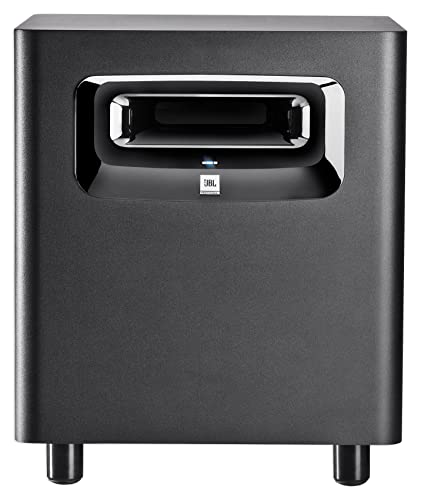
For music producers seeking powerful low-end reinforcement, the JBL Professional LSR310S Studio Monitor Subwoofer delivers unmatched performance. Its patented port design and custom driver provide deep bass response, reaching down to 20 Hz with impressive 113 dB peak output. The unique XLF setting emulates the bass found in dance clubs, inspiring creativity for your dance tracks. With professional balanced inputs and outputs, it easily integrates into any studio monitor system. Plus, it’s durable enough to handle extended periods at full power, ensuring reliability during your most intense sessions. Elevate your sound experience with the LSR310S today!
Best For: Music producers and sound engineers looking for powerful low-end reinforcement in their studio setups.
Pros:
- Deep bass response reaching down to 20 Hz with high peak output of 113 dB.
- XLF setting enhances the bass experience, emulating club ambiance for dance music production.
- Durable design allows for extended use at full power without risk of failure.
Cons:
- May be too powerful for smaller studio spaces, potentially overwhelming other monitors.
- Limited versatility for genres outside of electronic and dance music due to the emphasis on low frequencies.
- Requires professional audio equipment to take full advantage of its capabilities, which may not suit all users.
Rockville Rock Shaker 10 Black Powered Subwoofer

Looking to elevate your audio experience in a compact space? The Rockville Rock Shaker 10 Black Powered Subwoofer delivers impressive power with its 10-inch woofer, boasting 600W peak and 300W RMS output. You’ll enjoy tight, thumpy lows perfect for movies, music, and gaming. Customize your sound with adjustable volume, crossover frequency, and phase controls, ensuring it fits your needs. With versatile RCA line and high-level speaker inputs, connectivity is a breeze. Its durable MDF enclosure with a stylish vinyl finish and detachable foam grill guarantees lasting performance. Enhance your home theater or studio setup effortlessly with this powerful subwoofer!
Best For: Those seeking an affordable yet powerful subwoofer to enhance their home theater, music listening, or gaming experience.
Pros:
- Delivers impressive low-end performance with 600W peak and 300W RMS output.
- Customizable audio settings allow for a personalized audio experience.
- Versatile connectivity options make it easy to integrate into various setups.
Cons:
- The compact size may not produce as deep bass as larger subwoofers.
- Limited to a 10-inch woofer, which may not satisfy audiophiles seeking extreme low frequencies.
- MDF construction, while durable, may not appeal to those looking for premium materials.
Klipsch R-120SW Subwoofer, Black

The Klipsch R-120SW Subwoofer excels at delivering deep, powerful bass that enhances any audio experience, making it a fantastic choice for home theater enthusiasts and music lovers alike. Featuring a 12-inch spun-copper woofer and a built-in all-digital amplifier, it guarantees high efficiency and minimal distortion. With a frequency response of 29 Hz to 120 Hz, you’ll experience immersive sound that integrates seamlessly with your setup. Weighing 31 pounds, it’s easy to position in any space, while its stylish black finish complements your decor. Rated 4.8 out of 5 stars, it’s a reliable option that doesn’t disappoint.
Best For: Home theater enthusiasts and music lovers seeking deep, immersive bass to enhance their audio experience.
Pros:
- High Efficiency: Built-in all-digital amplifier ensures minimal distortion and true-to-source accuracy.
- Versatile Compatibility: Works well with various speaker configurations, making it suitable for surround sound setups.
- Stylish Design: Durable wood construction with a sleek black finish that integrates seamlessly into any decor.
Cons:
- Wired Connectivity: Requires a wired connection to an AV receiver, which may limit placement options.
- Size and Weight: At 31 pounds, it may be cumbersome for some users to move or reposition.
- Limited Frequency Response: While effective, the range of 29 Hz to 120 Hz may not satisfy users looking for even lower frequency performance.
YAMAHA 8 100W Powered Subwoofer – Black (NS-SW050BL)

Compact and powerful, the YAMAHA 8 100W Powered Subwoofer (NS-SW050BL) is perfect for desk studio setups where space is limited but quality sound is essential. Weighing just 18.7 pounds and measuring 11.5 inches in height, this subwoofer fits easily into smaller spaces. With a dynamic power of 100W and an 8” cone woofer, it delivers clear and impactful bass, enhancing your audio experience across genres. The included remote control and adjustable crossover frequency up to 200Hz make it user-friendly. Ideal for various devices, it’s a great choice for anyone craving quality sound without sacrificing room.
Best For: Those seeking a compact subwoofer that delivers quality bass for smaller living spaces or studio setups.
Pros:
- Powerful Sound: Delivers clear and impactful bass with a dynamic power of 100W and an 8” cone woofer.
- User-Friendly Features: Includes a remote control and adjustable crossover frequency for customizable audio experience.
- Space-Saving Design: Compact dimensions make it ideal for limited spaces without compromising sound quality.
Cons:
- Limited Deep Bass: May not satisfy users looking for extremely deep bass performance compared to larger subwoofers.
- No RCA Cable Included: Some users noted the absence of an RCA cable in the package, requiring additional purchases.
- Not Ideal for Large Rooms: Performance may be less favorable in larger spaces where more power is required.
Edifier R1280T Powered Bookshelf Speakers
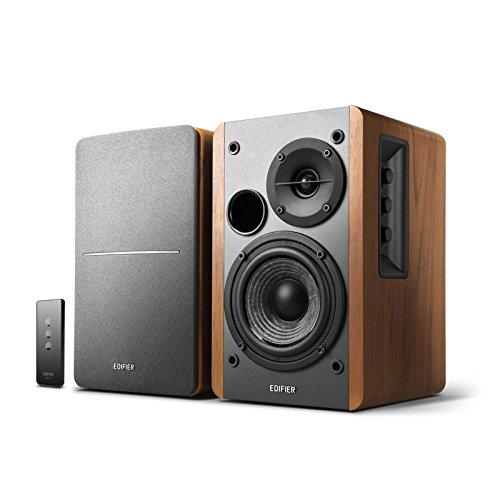
For anyone seeking rich sound quality without breaking the bank, the Edifier R1280T Powered Bookshelf Speakers stand out as an ideal choice. With 42 Watts RMS power, these speakers deliver clear and balanced audio, enhancing your music and movie experiences. Their classic wood finish complements any decor, while side panel controls and a remote make adjustments easy. You’ll appreciate the adjustable bass and treble settings, allowing you to tailor the sound to your liking. Compatible with various devices, these speakers are perfect for desktops, gaming consoles, and TVs. Overall, they’re a fantastic option for casual listeners wanting quality sound.
Best For: Casual listeners seeking high-quality sound in a stylish and affordable package.
Pros:
- Excellent sound quality with clear and balanced audio across frequencies.
- Adjustable bass and treble controls for personalized listening experiences.
- Versatile compatibility with various devices, including desktops and gaming consoles.
Cons:
- Limited subwoofer connectivity, which may not satisfy bass enthusiasts.
- Wired connections may require better quality cables for optimal performance.
- Bluetooth range is limited to 10 meters, which may restrict placement options.
Logitech Z313 2.1 Multimedia Speaker System
Looking to enhance your audio experience without taking up too much space? The Logitech Z313 2.1 Multimedia Speaker System is a fantastic choice. With a compact subwoofer delivering strong bass and 25 watts of maximum output, it fills your room with balanced sound. It’s compatible with PCs, consoles, and mobile devices, so you can enjoy your favorite tunes or games effortlessly. The control pod makes adjusting volume and connecting headphones easy. Setup is a breeze—just plug the speakers into the subwoofer and connect it to any device with a 3.5mm headphone jack. Perfect for any desk studio!
Best For: Those seeking a compact yet powerful speaker system for enhancing audio on PCs, consoles, and mobile devices.
Pros:
- Versatile compatibility with PC, PS4, Xbox, TV, smartphones, tablets, and music players.
- Easy setup with a straightforward plug-and-play connection to any device with a 3.5mm headphone jack.
- Compact design allows the subwoofer to fit into tight spaces while still delivering strong bass.
Cons:
- Limited waterproofing, meaning caution is needed around liquids.
- Maximum output power of 25 watts may not be sufficient for larger spaces or for users seeking very high volume levels.
- Tabletop mounting only, which may restrict placement options for some users.
Edifier T5 Powered Subwoofer

The Edifier T5 Powered Subwoofer is ideal for audio enthusiasts seeking powerful sound in a compact desk studio setup. With its 8-inch speaker driver, you’ll experience accurate bass that enhances your listening experience. The low pass filter, reaching down to 38Hz, guarantees the woofer complements your speakers’ high and mid-range output beautifully. Its thick MDF wooden enclosure reduces acoustic resonance, providing improved audio quality. Plus, the automatic standby feature saves electricity when not in use. Built for durability, the Edifier T5 guarantees long-lasting performance, making it a reliable choice for any audio setup you have.
Best For: Audio enthusiasts looking for powerful bass and enhanced sound quality in a compact setup.
Pros:
- Powerful 8-inch speaker driver delivers accurate and immersive bass for an enhanced listening experience.
- Durable MDF wooden enclosure reduces acoustic resonance, improving overall audio quality.
- Automatic standby feature conserves energy by minimizing power consumption when the subwoofer is not in use.
Cons:
- Size may be cumbersome for very small desk setups or limited spaces.
- Limited connectivity options might not suit all audio systems or preferences.
- Price point may be higher compared to entry-level subwoofers in the market.
Factors to Consider When Choosing Subwoofers for Desk Studios
When choosing a subwoofer for your desk studio, you’ll want to take into account several key factors. Think about the size and space you have available, as well as the power output you’ll need for your specific setup. Don’t forget to check the frequency response range, connectivity options, and overall build quality to make certain you get the best performance.
Size and Space Considerations
Choosing the right subwoofer for your desk studio involves careful consideration of size and space, especially since different models can vary greatly in dimensions. For instance, larger models like the Yamaha HS8 (18D x 16W x 18.5H inches) may demand more floor space than compact options such as the Yamaha NS-SW050BL (11.5D x 13.4W x 11.5H inches), which fit better in tighter setups. You should also think about the weight; heavier subwoofers like the Klipsch R-120SW (31 pounds) offer stability but can be cumbersome. Additionally, placing a larger sub in a corner can enhance bass response, but make sure it suits your studio layout. Finally, larger drivers typically need more space for peak performance, impacting your acoustics.
Power Output Requirements
Understanding power output requirements is vital for optimizing your desk studio’s sound experience. When selecting a subwoofer, consider options typically ranging from 100 to 150 Watts, as these provide effective bass performance in smaller spaces. Pay attention to the RMS (Root Mean Square) power rating—higher ratings, like 300W RMS, indicate better continuous power handling and sound quality. It’s important to match your subwoofer’s power with your studio monitors; for instance, pairing a 50W monitor with a 150W subwoofer guarantees balanced sound without distortion. Additionally, consider the amplifier type; Class D amplifiers are often more power-efficient, making them ideal for compact setups. This careful selection will enhance your overall audio experience in your desk studio.
Frequency Response Range
Selecting a subwoofer with the right frequency response range is vital for achieving clear and balanced sound in your desk studio. Look for a range between 20Hz and 150Hz; this guarantees you capture deep bass, perfect for genres like hip-hop and electronic music. A lower frequency response, down to 20Hz, allows you to enjoy those powerful bass notes. Meanwhile, a higher limit of 150Hz helps integrate seamlessly with your midrange speakers, promoting a smooth shift between bass and higher frequencies. It’s important to match your subwoofer’s frequency response with your main studio monitors. A wider frequency range not only enhances sound clarity but also enriches your overall listening experience during music production or audio mixing.
Connectivity Options Available
When it comes to subwoofers for desk studios, having the right connectivity options can make all the difference in your setup. Look for subwoofers that offer RCA line inputs and high-level speaker inputs, allowing for seamless integration with various audio systems. If you’re in a professional setting, balanced inputs like XLR or TRS can minimize noise and interference, ensuring cleaner sound. Features like a low cut switch and adjustable crossover frequency controls enable you to customize the frequency response to suit your room’s acoustics. Additionally, a phase switch helps align the subwoofer with your other speakers for better sound coherence. Don’t forget front-panel headphone outputs and aux inputs for convenient direct audio monitoring from multiple devices.
Build Quality and Materials
Whether you’re crafting beats or mixing tracks, the build quality and materials of your subwoofer play an essential role in your studio’s audio performance. Opt for subwoofers made from thick MDF wood or high-quality fiberboard; these materials considerably reduce acoustic resonance and distortion, leading to superior sound and bass response. A robust build guarantees longevity and consistent performance, minimizing damage during regular use. Additionally, a well-designed enclosure can prevent unwanted vibrations, resulting in cleaner sound reproduction. Consider how the choice of materials affects the weight and stability of your subwoofer, especially in compact desktop setups. Prioritizing build quality and materials will enhance your overall listening experience and elevate your sound production.
Design Aesthetics and Fit
While considering subwoofers for your desk studio, you’ll want to prioritize both design aesthetics and fit to create a harmonious workspace. Start by measuring your available space, as subwoofers range from compact models like the PreSonus Eris 3.5, measuring 5.5D x 6W x 8.3H inches, to larger options like the Yamaha HS8 at 18D x 16W x 18.5H inches. A sleek black finish can help your subwoofer blend into your professional environment seamlessly. Pay attention to build quality, too; MDF wood enclosures not only enhance durability but also improve aesthetics. Consider weight for portability and stability; lighter models are easier to move, while heavier ones may offer better stability. Design elements like detachable grills can further enhance usability and visual appeal.
Adjustable Controls and Settings
Finding the right subwoofer for your desk studio goes beyond just aesthetics and fit; adjustable controls and settings play a significant role in optimizing sound quality. Look for subwoofers with adjustable volume, crossover frequency, and phase controls, allowing you to tailor the sound to your specific environment. Low cut and high cut controls help manage the frequency range, ensuring a balanced sound that complements your main speakers. A phase switch can synchronize your subwoofer with other speakers, enhancing audio coherence. Some models offer advanced tuning features, like a low cut switch adjustable between 80-120Hz, perfect for different room sizes. Customizable audio settings let you fine-tune bass response, making your listening experience more enjoyable across various music genres or media types.
Compatibility With Existing Setup
When choosing a subwoofer for your desk studio, compatibility with your existing setup is crucial to achieving perfect sound quality. First, make certain the subwoofer has the right connectivity options, like RCA or XLR inputs, to connect seamlessly with your audio gear. Next, consider the power output; matching the wattage with your studio monitors helps prevent distortion and maintains balanced sound. Check the frequency response range to verify it complements your current setup, especially if you work with bass-heavy genres. Don’t forget to evaluate the subwoofer’s size and design, confirming it fits comfortably in your workspace. Finally, look for adjustable crossover and phase controls to fine-tune the integration with your speakers for peak performance.
