
If you want turn-by-turn guidance without adding bulk to your cockpit, space-saving bike navigation computers are the sweet spot. They pack mapping, route alerts, and ride data into compact, handlebar-friendly units.
Below, we focus on models that balance small size, readable displays, smart connectivity, and practical battery life for commuting, training, and long weekend rides.
Best 10 Space-Saving Bike Navigation Computers Picks for 2026
Compact Nav Pick
GEOID CC700 Pro 2.8" Touchscreen GPS Bike Computer

- 2.8-inch color touchscreen with button backup
- Offline maps, turn prompts, and re-route planning
- WiFi sync, ANT+/Bluetooth, and IPX7 waterproofing
Best For: Riders wanting compact guided navigation with wireless syncing.
Compact Map Navigator
iGPSPORT BSC300T 2.4" Touchscreen GPS Bike Computer
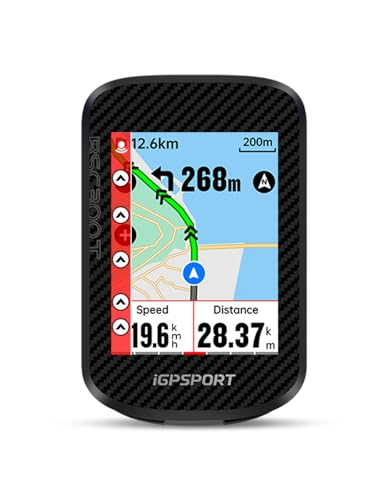
- 2.4-inch touchscreen with 6-button operation
- Offline map downloads, turn prompts, and off-course alerts
- ANT+/Bluetooth 5.0 with real-time tracking support
Best For: Cyclists who need compact navigation and sensor flexibility.
Ultra-Light Basic Choice
Navihood L4 Slim GPS Bike Speedometer

- 13.5 mm thin and only 45 g
- 2.3-inch anti-glare display with auto backlight
- ANT+/Bluetooth, IPX7, and 22-hour battery
Best For: Riders who want a slim, lightweight GPS computer for core ride data.
Long-Ride GPS Upgrade
Bryton Rider 650 2.8" Touch GPS Bike Computer

- 2.8-inch color touchscreen with ambient light sensor
- Preloaded maps, turn-by-turn guidance, and POIs
- 33-hour battery with radar and live tracking support
Best For: Riders wanting compact navigation with marathon battery life.
Compact Route Navigator
iGPSPORT BSC200S GPS Bike Computer

- Compact 2.4-inch color screen
- Route import plus one-touch navigation
- Up to 25 hours battery life
Best For: Riders wanting a small GPS unit with app-based navigation and ride tracking
Touchscreen Smart Planner

- Compact 2.4-inch touchscreen design
- Global maps with turn-by-turn navigation
- WiFi, Bluetooth, and AGNSS support
Best For: Riders wanting a compact touchscreen with navigation and fast connectivity
Long-Ride Navigator
COOSPO CS600 Color Touchscreen GPS Bike Computer

- Compact 2.4-inch touchscreen with auto-backlight
- Route upload plus breadcrumb trail navigation
- Up to 36 hours battery life
Best For: Endurance riders wanting a small GPS unit with long battery life
Compact Color Navigation Pick
GEOID CC600 2.4" Color Screen Cycling Computer

- 2.4-inch color screen with three-button controls
- Turn reminders, GPX upload, and rerouting support
- WiFi, Bluetooth, ANT+, and indoor training features
Best For: Riders wanting a compact navigation computer with wireless syncing
Lightweight Route Helper
Magene C506 SE 2.4" GPS Bike Computer

- 74g body with a 2.4-inch color screen
- Turn prompts, off-course alerts, and route re-planning
- WiFi, Bluetooth, and 5-second positioning
Best For: Riders who want a lightweight, compact GPS computer with colorful navigation
Best Larger Compact Display
GEOID CC700 2.8" Color Screen Cycling Computer

- 2.8-inch color screen with a compact footprint
- Turn reminders, GPX import, and rerouting support
- WiFi auto-sync plus ANT+/Bluetooth connectivity
Best For: Riders who want a compact navigation computer with a slightly larger display
Compact Nav Pick – GEOID CC700 Pro 2.8" Touchscreen GPS Bike Computer
If you want space-saving bike navigation computers that still feel feature-rich, the GEOID CC700 Pro is built around a compact 2.8-inch touchscreen with map guidance, re-route planning, and quick WiFi syncing. It keeps the unit small enough for clean cockpit setups while still offering offline map downloads, dual-perspective views, and fast positioning for everyday riding and route exploration.
Best For: Riders who want a compact touchscreen GPS computer with offline navigation, quick re-routing, and easy wireless syncing.
Pros:
- 2.8-inch color touchscreen plus 3 buttons for simple operation
- Offline map downloads with turn prompts, street names, zoom, and re-route planning
- WiFi auto-sync, firmware updates, and FIT export support
- ANT+/Bluetooth connectivity plus IPX7 waterproofing
Cons:
- Re-route planning depends on remaining connected to the designated app
- Smaller screen than some larger navigation-focused bike computers
This is a strong fit if you want a tidy handlebar setup without giving up guided navigation features. The CC700 Pro balances portability with useful map tools, making it a practical pick for riders who value compact size and modern connectivity.
Compact Map Navigator – iGPSPORT BSC300T 2.4" Touchscreen GPS Bike Computer
The iGPSPORT BSC300T fits the space-saving bike navigation computers category by combining a 2.4-inch touchscreen, 6-button control, and offline map support in a compact body. It is designed for riders who want route guidance, off-course alerts, and broad sensor compatibility without adding a bulky unit to the handlebars.
Best For: Cyclists who want a compact GPS computer with offline navigation, off-course warnings, and strong device compatibility.
Pros:
- 2.4-inch touch screen with 6-button control
- Global offline map download with route preview and turn prompts
- Off-course warning and real-time teammate tracking
- ANT+/Bluetooth 5.0 support for sensors, smart trainers, and Ebike use
Cons:
- Small screen may feel limited for riders who prefer larger map displays
- Type-C cable is not included in the box
For riders who prioritize routing features in a smaller form factor, the BSC300T covers the essentials well. Its offline maps and course alerts make it especially useful for unfamiliar routes, group rides, and mixed bike use.
Ultra-Light Basic Choice – Navihood L4 Slim GPS Bike Speedometer
If your priority is keeping the cockpit as clean and space-saving as possible, the Navihood L4 is a stripped-down GPS bike computer with a very slim 13.5 mm profile and just 45 g of weight. It focuses on the basics—accurate GPS positioning, customizable data pages, waterproofing, and long battery life—while staying notably small on the handlebar.
Best For: Riders who want an ultra-light, low-profile bike computer for core ride data and simple GPS tracking.
Pros:
- Very thin 13.5 mm body and 45 g weight
- IPX7 waterproofing and anti-glare 2.3-inch screen with auto backlight
- ANT+/Bluetooth 5.0 sensor support and Strava sharing
- 22-hour battery life with up to 1000 km storage
Cons:
- Button-only input may feel less convenient than touchscreen models
- Best for core riding data rather than advanced navigation features
The L4 is a smart choice when you want a smaller device that disappears on the bars but still covers the essentials. It is especially appealing for riders who care more about lightweight practicality than map-heavy navigation.
Long-Ride GPS Upgrade – Bryton Rider 650 2.8" Touch GPS Bike Computer
Among space-saving bike navigation computers, the Bryton Rider 650 stands out for combining a compact 2.8-inch color touchscreen with preloaded maps, turn-by-turn guidance, and a very long 33-hour battery. It is aimed at riders who want a small unit on the bars but still need confident route following, live tracking, and support for radar and electronic shifting.
Best For: Cyclists who want a compact touchscreen GPS computer with long battery life and full route guidance.
Pros:
- 2.8-inch color touchscreen with ambient light sensor
- Preloaded OSM maps with turn-by-turn guidance, street names, and POIs
- 33-hour battery life for long rides and commuting
- Supports rear-view radar, live tracking, and ANT+/Bluetooth syncing
Cons:
- Not as feature-minimal as basic speed-only computers
- Touchscreen plus advanced features may be more than some casual riders need
The Rider 650 is a well-rounded option if you want navigation depth without a bulky device. Its long battery life and map detail make it a practical upgrade for riders who regularly cover long distances or explore new routes.
Compact Route Navigator – iGPSPORT BSC200S GPS Bike Computer
If you want space-saving bike navigation computers that still handle everyday riding well, the iGPSPORT BSC200S is a compact option with route creation, imported GPX-style routes, and turn reminders. Its 2.4-inch color screen is small enough to stay unobtrusive on the bars while still giving you the navigation and ride data most riders need.
Best For: Riders who want a compact GPS computer with app-based route navigation, notifications, and long battery life.
Pros:
- Supports route creation in the iGPSPORT app and imports routes from platforms like Strava, Ride with GPS, and Komoot.
- Includes one-touch navigation, back-to-start guidance, and riding record navigation.
- Offers 100+ riding data fields, customizable pages, and support for front light and radar light integration.
- Rated for up to 25 hours of battery life and IPX7 waterproofing.
Cons:
- No Type-C cable is included in the box.
- The 2.4-inch display is compact, so riders wanting a larger map view may prefer a bigger unit.
Overall, the BSC200S is a practical pick if your priority is a small, tidy setup with solid navigation features rather than a bulky display. It balances size, battery life, and route tools well for everyday and longer rides.
Touchscreen Smart Planner – Magene C506 GPS Bike Computer
The Magene C506 fits well among space-saving bike navigation computers thanks to its compact 2.4-inch touchscreen, three-button layout, and lightweight 76g design. It adds smart navigation with downloadable global maps, turn-by-turn guidance, and route creation or GPX import through the OnelapFit app.
Best For: Riders who want a compact touchscreen computer with strong navigation tools, fast syncing, and smart accessory support.
Pros:
- 2.4-inch touchscreen with three-button control keeps the unit compact and easy to operate.
- Offers global maps, turn-by-turn navigation, custom routes, and GPX file support.
- Bluetooth and WiFi support speed up syncing, with AGNSS positioning designed for quick startup.
- Works with lights, radar tail lights, smart trainers, power meters, and electronic shifting systems.
Cons:
- Navigation and syncing depend on using the OnelapFit app ecosystem.
- The many features may feel more complex than a basic cycling computer.
For riders who want a small but capable navigation computer, the C506 stands out for its touch interface and broad smart-device support. It is a strong choice if you want a compact cockpit without giving up route planning or training features.
Long-Ride Navigator – COOSPO CS600 Color Touchscreen GPS Bike Computer
The COOSPO CS600 is a good fit if you want space-saving bike navigation computers with a clear screen and long endurance. It combines a 2.4-inch color touchscreen, route navigation with uploaded routes or breadcrumb trail following, and an auto-backlight system that helps keep the display readable without adding a bulky setup.
Best For: Riders who want a compact GPS computer with long battery life, route guidance, and a customizable display.
Pros:
- 2.4-inch color touchscreen with auto-backlight for easier viewing in changing light.
- Built-in route navigation supports uploaded routes and breadcrumb trail following.
- Up to 36 hours of battery life and IPX7 waterproof protection.
- Can connect with smart bike lights, radar tail lights, e-bikes, electronic shifters, and indoor trainers.
Cons:
- Does not include additional sensors or extension mounts.
- Cadence, heart rate, and power tracking require compatible accessories sold separately.
The CS600 is aimed at riders who want a compact navigation computer that can go the distance. Its long battery life and simple route tools make it especially appealing for riders who spend more time on the bike than in the charging cradle.
Compact Color Navigation Pick – GEOID CC600 2.4" Color Screen Cycling Computer
If you want space-saving bike navigation computers that still handle route guidance well, the GEOID CC600 is a compact pick with a 2.4-inch color screen, turn reminders, GPX import support, and automatic rerouting through the app. It also adds WiFi syncing and quick 5-second positioning, so it covers the basics a lot of riders want without taking up much bar space.
Best For: Riders who want a compact navigation computer with color route prompts, wireless syncing, and indoor training support.
Pros:
- 2.4-inch color display with a three-button layout for straightforward use
- Color navigation with turn reminders, zooming, and off-course rerouting
- WiFi and Bluetooth support for faster sync and firmware updates
- Supports ANT+ and Bluetooth connections with up to 9 device types
Cons:
- Smaller screen than the 2.8-inch model in this roundup
- Some navigation features rely on the phone app and GPX file workflow
- Best performance depends on keeping AGNSS data current
The CC600 is a practical choice if you want a smaller, feature-rich head unit that balances navigation, data fields, and indoor training tools. It is especially appealing for riders who prefer a tidy cockpit and wireless convenience over a larger display.
Lightweight Route Helper – Magene C506 SE 2.4" GPS Bike Computer
For shoppers comparing space-saving bike navigation computers, the Magene C506 SE stands out for its 74g weight, 2.4-inch color screen, and route navigation with turn tips and re-planning. It supports GPX uploads, WiFi transfers, and fast 5-second positioning, making it a compact option for riders who want navigation without extra bulk.
Best For: Riders who want a lightweight, compact GPS computer with colorful navigation and fast setup.
Pros:
- Very light at 74g with a 2.4-inch color display
- Color navigation with off-course alerts, turn prompts, and route re-planning
- WiFi and Bluetooth support for faster data uploads and AGNSS sync
- Supports 9 device types through ANT+ and Bluetooth
Cons:
- Navigation features are tied to the OnelapFit app connection
- Smaller display than larger-screen alternatives
- Route and data features may feel more complex if you want a very simple computer
The C506 SE is a strong fit if weight matters and you want a compact unit that still offers modern navigation tools. Its mix of quick positioning, wireless syncing, and training compatibility makes it a versatile everyday option.
Best Larger Compact Display – GEOID CC700 2.8" Color Screen Cycling Computer
If you want space-saving bike navigation computers but prefer a little more screen room, the GEOID CC700 offers a 2.8-inch color display with turn reminders, GPX import, and automatic rerouting. It keeps the same wireless convenience as the smaller models, with WiFi auto-sync, ANT+/Bluetooth support, and fast 5-second GPS positioning.
Best For: Riders who want a compact navigation computer with a larger display and full wireless sync.
Pros:
- 2.8-inch color screen gives more viewing space while staying compact
- Color navigation includes turn reminders, zooming, and rerouting
- WiFi auto-sync and Bluetooth/ANT+ support simplify transfers and device pairing
- Supports indoor training and up to 108 data items across multiple layouts
Cons:
- Larger than the 2.4-inch options, so it is less minimalist on the bars
- Navigation workflow still depends on the app for GPX uploads
- Best GPS results rely on synced AGNSS data and open-sky conditions
The CC700 is a smart middle ground if you want a compact head unit with a bit more readability. It is a good pick for riders who value navigation clarity, wireless syncing, and flexible data pages in one device.
How We Picked These Space-Saving Bike Navigation Computers
We prioritized compact designs that still deliver the essentials: clear navigation, reliable GPS, easy route loading, and wireless syncing. We also looked at screen size and visibility, mounting footprint, waterproofing, sensor compatibility, and whether the interface feels usable on the move.
Because these units are meant to save space, we gave extra credit to models that combine mapping and riding data in one device, reducing the need for a separate phone mount.
Quick Comparison
The best Space-Saving Bike Navigation Computers typically fall into two camps: simpler compact units for ride metrics and lightweight navigation, and richer color touchscreen models with offline maps, rerouting, and broader connectivity. If you want the smallest footprint, look for thinner bodies and modest screen sizes. If navigation matters most, choose a model with preloaded maps, route import support, and on-device rerouting.
Key Buying Factors for Space-Saving Bike Navigation Computers
Display Size and Legibility
A compact computer should still be readable at a glance. Look for strong backlighting, color displays if you ride in unfamiliar areas, and a layout that keeps navigation prompts easy to see without cluttering the screen.
Navigation Features
For route-following, offline maps, off-course warnings, and reroute planning are the most useful features. These reduce dependence on a phone and make the device more practical on unfamiliar roads or mixed-surface routes.
Connectivity and Sensors
Bluetooth and ANT+ support can make a big difference if you use heart-rate straps, cadence sensors, power meters, or smart trainers. WiFi auto-sync is also helpful for quickly uploading rides and updating maps.
Battery Life and Durability
Longer battery life matters for endurance riders, while IPX7 waterproofing is a strong plus for all-weather commuting and training. Fast GPS lock can also improve day-to-day convenience when you ride frequently.
Who Should Buy Which Space-Saving Bike Navigation Computers?
Choose a basic compact unit if you mainly want speed, distance, and a lightweight setup. Pick a touchscreen GPS model if you need navigation often and want a more phone-free experience. Riders with bikes packed with accessories or limited handlebar space will benefit most from these Space-Saving Bike Navigation Computers, especially if they want a cleaner cockpit without sacrificing route guidance.
If you ride indoors as well as outside, or you use multiple sensors, prioritize broader compatibility and easy syncing over the smallest possible screen. That way, you get a device that fits your bike, your data needs, and your riding style.
