
Smart OLED gaming monitors combine deep contrast, fast response times, and modern streaming or smart-TV features in one display. That makes them a strong fit for gamers who want both elite performance and everyday versatility.
From compact 27-inch QD-OLED panels to ultrawide and giant immersive screens, the best options in 2026 cover competitive play, cinematic single-player gaming, and console-friendly setups.
Best 10 Smart OLED Gaming Monitors Picks for 2026
Elite Curved Smart OLED
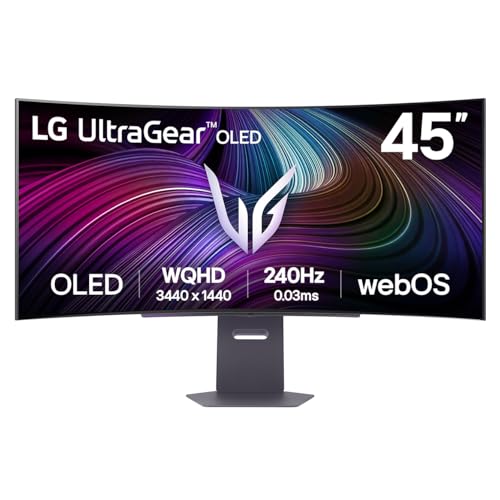
- 240Hz and 0.03ms for ultra-fast gaming
- webOS with Netflix, Prime Video, Disney+, and cloud gaming
- 800R curved 45-inch OLED with HDR True Black 400
Best For: Big-screen gamers who want built-in streaming and cloud play
Tournament-Ready QD-OLED
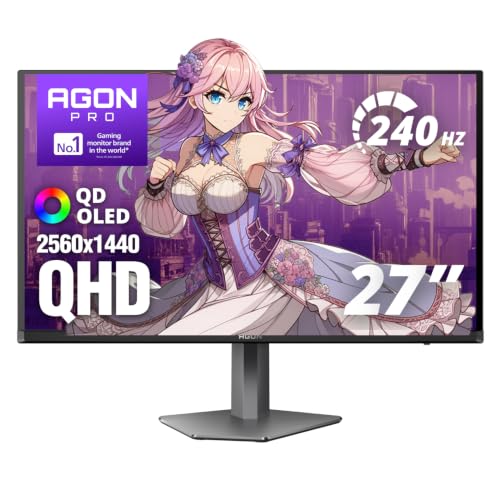
- Up to 280Hz with 0.03ms GTG response
- QD-OLED panel with deep blacks and vivid color
- QHD resolution, HDR10, and G-Sync support
Best For: Competitive players who want maximum speed in a 27-inch OLED
Ultrawide OLED Power Pick

- 240Hz and 0.03ms for fast motion handling
- 3440 x 1440 ultrawide OLED with 800R curve
- FreeSync Premium Pro, G-SYNC, HDMI 2.1, and USB-C
Best For: Ultrawide gamers who want speed, curve, and strong connectivity
Ultra-Wide QD-OLED Powerhouse

- 49-inch 32:9 QD-OLED with 5120 x 1440 resolution
- 240Hz refresh rate and 0.03ms response time
- HDR True Black 400, G-Sync, and PBP support
Best For: Immersive ultrawide gaming and multitasking
High-Refresh Competitive OLED

- 27-inch QD-OLED with QHD resolution
- 360Hz refresh rate and 0.03ms response time
- FreeSync Premium Pro and True Black 400
Best For: Fast-paced competitive gaming at 27 inches
Glossy Speed Pick
LG 27-inch UltraGear QHD OLED 240Hz

- 240Hz QHD OLED with 0.03ms response time
- Peak brightness up to 1300 nits with True Black 400
- HDMI 2.1, DisplayPort, G-SYNC Compatible and FreeSync Premium Pro
Best For: Competitive players wanting a bright 27-inch OLED for fast-motion gaming
Ultrawide Immersion Pick
Alienware 34 QD-OLED Curved 240Hz

- 34.2-inch WQHD ultrawide with 1800R curve
- 240Hz QD-OLED with 0.03ms response time
- 99.3% DCI-P3, Delta E<2, and True Black 400 HDR
Best For: Ultrawide gamers who want immersive curved visuals with fast QD-OLED performance
Dual-Mode Power Pick
LG 32-inch 4K OLED Dual-Mode 240Hz/480Hz
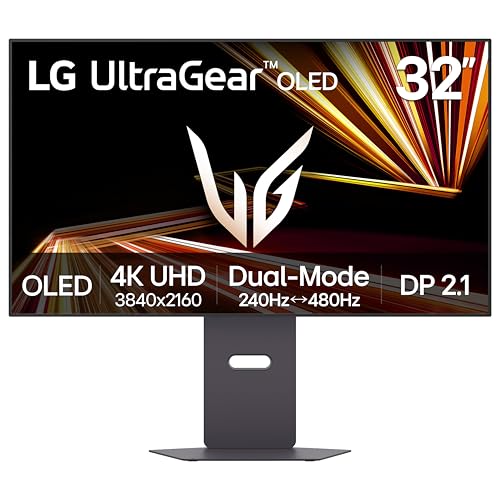
- Switches between 4K 240Hz and Full HD 480Hz
- 0.03ms response time with G-SYNC Compatible and FreeSync Premium Pro
- Micro Lens Array+ brightness, True Black 400, and anti-glare panel
Best For: Gamers who want one OLED monitor for both high-detail 4K play and ultra-high-refresh competitive gaming
Elite Curved Smart OLED – LG UltraGear 45GX90SA 45-inch
If you want a smart OLED gaming monitor that also doubles as a streaming hub, this LG UltraGear stands out with a huge 45-inch curved panel, webOS, and built-in access to services like Netflix and cloud gaming platforms. It pairs that convenience with serious gaming speed, making it a strong fit for players who want one screen for both play and entertainment.
Best For: Gamers who want a large, immersive curved OLED with built-in streaming and cloud gaming.
Pros:
- 240Hz refresh rate and 0.03ms response time for very fast, low-latency gaming
- 800R curved 45-inch OLED panel creates a deeply immersive viewing experience
- webOS adds Netflix, Prime Video, Disney+, and cloud gaming support
- HDMI 2.1, USB-C PD 65W, G-SYNC, and FreeSync Premium add flexible connectivity and sync support
Cons:
- The very large 45-inch size may be too much for smaller desks
- Built-in smart features may be unnecessary if you already use a console or PC for everything
Overall, this is one of the most feature-rich smart OLED gaming monitors here if you want both premium gaming performance and native entertainment apps in a single display.
Tournament-Ready QD-OLED – AOC Agon Pro AG276QZD2
For buyers focused on speed and clarity, this AOC Agon Pro fits squarely into the smart OLED gaming monitors conversation with a QD-OLED panel, QHD resolution, and a refresh rate that can reach 280Hz. It is built for competitive play, but it also brings strong color coverage and HDR10 for everyday visual quality.
Best For: Competitive gamers who want a fast 27-inch QD-OLED with strong color performance.
Pros:
- Up to 280Hz refresh rate and 0.03ms GTG response time
- QD-OLED panel delivers deep blacks and over 1.07 billion colors
- QHD 2560 x 1440 resolution offers sharp gaming visuals
- G-Sync support, HDR10, and 101% DCI-P3 coverage improve responsiveness and image quality
Cons:
- Smaller 27-inch size may feel less immersive than ultrawide OLED options
- No built-in smart TV platform or streaming apps mentioned
This is a strong pick if your priority is competitive responsiveness first and everything else second, with OLED contrast and color accuracy as welcome bonuses.
Balanced QD-OLED Choice – Samsung Odyssey OLED G5 27-inch
This Samsung Odyssey OLED G5 is a practical choice in smart OLED gaming monitors if you want high-end panel quality without moving to a huge ultrawide. Its QD-OLED display, 180Hz refresh rate, and built-in burn-in protection features make it appealing for everyday gaming with a focus on reliability and image quality.
Best For: Gamers who want a compact QD-OLED monitor with strong color accuracy and built-in screen protection.
Pros:
- QD-OLED panel with QHD resolution for sharp, vibrant image quality
- 180Hz refresh rate and 0.03ms GTG response time for fast gameplay
- OLED Safeguard with Thermal Modulation System helps reduce burn-in risk
- Glare Free coating, Pantone validation, and HDR10 improve visibility and color fidelity
Cons:
- 180Hz is lower than some competing OLED gaming monitors here
- Smaller 27-inch format may not satisfy users wanting a more cinematic screen
In practice, this monitor is best for buyers who want a well-rounded OLED gaming display that balances speed, accurate color, and screen-care features.
Ultrawide OLED Power Pick – LG 34GX900A-B 34-inch
For shoppers comparing smart OLED gaming monitors with an ultrawide format, this LG 34-inch model offers a strong blend of speed, immersion, and desk-friendly versatility. Its 3440 x 1440 OLED panel, 240Hz refresh rate, and 800R curve make it aimed at players who want expansive views and fast motion handling.
Best For: Gamers who want an ultrawide curved OLED with top-tier refresh speed.
Pros:
- 240Hz refresh rate and 0.03ms response time for smooth, responsive gaming
- 3440 x 1440 ultrawide OLED panel with 800R curve creates strong immersion
- FreeSync Premium Pro and G-SYNC compatibility help reduce tearing and stutter
- HDMI 2.1, DisplayPort, and USB-C PD 65W provide flexible connectivity
Cons:
- Ultrawide 21:9 format may not suit every game or workspace setup
- No built-in smart TV apps or cloud gaming platform are mentioned
This is a polished all-around ultrawide OLED choice if you want excellent speed, strong HDR class features, and a curved panel that puts you closer to the action.
Ultra-Wide QD-OLED Powerhouse – Samsung 49" Odyssey G93SC
If you want smart OLED gaming monitors that prioritize scale and immersion, this Samsung 49-inch Odyssey delivers a massive 32:9 QD-OLED canvas with 5120 x 1440 resolution. Its 240Hz refresh rate, 0.03ms response time, and HDMI 2.1/DisplayPort support make it built for fast, competitive play, while the curved ultrawide panel is also useful for split-screen productivity and creative work.
Best For: Gamers who want an ultra-wide OLED display for immersive play, high-speed competitive titles, and multitasking.
Pros:
- 49-inch 32:9 ultrawide QD-OLED panel with 5120 x 1440 native resolution
- 240Hz refresh rate and 0.03ms GTG response time for fast action
- DisplayHDR True Black 400 and infinite contrast for deep blacks
- G-Sync compatibility, Auto Source Switch+, and Picture-by-Picture support
Cons:
- Very large footprint may be too much for smaller desks
- Ultrawide format is best suited to games and apps that support 32:9
Overall, this is the most expansive option in the group, and it leans hard into immersion without giving up speed. If your setup can handle the size, it’s a standout choice among smart OLED gaming monitors for both gaming and multitasking.
High-Refresh Competitive OLED – Alienware AW2725DF
For buyers comparing smart OLED gaming monitors by speed and clarity, the Alienware AW2725DF is a focused 27-inch QD-OLED option with QHD resolution and a 360Hz refresh rate. It pairs that speed with 0.03ms response time, DisplayHDR True Black 400, and AMD FreeSync Premium Pro for smooth, tear-free gameplay with strong color accuracy.
Best For: Competitive PC gamers who want a compact OLED monitor with elite refresh rate performance.
Pros:
- 360Hz refresh rate with 0.03ms gray-to-gray response time
- QD-OLED panel with QHD resolution and 99.3% DCI-P3 coverage
- VESA DisplayHDR True Black 400 and infinite contrast
- Height, tilt, swivel, and pivot adjustability plus 3-year warranty coverage
Cons:
- 27-inch size is less immersive than ultrawide alternatives
- Only one HDMI port is listed in the supplied specs
This model is all about responsiveness and image quality in a desk-friendly size. If you value competitive speed over screen width, it’s one of the strongest smart OLED gaming monitors to consider.
Smart OLED Curved Gaming Display – LG 34GX90SA-W
If you want smart OLED gaming monitors with streaming built in, the LG 34GX90SA-W stands out for combining a 34-inch curved WQHD OLED panel with webOS24. It runs at 240Hz with a 0.03ms response time, supports FreeSync Premium and G-SYNC, and adds direct access to streaming and cloud gaming services from the monitor itself.
Best For: Gamers who want a curved OLED monitor with built-in streaming and cloud gaming features.
Pros:
- 34-inch 3440 x 1440 OLED panel with a steep 800R curve
- 240Hz refresh rate and 0.03ms response time for smooth gameplay
- webOS24 supports streaming apps and cloud gaming services
- FreeSync Premium, G-SYNC compatibility, and USB-C with 65W power delivery
Cons:
- 3440 x 1440 ultrawide format is not ideal for every game or workspace
- Features like webOS may be unnecessary if you only use a PC or console
This LG is the most feature-packed option for people who want their monitor to double as a streaming hub. For a curved OLED panel with strong gaming specs and smart features, it is a compelling pick.
Glossy Speed Pick – LG 27-inch UltraGear QHD OLED 240Hz
If you want a fast, compact option among smart OLED gaming monitors, this 27-inch LG UltraGear focuses on speed, clarity, and strong HDR punch. Its 240Hz refresh rate, 0.03ms response time, and QHD OLED panel make it a solid fit for competitive play where motion smoothness matters most.
Best For: Competitive PC and console players who want a bright 27-inch OLED with high refresh speed.
Pros:
- Up to 240Hz refresh rate with a near-instant 0.03ms response time
- Bright OLED panel with up to 1300 nits peak brightness and 98.5% DCI-P3
- VESA DisplayHDR True Black 400 with 1.5M:1 contrast for deep blacks
- HDMI 2.1, DisplayPort, and G-SYNC Compatible / FreeSync Premium Pro support
Cons:
- 27-inch size may feel small if you prefer a larger desktop display
- Glossy finish may not suit rooms with strong ambient reflections
- Protection features need to be managed through the on-screen settings
This LG is a practical pick if you prioritize motion performance and vivid OLED image quality over screen size. It is especially appealing for players who want a fast, well-connected display with built-in OLED care tools.
Ultrawide Immersion Pick – Alienware 34 QD-OLED Curved 240Hz
This Alienware stands out in smart OLED gaming monitors if you want a wide, immersive field of view without giving up speed. The 34.2-inch QD-OLED panel, 1800R curve, and 240Hz refresh rate are built for players who value smooth motion and rich color across a broader canvas.
Best For: Ultrawide gamers who want immersive curved visuals with fast QD-OLED performance.
Pros:
- 34.2-inch ultrawide WQHD panel with an 1800R curve
- 240Hz refresh rate and 0.03ms response time for smooth gameplay
- QD-OLED color with 99.3% DCI-P3 coverage and Delta E<2 accuracy
- HDR support with True Black 400, 1000 nits peak brightness, and infinite contrast
Cons:
- Ultrawide format is best suited to games and setups that support the wider aspect ratio
- No mention of built-in speakers or USB-C in the supplied notes
- Curved ultrawide size may require more desk space than a standard monitor
For players who want immersion first, this model delivers a strong mix of size, color, and responsiveness. It is a particularly good match for story-driven games and cinematic titles that benefit from the wider view.
Dual-Mode Power Pick – LG 32-inch 4K OLED Dual-Mode 240Hz/480Hz
Among smart OLED gaming monitors, this 32-inch LG is the most versatile choice here because it can switch between 4K UHD at 240Hz and Full HD at up to 480Hz. That makes it a strong fit if you want one display for detailed single-player games and a faster mode for competitive shooters or racing titles.
Best For: Gamers who want one OLED monitor for both high-detail 4K play and ultra-high-refresh competitive gaming.
Pros:
- Dual Mode support: 4K UHD 240Hz or Full HD 480Hz via hotkey
- 0.03ms response time helps reduce lag and ghosting
- Micro Lens Array+ technology with up to 1300 nits peak brightness
- VESA DisplayHDR True Black 400, 1.5M:1 contrast, and anti-glare low-reflection screen
Cons:
- May be more monitor than you need if you only play one type of game
- Dual-mode flexibility can add setup decisions versus a single fixed refresh target
- Built-in speakers are included, but serious audio users may still prefer a headset or external setup
This LG is the best all-rounder of the group if you want both resolution and speed in one OLED panel. Its dual-mode design, strong HDR specs, and modern connectivity make it easy to adapt to different kinds of play.
How We Picked the Best Smart OLED Gaming Monitors
We focused on the factors that matter most for real-world gaming: refresh rate, response time, panel quality, screen size, resolution, HDR performance, and connectivity. Because Smart OLED Gaming Monitors often add built-in apps or TV-style features, we also considered whether those extras actually improve everyday use instead of just inflating the spec sheet.
We prioritized models that balance speed and image quality, with attention to OLED-specific strengths like near-instant pixel response, excellent black levels, and strong motion clarity.
Quick Comparison
For competitive players, 27-inch and 26.7-inch models with 240Hz to 360Hz refresh rates are the fastest-feeling choices. If immersion matters more, 34-inch ultrawides and 45-inch curved displays offer a more cinematic field of view. For maximum detail, 32-inch 4K OLED panels deliver the sharpest image, while dual-mode options can give you flexibility between resolution and refresh rate.
Key Buying Factors for Smart OLED Gaming Monitors
Refresh Rate and Response Time
Higher refresh rates help motion look smoother, especially in fast shooters and esports titles. OLED’s low response time is a major advantage, but you should still match the refresh rate to your GPU and the types of games you play.
Resolution and Screen Size
QHD is a sweet spot for many gamers because it is easier to drive at high frame rates. Ultrawide 3440 x 1440 models are great for immersion, while 4K OLED monitors are best if you want sharper text and more detailed visuals.
Smart Features and Connectivity
Some Smart OLED Gaming Monitors include streaming apps, built-in operating systems, USB-C power delivery, HDMI 2.1, and console-friendly inputs. These features can reduce desk clutter and make the monitor more useful beyond gaming.
Panel Shape and Burn-In Care
Curved panels can improve immersion on larger ultrawides and super-ultrawides. Since OLED is still OLED, it is wise to look for built-in panel care, logo dimming, and warranty coverage that addresses image retention concerns.
Who Should Buy Which Smart OLED Gaming Monitors?
Choose a fast 27-inch OLED if you play competitive PC games and want the highest possible responsiveness. Go ultrawide if you want a more cinematic experience for racing, RPGs, and productivity. Pick a large curved smart model if you want a living-room-friendly display with built-in entertainment features. And if you want the most detail, a 32-inch 4K option is the most premium all-around choice.
In short, the best Smart OLED Gaming Monitors are the ones that fit your game genres, desk space, and source devices without forcing compromises you do not need.
