
If you want to run models locally without dedicating a full tower, a small form factor computer for local LLMs is the sweet spot. The best choices combine strong CPU and GPU acceleration, plenty of fast memory, and quiet, efficient cooling.
This roundup focuses on compact systems that can handle practical AI workloads, from prompt experimentation to lightweight inference and multimodal tools, while staying desk-friendly and power-conscious.
Best 10 Small Form Factor Computer for Local LLMs Picks for 2026
Best for AI-Heavy Mini Builds
GMKtec EVO-T2S Core Ultra X7 358H Mini PC

- 50 TOPS NPU for local AI inference
- 64GB LPDDR5X plus PCIe 5.0 AI SSD
- Oculink, dual USB4, WiFi 7, and dual NICs
Best For: Developers and power users building a compact AI workstation for local LLMs and multitasking.
Best Value for LLMs

- 8-core Ryzen 7 6800H for snappy multitasking
- 32GB LPDDR5 RAM plus 1TB SSD included
- Tiny footprint with triple-display support
Best For: Budget-minded buyers who want a compact mini PC for light local AI testing and everyday use.
Best for Local AI Workloads
Mini PC Ryzen AI 9 HX 470, 32GB, 1TB

- 86 TOPS AI platform with XDNA 2 NPU support
- 32GB DDR5 and dual PCIe 4.0 SSD slots
- USB4, Oculink, dual 2.5G LAN, and WiFi 7
Best For: Developers and AI hobbyists who need a compact PC for local inference and multi-display productivity.
Best for Triple-Display AI Workloads
Beelink SER5 MAX Mini PC 6800H

- Ryzen 7 6800H delivers strong 8-core/16-thread performance
- 32GB LPDDR5 RAM suits multitasking and smaller local models
- Triple-display output helps turn it into a compact workstation
Best For: Buyers who want a compact mini PC for productivity, streaming, and entry-level local AI work.
Best Fanless Value

- Silent fanless operation for always-on use
- Tiny chassis works well in tight spaces
- Good for lightweight local LLM experiments
Best For: Users who want a quiet, compact starter mini PC for light local AI and everyday tasks.
Best for Balanced Local AI Performance
Beelink SER5 Max Mini PC 6800U

- 8-core Ryzen 7 6800U is solid for light local AI tasks
- 24GB LPDDR5 plus PCIe 4.0 SSD keeps the system responsive
- Compact footprint works well on crowded desks and small setups
Best For: People who want a compact mini PC for light local LLM use, productivity, and media-server tasks.
Best for Local LLM Power

- 128GB unified LPDDR5X for larger local models
- Ryzen AI Max+ 395 with NPU and strong iGPU
- Wi-Fi 7, USB4, and quad-display support
Best For: Power users who want a compact AI mini PC for local LLMs and demanding multitasking.
Best Fanless Pick

- Silent fanless design for always-on use
- N150 chip is efficient for light workloads
- Triple-display support adds desk flexibility
Best For: People who want a tiny, silent mini PC for light local AI tasks and everyday computing.
Best for Local LLMs

- Ryzen AI Max+ 395 is strong for local AI inference
- 64GB LPDDR5X helps with larger shared-memory models
- USB4, Wi‑Fi 7, and 2.5GbE suit a modern compact desk setup
Best For: Power users who want a compact machine for local LLMs, multitasking, and light gaming.
Best Value Starter
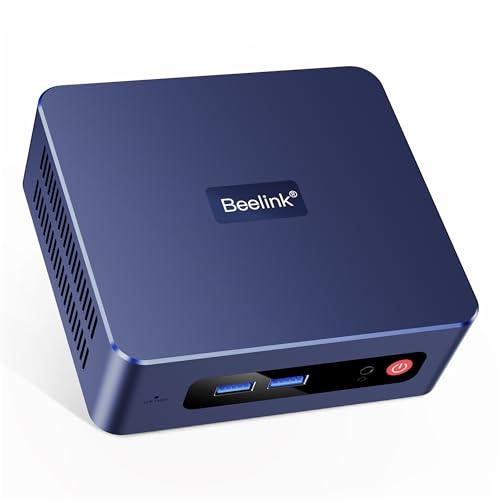
- 16GB RAM and 500GB NVMe SSD for light local AI and multitasking
- Compact dual-4K mini PC with WiFi 5, Bluetooth 5.0, and gigabit LAN
- Good starter option, but the 2-core Ryzen 3 is modest for local LLMs
Best For: Budget buyers who want a compact mini PC for light local LLM testing and everyday use.
Best for AI-Heavy Mini Builds – GMKtec EVO-T2S Core Ultra X7 358H Mini PC
If you want a small form factor computer for local llms, the GMKtec EVO-T2S stands out with a Core Ultra X7 358H, a 50 TOPS NPU, and 64GB of fast LPDDR5X memory. It is designed for on-device inference, multitasking, and compact workstation use, while the Oculink and dual USB4 ports give you expansion options for faster external storage or GPU setups.
Best For: Developers and power users who want a compact AI PC for local LLMs, image generation, and mixed productivity workloads with strong connectivity.
Pros:
- 50 TOPS NPU helps speed up local AI inference and assistant tasks
- 64GB LPDDR5X and PCIe 5.0 AI SSD support keep the system responsive
- Oculink, dual USB4, WiFi 7, and dual NICs offer excellent expansion and networking
- Compact all-in-one mini PC design suits tight desks and small builds
Cons:
- Premium pricing is likely compared with basic mini PCs
- Integrated graphics are capable, but not a replacement for a full desktop GPU
- AI-focused features may be more than casual users need
For buyers prioritizing AI throughput over plain office use, this is a compelling small form factor computer for local llms because it combines high memory capacity, dedicated AI acceleration, and unusually strong I/O in a tiny chassis.
Best Value for LLMs – Beelink SER5 MAX Mini PC
If you want a compact machine that can handle everyday desktop work and serve as a practical small form factor computer for local llms, the Beelink SER5 MAX is a strong value pick. The Ryzen 7 6800H, 32GB of LPDDR5 memory, and 1TB SSD give it enough headroom for lightweight model testing, prompt workflows, and general multitasking without taking up much desk space.
Best For: Buyers who want an affordable mini PC with solid CPU performance, plenty of RAM, and a tiny footprint for local AI experiments and daily use.
Pros:
- Ryzen 7 6800H offers 8 cores and 16 threads for responsive multitasking.
- 32GB LPDDR5 and 1TB SSD are a good base for local apps and small models.
- Triple-display support makes it easy to build a productive compact setup.
- Wi‑Fi 6, Bluetooth 5.2, and auto power on add convenience.
Cons:
- Integrated graphics are fine for display output, but not ideal for heavier AI acceleration.
- Memory is not the same as a larger desktop’s upgrade flexibility.
- Best suited to lighter local LLM use rather than large-model workloads.
Overall, this is a sensible small form factor computer for local llms if you care more about price, size, and strong general-purpose CPU performance than maximum AI throughput. It is a compact starting point for experimentation, but serious model runners will still want a system with dedicated GPU horsepower.
Best for Local AI Workloads – Mini PC Ryzen AI 9 HX 470, 32GB, 1TB
If you want a compact machine that can actually handle a small form factor computer for local llms, this Ryzen AI mini PC is built around the right mix of CPU power, NPU acceleration, and fast memory/storage. With Ryzen AI 9 HX 470, Radeon 890M graphics, and dual PCIe 4.0 SSD support, it is aimed at AI-assisted productivity, light content creation, and everyday desktop use without needing a full tower.
Best For: Developers, power users, and AI hobbyists who want a compact Windows PC for local inference, multi-display work, and fast general-purpose performance.
Pros:
- Ryzen AI 9 HX 470 and XDNA 2 NPU provide strong on-device AI acceleration
- 32GB DDR5, 1TB PCIe 4.0 SSD, and dual expansion slots leave room to grow
- USB4, Oculink, dual 2.5G LAN, and WiFi 7 make it highly flexible for advanced setups
- Supports triple 8K display output for a compact multi-monitor workstation
Cons:
- Integrated graphics are good for light gaming, but not a replacement for a high-end discrete GPU
- Local LLM performance is strong for a mini PC, but still limited versus full-size desktop GPUs
- Premium features likely put it above budget-tier mini PCs
This is a compelling option if you want a small form factor computer for local llms and advanced desktop workflows in a single, portable box. It is especially attractive if you value expansion, networking, and I/O flexibility alongside AI-ready hardware.
Best for Triple-Display AI Workloads – Beelink SER5 MAX Mini PC 6800H
If you want a compact machine that can handle everyday multitasking and serve as a practical small form factor computer for local llms, the Beelink SER5 MAX is a strong midrange option. Its Ryzen 7 6800H, 32GB LPDDR5 memory, and 500GB SSD give it enough headroom for light-to-moderate local inference, coding tools, and multiple apps without taking up much desk space.
Best For: Buyers who want a compact, well-rounded mini PC for productivity, streaming, and entry-level local AI experiments.
Pros:
- Ryzen 7 6800H with 8 cores and 16 threads offers solid CPU performance for multitasking
- 32GB LPDDR5 RAM is helpful for heavier browser tabs, containers, and smaller local models
- Triple-display support makes it easy to build a productive compact workstation
- Wi‑Fi 6, Bluetooth 5.2, and a 500GB SSD make it a capable out-of-box system
Cons:
- Integrated graphics limit it to lighter AI and graphics workloads
- 500GB storage may fill quickly if you keep multiple models and datasets locally
- Not as future-proof for demanding local llms as mini PCs with dedicated GPUs
Overall, this Beelink hits a practical balance of size, memory, and CPU power, which makes it a sensible small form factor computer for local llms if you’re starting with smaller models or want an efficient everyday AI dev box.
Best Fanless Value – MeLE Mini PC Quieter 4C N150
If you want a compact, quiet small form factor computer for local llms, the MeLE Mini PC Quieter 4C is a practical entry-level option. Its Intel N150 chip, 8GB of RAM, and 128GB of storage make it better suited to lightweight inference, testing, and everyday AI workflows than heavy model hosting.
Best For: Students, home users, and office buyers who want a fanless mini PC for light local LLM experiments, productivity, and always-on desktop use.
Pros:
- Fanless design keeps operation silent and low-maintenance.
- Very small footprint fits easily on a desk, shelf, or behind a monitor.
- USB-C, Wi‑Fi, and 4K triple-display support add flexibility for work setups.
Cons:
- 8GB RAM and N150 performance are limited for larger local models.
- 128GB storage fills quickly if you keep multiple models or datasets onboard.
As a small form factor computer for local llms, this MeLE model makes sense when silence, size, and low power matter more than raw speed. It is a sensible starter machine for experimenting with smaller models, but serious on-device AI workloads will outgrow it fast.
Best for Balanced Local AI Performance – Beelink SER5 Max Mini PC 6800U
The Beelink SER5 Max is a practical pick if you want a small form factor computer for local llms without moving up to a larger desktop tower. Its Ryzen 7 6800U, 24GB of LPDDR5 memory, and PCIe 4.0 SSD make it a capable little machine for light-to-moderate local AI workloads, development tools, and everyday multitasking.
Best For: Users who want a compact, desk-friendly mini PC that can handle local LLM testing, office work, and media server duties in a single box.
Pros:
- Ryzen 7 6800U offers 8 cores and 16 threads for solid entry-level local AI performance
- 24GB LPDDR5 memory and a fast PCIe 4.0 SSD help with responsiveness and model loading
- Triple-display support makes it easy to pair AI work with coding or productivity setups
- Compact size and quiet cooling design suit tight desks and always-on use
Cons:
- Not a dedicated GPU system, so larger local models will still be limited
- 24GB of RAM is decent, but power users may want more headroom
- Storage is good out of the box, though serious model libraries may fill it quickly
This is a strong middle-ground option for a small form factor computer for local llms if you care more about practicality, space savings, and multitasking than raw AI throughput. It should suit hobbyist experimentation and lightweight inference better than heavy-duty model hosting.
Best for Local LLM Power – GMKtec EVO-X2 AI Mini PC
If you want a small form factor computer for local llms, the GMKtec EVO-X2 stands out for sheer memory capacity and AI-focused silicon. Its Ryzen AI Max+ 395, 128GB of LPDDR5X, and fast PCIe 4.0 SSD make it a strong fit for running larger models locally, multitasking, and keeping everything in a compact desktop footprint.
Best For: Power users who want a compact AI mini PC for running local LLMs, heavy multitasking, and some gaming.
Pros:
- Massive 128GB unified memory is ideal for larger local model loads and multitasking.
- Ryzen AI Max+ 395 brings strong CPU, NPU, and integrated GPU performance in one chip.
- Quad-display output, Wi-Fi 7, USB4, and 2.5GbE make it versatile for a desktop workstation.
- Fast cooling design helps it stay usable under sustained AI and creative workloads.
Cons:
- Likely overkill if you only need basic chatbot or lightweight inference workloads.
- Premium specs usually mean a premium price.
- Integrated graphics are strong for a mini PC, but still not a substitute for a high-end discrete GPU.
For buyers prioritizing memory headroom and all-in-one performance, this is one of the most compelling small form factor computer for local llms options in a compact chassis. It makes the most sense when you want a mini PC that can handle serious AI work without moving to a full tower.
Best Fanless Pick – MeLE Quieter4C N150 Mini PC
If you want a quiet, compact small form factor computer for local llms in a light-duty setup, the MeLE Quieter4C is a practical place to start. Its N150 chip, fanless 0dB design, and triple-display output make it better suited to always-on productivity, dashboard, or lab-style use than heavy model training.
Best For: Users who need a silent, ultra-small mini PC for basic local AI experimentation, media, office work, or a compact home/server desk setup.
Pros:
- Fanless 0dB design keeps it silent for desks, studios, and 24/7 use
- N150 is a step up from older low-power Intel chips and stays efficient
- Supports 4K triple displays via dual HDMI plus USB-C
- Expandable storage options help if you need more room for apps or models
Cons:
- 8GB RAM is limiting for more serious local LLM workloads
- Included 128GB storage is modest and will fill quickly
- Not a good fit for demanding inference or multitasking-heavy AI use
This is a smart pick if your priority is silence, size, and steady low-power operation rather than maximum AI throughput. For a small form factor computer for local llms, it works best as an entry-level or auxiliary machine where efficiency matters more than raw memory and compute.
Best for Local LLMs – GMKtec EVO-X2 AI Mini PC
If you want a small form factor computer for local llms that can also handle gaming and multitasking, the GMKtec EVO-X2 is built around AMD’s Ryzen AI Max+ 395 with a strong integrated GPU and 64GB of fast LPDDR5X memory. That combination makes it a compelling compact workstation for running models in LM Studio, keeping large context-heavy tasks responsive, and driving multiple displays at once.
Best For: Buyers who want one compact machine for local AI inference, light content creation, and high-end everyday performance without a separate desktop tower.
Pros:
- Ryzen AI Max+ 395 platform is well suited to local LLM workloads and AI-assisted apps
- 64GB LPDDR5X memory and integrated Radeon graphics help with larger models and shared-memory tasks
- USB4, Wi‑Fi 7, and 2.5GbE make it easy to build a fast modern desk setup
- Quad-screen 8K support adds flexibility for coding, dashboards, and creative work
Cons:
- Premium hardware likely puts it well above entry-level mini PC pricing
- Fixed onboard memory means no easy RAM upgrades later
- Cooling and performance may be overkill if you only need basic office use
As a small form factor computer for local llms, the EVO-X2 stands out for packing workstation-class AI muscle into a tiny chassis, but it makes the most sense if you can use its extra GPU, memory, and connectivity headroom.
Best Value Starter – Beelink SER3 Ryzen 3 Mini PC
If you want a small form factor computer for local llms on a tight budget, the Beelink SER3 is a practical entry point. Its Ryzen 3 3200U, 16GB of RAM, and 500GB NVMe SSD make it better suited to light local inference, model experimentation, and general productivity than ultra-cheap mini PCs.
Best For: Budget-minded buyers who want a compact Windows mini PC for light local LLM testing, office work, and everyday multitasking.
Pros:
- 16GB RAM and 500GB NVMe SSD are solid starting specs for small local models and multitasking
- Very compact design with dual 4K HDMI outputs for a tidy desk setup
- WiFi 5, Bluetooth 5.0, and gigabit Ethernet cover flexible home or office use
Cons:
- Ryzen 3 3200U is entry-level for local LLMs, so performance is limited to lighter workloads
- Only 2 CPU cores means slower generation and less headroom for larger models
- Not ideal if you want serious AI performance or sustained heavy compute
As a small form factor computer for local llms, this Beelink makes the most sense as a low-cost starter machine rather than a heavy-duty AI box. It’s a smart pick if you mainly want compact size, decent memory, and enough storage to learn, test, and run small models without taking up much space.
How We Picked the Best Small Form Factor Computer for Local LLMs
For a Small Form Factor Computer for Local LLMs, we prioritized processors with strong multi-core performance, integrated graphics or AI acceleration where applicable, and configurations that support enough unified or system memory for larger context windows. We also favored models with fast NVMe storage, stable thermals, and practical port layouts for external drives, displays, and peripherals.
Quick Comparison
In this category, higher-memory AI mini PCs are the best fit for larger models and heavier multitasking. Midrange Ryzen systems are often the best value for local inference, testing, and developer workflows. Fanless and low-power mini PCs are better suited to light prompt work, document processing, and always-on utility roles rather than demanding model runs.
Key Buying Factors for a Small Form Factor Computer for Local LLMs
Memory First
RAM is one of the biggest limiting factors for local AI. More memory generally means you can load bigger models, use longer contexts, and keep other apps open without choking performance. If you plan to experiment regularly, aim higher rather than minimum-spec configurations.
Processor and AI Capability
Look for modern Ryzen AI, Core Ultra, or high-performance Ryzen mobile chips when possible. These platforms can improve responsiveness in inference, preprocessing, and hybrid workloads. If your goal is pure local LLM use, sustained CPU performance matters more than peak burst speed.
Cooling and Noise
Compact systems can throttle if the cooling solution is weak. A well-designed active cooler is usually preferable for heavier AI workloads, while fanless units make sense for quieter, lighter use cases. Thermal stability is especially important if you expect long inference sessions.
Storage and Expansion
Fast PCIe SSDs help with loading models, swapping datasets, and keeping your workflow snappy. Check whether the system supports a second SSD, higher-capacity modules, or faster networking if you plan to store multiple models locally.
Who Should Buy Which Small Form Factor Computer for Local LLMs?
Power users and developers should lean toward the highest-memory AI mini PCs, especially if they want to run larger local models or multitask heavily. Buyers focused on value should consider midrange Ryzen systems with 32GB memory, which are often the most practical entry point. For home labs, media servers, or lightweight assistant tasks, lower-power fanless options can be an efficient and reliable fit.
Ultimately, the best Small Form Factor Computer for Local LLMs is the one that matches your model size, workload intensity, and noise tolerance. If you can, prioritize memory and sustained performance before chasing headline clock speeds.
