
A screen extender can give your MacBook more room for documents, calls, and research without committing to a desk-bound monitor. The right choice depends on how much display space you need—and what your MacBook can actually drive.
These eight options range from compact 14-inch add-on screens to larger 15.6-inch triple-screen setups. Check connection and compatibility details before choosing: a USB-C port and a “plug-and-play” label do not guarantee that every MacBook will run every screen.
Best 8 Screen Extenders for Macbook Picks for 2026
Best Large Triple-Screen Setup
ZUMWALT P7 15.6-Inch Screen Extender
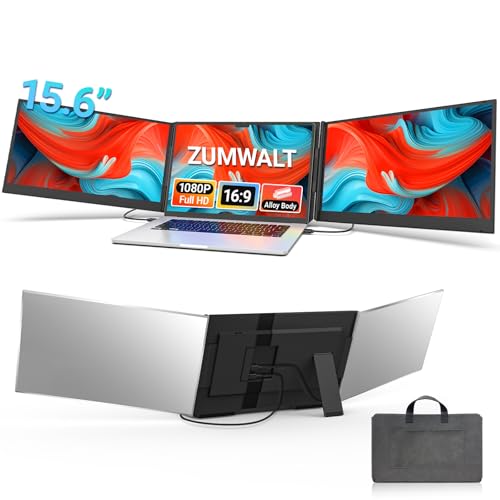
- Two 15.6-inch 1080p displays
- Clip-free aluminum design
- M1/M2/M3 Macs need extra connection hardware
Best For: Large portable triple-screen workspaces
Best Clip-Free Travel Design
Synnov 15.6-Inch Triple Monitor

- Two 15.6-inch FHD IPS screens
- Clip-free aluminum build
- Seller excludes M1/M2/M3 MacBooks
Best For: Compatible MacBooks needing a clip-free dual-display setup
Best Lightweight Single Extender
14.2-Inch Portable Screen Extender

- 1.87-pound listed weight
- 14.2-inch 1080p IPS screen
- Fits stated 14–17.3-inch laptop range
Best For: Travelers wanting one lighter extra screen
Best for Broad Mac Compatibility
KEFEYA 14-Inch Screen Extender

- M1/M2/M3 Macs listed as compatible
- 14-inch matte 1080p IPS screen
- HDMI connection needs separate USB power
Best For: M-series MacBook users seeking one extra display
Best for Color-Focused Multitasking
Vixtan 14-Inch Triple Screen Extender

- Two 14-inch FHD IPS panels
- Stated 100% sRGB coverage
- M1/M2/M3 dual-output setup needs DisplayLink
Best For: Color-conscious MacBook multitasking
Best Lightweight Second Screen
KEFEYA 14-Inch Laptop Screen Extender

- 1.9-pound foldable design
- 14-inch matte FHD display
- HDMI connection needs separate USB power
Best For: Portable MacBook dual-screen work
Best Standalone Triple-Screen Setup
P7 15.6-Inch Laptop Screen Extender
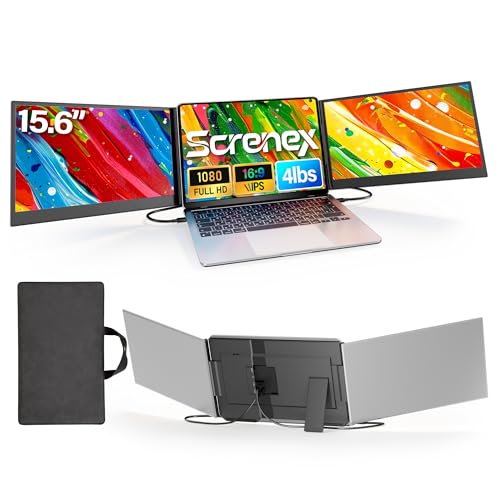
- Two 15.6-inch FHD IPS panels
- Freestanding base avoids lid pressure
- M1–M3 setup needs extra cable and driver
Best For: Larger displays without a laptop-lid clamp
Best Adjustable Travel Display
VueForge 14-Inch Screen Extender

- 1.8-pound portable design
- Adjustable height, tilt, and swivel
- Adds one 14-inch FHD screen
Best For: Lightweight, adjustable MacBook second screen
Best Large Triple-Screen Setup – ZUMWALT P7 15.6-Inch Screen Extender
For shoppers comparing screen extenders for MacBook, the ZUMWALT P7 adds two 15.6-inch 1080p displays without a clip pressing on the laptop screen. Its aluminum body and included carry bag make it a portable option, though the roughly 4-pound weight is worth factoring into your travel kit.
Best For: MacBook users who want two large extra screens and can confirm the required connection for their model.
Pros:
- Two 15.6-inch FHD displays offer substantial space for side-by-side apps.
- Uses two USB-C cables when the laptop supports full-function USB-C connections.
- Clip-free design; cables, power adapter, and carry bag are included.
Cons:
- M1/M2/M3 MacBooks require an additional H5-T cable, HDMI and USB-A connection, external power, and a driver.
- At approximately 4 pounds, it is heavier than a single-screen extender.
The generous display area is the draw here. Check your exact MacBook and port setup before buying, since the simple two-cable setup does not apply to every model.
Best Clip-Free Travel Design – Synnov 15.6-Inch Triple Monitor
The Synnov is a travel-focused choice among screen extenders for MacBook, pairing two 15.6-inch 1080p IPS screens with a clip-free aluminum design. It is listed at 4 pounds and 0.19 inches thin, with a metal stand and carry bag for packing between workspaces.
Best For: Owners of compatible MacBooks who want large extra displays without attaching a clip to the laptop screen.
Pros:
- Two FHD IPS displays support extend, mirror, and portrait modes.
- Clip-free design avoids pressure on the laptop screen and hinge.
- Includes cables, a power adapter, and a leather carry bag.
Cons:
- The seller states that M1/M2/M3 MacBooks are incompatible.
- Requires at least one full-featured USB-C port.
This model makes sense when a slim, freestanding setup matters more than minimal weight. Verify your MacBook’s chip and USB-C capabilities first; its stated compatibility restrictions are significant.
Best Lightweight Single Extender – 14.2-Inch Portable Screen Extender
If you need just one extra display, this 14.2-inch model is one of the lighter screen extenders for MacBook in this group. It weighs a stated 1.87 pounds and adds a 1080p IPS screen to laptops sized 14 to 17.3 inches.
Best For: Frequent travelers with a 14- to 17.3-inch MacBook who prefer one lightweight extra screen.
Pros:
- 1.87-pound, 0.27-inch-thin design is easier to pack than larger two-screen units.
- 300-nit FHD IPS display offers a 0–226° adjustable angle.
- No driver is required; included cables support USB-C or HDMI plus USB-A connections.
Cons:
- Adds only one screen, not the two extra displays of a triple-screen setup.
- Designed for laptops 14 inches and larger, so it is not specified to fit smaller MacBooks.
Its low listed weight is the clearest reason to choose it. Confirm your MacBook’s size and video-output ports, particularly if you plan to use a USB-C-only connection.
Best for Broad Mac Compatibility – KEFEYA 14-Inch Screen Extender
The KEFEYA is a practical option among screen extenders for MacBook if you want one 14-inch 1080p IPS display and flexible connection choices. Its supplied compatibility list explicitly includes M1, M2, and M3 Macs, and the package includes USB-C, HDMI, and USB-A connection cables.
Best For: MacBook owners, including M-series users, seeking a single additional screen with USB-C or HDMI connection options.
Pros:
- 14-inch FHD IPS panel has a stated 300-nit brightness and matte finish.
- Supports mirror, extend, landscape, and portrait modes with up to 180° rotation.
- Supplied compatibility list includes M1/M2/M3 Macs; required cables are included.
Cons:
- HDMI use requires a separate USB-A-to-USB-C connection to power the screen.
- Provides one additional display rather than a triple-screen arrangement.
This is the clearest stated M-series match of the four, but compatible cabling still matters. Check which video and power ports your particular MacBook can provide before ordering.
Best for Color-Focused Multitasking – Vixtan 14-Inch Triple Screen Extender
Among screen extenders for MacBook, the Vixtan is a travel-ready option for users who want two extra 14-inch FHD IPS panels. Its stated 100% sRGB coverage and 300-nit brightness make it particularly appealing for work that benefits from consistent color.
Best For: MacBook users who prioritize color coverage and want a triple-screen setup where their model supports it.
Pros:
- Two 14-inch 1080p IPS screens with stated 100% sRGB coverage.
- Weighs 3.0 pounds and fits 13- to 17.3-inch laptops.
- Includes USB-C, USB-A, and HDMI cables; no driver is required for supported connections.
Cons:
- The listing says M1/M2/M3 MacBooks support only one added screen without a DisplayLink adapter.
- Flickering or low brightness may require a separate 5V/3A-or-higher power adapter.
Check your MacBook’s external-display support before buying: the panels offer useful workspace, but the included cables alone may not deliver a triple-screen setup on an M-series model.
Best Lightweight Second Screen – KEFEYA 14-Inch Laptop Screen Extender
If you need one extra display rather than a full triple-screen rig, this KEFEYA is one of the lighter screen extenders for MacBook in this roundup. Its 14-inch matte FHD screen weighs 1.9 pounds and folds for travel.
Best For: Commuters and remote workers who want a portable second screen for documents, calls, or entertainment.
Pros:
- 14-inch 1080p screen with 300-nit stated brightness and built-in speakers.
- Folds for transport and rotates up to 180 degrees for screen sharing.
- Includes USB-C, USB-A, and HDMI cables for driver-free connection on supported devices.
Cons:
- HDMI use also requires a USB-A-to-USB-C cable to power the screen.
- Stated 75% sRGB coverage is less suited to color-critical work than wider-gamut options.
This is a practical pick when portability matters more than adding two displays. Before ordering, confirm that your MacBook can provide the required video connection and, if needed, power.
Best Standalone Triple-Screen Setup – P7 15.6-Inch Laptop Screen Extender
This 15.6-inch model takes a different approach to screen extenders for MacBook: its two FHD IPS panels stand behind the laptop instead of clamping to the lid. That design avoids adding weight or pressure to the MacBook’s display hinge.
Best For: Desk-based or traveling users who want two larger extra screens without attaching them to a laptop lid.
Pros:
- Two 15.6-inch 1080p IPS panels provide a spacious triple-screen layout.
- Freestanding, nonslip base avoids clamping onto the laptop screen.
- Includes connection cables, a power adapter, and a carrying bag.
Cons:
- At 3.9 pounds, it is a heavier item to pack.
- The listing says M1–M3 MacBooks require an extra H5-T cable, an HDMI and USB-A connection, and driver installation; the H5-T cable is not listed in the included kit.
Its freestanding design is the main reason to choose it. For an M1–M3 MacBook, plan for the specified extra hardware and setup rather than expecting the advertised two-cable connection.
Best Adjustable Travel Display – VueForge 14-Inch Screen Extender
For shoppers comparing compact screen extenders for MacBook, the VueForge offers a single 14-inch FHD IPS display at a stated 1.8 pounds. Its built-in aluminum kickstand provides more positioning options than a fixed-angle second screen.
Best For: Travelers who want a lightweight second display with adjustable height, tilt, and swivel.
Pros:
- 1.8-pound design is easy to pack for remote work.
- Kickstand adjusts for height, tilt, and swivel.
- Supports driver-free USB-C or HDMI connection on compatible devices.
Cons:
- Adds one screen, not the two extra displays of a triple-screen extender.
- The supplied specifications do not clarify which MacBook ports or adapters are needed for each connection method.
Choose this model for a flexible, portable second-screen arrangement. Verify your MacBook’s video-output connection before purchase, particularly if you plan to use HDMI.
How We Picked the Best Screen Extenders for Macbook
We organized the eight selected models around the specifications that matter most in everyday use: 14- versus 15.6-inch panels, single- versus dual-add-on-screen designs, stated weight, laptop fit range, and USB-C or HDMI connectivity. The listed screens offer 1080p resolution, but their product names alone cannot establish brightness, color accuracy, hinge durability, or compatibility with a particular MacBook. Treat those details as checks to make before purchase, not assumptions.
Quick Comparison
For a lighter travel setup, start with the 14-inch dual-screen options. The listed 14.2-inch model stands out on paper for its 1.87-pound claimed weight, while the 14-inch KEFEYA options list both USB-C and HDMI connections. For more viewing area, consider the 15.6-inch triple-screen models, including the Synnov and the two other 15.6-inch listings. The Vixtan offers a 14-inch triple-screen format with a stated weight of 3.0 pounds. Similar names do not necessarily mean identical mounting hardware, included cables, or Mac support; compare the exact listing you intend to buy.
Key Buying Factors for Screen Extenders for Macbook
External-Display Support Comes First
Check your MacBook model, chip, and macOS version against Apple’s supported external-display limits. A triple-screen extender generally adds two displays, which some MacBooks cannot drive as two independent extended desktops without a compatible workaround. If a seller specifies DisplayLink support, confirm the required adapter, driver, and operating-system compatibility; do not assume the extender includes them.
Ports, Power, and Cables
Confirm whether the extender needs a USB-C port that carries video, an HDMI video connection plus separate USB power, or multiple connections for two panels. Many MacBooks lack built-in HDMI, and a USB-C charging cable may not carry video. Check what cables and adapters are included, particularly if you use a hub or dock.
Fit and Portability
Match the extender’s stated laptop-size range to your MacBook’s actual dimensions, not just its nominal screen size. Check the clamp or mounting method, clearance around ports, and whether the added weight needs a kickstand. A 15.6-inch setup provides more space but takes up more room in a bag and on a café table.
Who Should Buy Which Screen Extenders for Macbook?
Choose a 14- or 14.2-inch single-add-on-screen model if you travel frequently or mainly need one extra window for notes, chat, or reference material. Consider a 15.6-inch option if readable side-by-side work matters more than packability. Pick a triple-screen model only after confirming that your MacBook can run both added displays in the arrangement you want. If you mostly work at one desk, compare these extenders with a conventional external monitor, which may be simpler to connect and position.
