
A RAID enclosure can keep files accessible when a drive fails—but only if you choose a suitable configuration and maintain a separate backup. Bay count, drive compatibility, and the enclosure’s USB connection matter just as much as its list of RAID modes.
These 10 options span compact dual-bay SSD cases and higher-capacity desktop HDD enclosures. Use the comparisons below to narrow your choice by the data you store, the drives you own, and how you plan to protect them.
Best 10 Raid Enclosures for Data Security Picks for 2026
Best for QNAP Expansion
QNAP TR-004 4-Bay USB-C RAID Enclosure
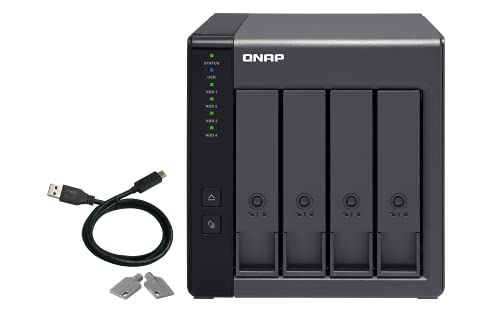
- Four lockable 3.5-inch bays
- Hardware RAID 0, 1, and 5
- Separate QNAP NAS backup storage
Best For: QNAP backup and four-bay desktop storage
Best for Portable NVMe Cloning
NEWQ Dual-Bay M.2 RAID Enclosure

- RAID 1 mirroring and clone mode
- Tool-free NVMe SSD swaps
- Up to 20Gbps USB transfer rate
Best For: Portable NVMe mirroring and offline cloning
Best Two-Bay SATA Pick
TERRAMASTER D2-320 USB RAID Enclosure

- Hardware RAID 1 mirroring
- Tool-free push-lock drive trays
- 10Gbps USB 3.2 Gen 2 connection
Best For: Simple two-drive SATA mirroring
Best for High-Capacity HDDs
ORICO 9848RU3 4-Bay RAID Enclosure

- Up to four 22TB SATA HDDs
- RAID 1, 5, and 10 options
- Trayless bays with safety lock
Best For: Large four-drive HDD storage
Compact Mirror Option

- RAID 1 plus three other modes
- Up to 20TB per drive
- Built-in fan; stated 40–50 dB noise
Best For: Compact two-drive RAID 1 setups
High-Capacity Performance Pick
ORICO 5-Bay 20Gbps RAID Enclosure
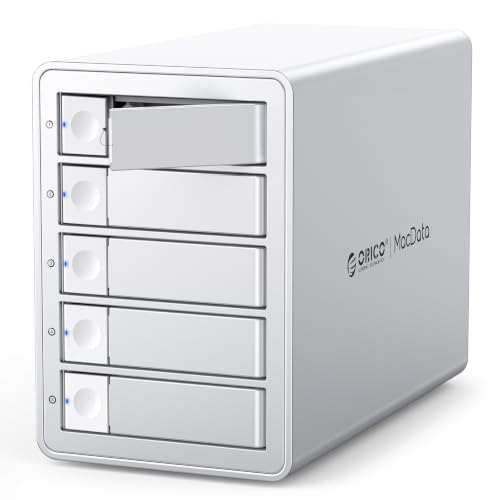
- Five bays; up to 130TB installed capacity
- RAID 1, 5, and 10 options
- 20Gbps requires a suitable host connection
Best For: Large, high-speed five-drive workflows
Versatile Archive Station
Yottamaster FS5RU3 5-Bay RAID Enclosure
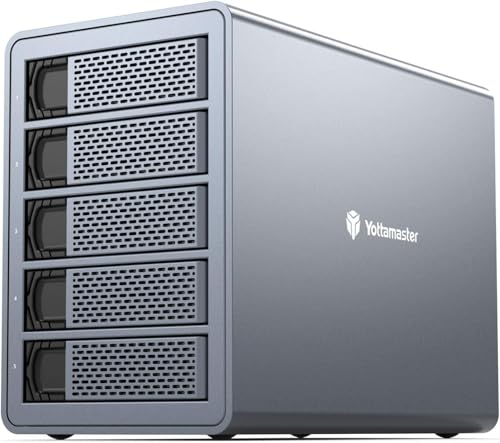
- Five bays; up to 120TB installed capacity
- RAID 1, 5, 10, and CLONE options
- USB 3.0 connection rated up to 5Gbps
Best For: Large direct-attached media and document archives
Versatile Desktop Pick
CENMATE 2-Bay Aluminum RAID Enclosure

- RAID 0, RAID 1, Normal, and JBOD modes
- Supports 2.5-inch and 3.5-inch SATA drives
- Fan noise rated around 40–50 dB
Best For: Desktop users mixing SATA drive sizes
Compact SSD Pick
MAIWO 2.5-Inch Dual-Bay RAID Enclosure

- RAID 1 mirroring plus three other modes
- Fits 7mm and 9.5mm 2.5-inch SATA drives
- Up to 8TB per bay; no 3.5-inch support
Best For: Compact setups using two 2.5-inch SATA drives
High-Capacity Workstation Pick
ORICO 5-Bay Hardware RAID Enclosure

- Five bays and multiple hardware RAID modes
- Details specify up to 110TB total
- Built-in 150W power supply and 80mm fan
Best For: Large multi-drive backups and media libraries
Best for QNAP Expansion – QNAP TR-004 4-Bay USB-C RAID Enclosure
QNAP TR-004 4 Bay USB Type-C Direct Attached Storage (DAS) with hardware RAID (Diskless)
Check Price On AmazonAmong raid enclosures for data security, the diskless QNAP TR-004 is a practical choice if you want four drive bays for direct-attached storage or compatible QNAP NAS backup. Its hardware RAID options include RAID 1 and RAID 5 for drive-failure protection.
Best For: QNAP NAS owners who need separate backup storage, or computer users who want a four-bay USB enclosure.
Pros:
- Supports RAID 0, 1, 5, JBOD, and individual-disk modes.
- Four lockable 3.5-inch drive bays help prevent casual drive removal.
- Connects over USB Type-C and supports Windows, macOS, and Linux.
Cons:
- Ships without drives.
- On a QNAP NAS, it must remain a separate storage pool or volume; it cannot be combined with the NAS pool.
- Not compatible with every QNAP NAS model.
Choose this for flexible four-drive RAID and QNAP backup use, but check NAS compatibility before buying. RAID protects against certain drive failures; it does not replace a separate backup.
Best for Portable NVMe Cloning – NEWQ Dual-Bay M.2 RAID Enclosure
If you are comparing raid enclosures for data security but work with M.2 2280 NVMe SSDs rather than hard drives, this NEWQ dual-bay model offers RAID 1 mirroring and a separate offline clone mode. Its compact aluminum housing suits a mobile setup.
Best For: Users who want to mirror two NVMe SSDs or duplicate a drive without a computer.
Pros:
- Offers RAID 0, RAID 1, JBOD, and clone modes.
- Tool-free access makes SSD changes easier during cloning.
- Rated for up to 20Gbps transfers, with an auxiliary USB-C power input for demanding dual-drive setups.
Cons:
- Holds only two M.2 2280 NVMe SSDs, not 3.5-inch SATA hard drives.
- RAID 1 mirrors drive contents but does not protect against accidental deletion or corruption.
This is the portable pick when quick SSD swaps and direct duplication matter. Keep another backup of important files even when using RAID 1.
Best Two-Bay SATA Pick – TERRAMASTER D2-320 USB RAID Enclosure
The diskless TERRAMASTER D2-320 is a straightforward option among raid enclosures for data security when two SATA drives are enough. Hardware RAID 1 mirrors data across the drives, and its USB 3.2 Gen 2 connection supports up to 10Gbps.
Best For: Desktop users who want a two-drive mirrored volume with easy drive installation.
Pros:
- Supports RAID 0, RAID 1, JBOD, and single-drive modes.
- Accepts 3.5-inch or 2.5-inch SATA drives, including 2.5-inch SSDs.
- Tool-free, push-lock trays and a temperature-controlled fan simplify day-to-day use.
Cons:
- Drives are not included.
- This is direct-attached USB storage, not a network-attached storage device.
Its two-bay design keeps mirrored storage simple. If one drive fails in RAID 1, the enclosure supports replacing it and rebuilding the mirror; maintain a separate backup for risks beyond drive failure.
Best for High-Capacity HDDs – ORICO 9848RU3 4-Bay RAID Enclosure
For buyers looking at raid enclosures for data security alongside large storage needs, the ORICO 9848RU3 houses four 3.5-inch SATA hard drives and supports up to 88TB total with four 22TB drives. Its RAID choices include RAID 1, 5, and 10.
Best For: Users consolidating large files onto four hard drives while choosing a RAID mode suited to their redundancy needs.
Pros:
- Offers eight modes: RAID 0, 1, 3, 5, 10, JBOD, CLONE, and CLEAR.
- Trayless access and an independent safety lock help secure installed drives.
- Aluminum housing, an 80mm fan, and a built-in 150W power supply support a four-drive setup.
Cons:
- Designed for 3.5-inch SATA hard drives rather than smaller SSDs.
- USB 3.0 is rated at 5Gbps; the supplied notes list transfer speeds up to 235 MB/s.
This enclosure prioritizes capacity and RAID flexibility over the fastest USB interface in this group. Select a redundant mode if drive-failure protection is the goal, and keep an independent backup.
Compact Mirror Option – CENMATE 2-Bay RAID Enclosure
For shoppers comparing raid enclosures for data security, this CENMATE unit offers a straightforward two-drive setup with RAID 1 mirroring. It accepts 2.5-inch and 3.5-inch SATA HDDs or SSDs, with support for up to 20TB per drive.
Best For: A desktop user who wants a compact, two-drive RAID 1 setup and can accommodate fan noise.
Pros:
- Offers RAID 0, RAID 1, Normal, and JBOD modes.
- Aluminum-alloy housing and a built-in fan help cool the drives.
- Includes a USB-A/USB-C 3.0 cable and supports Windows, macOS, and Linux.
Cons:
- The stated fan noise is around 40–50 dB, which may bother noise-sensitive users.
- Changing or setting up RAID can cause data loss; follow the reset instructions and back up existing drives first.
Choose RAID 1 if drive redundancy is the priority. Its two-bay limit makes this a simpler choice than a five-drive enclosure, though mirroring is not a substitute for a separate backup.
High-Capacity Performance Pick – ORICO 5-Bay 20Gbps RAID Enclosure
Among raid enclosures for data security, the ORICO stands out for combining five bays with RAID 1, RAID 5, and RAID 10 options. It supports up to 26TB per drive and has a USB 3.2 Gen 2×2 connection rated at up to 20Gbps.
Best For: Video or data-heavy workflows that need five-drive capacity, a choice of redundant RAID modes, and a compatible high-speed USB connection.
Pros:
- Offers RAID 0, 1, 5, 10, JBOD, and Normal modes.
- Supports hot-swapping and up to 130TB of installed drive capacity.
- Built-in 150W power supply, cooling fan, and ventilation support extended operation.
Cons:
- The stated full 20Gbps connection requires a suitable host; the notes put Thunderbolt-connected performance at around 10Gbps.
- Configuring or changing RAID mode erases drive contents, so back up existing drives first.
This is the most flexible capacity-and-speed choice of the three if your host connection can use it. Pick a redundant RAID mode for drive-failure tolerance, and keep an independent backup of important files.
Versatile Archive Station – Yottamaster FS5RU3 5-Bay RAID Enclosure
If you are weighing raid enclosures for data security alongside large archive needs, the Yottamaster FS5RU3 provides five bays and RAID 1, 5, and 10 options. It supports up to five 24TB drives and connects over USB 3.0 at a stated maximum of 5Gbps.
Best For: Users organizing large media or document archives who want multiple hardware RAID modes and do not require a faster-than-USB-3.0 connection.
Pros:
- Supports RAID 0, 1, 5, 10, JBOD, CLONE, and Normal modes.
- Removable aluminum trays accept 2.5-inch or 3.5-inch SATA HDDs and SSDs.
- Aluminum housing, ventilation, and an 80mm fan help manage heat.
Cons:
- USB 3.0 is rated at up to 5Gbps, below the ORICO model’s stated 20Gbps interface speed.
- Its five-drive capacity requires a larger drive investment if you plan to fill every bay.
The mix of RAID modes makes this a flexible direct-attached archive station. Use a redundant mode where appropriate, but maintain another copy of irreplaceable data outside the enclosure.
Versatile Desktop Pick – CENMATE 2-Bay Aluminum RAID Enclosure
Among raid enclosures for data security, this CENMATE model offers a practical two-drive setup with RAID 1 mirroring, plus RAID 0, Normal, and JBOD modes. It accepts 2.5-inch and 3.5-inch SATA HDDs or SSDs, with support for up to 20TB per drive.
Best For: Desktop users who want mirrored storage and the flexibility to use either laptop-size or full-size SATA drives.
Pros:
- Four storage modes, including RAID 1 mirroring.
- Aluminum enclosure with a built-in cooling fan.
- Tool-free drive installation and included USB-A/C 3.0 cable.
Cons:
- The fan is rated around 40–50 dB, which may bother noise-sensitive users.
- Changing RAID configuration can result in data loss.
Its drive compatibility makes it a flexible desk-side choice. Back up your files before configuring an array, and consider the fan noise if it will sit close to your workspace.
Compact SSD Pick – MAIWO 2.5-Inch Dual-Bay RAID Enclosure
If you are comparing raid enclosures for data security but only use 2.5-inch drives, the compact MAIWO offers RAID 1 mirroring alongside RAID 0, JBOD, and Normal modes. Its two bays accept 7mm or 9.5mm SATA SSDs and HDDs, up to 8TB per bay.
Best For: Users who want a small, tool-free enclosure for a pair of 2.5-inch SATA drives.
Pros:
- RAID 1 option for mirroring two drives.
- Tool-free, sliding-closure design with hot swapping.
- USB 3.0 supports up to 5Gbps with UASP on compatible Windows 8-or-later devices.
Cons:
- Does not accommodate 3.5-inch drives.
- Capacity is limited to 8TB per bay.
This is the space-saving option for existing laptop-size drives. Check your drive thickness and capacity before buying, and back up data before setting a RAID mode.
High-Capacity Workstation Pick – ORICO 5-Bay Hardware RAID Enclosure
For larger collections, this ORICO is one of the more flexible raid enclosures for data security in this lineup. Its five bays support 2.5-inch and 3.5-inch SATA drives, while the hardware controller offers redundancy-oriented RAID 1, 3, 5, and 10 alongside other modes.
Best For: Workstations managing large backups or media libraries across multiple drives.
Pros:
- Five bays with support for up to 22TB per drive, or 110TB total.
- Hardware RAID modes include RAID 0, 1, 3, 5, and 10.
- Built-in 150W power supply and 80mm cooling fan.
Cons:
- USB 3.0 transfer performance is specified at up to 230MB/s.
- The supplied capacity figures conflict: the title says 130TB, while the details specify 110TB.
The extra bays and RAID choices suit a growing desk-side storage setup. Confirm the supported capacity for your planned drives, and keep a separate backup even if you choose a redundant RAID mode.
How We Picked the Best Raid Enclosures for Data Security
We organized the selected models around practical buying decisions: two versus four or five bays, NVMe versus SATA drives, advertised RAID modes, host connection, and features such as cooling or offline cloning. These are product-selection criteria, not hands-on test results. Before buying, verify the current specifications, supported drive capacities, and RAID behavior on the exact listing and in the manufacturer’s documentation.
Quick Comparison
For a compact SSD setup: The dual-bay M.2 NVMe model targets users with 2280 NVMe drives and a compatible 20Gbps USB host. The MAIWO dual-bay model is aimed at 2.5-inch SATA drives instead; the two drive types are not interchangeable.
For a two-drive desktop array: The TERRAMASTER D2-320 and CENMATE dual-bay options suit shoppers who want fewer drives and a smaller footprint. Compare their exact RAID options, cooling, and connection specifications before choosing.
For more bays: The QNAP TR-004 and ORICO four-bay model offer room for four drives. The ORICO and Yottamaster five-bay options provide additional drive positions; check each model’s supported layouts and capacity limits rather than assuming all five-bay enclosures work alike.
Key Buying Factors for Raid Enclosures for Data Security
Choose Protection Before Speed
RAID 1 mirrors two drives, so one drive can fail without immediately taking the array offline. RAID 5 or other parity-based layouts may offer a different balance of usable space and fault tolerance, but only if the enclosure supports the mode you need. RAID 0 stripes data for performance or capacity and offers no drive-failure protection. JBOD and individual-disk modes should not be mistaken for redundancy.
Match Drives, Bays, and USB Hardware
Confirm the enclosure supports your drives’ physical size and interface: M.2 NVMe, 2.5-inch SATA, and 3.5-inch SATA are distinct requirements. Check the maximum capacity supported per bay, power requirements, and whether drives are included; several selections are diskless. A 20Gbps-rated enclosure needs a compatible host port and cable to approach its advertised connection speed, while mechanical hard drives may not benefit as much from a faster USB link.
Plan for Failure and Recovery
Look for clear drive-status indicators, documented rebuild procedures, adequate ventilation, and a way to replace a failed drive. Ask whether the array can be accessed if the enclosure itself fails; hardware-managed RAID may require compatible replacement hardware. Offline clone mode is useful for copying a drive, but it can overwrite the destination and is not a backup schedule. Keep a separate, tested backup—ideally including a copy away from your desk—for deletion, corruption, theft, and other failures RAID cannot prevent.
Who Should Buy Which Raid Enclosures for Data Security?
Choose a dual-bay RAID 1 setup if you want straightforward drive-failure tolerance and can accept roughly half the raw capacity as usable space. Choose four or five bays when you need expansion and are prepared to confirm the enclosure’s supported RAID layouts and recovery process. Pick the NVMe option for compatible M.2 drives; choose a SATA model for existing HDDs or 2.5-inch SSDs. If the files are irreplaceable, prioritize a reliable backup plan over extra bays or headline transfer speeds.
