
Building a home lab doesn’t have to mean a loud rack of gear. A well-chosen quiet mini PC can handle virtualization, media serving, light networking, and always-on services with far less noise and power draw.
Below, we’ve narrowed down the best 10 options for different workloads, budgets, and upgrade paths so you can pick the right quiet mini pc for home lab use without overspending.
Best 10 Quiet Mini PC for Home Lab Picks for 2026
Best Fanless 4K Multitasker
MeLE Fanless Mini PC Quieter 4C N100

- Silent fanless cooling for 24/7 operation
- Efficient N100 chip with 16GB RAM and 512GB storage
- Triple 4K display support with full-function USB-C
Best For: Silent, low-power home lab and multitasking setups.
Best Quiet 24/7 Home Lab Pick

- Ryzen 9 7940HS with Radeon 780M for strong multitasking
- Quiet IceBlast 2.0 cooling rated under 36dB
- Upgradeable DDR5 RAM and NVMe storage for future growth
Best For: Home lab users who want a quiet, upgradeable mini PC for always-on tasks and admin work.
Best for Home Lab Networking
MeLE Quieter DL N100 Fanless Mini PC

- Dual 2.5GbE ports for routing and network isolation
- Fanless, silent design for always-on use
- Unlocked BIOS with Wake on LAN and PXE support
Best For: Home lab builders who need a silent mini PC for routing, server, and network-isolation tasks.
Best for Expandable Home Labs
GEEKOM A5 2026 Edition Mini PC
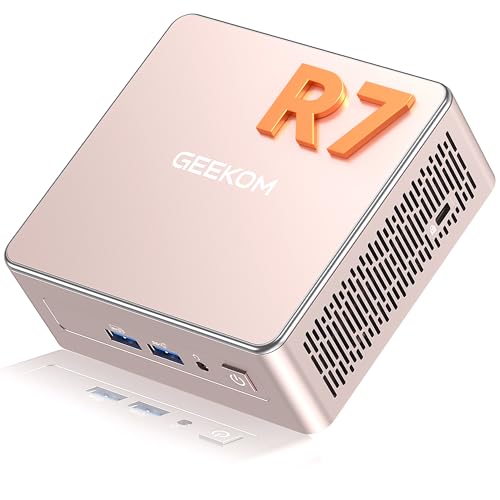
- Upgradeable RAM and storage for growing lab needs
- Compact, low-noise design for always-on setups
- 3-year warranty for long-term reliability
Best For: Home lab users who want a quiet, upgradeable mini PC with strong value.
Best Fanless Firewall Box
Fanless Mini PC with Dual 1GbE

- Silent fanless build for always-on use
- Dual 1GbE ports suit firewall/router setups
- Low-power Celeron hardware for basic home lab tasks
Best For: Home lab users who need a quiet, compact firewall or soft-router appliance.
Best for 24/7 Plex Servers

- Intel i5-12450H with Quick Sync for Plex transcoding
- Quiet cooling and low-power design for always-on use
- Dual USB4, dual HDMI, and 2.5GbE for flexible home lab setups
Best For: Home lab users who need a low-noise mini PC for Plex and other 24/7 services.
Best Fanless Pick
- Silent fanless cooling for 24/7 use
- N150, 16GB RAM, and 512GB SSD for light tasks
- Triple 4K display support with USB-C
Best For: Silent, low-power home lab and compact desktop setups.
Best Budget Quiet Pick

- Low-power Celeron N5095 keeps noise and energy use modest
- 16GB RAM plus SSD storage works for light home lab tasks
- Dual 4K HDMI and extra drive support improve flexibility
Best For: Home lab users who want an affordable, quiet machine for light workloads and basic always-on services.
Best for Dual-Network Home Labs

- Dual RJ45 ports suit firewall and networking projects
- 16GB RAM + 512GB SSD handle light lab workloads
- Triple 4K display support adds desktop flexibility
Best For: Home lab users who want dual-Ethernet connectivity in a compact, quiet mini PC.
Best for Small Labs

- Ultra-quiet operation suits a home lab or shared room.
- Tiny HP chassis saves desk space and stays tidy.
- Windows 11 Pro and accessories make setup easy.
Best For: Home lab users who want a quiet, compact mini PC for light-duty tasks and everyday administration.
Best Fanless 4K Multitasker – MeLE Fanless Mini PC Quieter 4C N100
If you want a quiet mini pc for home lab use that can stay on all day without fan noise, this MeLE fanless model is a practical pick. The N100 chip, 16GB of LPDDR5 memory, and 512GB of storage give it enough headroom for light virtualization, NAS-style tasks, automation, and everyday desktop work.
Best For: Users who want a silent, low-power mini PC for a small home lab, office desk, or always-on media and automation setup.
Pros:
- Fanless design keeps operation silent and dust-resistant for 24/7 use
- Low-power Intel N100 platform is efficient for always-on home lab tasks
- 16GB LPDDR5 RAM and 512GB storage provide a solid ready-to-use base
- Triple 4K display support adds flexibility for monitoring and multitasking
Cons:
- Passive cooling means the case runs warmer than fan-cooled mini PCs
- Wi‑Fi 5 is fine, but not as modern as Wi‑Fi 6 or Wi‑Fi 6E
- N100 performance is good for light workloads, not heavy virtualization
For buyers comparing a quiet mini pc for home lab setups, this one stands out for silence, efficiency, and a well-rounded feature set rather than raw speed. It makes the most sense when low noise and always-on reliability matter more than maximum CPU power.
Best Quiet 24/7 Home Lab Pick – GEEKOM A7 MAX Mini PC
If you want a quiet mini pc for home lab duties, the GEEKOM A7 MAX is built to balance strong CPU performance, modern connectivity, and low-noise cooling. Its Ryzen 9 7940HS, DDR5 memory, and dual USB4 ports make it a solid fit for virtualization, file services, light content work, and multi-monitor admin setups without taking over your desk.
Best For: Home lab users who want a compact Windows mini PC that can stay quiet, handle 24/7 workloads, and leave room for future RAM and storage upgrades.
Pros:
- Ryzen 9 7940HS and Radeon 780M deliver strong all-around performance for labs and multitasking.
- IceBlast 2.0 cooling is designed for quieter long-hour operation, rated under 36dB.
- Upgradeable DDR5 memory and NVMe storage help extend the machine as your needs grow.
- Dual USB4 plus dual HDMI support up to four displays for an efficient admin workstation.
Cons:
- 16GB RAM is workable, but heavy virtualization users will likely want to upgrade quickly.
- Integrated graphics are good for light gaming, not a substitute for a discrete GPU.
- Premium specs and cooling features make it pricier than basic mini PCs.
For buyers prioritizing a quiet mini pc for home lab use, this GEEKOM model stands out because it combines a fast Ryzen chip, upgrade headroom, and a cooling design aimed at steady low-noise operation.
Best for Home Lab Networking – MeLE Quieter DL N100 Fanless Mini PC
If you want a quiet mini pc for home lab use, the MeLE Quieter DL stands out for its dual 2.5GbE ports, fanless cooling, and low-power Intel N100 platform. It is a practical fit for routing, light server tasks, and always-on projects where noise and dust are concerns.
Best For: Home lab builders who want a silent, low-maintenance mini PC for routing, server, and network-isolation tasks.
Pros:
- Dual 2.5GbE ports are ideal for soft routing, VLANs, and network separation
- Fanless design keeps operation silent and reduces dust buildup
- N100 CPU offers solid efficiency for always-on home lab workloads
- Unlocked BIOS adds useful options like Wake on LAN and PXE boot
Cons:
- 4GB RAM and 128GB eMMC are modest for heavier virtualization
- Storage expansion requires adding your own NVMe SSD or microSD card
- Better suited to lightweight lab roles than demanding multi-VM setups
For buyers prioritizing silence, low power draw, and dual-network flexibility, this is a smart quiet mini pc for home lab deployments. It is especially appealing if your main goal is a dependable always-on box rather than maximum compute performance.
Best for Expandable Home Labs – GEEKOM A5 2026 Edition Mini PC
If you want a quiet mini pc for home lab use that still leaves room to grow, the GEEKOM A5 is a practical pick. It pairs a Ryzen 5 7430U with 16GB of RAM, a 512GB NVMe SSD, and a compact chassis that’s suited to always-on desk or rack-adjacent setups.
Best For: Home lab users who want a low-noise mini PC with strong upgrade options, multiple display outputs, and long warranty coverage.
Pros:
- Upgrade-friendly design with dual-slot RAM, extra storage options, and a 2.5" bay
- Quiet, compact build that fits well in a home office or small lab environment
- Good connectivity for multitasking with 6 USB ports, Wi-Fi 6, and Bluetooth 5.2
- 3-year limited warranty adds peace of mind for long-term use
Cons:
- Ryzen 5 integrated graphics are fine for productivity, but not for heavy GPU work
- Base 512GB SSD may feel small once VM images and backups stack up
- DDR4 platform is capable, but not as forward-looking as newer memory standards
For anyone comparing a quiet mini pc for home lab deployments, the A5 stands out more for flexibility and reliability than raw speed. It’s a smart fit if you value expandability, stable networking, and a compact system you can leave running day and night.
Best Fanless Firewall Box – Fanless Mini PC with Dual 1GbE
If you want a quiet mini pc for home lab use, this fanless micro appliance is built around low power draw, dual Intel-compatible gigabit ports, and broad software support for firewall and routing tasks. It is not a performance monster, but it can be a practical entry point for OPNsense, OpenWrt, Linux, or a lightweight Windows test box.
Best For: Home lab users who need a silent, compact firewall or soft-router machine with dual Ethernet and basic expansion.
Pros:
- Fanless design keeps operation silent for closets, desks, or networking cabinets
- Two 1GbE LAN ports make it a fit for firewall and router deployments
- Low 7.5W Celeron N2840 is efficient for always-on lab use
- Includes USB 3.0, HDMI, VGA, and mSATA storage support
Cons:
- Older Celeron hardware is limited for heavier virtualization or container loads
- 4GB RAM and 64GB storage are modest for a growing home lab
- Not ideal if you need multi-gig networking or modern CPU headroom
For buyers who mainly want a quiet mini pc for home lab networking, this unit makes sense as a simple always-on appliance rather than a general-purpose server. It’s best when silence, low power use, and dual LAN matter more than raw speed.
Best for 24/7 Plex Servers – GEEKOM IT12 i5 Mini PC
If you want a quiet mini pc for home lab use that can also handle Plex, the GEEKOM IT12 is built around a capable Intel i5-12450H, dual USB4, and 2.5GbE networking. It’s a practical fit for always-on services, media streaming, and light virtualization, with a small footprint that won’t crowd a rack, desk, or media cabinet.
Best For: Home lab users who want an energy-efficient, low-noise mini PC for Plex, remote management, and other 24/7 services.
Pros:
- Intel i5-12450H and Quick Sync help with smooth Plex transcoding.
- Quiet cooling and low-power design suit always-on home lab setups.
- Dual USB4, dual HDMI, and 2.5GbE make it flexible for networking and displays.
- Expandable RAM and storage add room for future workloads.
Cons:
- Not the cheapest option if you only need a basic server box.
- 16GB RAM and 512GB SSD may feel modest for heavier VM stacks.
- Best results for home lab use may require upgrading storage later.
Overall, the IT12 makes sense if you want a quiet mini pc for home lab tasks and media streaming without jumping to a bigger desktop. It leans more toward dependable 24/7 service than raw workstation power, which is exactly what many Plex and small-server buyers need.
Best Fanless Pick – MeLE Mini PC Quieter 4C N150
If you need a quiet mini pc for home lab use, the MeLE Mini PC Quieter 4C is built for silent 24/7 operation with a fanless design, low 8W N150 chip, and Windows 11 Pro preinstalled. It is a practical fit for light server tasks, dashboards, remote access, and other always-on roles where low noise matters more than raw horsepower.
Best For: Users who want a silent, low-power mini PC for a small home lab, office desk, or compact media/control setup.
Pros:
- Fanless cooling keeps noise out of your workspace and supports always-on use
- N150 processor, 16GB RAM, and 512GB SSD are solid for light home lab and productivity tasks
- Triple 4K display support and full-function USB-C make it flexible for multi-monitor setups
- Wi-Fi 5, Bluetooth 5.1, and expandable storage add useful everyday versatility
Cons:
- Fanless designs run warmer than typical mini PCs, so the case may feel hot
- N150 is best for modest workloads, not heavy virtualization or demanding compute jobs
- Wi-Fi 5 is fine for basics, but not as future-proof as Wi-Fi 6 or newer
As a quiet mini pc for home lab setups, this MeLE model makes sense when silence, power efficiency, and small size are the priorities. It is not a performance monster, but for low-intensity services and 24/7 desktop use, it hits a very practical balance.
Best Budget Quiet Pick – KAMRUI AK1PLUS Mini PC
If you want a quiet mini pc for home lab basics without spending much, the KAMRUI AK1PLUS is a sensible low-power option. Its Celeron N5095 chip, 16GB of RAM, and expandable storage make it better suited to light services, dashboards, and always-on home office tasks than to heavy virtualization.
Best For: Home lab users who need an affordable, quiet system for light workloads, media tasks, and simple always-on services.
Pros:
- Low-power Celeron N5095 helps keep fan noise and energy use down
- 16GB RAM and SSD storage are solid for light containers and everyday multitasking
- Dual 4K HDMI outputs and multiple USB ports add useful desktop flexibility
- 2.5-inch drive support gives you room to expand storage later
Cons:
- Not powerful enough for demanding home lab virtualization or heavier workloads
- Integrated graphics and entry-level CPU limit performance headroom
- Storage expansion is useful, but not as fast or scalable as higher-end systems
For buyers who prioritize silence, low power draw, and simple expansion, the AK1PLUS is an approachable quiet mini pc for home lab use. It is a practical fit when you need a compact machine for light servers, media, or remote admin work rather than a high-performance lab box.
Best for Dual-Network Home Labs – BOSGAME E4 Mini PC
If you want a quiet mini pc for home lab duties without jumping to a pricier platform, the BOSGAME E4 is a practical fit. Its Ryzen 5 3550H, 16GB of RAM, and 512GB SSD are enough for light virtualization, basic containers, media services, and everyday desktop use, while the dual LAN ports make it especially useful for network-focused setups.
Best For: Home lab users who want a compact, quiet system with dual Ethernet for networking tasks, plus enough performance for streaming and multitasking.
Pros:
- Dual RJ45 ports are ideal for router, firewall, or multi-network home lab setups
- 16GB RAM and a 512GB PCIe SSD give it a solid baseline for light lab workloads
- Triple 4K display support adds flexibility for dashboards and daily desktop use
- Wi-Fi 5, Bluetooth 5.0, and USB-C broaden connectivity in a small footprint
Cons:
- Ryzen 5 3550H is older hardware, so it is not ideal for heavier virtualization
- Wi-Fi 5 is fine for basics, but not as fast as newer Wi-Fi 6/6E options
- Only 16GB of memory out of the box may feel limiting for more demanding labs
Overall, this is a sensible choice if your priority is a quiet mini pc for home lab networking, media, and light server tasks rather than raw compute power. The dual Ethernet ports are the standout feature, making it easier to run useful lab projects in a compact desktop setup.
Best for Small Labs – HP Pro 400 G9 Mini PC
If you want a quiet mini pc for home lab use that still feels practical for everyday work, the HP Pro 400 G9 Mini PC is a strong compact option. Its small footprint, Wi‑Fi 6, Bluetooth 5.2, and triple 4K display support make it easy to tuck into a desk or rack-adjacent setup without adding much noise or clutter.
Best For: Home lab users who want a low-noise, space-saving mini PC for light server tasks, admin work, or a compact desktop setup.
Pros:
- Ultra-quiet design helps it blend into a bedroom, office, or home lab environment.
- Very compact HP chassis is easy to place on a desk or shelf.
- Includes Windows 11 Pro, keyboard, and mouse for quick setup.
- Triple 4K display support adds flexibility for monitoring and multitasking.
Cons:
- Intel Celeron G6900T is fine for basics, but not ideal for heavier virtualized workloads.
- 256GB SSD is modest if you plan to store many VMs or containers locally.
Overall, this HP is a sensible quiet mini pc for home lab buyers who value low noise, reliability, and a small footprint over raw performance. It makes more sense for light services, admin tasks, and always-on use than for demanding multi-VM builds.
How We Picked the Best Quiet Mini PC for Home Lab
We focused on models that are practical for 24/7 use, emphasizing low-noise or fanless operation, reliable connectivity, storage expandability, and CPU performance that fits real home lab tasks. We also considered memory ceiling, dual-LAN or multi-display support where useful, and overall value for common workloads like Docker, light virtualization, DNS, file sharing, and Plex.
Quick Comparison
For the quietest setups, fanless Intel N-series systems are the easiest fit. For more demanding workloads, Ryzen 5/7 and Intel H-series mini PCs offer much better headroom for containers, media transcoding, and multiple services. Network-heavy users should prioritize dual Ethernet, while tinkerers should look for models with upgradeable RAM and SSD slots.
Key Buying Factors for a Quiet Mini PC for Home Lab
Noise and Cooling
Fanless designs are the quietest choice, but they typically trade away peak performance. If you need more processing power, a well-tuned active cooling system can still stay very quiet in a home office or lab closet.
CPU Performance and Power Use
Match the processor to the job. Intel N-series chips are fine for lightweight always-on services. Ryzen 5, Ryzen 7, and Intel Core i5-class CPUs are better if you plan to run virtual machines, Plex, build services, or multiple containers at once.
Memory and Storage Upgrades
Home labs grow fast. Look for at least 16GB of RAM, with the ability to expand to 32GB or 64GB if you expect to add VMs. NVMe SSD support is strongly preferred for faster boot times and smoother container performance.
Networking and Ports
Dual 2.5GbE can be a major advantage for routing, NAS-adjacent tasks, and lab segmentation. Also check for USB-C, HDMI, and DisplayPort support if you want to run local consoles or multiple monitors.
Who Should Buy Which Quiet Mini PC for Home Lab?
If you want the quietest, lowest-power option for basic services, choose a fanless Intel N-series mini PC. If your goal is Plex, heavier multitasking, or a flexible VM host, step up to a Ryzen 5, Ryzen 7, or Intel Core i5 model. If your lab centers on firewalling, soft routing, or network experimentation, prioritize dual Ethernet and stable firmware support over raw CPU speed.
In short, the best Quiet Mini PC for Home Lab use is the one that balances silence, expandability, and enough performance for your next two years of projects—not just today’s workload.
