
Choosing one of the best professional Thunderbolt audio interfaces can make a major difference in latency, monitoring, and day-to-day studio efficiency.
Below, we focus on options that balance sound quality, I/O flexibility, and workflow features for serious recording, production, and hybrid setups.
Best 10 Professional Thunderbolt Audio Interfaces Picks for 2026
Compact Apollo Tracking
Universal Audio Apollo Twin X DUO Gen 2

- Unison preamps with classic console-style emulations
- 200+ UAD DSP and Native plug-ins included
- Apollo Monitor Correction and Auto-Gain tools
Best For: Solo producers who want Apollo sound in a compact Thunderbolt 3 interface
High-I/O Studio Hub

- 32 x 34 interface with extensive line and optical I/O
- Round-trip latency as low as 1.8 ms at 96 kHz
- 64-channel mixing and AVB networking support
Best For: Studios that need high channel count, low latency, and network expansion
Dual-DSP Apollo Upgrade
Universal Audio Apollo Twin X QUAD Gen 2
- QUAD DSP for more UAD plug-in processing headroom
- Wide dynamic range and low-distortion conversion
- Unison preamps plus Apollo Monitor Correction
Best For: Mixers and producers who want more DSP in a desktop Apollo
Flexible Networked Rack I/O
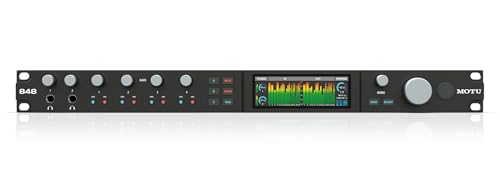
- 28 x 32 I/O with dual optical banks and two headphone outs
- Advanced mic channels with remote control and high gain
- 64-channel mixing plus AVB networking and monitor control
Best For: Engineers who need scalable rack I/O and transparent mic channels
Flagship Apollo Studio Centerpiece
Universal Audio Apollo x8 Gen 2

- Wide dynamic range and low-distortion conversion
- 200+ UAD DSP and Native plug-ins included
- Auto-Gain and bass management streamline workflow
Best For: engineers and producers building a premium Apollo-based studio
High-Channel Routing Workhorse

- 32x32 analog I/O with 130dB dynamic range
- Thunderbolt 3 supports up to 128 channels at 192kHz
- Routing matrix and MADI/ADAT/S/PDIF expandability
Best For: large studios needing extensive I/O and flexible routing
Compact Apollo Recording Hub
Universal Audio Apollo x6 Gen 2

- Wide dynamic range and low-distortion conversion
- 200+ UAD DSP and Native plug-ins included
- Auto-Gain and bass management improve workflow
Best For: producers wanting Apollo features in a smaller studio-friendly unit
Flagship rackmount precision
Antelope Discrete 8 Synergy Core

- 121dB conversion with 64-bit clocking
- USB and Thunderbolt compatibility
- 36 real-time plugins plus Auto-Tune Synergy
Best For: Hybrid studios needing pro conversion, clocking, and onboard processing
Premium desktop tracking
Universal Audio Apollo x4 Gen 2

- Thunderbolt 3 with high-end Apollo conversion
- Unison preamps for real-time analog-style tone
- 200+ UAD DSP and Native plug-ins
Best For: Solo producers and small studios wanting a premium desktop Apollo
High-input Apollo workflow
Universal Audio Apollo x8p Gen 2

- Eight-channel Apollo interface for larger sessions
- 200+ UAD DSP and Native plug-ins
- Auto-Gain for faster multi-input setup
Best For: Bands and larger studios needing more inputs and UAD processing
Compact Apollo Tracking – Universal Audio Apollo Twin X DUO Gen 2
Universal Audio Apollo Twin X DUO Gen 2 with UAD Analog Classics Thunderbolt 3 Audio Interface
Check Price On AmazonFor professional Thunderbolt audio interfaces in a compact desktop format, the Apollo Twin X DUO Gen 2 is built around Unison preamps, real-time UAD processing, and up to 192 kHz recording. It’s a strong fit if you want classic studio flavors while working in a modern DAW on Windows or macOS.
Best For: Solo producers and engineers who want Apollo sound, DSP plug-ins, and monitor correction in a small Thunderbolt 3 interface.
Pros:
- Unison preamps let you track through authentic emulations of Neve, API, Avalon, Manley, Fender, and more.
- Includes access to 200+ UAD DSP and Native plug-ins, including Capitol Chambers, Sound City Studios, and EL8 Distressor.
- Apollo Monitor Correction powered by Sonarworks helps you mix more confidently in any room or on headphones.
- Auto-Gain speeds up level setting across multiple inputs so you can focus on the take.
Cons:
- It is a compact 32-channel interface, so it is not aimed at larger I/O-heavy studio setups.
- Uses Thunderbolt 3, not the newer Thunderbolt 4/USB4 connection found on some competitors.
- Best value is tied to the UAD ecosystem, which may be more than some buyers need.
The Twin X DUO Gen 2 stands out if you want a polished Apollo workflow with strong conversion, plug-in access, and practical monitoring tools. It is especially appealing for producers who want premium results without moving up to a rack interface.
High-I/O Studio Hub – MOTU 16A Thunderbolt 4/USB4
If you need professional Thunderbolt audio interfaces for a full studio rig, the MOTU 16A is designed around high channel count, low latency, and flexible routing. Its Thunderbolt 4/USB4 connectivity, AVB networking, and 64-channel mixing make it a serious control center for complex Mac, Windows, or iPad-based setups.
Best For: Engineers and studio owners who need lots of line I/O, networked expansion, and deep routing flexibility.
Pros:
- 32 x 34 audio I/O with 16 balanced TRS line inputs/outputs and dual 8-channel optical banks.
- Ultra-low latency drivers with round-trip latency as low as 1.8 ms at 96 kHz.
- 64-channel mixing with effects plus patchbay-style routing and splitting.
- AVB networking and two Gigabit ports support expanded, multi-device studio workflows.
Cons:
- Its feature set is broad, which may be more interface than a simple home studio needs.
- At 11 pounds and rack-sized dimensions, it is not the most portable option.
- The front panel focus is on monitoring and metering rather than hands-on mic pre controls.
The 16A is best viewed as a central studio engine rather than a small desktop box. If your work depends on lots of routing, reliable drivers, and network-ready expansion, it offers a very capable platform.
Dual-DSP Apollo Upgrade – Universal Audio Apollo Twin X QUAD Gen 2
Universal Audio Apollo Twin X QUAD Gen 2 with UAD Analog Classics Thunderbolt 3 Audio Interface
Check Price On AmazonThe Apollo Twin X QUAD Gen 2 is aimed at users who want professional Thunderbolt audio interfaces with more onboard processing headroom. It keeps the desktop Apollo workflow, adds QUAD DSP, and offers the same Unison preamp approach and 192 kHz operation for Windows and macOS systems.
Best For: Producers and mix engineers who want extra DSP for UAD plug-ins in a compact Thunderbolt 3 interface.
Pros:
- QUAD DSP provides more processing capacity for running UAD plug-ins while tracking or mixing.
- Next-generation audio conversion offers the widest dynamic range and lowest distortion of any Apollo.
- Unison preamps support real-time recording through emulations of Neve, API, Avalon, Manley, Fender, and more.
- Apollo Monitor Correction powered by Sonarworks helps with mix translation in any room or on headphones.
Cons:
- Still a 32-channel desktop interface, so it is not meant for large multi-mic recording sessions.
- Uses Thunderbolt 3 rather than Thunderbolt 4/USB4.
- The strongest appeal is within the UAD plug-in ecosystem.
This model makes sense if you like the Apollo sound and workflow but want more DSP than the DUO version. It is a practical step up for heavier plug-in use without moving to a rackmount system.
Flexible Networked Rack I/O – MOTU 848 Thunderbolt 4/USB4
Among professional Thunderbolt audio interfaces, the MOTU 848 is built for users who need a lot of I/O, low latency, and flexible studio integration. With Thunderbolt 4/USB4 connectivity, AVB networking, and onboard mixing, it fits well in modern Mac, Windows, and iOS setups that grow over time.
Best For: Studio engineers who need high channel counts, transparent mic inputs, and networked expansion in a rack unit.
Pros:
- 28 x 32 channel count with 8×12 TRS analog I/O, dual 8-channel optical banks, and two headphone outputs.
- Advanced mic channels offer +74 dB gain, pad, 48V phantom power, phase invert, and remote control.
- Low-latency drivers reach round-trip latency as low as 1.8 ms at 96 kHz.
- 64-channel mixing, AVB networking, and control-room functions like talk and A/B/C speaker select add serious studio utility.
Cons:
- Its rack-focused design is less convenient for quick desktop use.
- The feature set is substantial, which may be excessive for simple recording needs.
- Some of the most flexible expansion depends on AVB networking and compatible gear.
The 848 is a strong fit when routing, monitor control, and scalable I/O matter as much as raw sound quality. If you want a modern interface that can anchor a larger studio, it checks a lot of boxes.
Flagship Apollo Studio Centerpiece – Universal Audio Apollo x8 Gen 2
Universal Audio Apollo x8 Gen 2 with UAD Analog Classics Thunderbolt 3 Audio Interface
Check Price On AmazonIf you want a professional Thunderbolt audio interface built for serious tracking and mixing, the Universal Audio Apollo x8 Gen 2 focuses on high-end conversion, low distortion, and a large DSP plug-in ecosystem. It also adds practical workflow tools like Auto-Gain and bass management, making it a strong fit for modern studio setups.
Best For: Engineers and producers who want a flagship Apollo interface with premium conversion and UAD processing.
Pros:
- Next-generation audio conversion with very wide dynamic range and low distortion
- Access to 200+ UAD DSP and Native plug-ins, including Capitol Chambers and Sound City Studios
- Auto-Gain helps set levels quickly across multiple inputs
- Bass management supports a subwoofer in monitor setups
Cons:
- Built around the Apollo ecosystem, so the biggest value comes with UAD plug-in use
- May be more interface than needed for simple recording rigs
The Apollo x8 Gen 2 is aimed at users who care about conversion quality and integrated processing as much as I/O. If your studio workflow can take advantage of UAD tools and advanced monitoring features, it is one of the most capable professional Thunderbolt audio interfaces in this group.
High-Channel Routing Workhorse – Antelope Orion 32+ Gen 4
For studios comparing professional Thunderbolt audio interfaces, the Antelope Orion 32+ Gen 4 stands out for its huge channel count, flexible routing, and high-resolution connectivity. It is designed for larger recording, mixing, and immersive monitoring setups where precision I/O matters more than a simple desktop layout.
Best For: Larger studios and hybrid rigs that need extensive routing, high channel counts, and Thunderbolt 3 performance.
Pros:
- 32×32 analog I/O with 130dB dynamic range
- Thunderbolt 3 streams up to 128 channels at 192kHz
- Built-in routing matrix supports custom studio configurations
- MADI optical, ADAT, and S/PDIF expand integration options
Cons:
- Channel count and feature set are overkill for small project studios
- Best suited to users who need to plan complex routing and monitoring
The Orion 32+ Gen 4 is a serious interface for users who need scale and flexibility. Its combination of Thunderbolt 3 throughput, advanced clocking, and broad I/O makes it especially relevant for multi-channel recording and advanced production environments.
Compact Apollo Recording Hub – Universal Audio Apollo x6 Gen 2
Universal Audio Apollo x6 Gen 2 with UAD Analog Classics Thunderbolt 3 Audio Interface
Check Price On AmazonThe Universal Audio Apollo x6 Gen 2 is a practical choice if you want a professional Thunderbolt audio interface with Apollo conversion and UAD plug-in access in a more compact format. It is built for serious recording and production workflows, with tools like Auto-Gain and bass management that help streamline everyday studio use.
Best For: Producers and engineers who want Apollo sound and UAD processing in a smaller desktop-friendly interface.
Pros:
- Next-generation audio conversion with very wide dynamic range and low distortion
- Access to 200+ UAD DSP and Native plug-ins
- Auto-Gain speeds up level-setting across multiple inputs
- Bass management helps when adding a subwoofer to monitor setups
Cons:
- Smaller footprint means less expanded hardware scale than larger Apollo models
- Best value comes when you plan to use UAD plug-ins and Apollo workflow features
The Apollo x6 Gen 2 is a strong middle-ground option for users who want the Apollo ecosystem without jumping to a larger rack-focused interface. It keeps the same conversion and plug-in advantages while staying more manageable for compact studios.
Flagship rackmount precision – Antelope Discrete 8 Synergy Core
If you want a professional Thunderbolt audio interface that combines high-end conversion, deep I/O, and real-time processing, the Antelope Audio Discrete 8 Synergy Core is built for serious studio work. It pairs 121dB A/D and D/A conversion with 64-bit Acoustically Focused Clocking, plus USB and Thunderbolt compatibility for flexible integration on Mac or Windows setups.
Best For: Engineers and producers who want rackmount connectivity, clocking accuracy, and onboard FX in one interface.
Pros:
- 121dB A/D and D/A conversion with a 130dB dynamic range monitor converter
- USB and Thunderbolt compatibility with eight mic/line inputs and eight DC-coupled outputs
- Includes 36 real-time plugins for tracking and mixing
- Auto-Tune Synergy adds live pitch correction with low latency
Cons:
- Rackmount design is less portable than compact desktop interfaces
- Feature set is extensive, which may be more than a simple recording rig needs
The Discrete 8 Synergy Core stands out if you want a studio centerpiece rather than a basic interface. Its combination of clocking, conversion, and onboard effects makes it especially appealing for hybrid recording and mixing workflows.
Premium desktop tracking – Universal Audio Apollo x4 Gen 2
Universal Audio Apollo x4 Gen 2 with UAD Analog Classics Thunderbolt 3 Audio Interface
Check Price On AmazonThe Universal Audio Apollo x4 Gen 2 is a strong pick for professional Thunderbolt audio interfaces when you want top-tier conversion and the classic UAD workflow in a compact desktop format. It offers Thunderbolt 3 connectivity, Unison preamps for real-time analog-style tracking, and access to 200+ UAD DSP and Native plug-ins for recording and mixing.
Best For: Solo producers and small studios that want premium Apollo sound, plug-ins, and an easy desktop setup.
Pros:
- Thunderbolt 3 interface with next-generation conversion
- Unison preamps support real-time emulations of classic analog gear
- Access to 200+ UAD DSP and Native plug-ins
- Auto-Gain helps set input levels quickly across multiple sources
Cons:
- Four-input desktop layout is better suited to smaller tracking sessions
- Premium ecosystem works best if you plan to use UAD plug-ins
The Apollo x4 Gen 2 is a practical choice if you want UA’s signature sound without moving up to a larger rack unit. Its mix of conversion, Unison processing, and plug-in access makes it a polished fit for focused project studios.
High-input Apollo workflow – Universal Audio Apollo x8p Gen 2
Universal Audio Apollo x8p Gen 2 with UAD Analog Classics Thunderbolt 3 Audio Interface
Check Price On AmazonIf your workflow needs more inputs and the Apollo ecosystem, the Universal Audio Apollo x8p Gen 2 is one of the more capable professional Thunderbolt audio interfaces to consider. It delivers next-generation conversion, a full library of 200+ UAD DSP and Native plug-ins, and Auto-Gain for quickly setting levels across multiple inputs.
Best For: Bands, engineers, and larger project studios that need more channels and Apollo plug-in power.
Pros:
- Eight-channel design suited to multi-input recording
- Next-generation conversion with very low distortion
- Access to 200+ UAD DSP and Native plug-ins
- Auto-Gain speeds up setup across multiple inputs
Cons:
- Windows-only compatibility is more limiting than cross-platform options
- Ethernet connectivity may not suit every studio preference
- Larger footprint and weight make it less portable
The Apollo x8p Gen 2 is the most session-ready option here if you need more inputs without leaving the UAD workflow. It’s a solid fit for tracking ensembles, building bigger sessions, and managing monitoring detail with confidence.
How We Picked These Professional Thunderbolt Audio Interfaces
We prioritized interfaces that are relevant to demanding studio use: solid driver performance, dependable Thunderbolt connectivity, strong preamp and conversion quality, and monitoring tools that support fast tracking sessions. We also looked at channel count, expansion potential, DSP or onboard processing, and compatibility across Mac, Windows, and in some cases iOS.
Quick Comparison
Compact desktop models are best for solo producers, vocalists, and small writing rooms, while larger rack units suit full-band tracking, drum recording, and studios that need more analog and digital I/O. If you rely on near-zero-latency monitoring, bundled effects and DSP can be a major advantage. If your setup may grow, choose an interface with room for expansion rather than just enough inputs for today.
Key Buying Factors for Professional Thunderbolt Audio Interfaces
I/O Count and Expandability
Think beyond your current mic count. A 2-in interface may be enough for overdubs, but multi-in models are better for recording drums, ensembles, or outboard-heavy workflows. Also check ADAT, line, and digital expansion options if you expect to scale.
Latency and Monitoring Workflow
Thunderbolt is valued for low-latency performance, but the monitoring system matters just as much. Look for direct monitoring, cue mixes, loopback, and software mixers that make tracking easier without distracting setup steps.
Conversion, Preamps, and Headroom
Clean A/D and D/A conversion, low-noise preamps, and enough gain for dynamic microphones are essential. For professional use, headroom and consistency often matter more than marketing claims.
Compatibility and Connectivity
Not every Thunderbolt interface behaves the same on every computer. Confirm support for your operating system, port type, and any adapters required. Some Professional Thunderbolt Audio Interfaces also work over USB4 or USB-C, which can simplify long-term compatibility.
DSP, Effects, and Workflow Extras
If you track through effects, consider interfaces with onboard DSP or FPGA processing. These features can reduce CPU load and make monitoring more inspiring, especially for vocal and guitar sessions.
Who Should Buy Which Professional Thunderbolt Audio Interfaces?
Choose a compact Apollo Twin-style unit if you need a premium desktop interface for vocals, songwriting, and overdubbing. Step up to x6, x8, or x8p-class models if you want more inputs, more headroom, and a stronger fit for larger productions. MOTU’s higher-channel Thunderbolt 4/USB4 options are well suited to engineers who need flexible I/O, modern connectivity, and routing depth. Antelope models may appeal to users who want integrated processing and a feature-rich mixer for fast, effects-driven workflows.
If you are comparing Professional Thunderbolt Audio Interfaces for long-term studio use, focus first on the input count and monitoring workflow, then choose the model that matches your current room, your expansion plans, and the way you actually record.
