
Choosing the right bike computer can make every ride easier, safer, and more efficient. The best options do more than show turn-by-turn directions—they help you follow routes, track performance, and stay confident on unfamiliar roads.
In this roundup, we focus on professional bike navigation computers that balance reliable GPS, useful mapping, long battery life, and rider-friendly controls for real-world use.
Best 10 Professional Bike Navigation Computers Picks for 2026
Premium Flagship
Garmin Edge 1050 Premium Cycling Computer

- 3.5-inch vivid touchscreen with built-in speaker
- Course creation, ClimbPro, and hazard alerts
- Up to 20 hours, or 60 hours in battery saver mode
Best For: Serious cyclists who want premium navigation and training features
Budget Navigation
iGPSPORT BSC200S Wireless GPS Bike Computer

- Route creation plus Strava, Ride with GPS, and Komoot imports
- 2.4-inch sunlight-readable color display
- Up to 25 hours battery life with Type-C charging
Best For: Value-minded riders who want easy route navigation
Easy Navigator
Garmin Edge Explore 2 GPS Cycling Navigator

- 3-inch glove- and rain-friendly touchscreen
- Preloaded activity profiles and ride-type maps
- Up to 16 hours battery life with eBike routing support
Best For: Riders who want simple navigation and easy setup
Precision Performer
Hammerhead Karoo Wireless GPS Bike Computer

- Multi-band GNSS for accurate tracking
- Large memory for faster map rendering
- Works with SRAM AXS, e-bikes, and ANT+ lights
Best For: Tech-focused riders who want precise navigation and ecosystem support
Precision Climber
Garmin Edge 540 Compact GPS Cycling Computer

- Multi-band GNSS for improved positioning accuracy
- ClimbPro works on every ride without a course
- Up to 26 hours battery, or 42 in saver mode
Best For: Riders who want compact navigation and training tools
Endurance Navigator
Garmin Edge 1040 Solar GPS Bike Computer
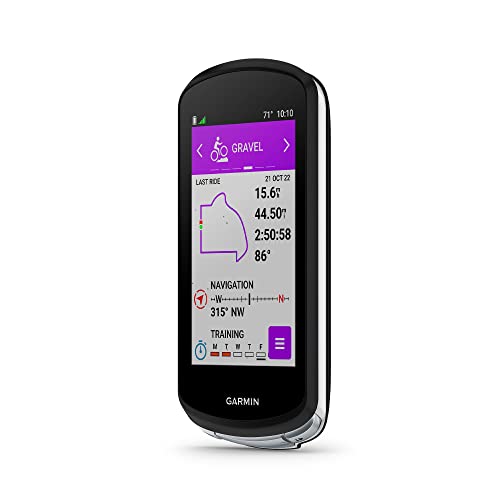
- Solar charging helps extend battery life dramatically
- 3.5-inch screen with touchscreen and buttons
- Multi-band GNSS plus detailed training and routing features
Best For: Long-distance cyclists who want maximum battery life
Smart Value Navigator
Magene C606 Pro GPS Bike Computer

- Waypoint routing, rerouting, and back-to-start tools
- Climb Pro with real-time gradient and elevation data
- Up to 25 hours battery with broad sensor support
Best For: Riders wanting touchscreen navigation and wide compatibility
Top All-Around Pick
Garmin Edge 840 Compact GPS Cycling Computer
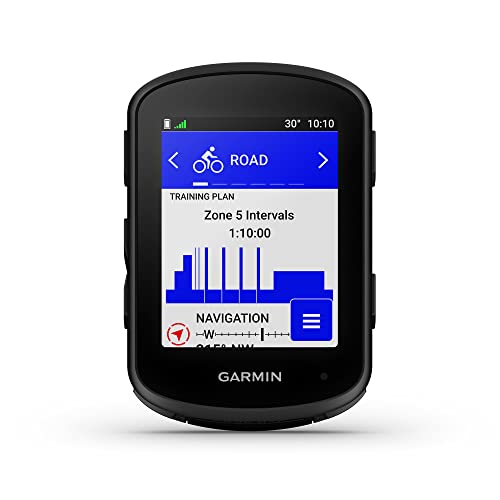
- Touchscreen and button control
- Multi-band GNSS positioning accuracy
- ClimbPro and stamina insights
Best For: Riders wanting a compact navigation and training computer
Premium Smart Ride Pick
Garmin Edge 850 Compact GPS Cycling Computer
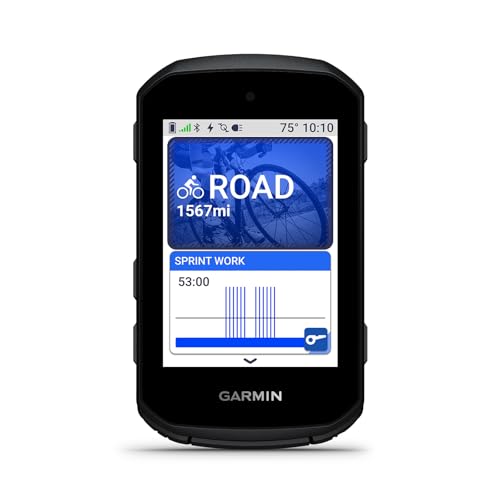
- Touchscreen with built-in speaker
- Trailforks maps and Forksight mode
- Connected ride tools and Garmin Pay
Best For: Riders wanting premium navigation plus smart connected features
Button-Control Value Pick
Garmin Edge 550 Compact GPS Cycling Computer
- Button-only control layout
- Road, gravel, and trail maps
- Adaptive Garmin Cycling Coach plans
Best For: Riders who prefer buttons and want capable ride navigation
Premium Flagship – Garmin Edge 1050 Premium Cycling Computer
If you want one of the most advanced professional bike navigation computers available, the Garmin Edge 1050 is built for riders who prioritize detailed guidance, training support, and smart ride features. Its vivid 3.5-inch touchscreen, built-in speaker, and broad connectivity make it a strong fit for serious road cyclists and performance-focused riders.
Best For: Riders who want premium navigation, advanced training tools, and connected group-ride features.
Pros:
- Large 3.5-inch color touchscreen is responsive and easy to use on the bike.
- Navigation tools include course creation, ClimbPro ascent planning, and road hazard alerts.
- Strong smart features like live location sharing, in-ride messaging, Garmin Pay, and a built-in speaker.
- Long battery options with up to 20 hours in demanding use or 60 hours in battery saver mode.
Cons:
- Its premium feature set may be more than casual riders need.
- Best experience depends on pairing with a compatible smartphone and sensors.
Overall, the Edge 1050 is the most feature-rich option here, especially for cyclists who want navigation, performance tracking, and ride awareness in a single high-end unit. It is especially compelling if you regularly ride with power and heart rate data or value connected features on group rides.
Budget Navigation – iGPSPORT BSC200S Wireless GPS Bike Computer
The iGPSPORT BSC200S is a practical pick for riders looking for professional bike navigation computers with straightforward route handling and solid daily riding features. It supports route creation and imports from platforms like Strava, Ride with GPS, and Komoot, while keeping the interface focused on navigation and ride data.
Best For: Riders who want affordable navigation, long battery life, and broad route import support.
Pros:
- Route navigation works with the iGPSPORT app and imported third-party routes.
- One-touch navigation, back-to-start guidance, and ride-record navigation add flexibility.
- Clear 2.4-inch display is designed to be easier to read in sunlight.
- Battery lasts up to 25 hours and charges via Type-C in about 1.5 hours.
Cons:
- Screen is smaller than premium large-format cycling computers.
- Smart features are useful, but not as advanced as top-tier flagships.
For riders who care more about reliable route navigation and long battery life than high-end extras, the BSC200S delivers a lot of value. Its broad route compatibility and practical ride data make it a sensible everyday computer for training and touring.
Easy Navigator – Garmin Edge Explore 2 GPS Cycling Navigator
The Garmin Edge Explore 2 is aimed at riders who want professional bike navigation computers without a complicated setup. It comes ready with road, off-road, and indoor activity profiles, plus ride-type maps and navigation tools that make it easy to follow unfamiliar routes.
Best For: Riders who want a simple, navigation-first computer for road, trail, and eBike use.
Pros:
- 3-inch touchscreen is glove- and rain-friendly, and easy to read in sunlight.
- Preloaded profiles and improved ride-type maps make setup fast and straightforward.
- Includes eBike routing support and battery-status-based guidance when paired with a compatible eBike.
- Works with LiveTrack, GroupTrack, incident detection, and compatible Varia accessories.
Cons:
- Battery life is shorter than some newer premium units at up to 16 hours.
- Sensor support is available, but sold separately.
This is a strong choice if you want dependable navigation and ride awareness more than deep performance analytics. The Explore 2 keeps things approachable while still offering useful connected features for everyday riding and touring.
Precision Performer – Hammerhead Karoo Wireless GPS Bike Computer
The Hammerhead Karoo is built for cyclists who want a polished navigation experience in a high-performance computer. With multi-band GNSS for accurate tracking, generous memory for faster map rendering, and broad accessory compatibility, it fits well into the workflow of serious riders looking for professional bike navigation computers.
Best For: Performance riders who want precise navigation, fast map handling, and strong ecosystem support.
Pros:
- Multi-band GNSS helps deliver accurate tracking across different environments.
- Large memory storage supports faster map rendering and longer uptime.
- Works with SRAM AXS products, e-bikes, ANT+ lights, and more.
- Focused hardware/software design aims to reduce distractions while riding.
Cons:
- Product details emphasize features more than specific battery-hour figures.
- Compatibility benefits are strongest if you already use supported accessories and ecosystems.
The Karoo stands out for riders who value accurate navigation and a refined interface over basic turn-by-turn guidance alone. It is a strong fit for tech-forward cyclists who want a premium computer that integrates cleanly with connected riding gear.
Precision Climber – Garmin Edge 540 Compact GPS Cycling Computer
If you want a compact option among professional bike navigation computers, the Garmin Edge 540 focuses on accurate routing, training support, and ride data in a small button-controlled package. It adds multi-band GNSS, ClimbPro on every ride, and ride-type maps that make it practical for riders who want dependable navigation without extra bulk.
Best For: Riders who want a compact, button-based computer with strong navigation and training tools for demanding rides.
Pros:
- Multi-band GNSS improves positioning accuracy in challenging environments.
- ClimbPro shows remaining ascent and grade on every ride, even without a course.
- Battery life reaches up to 26 hours in demanding use and 42 hours in battery saver mode.
- Training features include suggested workouts, coaching prompts, stamina insights, and power guidance when paired with compatible sensors.
Cons:
- Uses button controls rather than a touchscreen.
- Several advanced training insights require a compatible power meter and heart rate monitor.
- The 2.6-inch screen is smaller than larger endurance-focused units.
This is a strong pick if you value navigation accuracy, climb data, and adaptive training tools in a compact design. It suits riders who prioritize function and battery life over a larger display.
Endurance Navigator – Garmin Edge 1040 Solar GPS Bike Computer
Among professional bike navigation computers, the Garmin Edge 1040 Solar stands out for riders who want long battery life, detailed navigation, and a larger interface. Its solar charging lens, multi-band GNSS, and streamlined setup make it well suited to long rides where dependable guidance and reduced charging concerns matter.
Best For: Long-distance cyclists who want a feature-rich GPS computer with solar charging and a larger display.
Pros:
- Power Glass solar charging extends battery life to up to 100 hours in battery saver mode.
- Multi-band GNSS helps improve positioning accuracy in difficult environments.
- Larger 3.5-inch touchscreen plus button input offers flexible control and easier data viewing.
- Connects with platforms like Strava, Komoot, and TrainingPeaks through the Garmin ecosystem.
Cons:
- More expensive and larger than compact cycling computers.
- Advanced performance features depend on compatible sensors.
- Touchscreen controls may not appeal to riders who prefer a fully button-based unit.
This is the most endurance-oriented option in the group, especially if battery life is a top priority. It combines navigation, training, and smart connectivity in a package built for very long rides.
Smart Value Navigator – Magene C606 Pro GPS Bike Computer
The Magene C606 Pro is a capable option in the professional bike navigation computers category if you want map navigation, climbing tools, and connected features at a more streamlined level. It combines waypoint routing, live segments, touchscreen control, and broad sensor support in a package aimed at practical everyday training and riding.
Best For: Riders who want a touchscreen GPS bike computer with navigation, climbing support, and wide sensor compatibility.
Pros:
- Waypoint routing, back-to-start, rerouting, and long route support help with navigation.
- Climb Pro auto-detects climbs and shows real-time gradient, distance, and elevation gain.
- Up to 25 hours of battery life with a sunlight-readable 2.8-inch transflective display.
- Supports ANT+, Bluetooth, Wi-Fi, live segments, smart trainer control, and 11+ sensors.
Cons:
- Smaller display than some premium flagship units.
- Many connected features rely on compatible accessories or sensors.
- Stem-mount setup may be less familiar for riders used to other mounting styles.
This model is well rounded for riders who want a practical touchscreen navigator with strong route and climb tools. It leans toward flexibility and ecosystem support rather than top-tier flagship branding.
Top All-Around Pick – Garmin Edge 840 Compact GPS Cycling Computer
The Garmin Edge 840 is a strong choice among professional bike navigation computers if you want a compact unit that balances routing, training, and ride awareness. It combines touchscreen and button control, multi-band GNSS positioning, ClimbPro ascent planning on every ride, and Garmin’s training prompts for riders who want navigation and structured performance in one device.
Best For: Riders who want a compact, navigation-first computer with advanced training tools and reliable climb guidance.
Pros:
- Touchscreen plus button control for flexible use in different riding conditions
- Multi-band GNSS for enhanced positioning accuracy in challenging environments
- ClimbPro, power guide, and stamina insights support more informed pacing
- Up to 26 hours of battery life in demanding use cases
Cons:
- Some advanced performance features require a compatible power meter and heart rate monitor
- Battery life drops from maximum in demanding real-world use
- Best value is tied to riders who will use the training and climbing tools
For riders who want one computer to handle route guidance, climbing info, and workout structure, the Edge 840 is especially well-rounded. It is built for cyclists who care about both precise navigation and measurable performance tracking.
Premium Smart Ride Pick – Garmin Edge 850 Compact GPS Cycling Computer
The Garmin Edge 850 is a feature-rich option in professional bike navigation computers for cyclists who want vivid mapping, smart ride alerts, and connected ride tools. It adds a touchscreen, built-in speaker, preloaded Trailforks maps, multi-band GPS with 5 Hz recording, and on-device conveniences like Garmin Pay and a bike bell.
Best For: Riders who want a premium navigation computer with smart safety, trail, and in-ride convenience features.
Pros:
- Vivid color display with touchscreen and button controls
- Preloaded maps, Trailforks maps, and Forksight mode for better route awareness
- Built-in speaker, bike bell, and workout/navigation prompts improve usability
- Connected features include group ride messaging, live locations, incident detection, and Garmin Pay
Cons:
- Demanding-use battery life is up to 12 hours, shorter than some alternatives
- Several smart features depend on a compatible smartphone and Garmin Connect app
- Performance-focused fueling and training prompts work best with compatible sensors
The Edge 850 stands out if you want a navigation computer that does more than just show the route. It is geared toward riders who value connected ride features, detailed map layers, and a more premium on-bike experience.
Button-Control Value Pick – Garmin Edge 550 Compact GPS Cycling Computer
The Garmin Edge 550 is a practical fit for professional bike navigation computers if you prefer button control and want strong mapping, training, and ride safety features in a compact package. It includes a vivid color display, multi-band GPS with 5 Hz recording, preloaded road, gravel, and trail maps, and Garmin Cycling Coach plans that adapt to your training load and recovery.
Best For: Riders who want a button-operated navigation computer with solid training and safety tools.
Pros:
- Button controls keep operation simple and consistent
- Preloaded maps plus Trailforks support road, gravel, and trail riding
- Multi-band GPS and 5 Hz recording improve tracking on descents
- Garmin Cycling Coach plans adapt to training load, recovery, and course demands
Cons:
- No touchscreen, which may matter to riders who prefer tap-based control
- Many ride intelligence features rely on a compatible smartphone and app
- Demanding-use battery life is listed at up to 12 hours
The Edge 550 is a strong choice for riders who want dependable navigation and training tools without adding touchscreen complexity. It is especially appealing if you prioritize button reliability and a straightforward ride interface.
How We Picked These Professional Bike Navigation Computers
We prioritized navigation accuracy, screen readability, battery life, mapping quality, training support, and ease of use. We also looked at how well each model serves different riders, from endurance cyclists and commuters to racers and adventure riders.
Because Professional Bike Navigation Computers are often used in changing weather and fast-paced rides, durability, waterproofing, and button/touch responsiveness also mattered.
Quick Comparison
Some models are better for advanced navigation and premium displays, while others emphasize compact size, simpler controls, or strong value. If you want the most complete feature set, look toward higher-end units with robust mapping and training tools. If you prefer straightforward route guidance, a simpler GPS cycling navigator may be the better fit.
Key Buying Factors for Professional Bike Navigation Computers
Navigation and Mapping
Look for dependable turn-by-turn routing, clear map rendering, rerouting, and support for saved routes or course planning. Riders who explore new areas will benefit from full-color mapping and easy route management.
Display and Controls
A bright screen helps in direct sunlight, while gloves-friendly buttons improve usability in poor weather. Touchscreens are convenient for zooming and panning, but physical controls can be more dependable during hard rides or rain.
Battery Life
Long rides and multi-day events call for strong battery performance. Solar assistance can be useful, but battery claims should be weighed against real-world use with navigation, sensors, and brightness settings enabled.
Connectivity and Sensors
Most advanced units support ANT+ and Bluetooth for heart rate monitors, power meters, radar, and smart trainers. If you train seriously, make sure the computer integrates cleanly with your existing setup.
Training and Performance Features
Climb metrics, structured workouts, live segments, and recovery tools can add value for athletes. Commuters and casual riders may prefer simpler interfaces over deeper training complexity.
Who Should Buy Which Professional Bike Navigation Computers?
Choose a premium model if you want the most complete navigation and training experience, especially for long-distance riding or performance-focused use. Pick a compact midrange unit if you want a strong balance of features, size, and price. Go with a simpler navigator if your main goal is easy route guidance without advanced training extras.
If you are comparing Professional Bike Navigation Computers for a specific riding style, match the device to your priorities: best display, longest battery, easiest interface, or strongest value. That approach will narrow the field quickly and help you choose a computer that fits how you actually ride.
