
Professional audio-over-IP interfaces let studios, broadcast teams, and installed systems move high-quality audio over standard networks with less cabling and more routing flexibility.
Whether you need Dante, AES67, Thunderbolt, USB, or hybrid network connectivity, the right interface can make integration faster, cleaner, and more scalable.
Best 10 Professional Audio-Over-IP Interfaces Picks for 2026
Dante USB Bridge
ToVi Dante USB to Network Audio Adapter

- 2-channel USB-to-Dante bridge
- AES67 compliant for interoperability
- 24-bit audio up to 96kHz
Best For: Small Dante/AES67 setups needing a simple USB bridge
High-Channel Dante Hub
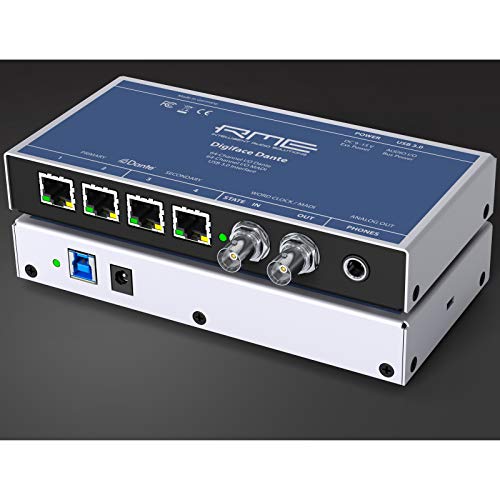
- 128-in/128-out Dante, MADI, and USB 3.0
- 24-bit audio up to 192kHz
- Headphone output and bus power
Best For: Large systems needing maximum Dante routing capacity
Thunderbolt Network Interface
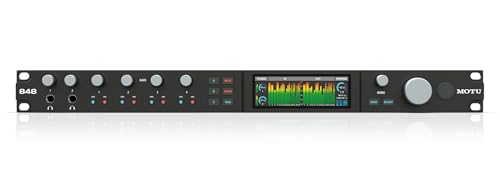
- 28x32 Thunderbolt 4/USB4 interface
- AVB networking with dual Gigabit ports
- Built-in DSP mixing and effects
Best For: Studios needing a networked Thunderbolt interface with DSP
Dante USB Audio Interface

- 16-in/16-out Dante/USB interface
- Includes 2 mic inputs and 2 line outputs
- VST Rack Pro with 30+ plug-ins
Best For: Dante setups that want built-in software processing
All-in-One DSP Interface
Universal Audio Apollo Twin X DUO Gen 2

- Thunderbolt 3 desktop interface with 32 channels
- Unison preamps and UAD plug-in access
- Monitor Correction and Auto-Gain for easier tracking
Best For: Desktop producers who want premium tracking and mix monitoring tools
High-Channel MADI Bridge

- USB 2.0 interface with dual MADI I/O
- Up to 64 channels for larger setups
- TotalMix FX for routing and management
Best For: Studios that need reliable USB-to-MADI connectivity
Dante Network Input Box
MSQ-3900D 4-Channel Analog Interface

- Converts 4 XLR inputs to Dante and AES67
- PoE-powered for simpler installation
- Aluminum housing built for pro use
Best For: Installers needing a compact PoE Dante input box
Compact Creator Interface
SSL 2 MKII Plus USB-C Audio Interface
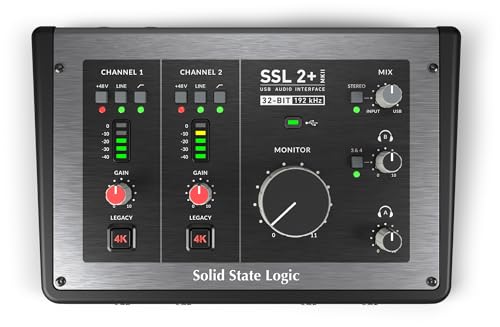
- 2 XLR mic preamps with 2 line/Hi-Z inputs
- Dual headphone outs plus 4 line outputs
- 32-bit / 192 kHz conversion and zero-latency monitoring
Best For: Producers, podcasters, and live-studio musicians
Dante Bridge Interface
RDL SF-BNC2 Dante Audio Network Interface

- Two-input, two-output Dante audio bridge
- Front-panel RCA and 3.5 mm connections
- PoE-powered with no special setup software
Best For: Fixed installs and compact stereo Dante systems
Thunderbolt Studio Flagship
Universal Audio Apollo x4 Gen 2
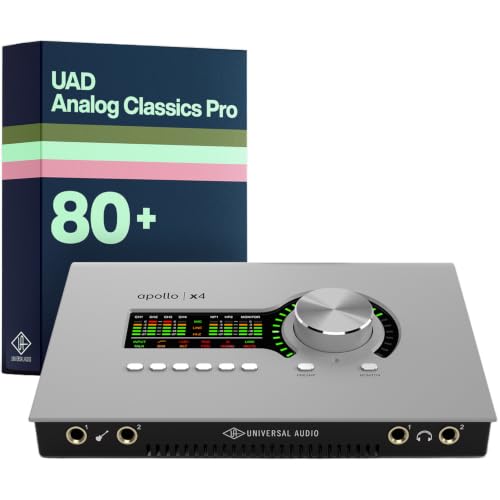
- High-end conversion with wide dynamic range
- Unison preamps and 200+ UAD plug-ins
- Auto-Gain and Sonarworks monitor correction
Best For: Project studios and serious recordists
Dante USB Bridge – ToVi Dante USB to Network Audio Adapter
If you need professional audio-over-IP interfaces for connecting a USB device to a Dante workflow, this ToVi adapter is built as a simple 2-channel bridge. It works as a high-quality external USB sound card, supports AES67 interoperability, and keeps the focus on clear 24-bit audio for studio, broadcast, and live sound use.
Best For: Small Dante/AES67 setups that need a straightforward USB-to-network audio bridge.
Pros:
- 2-channel USB-to-Dante interface for input and output routing
- AES67 compliant for broader audio-over-IP compatibility
- 24-bit audio with 44.1kHz, 48kHz, and up to 96kHz support
- Includes mic input and speaker output support for AV setups
Cons:
- Only handles 2 channels, so it is not suited to larger I/O counts
- Best fit is narrow if you need advanced mixing or onboard processing
This is a practical utility device rather than a full-featured interface, but it solves a common connectivity problem cleanly. If your goal is to bring USB audio into a Dante network with minimal fuss, it fits that use case well.
High-Channel Dante Hub – RME Digiface Dante
For buyers comparing professional audio-over-IP interfaces, the RME Digiface Dante stands out for very high channel counts and broad routing flexibility. It combines Dante, MADI, and USB 3.0 in one interface, adds a headphone output, and supports 24-bit operation up to 192kHz for demanding Mac and PC workflows.
Best For: Large routing jobs that need a high-channel Dante interface with USB and MADI connectivity.
Pros:
- 128-in/128-out Dante, MADI, and USB 3.0 connectivity
- 24-bit/192kHz support for high-resolution audio work
- Includes headphone output and bus power
- Designed for Mac and PC use with TotalMix FX support
Cons:
- Its feature set is oriented toward complex systems, not simple plug-and-play use
- More interface than many smaller studios or single-room setups need
This model is best understood as a serious routing centerpiece rather than a basic converter. If your setup needs deep channel capacity and multiple digital paths, it is the most capable option in this group.
Thunderbolt Network Interface – MOTU 848 28×32
The MOTU 848 is a strong choice if you want professional audio-over-IP interfaces with modern computer connectivity and built-in networking. It offers Thunderbolt 4/USB4 support, AVB networking over dual Gigabit ports, and a 28×32 layout with 24-bit audio quality aimed at serious studio and production work.
Best For: Studios that want a high-channel Thunderbolt interface with AVB networking and onboard DSP.
Pros:
- 28 inputs and 32 outputs with up to 192kHz sample rates
- Thunderbolt 4/USB4 connectivity with class-compliant firmware
- AVB networking across two Gigabit ports for daisy-chaining and expansion
- Built-in DSP mixing, effects, and detailed front-panel metering
Cons:
- Most useful in more advanced setups that can take advantage of AVB and DSP
- Broad feature set may be more than a simple recording rig needs
This interface brings together I/O count, networking, and onboard control in one box. If you need a production hub that can grow with a larger studio or hybrid networked workflow, it is well positioned for that role.
Dante USB Audio Interface – Yamaha RUio16-D
The Yamaha RUio16-D is aimed at users who want professional audio-over-IP interfaces with a balanced mix of Dante and USB connectivity. It provides 16-in/16-out operation, 16×16-channel Dante interfacing, two line outputs, two mic inputs, and VST Rack Pro software with more than 30 plug-ins for macOS and Windows.
Best For: Dante-based production setups that also want built-in software processing options.
Pros:
- 16-in/16-out Dante/USB audio interface
- 16×16-channel Dante interface for networked routing
- Includes 2 mic inputs and 2 line-level outputs
- Bundles VST Rack Pro software with 30+ plug-ins
Cons:
- Channel count is moderate compared with larger Dante interfaces
- Best suited to users who will use both the hardware and software features
This model makes sense when you want Dante connectivity plus some onboard software value in the same package. It is a practical middle-ground option for small to midsize professional setups.
All-in-One DSP Interface – Universal Audio Apollo Twin X DUO Gen 2
Universal Audio Apollo Twin X DUO Gen 2 with UAD Analog Classics Thunderbolt 3 Audio Interface
Check Price On AmazonIf you want professional audio-over-IP interfaces-level polish in a compact desktop package, the Apollo Twin X DUO Gen 2 is built for tracking and mixing with onboard DSP and premium monitoring tools. Its Thunderbolt 3 connection, Unison preamps, and 32-channel support make it a strong fit for modern studio workflows on Mac or Windows.
Best For: Producers and engineers who want realtime plug-in tracking, accurate monitoring, and a small but capable interface for a computer-based studio.
Pros:
- Unison preamps let you record through emulations of Neve, API, Avalon, Manley, Fender, and more in realtime.
- Includes access to 200+ UAD DSP and Native plug-ins, including Capitol Chambers, Sound City Studios, and EL8 Distressor.
- Apollo Monitor Correction powered by Sonarworks helps you mix more confidently in different rooms or on headphones.
- Auto-Gain speeds up level setting across multiple inputs.
Cons:
- Connectivity is Thunderbolt 3, so it is not a networked audio-over-IP interface.
- Its XLR input count is limited compared with larger rack units.
- Some of the standout features rely on UAD DSP and supported software.
This is a highly polished interface for creators who value tone-shaping, monitoring accuracy, and plug-in processing more than high channel count. It is best viewed as a premium desktop studio hub rather than a traditional network audio interface.
High-Channel MADI Bridge – RME MADIface USB
For buyers comparing professional audio-over-IP interfaces alternatives, the RME MADIface USB stands out as a high-channel digital bridge for MADI-based systems. With USB 2.0 connectivity, dual MADI I/O, and TotalMix FX management software, it is designed for serious recording and routing on Mac or Windows.
Best For: Engineers and studios that need reliable USB-to-MADI connectivity with lots of channels and flexible routing.
Pros:
- Provides 2 x MADI I/O in optical and coax formats.
- Offers up to 64 channels, making it suitable for larger digital setups.
- TotalMix FX management software adds routing and control flexibility.
- Compatible with mainstream audio recording and editing software on Mac and Windows.
Cons:
- It uses USB rather than Dante or another network audio-over-IP protocol.
- Focused on MADI integration, so it is less of a general-purpose desktop interface.
- Requires a compatible digital workflow to take full advantage of its channel count.
This is a strong choice if your studio already runs on MADI and you want dependable channel handling with straightforward computer connectivity. It is less about onboard processing and more about getting clean, high-count digital audio into your system.
Dante Network Input Box – MSQ-3900D 4-Channel Analog Interface
If your priority is a compact networked front end, this Dante Audio 4 Channel Analog Audio Network Interface Box is a practical fit for professional audio-over-IP interfaces workflows. It converts four XLR analog inputs into Dante audio over IP and AES67 RTP transport, with PoE support for easier installation in fixed or mobile systems.
Best For: Installers and audio teams that need a small PoE-powered Dante input box for four-channel analog capture.
Pros:
- Four 3-pin XLR inputs provide straightforward analog capture.
- Supports Dante audio over IP and AES67 RTP transport for uncompressed, low-latency transmission.
- PoE class 0 support simplifies setup when used with a PoE-enabled switch.
- Aluminum housing and TAA compliance make it suitable for demanding installed environments.
Cons:
- Limited to four channels, so it is not aimed at larger multichannel applications.
- Sample rate support tops out at 96 kHz.
- It is an input box, not a full-featured interface with monitoring or DSP tools.
This is the most direct network-ready option in the group, especially if you need a simple analog-to-Dante bridge. It makes sense for installs where clean integration, low-latency transport, and easy power delivery matter more than deep onboard features.
Compact Creator Interface – SSL 2 MKII Plus USB-C Audio Interface
If you want a compact option among professional audio-over-IP interfaces adjacent workflow needs, the Solid State Logic 2 MKII Plus is built more like a straightforward USB-C recording interface for producer, podcaster, and live-studio use. It offers 2 XLR mic preamps, 2 line/Hi-Z inputs, 4 line outputs, dual headphone outs, MIDI I/O, and 32-bit / 192 kHz conversion for a flexible desktop setup.
Best For: Producers, podcasters, and live-studio musicians who want a small but fully equipped USB-C interface with strong monitoring and I/O.
Pros:
- 2 XLR mic preamps plus 2 1/4″ line/Hi-Z inputs
- 2 discrete headphone outputs and 4 1/4″ line outputs
- 32-bit / 192 kHz AD/DA converters with zero-latency monitoring
- Useful extras like stereo loopback, high-pass filters, MIDI I/O, and Legacy 4K analog enhancement
Cons:
- Only 2×4 channel count, so it is not built for larger multi-source rigs
- USB-C connection is aimed at Mac/Windows desktop workflows rather than networked audio setups
This is a practical studio interface when you want SSL features in a compact format. It stands out for monitoring and creator-friendly tools, but buyers needing network audio routing should look elsewhere.
Dante Bridge Interface – RDL SF-BNC2 Dante Audio Network Interface
For professional audio-over-IP interfaces in a simple stereo bridge format, the RDL SF-BNC2 is designed to move two analog inputs and two analog outputs onto a Dante network. It uses front-panel RCA and 3.5 mm mini-jacks, supports selectable Dante sample rates from 44.1 kHz to 96 kHz, and includes 24-bit digital-to-analog conversion with analog filtering for clean playback.
Best For: Fixed installs or compact Dante systems that need a straightforward stereo analog-to-network interface.
Pros:
- Dante interface for two audio inputs and two audio outputs
- Front-panel RCA and stereo 3.5 mm mini-jacks for easy connectivity
- Selectable sample rates from 44.1 kHz to 96 kHz
- PoE operation, LED network/power status, and no special setup software required
Cons:
- Only handles two inputs and two outputs, so it is limited to small jobs
- It is an unbalanced stereo interface, which may not suit every professional application
This model is best viewed as a simple Dante building block rather than a full production interface. It should appeal to installers and users who want reliable network audio with minimal configuration.
Thunderbolt Studio Flagship – Universal Audio Apollo x4 Gen 2
Universal Audio Apollo x4 Gen 2 with UAD Analog Classics Pro Thunderbolt 3 Audio Interface
Check Price On AmazonThe Universal Audio Apollo x4 Gen 2 fits well in a premium discussion of professional audio-over-IP interfaces, even though it is a Thunderbolt 3 interface rather than a networked Dante unit. It focuses on high-end conversion, Unison preamps, onboard UAD DSP, and a workflow that lets you track with classic analog-style processing in real time.
Best For: Project studios and serious recordists who want top-tier conversion, plug-in processing, and premium monitor control in a Thunderbolt interface.
Pros:
- Next-generation audio conversion with very wide dynamic range and very low distortion
- Unison preamps with real-time analog-style emulations of Neve, API, Avalon, Manley, Fender, and more
- Access to 200+ UAD DSP and Native plug-ins
- Auto-Gain and Apollo Monitor Correction powered by Sonarworks
Cons:
- Uses Thunderbolt 3 rather than an audio-over-IP network connection
- Its feature set is premium-focused, so it may be more than basic setups need
For buyers prioritizing sound quality and studio polish, this is the most full-featured option here. It is especially compelling if you want tracking and mixing tools bundled into one interface.
How We Picked the Best Professional Audio-Over-IP Interfaces
We focused on network compatibility, channel count, low-latency performance, driver stability, and real-world install flexibility. For Professional Audio-Over-IP Interfaces, it also matters whether the unit supports Dante or AES67 natively, offers redundant networking or PoE where needed, and integrates cleanly with common studio and broadcast workflows.
Quick Comparison: What Matters Most
Some buyers need a compact interface for a desktop studio, while others need rack-friendly I/O for live production or fixed installation. Compare the product’s primary network standard, analog I/O type, computer connection, and expansion options before looking at extras like onboard DSP or monitoring control.
Key Buying Factors for Professional Audio-Over-IP Interfaces
Network Standard
Dante remains the most common choice in production and installed audio, while AES67 improves interoperability across brands. Make sure the interface matches the network ecosystem you already use or plan to build around.
I/O Count and Format
Choose channel count based on present needs, then leave room for growth. XLR, line-level, stereo unbalanced, and USB/Thunderbolt connections each suit different setups, so match the hardware to your sources and destinations.
Computer Connectivity
USB is convenient and universal, Thunderbolt often offers lower latency and deeper channel counts, and network-first designs can reduce dependency on the host computer. Pick the connection that fits your workstation and operating system.
Installation and Reliability
For studios and AV installs, physical design matters: rackability, PoE support, metal housing, and clear status indicators can save time and reduce downtime. Driver support and firmware maturity are equally important for long-term reliability.
Who Should Buy Which Professional Audio-Over-IP Interfaces?
Choose a compact desktop interface if you need a straightforward personal studio or mobile rig. Pick a multi-channel Dante or AES67 model if you are building a broadcast, venue, or install network. Go with Thunderbolt-based Professional Audio-Over-IP Interfaces when you want high performance, low latency, and tight DAW integration for production-heavy workflows.
If your setup mixes computer recording with network audio distribution, prioritize interoperability first, then add features like onboard mixing, monitoring control, and redundant connectivity only when they solve a real workflow need.
