
If you want fast, low-latency recording with serious studio I/O, Thunderbolt remains one of the best connection types available. The right interface can streamline tracking, mixing, and monitoring without slowing your workflow.
This roundup focuses on premium Thunderbolt audio interfaces for musicians, producers, and engineers who need dependable performance, flexible routing, and pro-level sound quality.
Best 10 Premium Thunderbolt Audio Interfaces Picks for 2026
Premium Desktop Apollo

- Thunderbolt 3 desktop interface with 32 channels
- Unison preamps for realtime analog-style tracking
- 200+ UAD plug-ins plus monitor correction tools
Best For: Compact premium recording setups built around UAD processing
High-I/O Studio Hub

- 32 x 34 Thunderbolt 4/USB4 interface
- ESS Sabre32 conversion with 125 dB dynamic range
- 64-channel DSP mix engine with AVB networking
Best For: Large studios needing routing, expansion, and multi-device control
Higher-DSP Apollo Desktop
- Quad DSP for more realtime plugin headroom
- Thunderbolt 3 desktop interface with Apollo conversion
- Unison preamps and 200+ UAD plug-ins
Best For: Apollo users who need extra DSP for heavier sessions
Flexible Networked Interface
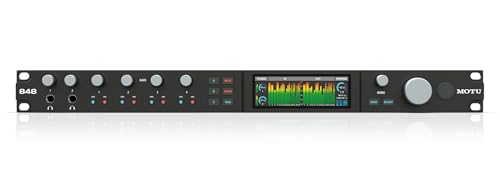
- 28 x 32 interface with 60 simultaneous channels
- ESS Sabre32 conversion and 192 kHz support
- AVB networking plus 64-channel DSP mixing
Best For: Studios needing transparent mic inputs and expandable routing
Flagship Apollo Conversion
Universal Audio Apollo x4 Gen 2
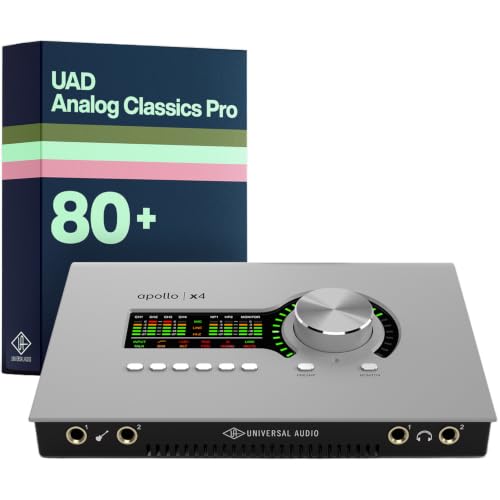
- Thunderbolt 3 interface with next-generation Apollo conversion
- Unison preamps support realtime emulations of classic gear
- Includes access to 200+ UAD DSP and Native plug-ins
Best For: Engineers who want Apollo sound quality and UAD processing in one interface
High-Channel Workhorse
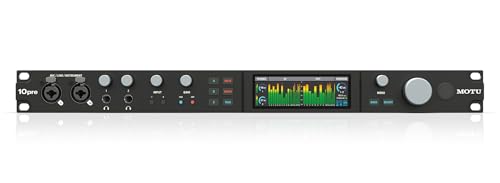
- 26-in/28-out interface with 10 mic inputs
- Thunderbolt 4 / USB4 support for Mac, Windows, and iOS
- ESS Sabre32 conversion with low-latency performance
Best For: Studios that need lots of inputs, outputs, and routing flexibility
Compact Studio Apollo
Universal Audio Apollo x6 Gen 2

- Compact Apollo interface with next-generation conversion
- Access to 200+ UAD DSP and Native plug-ins
- Auto-Gain and bass management support included
Best For: Small studios that want Apollo sound and UAD plug-ins in a smaller footprint
Antelope Studio Core
32-Channel Thunderbolt/USB Studio Interface

- 32x32 analog I/O with 130dB dynamic range
- Thunderbolt 3 up to 128 channels at 192kHz
- MADI, ADAT, and S/PDIF for expansion
Best For: Large studios needing flexible routing and high-channel-count I/O
Universal Audio Elite
Premium Thunderbolt 3 Interface

- Wide dynamic range with very low distortion
- 200+ UAD DSP and Native plug-ins included
- Auto-Gain and bass management for monitoring
Best For: Producers who want top conversion and the UAD plug-in library
Universal Audio Compact Pro

- Wide dynamic range with low distortion
- 200+ UAD DSP and Native plug-ins
- Auto-Gain and bass management tools
Best For: Windows studios needing an 8-channel Apollo with UAD processing
Premium Desktop Apollo – Apollo Twin X DUO Gen 2
Universal Audio Apollo Twin X DUO Gen 2 with UAD Analog Classics Thunderbolt 3 Audio Interface
Check Price On AmazonFor premium Thunderbolt audio interfaces, the Apollo Twin X DUO Gen 2 is a strong pick if you want Unison preamps, realtime tracking through classic console and preamp emulations, and access to a large UAD ecosystem. It pairs Thunderbolt 3 connectivity with up to 192 kHz support, so it fits modern Mac and Windows workflows built around low-latency recording and plugin-heavy sessions.
Best For: Producers and engineers who want premium Apollo conversion, Unison recording, and DSP-powered tracking in a compact desktop interface.
Pros:
- Unison preamps let you record through emulations of Neve, API, Avalon, Manley, Fender, and more.
- Includes access to 200+ UAD DSP and Native plug-ins, including Capitol Chambers and EL8 Distressor.
- Apollo Monitor Correction powered by Sonarworks helps with mixes in rooms or on headphones.
- Auto-Gain and bass management add practical setup tools for fast tracking and monitor control.
Cons:
- Uses Thunderbolt 3 rather than the newer Thunderbolt 4/USB4 connectivity found on some rivals.
- Its 32-channel count is more modest than larger rack-style interfaces.
The Apollo Twin X DUO Gen 2 is best viewed as a premium desktop interface for users who value UAD processing and a polished recording workflow over maximum I/O count. If your priority is character, plug-in power, and dependable day-to-day production tools, it stands out immediately.
High-I/O Studio Hub – MOTU 16A Thunderbolt 4/USB4
Among premium Thunderbolt audio interfaces, the MOTU 16A is aimed squarely at users who need serious routing, lots of I/O, and flexible connectivity across Mac, Windows, and iOS. It combines Thunderbolt 4/USB4 support, ESS Sabre32 conversion, and built-in DSP mixing with networking, making it a practical centerpiece for larger studios and hybrid setups.
Best For: Studios that need high channel counts, flexible digital routing, and low-latency performance across multiple platforms.
Pros:
- 32 x 34 Thunderbolt 4/USB4 design with included 40 Gbps cable.
- 16 analog line-level I/O plus two banks of 8-channel optical I/O for expanded setups.
- ESS Sabre32 DAC technology delivers 125 dB dynamic range and support up to 192 kHz.
- 64-channel DSP mixing, patchbay routing, AVB networking, and control-room speaker switching.
Cons:
- No built-in mic preamp specs are listed in the supplied details.
- Its many routing and networking features may be more than casual users need.
The 16A reads like a serious studio hub rather than a simple recording box. If you want premium Thunderbolt connectivity with deep routing, strong conversion, and network expansion, it offers a very complete feature set.
Higher-DSP Apollo Desktop – Apollo Twin X QUAD Gen 2
Universal Audio Apollo Twin X QUAD Gen 2 with UAD Analog Classics Thunderbolt 3 Audio Interface
Check Price On AmazonIf you are comparing premium Thunderbolt audio interfaces and want more onboard processing headroom, the Apollo Twin X QUAD Gen 2 is the higher-power sibling to the DUO model. It keeps the same desktop-friendly Thunderbolt 3 workflow and UAD ecosystem while adding four DSP cores for users who expect heavier plugin monitoring and realtime tracking.
Best For: Users who want Apollo conversion and Unison tracking with extra DSP power for larger sessions.
Pros:
- Quad DSP configuration provides more processing headroom than the DUO model.
- Promotes next-generation conversion with the widest dynamic range and lowest distortion of any Apollo.
- Unison preamps support realtime recording through emulations of Neve, API, Avalon, Manley, Fender, and more.
- Includes access to 200+ UAD DSP and Native plug-ins plus Apollo Monitor Correction and Auto-Gain.
Cons:
- Still limited to Thunderbolt 3 connectivity rather than Thunderbolt 4/USB4.
- It remains a compact desktop unit, so users needing lots of physical I/O may need a larger interface.
The QUAD version is the better fit when Apollo sound and workflow matter, but you want more DSP for monitoring chains and plugin-heavy projects. It is a straightforward upgrade path for anyone who likes the Apollo desktop format but needs extra processing room.
Flexible Networked Interface – MOTU 848 Thunderbolt 4/USB4
For premium Thunderbolt audio interfaces with a studio-first feature set, the MOTU 848 offers a broad mix of I/O, modern USB4/Thunderbolt connectivity, and serious onboard mixing tools. Its 28 x 32 layout, dual headphone outputs, and AVB networking make it a strong fit for users who want one interface to anchor a complex setup.
Best For: Engineers and producers who need flexible I/O, transparent mic inputs, and network expansion in one interface.
Pros:
- 28 inputs and 32 outputs with 60 simultaneous audio channels.
- ESS Sabre32 conversion with 125 dB dynamic range and support up to 192 kHz.
- Advanced mic channels include +74 dB gain, pad, phantom power, phase invert, and remote control.
- 64-channel DSP mixing, AVB networking, and two front-panel headphone outputs add studio flexibility.
Cons:
- The interface is feature-rich, which may be more involved than a simple home-studio setup needs.
- Its larger channel count may be unnecessary if you only record a few sources at a time.
The 848 is especially appealing if you want a compact but highly capable interface that can scale with a studio. Between the conversion, network options, and strong monitoring tools, it feels built for serious day-to-day production work.
Flagship Apollo Conversion – Universal Audio Apollo x4 Gen 2
Universal Audio Apollo x4 Gen 2 with UAD Analog Classics Pro Thunderbolt 3 Audio Interface
Check Price On AmazonIf you’re comparing premium Thunderbolt audio interfaces, the Universal Audio Apollo x4 Gen 2 is built for creators who want top-tier conversion, low distortion, and a streamlined recording workflow. It pairs Thunderbolt 3 connectivity with Unison preamps and bundled UAD DSP power, making it a strong fit for tracking and mixing in a modern home or project studio.
Best For: Producers and engineers who want Apollo conversion, Unison preamp modeling, and built-in DSP plug-ins in one interface.
Pros:
- Next-generation audio conversion with the widest dynamic range and lowest distortion of any Apollo
- Unison preamps let you record through emulations of Neve, API, Avalon, Manley, Fender, and more
- Access to 200+ UAD DSP and Native plug-ins, including Capitol Chambers, Sound City Studios, and EL8 Distressor
- Auto-Gain helps set levels across multiple inputs quickly
Cons:
- Uses Thunderbolt 3, so it is most relevant for computers with that connection
- Some features depend on UAD plug-ins and Apollo ecosystem tools
This is a strong all-around choice if you want a premium interface with serious recording and mixing features rather than a bare-bones I/O box. The Apollo x4 Gen 2 stands out most when you want polished sound quality plus hands-on access to UA’s plug-in workflow.
High-Channel Workhorse – MOTU 10pre 26×28
MOTU 10pre 26x28 Thunderbolt 4/USB4 audio interface for Mac, Windows and iOS with 10 mic inputs
Check Price On AmazonThe MOTU 10pre 26×28 is a premium Thunderbolt audio interface for users who need a lot of connectivity, low latency, and flexible routing. With Thunderbolt 4/USB4 support, 10 mic inputs, and a high-resolution front display, it is built for larger sessions where monitoring, metering, and expandability matter.
Best For: Producers, bands, and studios that need many mic inputs, high channel count, and flexible computer connectivity.
Pros:
- 26 inputs and 28 outputs, including 10 mic/line/instrument inputs
- Thunderbolt 4 / USB4 connectivity with support for Mac, Windows, and iOS
- ESS Sabre32 converters with 125 dB dynamic range and support up to 192 kHz
- Ultra-low latency and onboard 64-channel mixing with effects
Cons:
- Its broad feature set may be more than needed for simple recording setups
- Advanced routing and networking features are aimed at users with more complex workflows
Overall, the 10pre is the most flexible option here if your priority is input count, modern connectivity, and studio-scale control. It is especially compelling for users who want one interface that can grow with a multi-source recording setup.
Compact Studio Apollo – Universal Audio Apollo x6 Gen 2
Universal Audio Apollo x6 Gen 2 with UAD Analog Classics Thunderbolt 3 Audio Interface
Check Price On AmazonFor buyers focused on premium Thunderbolt audio interfaces, the Universal Audio Apollo x6 Gen 2 offers a compact Apollo setup with the conversion quality and plug-in ecosystem many studios want. It keeps the attention on clean capture, fast level setting with Auto-Gain, and access to the full UAD plug-in library while staying sized for more modest studio racks.
Best For: Writers, producers, and small studios that want Apollo conversion and UAD processing in a compact interface.
Pros:
- Next-generation Apollo conversion with very wide dynamic range and low distortion
- Access to 200+ UAD DSP and Native plug-ins, including Capitol Chambers, Sound City Studios, and EL8 Distressor
- Auto-Gain helps set levels across multiple inputs quickly
- Bass management support adds a subwoofer path for more detailed low-end monitoring
Cons:
- The notes list Ethernet connectivity rather than Thunderbolt, so connection details should be checked carefully
- Fewer channels than larger rack interfaces in this roundup
The Apollo x6 Gen 2 makes sense if you want the Apollo workflow and UAD ecosystem in a smaller footprint. It is a practical pick for users who value monitoring refinement and premium conversion more than maximum I/O count.
Antelope Studio Core – 32-Channel Thunderbolt/USB Studio Interface
If you need a premium Thunderbolt audio interface for a large studio setup, the Antelope Orion 32+ Gen 4 stands out for its 32×32 analog I/O, Thunderbolt 3 streaming, and flexible routing. It is built for users who want high-channel-count recording, precise monitoring, and integration with expanded studio workflows on Windows or macOS.
Best For: High-channel-count studios, mixing rooms, and engineers who need flexible routing plus Thunderbolt and USB connectivity.
Pros:
- 32×32 channels of analog I/O with 130dB dynamic range
- Thunderbolt 3 support for up to 128 channels at 192kHz
- Built-in signal routing matrix for custom studio configurations
- MADI optical, ADAT, and S/PDIF for expanded integration
Cons:
- More interface than small desktop or solo recording setups may need
- Heavier studio unit at 6.21 kg
Overall, this is a serious studio interface for producers and engineers who value routing flexibility and high channel counts over compact simplicity. Its advanced clocking and multi-format connectivity make it especially suited to complex recording and monitoring environments.
Universal Audio Elite – Premium Thunderbolt 3 Interface
Universal Audio Apollo x8 Gen 2 with UAD Analog Classics Thunderbolt 3 Audio Interface
Check Price On AmazonThe Universal Audio Apollo x8 Gen 2 is a premium Thunderbolt audio interface aimed at producers who want top-tier conversion and access to the UAD ecosystem. Its focus on wide dynamic range, low distortion, and included DSP and Native plug-ins makes it a strong fit for recording and mixing workflows that rely on polished monitoring and processing.
Best For: Producers and engineers who want high-end conversion plus access to 200+ UAD plug-ins.
Pros:
- Next-generation conversion with very wide dynamic range and low distortion
- Includes access to 200+ UAD DSP and Native plug-ins
- Auto-Gain helps set multiple input levels quickly
- Bass management supports adding a subwoofer to the monitor setup
Cons:
- Notes do not list detailed channel count or I/O layout here
- Best value depends on whether you use the UAD plug-in ecosystem
As a premium studio centerpiece, the Apollo x8 Gen 2 is compelling if you want both quality conversion and a deep software bundle. It is especially attractive for users who want to streamline gain staging and monitor management in a professional setup.
Universal Audio Compact Pro – 8-Channel Apollo Interface
Universal Audio Apollo x8p Gen 2 with UAD Analog Classics Pro Thunderbolt 3 Audio Interface
Check Price On AmazonThe Universal Audio Apollo x8p Gen 2 is another premium Thunderbolt audio interface built for professional tracking and mixing, with the same conversion and plug-in strengths highlighted in the Apollo line. It is a practical choice for Windows-based studios that want high-end audio, Auto-Gain convenience, and access to the UAD plug-in ecosystem in an 8-channel format.
Best For: Windows studios and engineers needing an 8-channel Apollo with UAD processing.
Pros:
- Next-generation conversion with wide dynamic range and low distortion
- Includes access to 200+ UAD DSP and Native plug-ins
- Auto-Gain simplifies setting levels across multiple inputs
- Bass management helps integrate a subwoofer in the monitor setup
Cons:
- Connectivity details in the supplied notes list Ethernet rather than Thunderbolt
- Limited to 8 channels according to the product details
For buyers comparing premium studio interfaces, this model makes sense when you want Apollo-grade conversion and software support in a smaller channel count. It is especially suited to users working in DAWs like LUNA, Logic Pro, Pro Tools, Cubase, and Ableton Live on Windows.
How We Picked These Premium Thunderbolt Audio Interfaces
We focused on interfaces that offer a strong mix of audio quality, driver stability, input/output flexibility, and real-world workflow benefits. That means looking beyond raw channel count to include preamp quality, monitor control, built-in DSP or mixing tools, and platform compatibility.
We also prioritized models that make sense for different studio sizes, from compact desktop units to larger rackmount systems for serious multitrack sessions.
Quick Comparison: What Matters Most
When comparing Premium Thunderbolt Audio Interfaces, start with your recording needs. Solo creators and small project studios usually need fewer inputs but more convenience features. Larger bands, hybrid studios, and post-production rooms often benefit from higher channel counts, more line outputs, and advanced routing.
Also compare Thunderbolt 3 versus Thunderbolt 4/USB4 support, since the newer connection standard can improve flexibility across modern Mac and Windows setups. If you rely on outboard gear, look closely at insert points, ADAT or digital expansion, and monitor outputs.
Key Buying Factors for Premium Thunderbolt Audio Interfaces
Input Count and Expandability
Choose enough mic, line, and instrument inputs for your current setup, then leave room for growth. If you record full drum kits, live ensembles, or hardware-heavy sessions, expansion options matter as much as onboard channels.
Monitoring and Latency Workflow
Low-latency performance is a major reason to buy Thunderbolt in the first place. Look for direct monitoring, onboard mixers, and software control that make it easy to build cue mixes without distracting delays.
DSP, Effects, and Routing
Some interfaces include built-in effects or DSP processing that can reduce CPU load and speed up tracking. This is especially useful if you want to record with compression, EQ, or amp-style processing while keeping your computer resources available.
Compatibility and Studio Integration
Make sure the interface works cleanly with your operating system, DAW, and preferred connection standard. If you switch between devices or collaborate across systems, Mac, Windows, and iOS support can be a practical advantage.
Who Should Buy Which Premium Thunderbolt Audio Interfaces?
Buy a compact desktop model if you mostly record vocals, guitar, podcasts, or small overdub sessions. Step up to a mid-size unit if you need more mic inputs, better routing, or room to expand with external gear. Choose a high-channel-count interface if you regularly track multiple sources at once, run a hybrid studio, or need a central hub for complex monitoring and mixing.
In short, the best choice depends on your workflow, not just your budget. The strongest Premium Thunderbolt Audio Interfaces are the ones that match your channel needs today while leaving enough headroom for the sessions you want to run tomorrow.
