
Premium thermal imaging cameras have become essential tools for electricians, HVAC pros, building inspectors, and serious DIY users who need fast, reliable thermal data.
In this roundup, we focus on models that balance image clarity, temperature range, workflow features, and field usability so you can choose with confidence.
Best 10 Premium Thermal Imaging Cameras Picks for 2026
Ultra-High Detail Handheld Thermal Pick
Thermal Master Thor002 512×384 X³

- 512×384 thermal resolution with 40mK sensitivity
- 3.5-inch IPS display and 2MP visible camera
- 10.5-hour battery, 18W fast charging, IP54 protection
Best For: Electrical, HVAC, mechanical, and building inspections
Pro-Grade Flir Inspection System

- 640×480 thermal resolution with 307,000 measurement points
- MSX, UltraMax, and adaptive filtering for clearer images
- Interchangeable lenses and built-in reporting tools
Best For: Electrical, mechanical, roof, and building-envelope inspections
Connected Inspection Workflow Pick

- Up to 240×320 resolution with 40 mK sensitivity
- MSX enhancement improves image detail
- Wi-Fi cloud integration for uploading and reporting
Best For: App-enabled inspections with cloud sharing and reporting
Smart Scene Detection Value Pick
HP96 Intelligent Thermal Camera
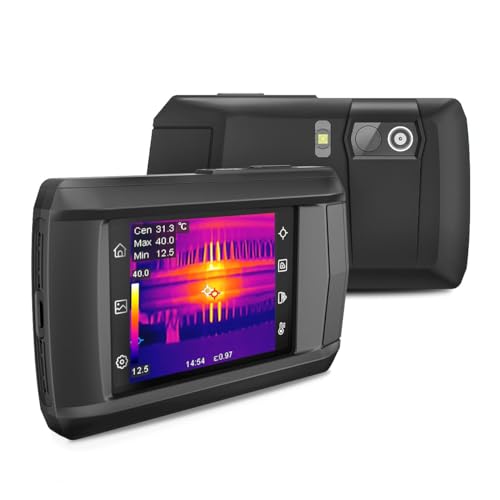
- IntellFault automates scene recognition for leaks and insulation gaps
- 3.5-inch touchscreen with recording and playback
- Live super resolution boosts 96×96 to 240×240
Best For: Inspectors wanting automated anomaly detection and easy touchscreen control
Pro-Grade Pick
FLIR E50bx Compact Thermal Imaging Camera
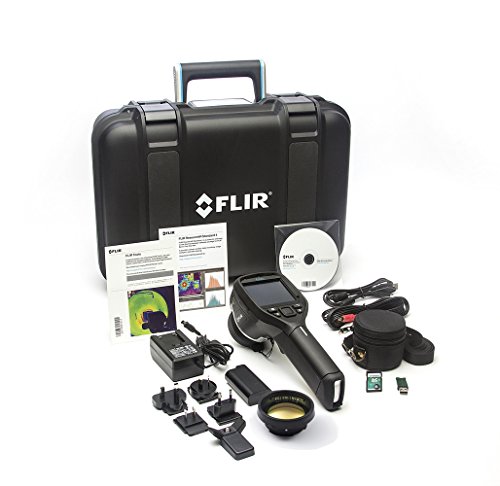
- 240 x 180 IR resolution with MSX
- Lightweight 1.82 lb body with 3.5-inch touchscreen
- Includes battery, charger, software, and hard case
Best For: Technicians who want a lightweight, easy-to-use thermal camera for detailed inspections and reporting.
Smart Inspection Pick

- 256 x 192 detector enhanced to 640 x 480 super resolution
- <40 mK sensitivity with 25 Hz refresh rate
- Wi-Fi app, PC software, and intelligent scene detection
Best For: Inspectors who want app connectivity, scene detection, and enhanced thermal image clarity.
Best Portable Pick
TOPDON TC004 Mini Thermal Camera

- 128 x 128 thermal imaging enhanced to 240 x 240
- 15-hour runtime with IP54 protection
- Stores up to 8,000 photos with auto-capture alerts
Best For: Homeowners and field users who want a pocket-friendly thermal camera with long runtime and basic smart alerts.
AI-Fusion Pro
TT27D Dual-Lens WiFi Thermal Camera

- AI upscaling to 640x480 with 5 imaging modes
- Wi-Fi app support for live viewing and reports
- ±3.6°F accuracy with alarms and tripod support
Best For: HVAC, home inspection, and professional field reporting
Field-Ready Thermal Analyzer
FOXWELL RT280 Thermal Imaging Camera

- TISR boosts effective resolution to 240x180
- Windows software supports analysis and reports
- 8GB storage holds 20,000+ images and videos
Best For: Field inspections that need rugged build quality and PC reporting
Ultra-High Detail Handheld Thermal Pick – Thermal Master Thor002 512×384 X³
If you want premium thermal imaging cameras with a strong balance of detail, portability, and field-ready features, the Thermal Master Thor002 is built for demanding inspections. Its upgraded X³ IR tech boosts thermal resolution to 512×384, while the 3.5-inch IPS display and 25Hz refresh rate make it easier to spot changes quickly on the job.
Best For: Electrical, HVAC, mechanical, and building inspectors who want higher-resolution handheld thermal imaging.
Pros:
- 512×384 thermal resolution with 40mK sensitivity for fine detail.
- 3.5-inch 640×480 IPS display plus 2MP visible camera for clearer viewing.
- Wide measurement range from -4°F to 1022°F with ±3.6°F accuracy.
- Long 10.5-hour battery life, 18W fast charging, and IP54 / 2-meter drop resistance.
Cons:
- Premium feature set may be more camera than casual users need.
- Some workflow features rely on USB or Wi-Fi connectivity for broader review and sharing.
- Built for professional use, so it may feel more complex than entry-level handhelds.
Overall, the Thor002 is a strong choice if your priority is sharper thermal detail and practical inspection tools in one handheld unit. It adds helpful documentation and alarm features without sacrificing portability.
Pro-Grade Flir Inspection System – FLIR E96 24° + 14°
FLIR E96 Advanced Thermal Imaging Camera with 24° + 14° Lens, 640x480, -20°C to +1500°C
Check Price On AmazonFor buyers comparing premium thermal imaging cameras, the FLIR E96 stands out as a professional inspection tool with 640×480 thermal resolution and advanced image processing. It is designed to help you make faster decisions with FLIR Vision Processing, MSX, UltraMax, and adaptive filtering, while interchangeable lenses expand its usefulness across different inspection tasks.
Best For: Professionals who need a high-resolution FLIR camera for electrical, mechanical, roof, and building-envelope inspections.
Pros:
- 640×480 thermal resolution and 307,000 non-contact measurement points.
- MSX, UltraMax, and adaptive filtering help improve image clarity.
- Interchangeable auto-calibrating lenses support both wide and telephoto work.
- Built-in mic, routing software integration, and report generation features aid documentation.
Cons:
- Best suited to professional workflows rather than simple occasional use.
- Accessory and lens-based system may be more than some buyers need.
- Premium capabilities are focused on inspection efficiency, not consumer convenience.
The E96 is a serious inspection camera for users who need dependable thermal detail and flexible optics. Its reporting and workflow features make it especially practical for teams that document findings regularly.
Connected Inspection Workflow Pick – FLIR i34 ACE OS
The FLIR i34 is a practical option in premium thermal imaging cameras if your priority is connected inspections and smooth data handling. With up to 240×320 resolution, 40 mK NETD, and FLIR-patented MSX enhancement, it is aimed at clear image capture and easier identification of problem areas.
Best For: Teams that want app-enabled thermal inspections with cloud sharing and streamlined reporting.
Pros:
- Up to 240×320 resolution with 40 mK thermal sensitivity.
- MSX enhancement helps visible details stand out in thermal images.
- Wi-Fi cloud integration via FLIR Ignite supports uploading, organization, and sharing.
- Designed to simplify onboarding, training, and data connectivity.
Cons:
- Lower thermal resolution than FLIR’s higher-end inspection models.
- Focused more on workflow and connectivity than lens flexibility.
- Best fit is professional inspection teams, not casual users.
If you need thermal imaging that fits into a connected workflow, the i34 is built to reduce friction from capture to reporting. It is especially appealing for organizations that want secure Wi-Fi-based sharing and simpler scaling.
Smart Scene Detection Value Pick – HP96 Intelligent Thermal Camera
The HP96 is a feature-packed choice if you want premium thermal imaging cameras with automated scene recognition and simple touchscreen control. Its IntellFault technology is designed to help detect water leaks and insulation gaps faster, while the 3.5-inch touchscreen, dual cameras, and multiple viewing modes make it easier to work through inspections.
Best For: Inspectors who want automated anomaly detection and an easy-to-use touchscreen thermal camera.
Pros:
- IntellFault scene recognition helps identify leaks and insulation gaps automatically.
- 3.5-inch touchscreen with phone-style controls and built-in recording.
- Dual cameras with thermal, visual, fusion, PIP, and blending modes.
- Live super resolution boosts viewing from 96×96 to 240×240 in real time.
Cons:
- Note says there are no moisture readings, despite leak-focused detection.
- Built-in battery life is listed at up to 4 hours, which is shorter than some alternatives.
- Base sensor is 96×96 before super-resolution enhancement.
The HP96 is a strong option if you want smarter detection tools and an approachable interface in one handheld package. It is especially useful when you want faster spot checks without giving up useful imaging modes and alerts.
Pro-Grade Pick – FLIR E50bx Compact Thermal Imaging Camera
FLIR E50bx Compact Thermal Imaging Camera with 240 x 180 IR Resolution, MSX and 15 Degree Lens
Check Price On AmazonIf you want premium thermal imaging cameras with a proven, field-ready feel, the FLIR E50bx is built for detailed inspections. Its 240 x 180 IR measurable pixel resolution, 3.5-inch touchscreen, manual focus, and 4x continuous zoom make it a strong choice when you need practical thermal detail in a compact body.
Best For: Technicians who want a lightweight, easy-to-use thermal camera for detailed inspections and reporting.
Pros:
- 240 x 180 IR resolution with MSX support for clearer thermal inspection detail
- Lightweight 1.82 lb design with manual focus and 4x continuous zoom
- 3.5-inch touchscreen LCD makes operation straightforward in the field
- Includes battery, charger, USB cable, FLIR Tools software, and hard transport case
Cons:
- Lower IR resolution than some newer enhanced-resolution models
- 15-degree lens may feel specialized rather than broadly flexible
Overall, the E50bx is a solid premium option if you value FLIR’s compact design and a complete accessory bundle. It’s best suited to users who care more about dependable workflow than headline-grabbing specs.
Smart Inspection Pick – HSFTOOLS F2W Thermal Camera
The HSFTOOLS F2W stands out among premium thermal imaging cameras for users who want enhanced clarity and smarter workflow tools. It starts with a 256 x 192 detector and uses Live Super Resolution to reach 640 x 480, while the 3.2-inch LCD, <40 mK sensitivity, and 25 Hz refresh rate aim to keep inspections smooth and responsive.
Best For: Inspectors who want app connectivity, scene detection, and enhanced thermal image clarity.
Pros:
- 256 x 192 detector enhanced to 640 x 480 super resolution
- Very sensitive <40 mK thermal detection with 25 Hz refresh rate
- Wi-Fi app support plus PC software for analysis, reporting, and projection
- Intelligent scene detection and alert features for moisture or insulation issues
Cons:
- Feature set may be more complex than basic point-and-shoot thermal cameras
- Battery is included, but the unit is heavier than the smallest pocket models
For buyers who want more than just thermal snapshots, the F2W offers a strong mix of image enhancement and software tools. It’s a practical choice when you want faster anomaly recognition and easier documentation.
Best Portable Pick – TOPDON TC004 Mini Thermal Camera
The TOPDON TC004 Mini is a compact option for buyers comparing premium thermal imaging cameras that still need useful inspection features. It uses 128 x 128 thermal imaging enhanced to 240 x 240 with TISR technology, plus a wide 40° x 30° field of view and 25 Hz refresh rate for smooth everyday diagnostics.
Best For: Homeowners and field users who want a pocket-friendly thermal camera with long runtime and basic smart alerts.
Pros:
- 128 x 128 thermal imaging enhanced to 240 x 240 with TISR
- Pocket-friendly 1.03 lb design with IP54 waterproof rating
- 15-hour runtime and automatic shut-off options to extend battery life
- Stores up to 8,000 photos with auto-capture alerts for high temperatures
Cons:
- Base thermal resolution is lower than higher-end inspection cameras
- No paper manual included, so setup relies on the electronic download
The TC004 Mini is a strong fit if portability and battery life matter more than maximum image resolution. It keeps the core thermal tools simple while adding useful alerts and storage for routine inspections.
AI-Fusion Pro – TT27D Dual-Lens WiFi Thermal Camera
If you’re comparing premium thermal imaging cameras for professional inspections, the TT27D stands out for its dual-lens setup, AI upscaling, and flexible viewing modes. It combines thermal and 2MP visual imaging in five modes, so you can inspect issues like leaks, insulation gaps, or electrical faults with more context and less guesswork.
Best For: Professionals who want a compact, feature-rich thermal camera for HVAC, home inspection, and maintenance work.
Pros:
- AI upscales thermal output to 640×480 with fusion, PIP, blending, and visual modes.
- Wi-Fi and the AccuHeat app support live streaming, remote control, and faster reporting.
- Strong measurement tools include <40 mK NETD, ±3.6°F accuracy, and high/low alarms.
- Pocket-sized design adds a touchscreen, LED light, tripod hole, and drop resistance.
Cons:
- On-device storage tops out at 4GB, so large projects may need more frequent file management.
- Its many scene modes and settings may feel more complex than a basic point-and-shoot camera.
Overall, the TT27D is a strong pick if you want premium thermal imaging cameras with modern image enhancement and workflow-friendly connectivity. It looks especially well suited to users who need both detailed analysis and quick field reporting.
Field-Ready Thermal Analyzer – FOXWELL RT280 Thermal Imaging Camera
The FOXWELL RT280 is aimed at buyers who want premium thermal imaging cameras with practical inspection tools and straightforward analysis. Its 320×240 display, TISR-enhanced effective resolution, and 25Hz frame rate make it a solid choice for spotting temperature differences in home, electrical, mechanical, and automotive work.
Best For: Inspectors who want rugged handheld thermal imaging with PC-based analysis and large internal storage.
Pros:
- TISR boosts effective thermal resolution to 240×180 for clearer detail.
- Windows software supports point, line, and area analysis plus automatic report generation.
- Built-in 8GB eMMC storage can hold over 20,000 images and videos.
- Rugged design includes IP54 protection and 6.6-foot drop resistance.
Cons:
- PC analysis is limited to Windows and is not compatible with Mac.
- The 2.8-inch LCD is smaller than some larger-screen competitors.
In practice, the RT280 balances durability, storage, and analysis features better than a bare-bones thermal imager. If you need a field-ready option that still supports structured reporting on a PC, it fits the job well.
AI Scene Scan – HF96 Thermal Camera with AI Scene Detection
The HF96 is a practical option for shoppers looking at premium thermal imaging cameras with automated scene detection and easy handheld operation. It combines a thermometer, thermal camera, and laser pointer in one tool, while live super resolution and 25Hz output help reveal hotspots, cold spots, and other anomalies during routine inspections.
Best For: Home energy checks, HVAC troubleshooting, and users who want automated thermal detection in a portable tool.
Pros:
- IntellFault scene recognition helps identify water leaks and insulation gaps more quickly.
- Live super resolution enhances images to 240×240 with thermal sensitivity below 50mK.
- Tracks hot spot, cold spot, and center spot automatically for faster anomaly spotting.
- Long runtime, 4GB storage, IP54 protection, and 6.6-foot drop resistance support field use.
Cons:
- It does not provide moisture readings, despite its leak-focused scene detection.
- The 7 preset palettes are useful, but fewer than some higher-end competitors offer.
For buyers who value guided detection over manual complexity, the HF96 offers a compelling mix of automation and portability. It’s especially attractive if you want thermal inspection tools that can simplify common home and HVAC checks without sacrificing core measurement capability.
How We Picked the Best Premium Thermal Imaging Cameras
Our selection focused on practical buying factors that matter in real inspections: thermal resolution, measured temperature range, lens and field of view options, display quality, app or Wi-Fi connectivity, and advanced software features such as scene detection or image fusion. We also considered whether each camera feels suited to entry-level troubleshooting, daily professional use, or demanding diagnostic work.
Quick Comparison
At a high level, the lineup breaks into three categories. Compact handheld models are best for portability and basic fault-finding. Midrange cameras offer a strong mix of resolution, smart features, and usability for general trade work. Higher-end units deliver broader temperature coverage, better optics, and sharper detail for users who need more confidence in complex environments.
Key Buying Factors for Premium Thermal Imaging Cameras
Resolution and Image Detail
Higher IR resolution helps reveal smaller temperature differences and makes it easier to identify electrical hotspots, insulation gaps, moisture issues, and mechanical faults. If you inspect detailed systems often, prioritize sharper sensors and features that improve visible clarity.
Temperature Range
Choose a range that matches your work. HVAC, building, and maintenance users often need moderate ranges, while electrical and industrial applications may require much higher maximum readings for safe, meaningful diagnostics.
Lens, Screen, and Ergonomics
A wider lens can help with large surfaces, while a tighter field of view may suit distant components. A bright touchscreen, good button layout, and comfortable grip matter more than many buyers expect during long workdays.
Smart Features and Connectivity
App support, Wi-Fi, scene recognition, and image enhancement can streamline reporting and improve workflow. These features are especially useful if you share findings with clients or need documentation after the inspection.
Who Should Buy Which Premium Thermal Imaging Cameras?
If you want the best all-around professional tool, look for a model with high resolution, strong temperature coverage, and a flexible lens system. If portability matters most, a compact app-enabled camera may be enough. For frequent trade use, Premium Thermal Imaging Cameras with intelligent scene tools and easy data handling usually provide the best long-term value. If you work in demanding electrical or industrial settings, prioritize the highest resolution and broadest thermal range you can reasonably afford.
