
Premium OLED reference monitors combine exceptional contrast, fast response times, and wide-gamut color in displays suited to demanding creative and gaming workflows.
We compare 10 standout 4K and QHD OLED models, focusing on color performance, HDR capability, connectivity, refresh rate, and practical desk use.
Best 10 Premium OLED Reference Monitors Picks for 2026
Studio Speed Pick

- 4K 240Hz QD-OLED panel
- Delta E less than 1 and hardware calibration
- Thunderbolt 4 and broad HDR support
Best For: Color-critical creative work with high-refresh gaming
Competitive Gaming Pick

- 4K OLED at 165Hz or Full HD at 330Hz
- 0.03ms response time with adaptive sync
- Glossy panel with up to 98.5% DCI-P3
Best For: Flexible high-refresh gaming
Broadcast Reference Pick

- 4K 240Hz QD-OLED with 1000-nit peak brightness
- Dual 12G-SDI for professional video playback
- Calibration tools, hood, and two stand options included
Best For: Broadcast and post-production workflows
Ultra-High-Refresh Pick
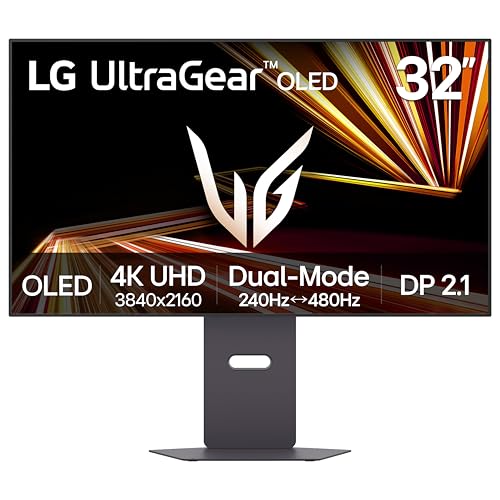
- 4K at 240Hz or Full HD at 480Hz
- 0.03ms response time with adaptive sync
- Up to 1300 nits peak brightness and OLED Care
Best For: Competitive gaming at extreme refresh rates
Color-Accurate Creator Pick

- 4K QD-OLED with 99% DCI-P3 and true 10-bit color
- Calman Verified with Delta E < 1.5
- 96W USB-C, Auto KVM, and ergonomic stand
Best For: Color-focused creative work and Mac laptop setups
High-Refresh OLED Gaming Pick

- 4K QD-OLED with 166 PPI
- 165Hz refresh and 0.03ms response time
- HDR10+ Gaming and burn-in safeguards
Best For: Fast-paced 4K gaming
Balanced Professional OLED
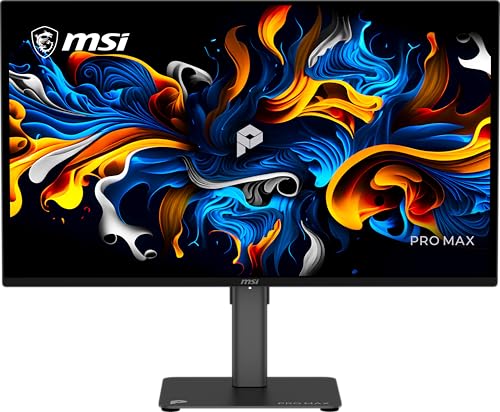
- 4K QD-OLED with Delta E < 2 accuracy
- 120Hz, FreeSync Premium Pro, and HDR True Black 400
- USB-C, height adjustment, speakers, and eye care
Best For: Mixed creative, productivity, and gaming setups
Best Glossy 4K Hybrid

- 4K at 240Hz or FHD at 480Hz
- 99% DCI-P3 and Delta E < 2
- Three-year burn-in coverage
Best For: Mixed gaming and photo/video editing
Best High-Refresh QHD

- 360Hz QHD gaming performance
- 0.03ms QD-OLED response time
- Matte Glare Free screen
Best For: Competitive gaming in bright rooms
Best 4K QD-OLED Value

- 31.5-inch 4K QD-OLED panel
- 240Hz refresh and 0.03ms response
- USB-C supports up to 90W
Best For: 4K gaming and multi-device setups
Studio Speed Pick – ASUS ProArt PA32UCDM
The ASUS ProArt PA32UCDM combines a 32-inch 4K QD-OLED panel with a 240Hz refresh rate, making it a versatile choice among premium OLED reference monitors. Its true 10-bit color, broad gamut coverage, hardware calibration, and professional connectivity suit color-sensitive creative work while retaining strong gaming performance.
Best For: Photo and video editors, Mac users, and creators who want reference-oriented color tools with high-refresh performance.
Pros:
- 4K QD-OLED panel with 240Hz refresh rate and 0.1ms response time.
- True 10-bit color, 100% sRGB, 99% DCI-P3, and BT.2020 coverage.
- Delta E less than 1 performance, hardware calibration, Thunderbolt 4, and Dolby Vision, HLG, and HDR10 support.
- Five-year warranty with online registration extension.
Cons:
- Its professional feature set may be more than casual users need.
- Only one HDMI port is listed.
The PA32UCDM is a strong all-rounder when accurate color, HDR flexibility, and fast motion matter equally. Thunderbolt 4 and calibration support make it especially practical for modern creative workstations.
Competitive Gaming Pick – LG UltraGear 32GX850A-B
The LG UltraGear 32GX850A-B brings a glossy 32-inch 4K OLED display to the premium OLED reference monitors category, with a dual-mode design that switches between 4K at 165Hz and Full HD at 330Hz. It prioritizes responsive gaming, contrast, and flexible viewing adjustments over studio calibration features.
Best For: Gamers who want sharp 4K visuals for cinematic titles and higher frame rates for competitive play.
Pros:
- Glossy 4K UHD OLED display with 1.5M:1 contrast and up to 98.5% DCI-P3 coverage.
- Dual-mode operation supports 4K at 165Hz or Full HD at 330Hz.
- 0.03ms response time with G-SYNC compatibility and FreeSync Premium Pro.
- Height, tilt, swivel, and pivot adjustments plus UL certifications for anti-glare, flicker-free, and low-blue-light performance.
Cons:
- Typical brightness is listed at 275 nits.
- Glossy finish can be less suitable for brightly lit rooms despite its anti-glare certification.
This UltraGear model is best viewed as a gaming-first OLED rather than a calibration-focused reference display. Its dual-mode refresh options make it particularly adaptable for both detailed single-player games and fast competitive titles.
Broadcast Reference Pick – ASUS ProArt PA32USD
The ASUS ProArt PA32USD is the most specialized option here for professional video workflows. Alongside its 32-inch 4K QD-OLED panel, it provides dual 12G-SDI, Thunderbolt 4, HDMI 2.1, DisplayPort 2.1, calibration support, and bundled accessories that make it a serious contender among premium OLED reference monitors.
Best For: Broadcast, post-production, and HDR video professionals needing SDI connectivity and flexible studio setup options.
Pros:
- 4K QD-OLED panel with 240Hz refresh, 1000-nit peak brightness, and DisplayHDR True Black 400.
- Dual 12G-SDI supports uncompressed 4K at 60Hz and compatibility with 6G and 3G Level A and B.
- Delta E less than 1 color performance, hardware calibration, and Dolby Vision, HLG, and HDR10 support.
- Includes dual stand options, monitor hood, cable-management clips, and a five-year warranty with registration.
Cons:
- Its broadcast-oriented connectivity may be unnecessary for general desktop use.
- At about 20 pounds, it is not a lightweight display.
The PA32USD stands out when signal flexibility and production accessories are as important as panel quality. Dual SDI and 96W Thunderbolt 4 power delivery make it especially well suited to demanding professional environments.
Ultra-High-Refresh Pick – LG UltraGear 32GX870A-B
The LG UltraGear 32GX870A-B targets players who want premium OLED image quality without giving up extreme refresh rates. Its dual-mode panel runs at 4K and 240Hz or Full HD and 480Hz, while OLED protection tools, adaptive sync, and USB-C connectivity add practical value for a high-end setup.
Best For: Competitive gamers who want a fast 4K OLED monitor with a 480Hz Full HD mode.
Pros:
- Dual-mode operation offers 4K at 240Hz or Full HD at 480Hz.
- 0.03ms response time with G-SYNC compatibility and FreeSync Premium Pro.
- Micro Lens Array+ technology reaches up to 1300 nits peak brightness and supports DisplayHDR True Black 400.
- Includes USB-C, DisplayPort 2.1, built-in speakers, webOS features, and OLED Care tools.
Cons:
- The 480Hz mode uses Full HD resolution rather than 4K.
- Its two-year limited warranty is shorter than the five-year coverage listed for the ASUS ProArt models.
This is the strongest fit for speed-focused gaming in the group. The 4K 240Hz mode handles detailed visuals, while the 480Hz option gives competitive players a lower-resolution route to exceptionally high frame rates.
Color-Accurate Creator Pick – ASUS ProArt PA279CDV
The ASUS ProArt PA279CDV is a strong choice among premium OLED reference monitors for creators who need 4K detail, wide-gamut color, and convenient laptop connectivity. Its QD-OLED panel combines 120Hz motion with factory calibration, Calman Verification, and Delta E < 1.5 accuracy.
Best For: Photo and video editors, Mac users, and professionals building a color-focused USB-C workstation.
Pros:
- 4K QD-OLED panel with 99% DCI-P3, 100% sRGB, true 10-bit color, and BT.2020 coverage.
- Factory-calibrated, Calman Verified performance with Delta E < 1.5.
- USB-C supports up to 96W Power Delivery, with Auto KVM, USB hub, and DisplayPort daisy chaining.
- Adjustable stand, Mac optimization, HDR10, and a three-year warranty.
Cons:
- Its 27-inch screen may feel compact for users who prefer larger editing canvases.
- Connectivity and calibration features may be more than casual users need.
Choose this model when color consistency and streamlined desk connectivity matter as much as OLED contrast. The ergonomic stand and high-power USB-C connection make it particularly practical for a laptop-centered creative setup.
High-Refresh OLED Gaming Pick – Samsung Odyssey OLED G7
The Samsung Odyssey OLED G7 brings premium OLED reference monitors into a gaming-focused design, pairing 4K resolution with a 165Hz refresh rate and 0.03ms response time. Its QD-OLED panel adds glare reduction, HDR10+ Gaming, and burn-in protection for demanding play.
Best For: Competitive and enthusiast gamers who want sharp 4K OLED visuals with fast refresh and adaptive sync.
Pros:
- 4K QD-OLED resolution with 166 PPI for crisp game imagery.
- 165Hz refresh rate and 0.03ms response time support responsive motion.
- AMD FreeSync Premium helps reduce tearing and stutter.
- Glare Free Technology, HDR10+ Gaming, Pantone Validation, and Safeguard burn-in protection.
Cons:
- Its feature set is oriented more toward gaming than calibration-led reference work.
- The listed connectivity is limited to DisplayPort and HDMI.
This Samsung is the better fit when refresh rate and response are priorities. It still offers useful color and HDR features, but its strongest advantage is delivering fast, detailed 4K OLED gaming with added screen-protection technologies.
Balanced Professional OLED – MSI PRO MAX 271UPX12G
The MSI PRO MAX 271UPX12G offers a practical middle ground among premium OLED reference monitors, combining 4K QD-OLED contrast with Delta E < 2 accuracy, 120Hz performance, and modern USB-C connectivity. It is designed for creative productivity while retaining gaming-friendly adaptive sync.
Best For: Professionals who want accurate 4K OLED imagery, ergonomic comfort, and a monitor that can handle both work and entertainment.
Pros:
- 27-inch 4K UHD QD-OLED panel delivers deep blacks and strong contrast.
- Delta E < 2 accuracy and DisplayHDR True Black 400 support color-sensitive workflows.
- 120Hz refresh rate with FreeSync Premium Pro and a listed 0.03ms response time.
- Height-adjustable stand, USB-C, built-in speakers, and TÜV-certified eye-care features.
Cons:
- USB-C Power Delivery is limited to 15W, so it is less suitable for charging a laptop.
- Its color accuracy specification is less stringent than the ASUS model’s Delta E < 1.5 rating.
The MSI makes sense for users who want one display for editing, productivity, and gaming without giving up ergonomic adjustments. Its USB-C connection adds flexibility, although the low power-delivery rating means a separate laptop charger may still be needed.
Best Glossy 4K Hybrid – ASUS ROG XG32UCWMG
The ASUS ROG XG32UCWMG is a strong choice among premium OLED reference monitors for buyers who want sharp 4K detail, a glossy zero-haze surface, and the flexibility to switch between 4K at 240Hz and Full HD at 480Hz. Its 99% DCI-P3 coverage, true 10-bit color, and Delta E below 2 also make it suitable for photo and video work.
Best For: Gamers and creators who want one monitor for high-refresh gaming, HDR entertainment, and color-sensitive editing.
Pros:
- 32-inch 4K OLED display with 240Hz refresh rate and FHD 480Hz dual mode
- Glossy TrueBlack panel, 99% DCI-P3 coverage, true 10-bit color, and Delta E < 2
- HDMI 2.1, DisplayPort 1.4 DSC, and USB-C with 15W power delivery
- Three-year warranty with replacement and burn-in coverage
Cons:
- USB-C power delivery is limited to 15W
- The dual-mode feature prioritizes either 4K detail or Full HD speed rather than both simultaneously
This ASUS stands out as the most versatile option here for mixed gaming and content-creation setups. OLED Care Pro features, including a proximity sensor, add useful burn-in risk management, while the glossy finish favors image clarity over glare reduction.
Best High-Refresh QHD – Samsung Odyssey OLED G6 G60SD
The Samsung Odyssey OLED G6 is a compelling premium OLED reference monitor for competitive players who value speed, smooth motion, and reduced glare. Its QHD QD-OLED panel combines a 360Hz refresh rate with a 0.03ms response time, while the matte Glare Free surface suits brighter rooms.
Best For: Competitive gamers who prioritize 360Hz responsiveness, QD-OLED contrast, and a matte screen finish.
Pros:
- 360Hz QHD refresh rate with a near-instant 0.03ms response time
- QD-OLED delivers deep blacks, dynamic contrast, and an expansive color range
- Glare Free coating reduces reflections from external light sources
- Cooling and OLED protection features help manage burn-in risk
Cons:
- QHD resolution provides less desktop detail than the 4K alternatives
- The 27-inch screen is smaller than the 31.5- and 32-inch options
- Its feature set is focused primarily on gaming
The G6 is the speed-focused pick in this group. It trades 4K sharpness for a faster 360Hz experience and adds Samsung’s cooling, logo detection, taskbar detection, and screen-saver features for additional OLED care.
Best 4K QD-OLED Value – MSI MPG 321URX QD-OLED
The MSI MPG 321URX is a practical premium OLED reference monitor for buyers who want a large 4K QD-OLED display without giving up high-refresh gaming. Its 240Hz refresh rate, 0.03ms response time, 99% DCI-P3 gamut, and Delta E of 2 or less support both immersive play and color-conscious work.
Best For: Users seeking a large 4K QD-OLED monitor with strong gaming performance and flexible connectivity.
Pros:
- 31.5-inch 4K UHD QD-OLED panel with 240Hz refresh rate
- 0.03ms response time, 10-bit color, and 99% DCI-P3 coverage
- HDMI 2.1, DisplayPort 1.4a, and USB-C connectivity with 90W power delivery
- OLED Care 2.0, AI KVM, and PiP/PbP support
Cons:
- It has a limited warranty description compared with the ASUS model’s specified coverage
- The supplied notes identify it primarily for gaming rather than professional editing
- Its listed weight is relatively high at 27.2 pounds
MSI’s 321URX balances 4K image quality and fast gaming performance particularly well. The 90W USB-C connection, KVM functionality, and picture-by-picture support make it the most flexible choice for users connecting multiple computers or devices.
How We Picked the Best Premium OLED Reference Monitors
We selected displays that offer a compelling mix of OLED image quality, resolution, HDR performance, color coverage, refresh rate, and professional or enthusiast-focused features. Priority went to models with strong connectivity, useful calibration support, modern adaptive-sync technology, and specifications that match their intended audience.
Because OLED monitors vary widely, this list includes both creator-oriented reference displays and high-refresh gaming monitors. A model designed for grading and production may emphasize calibration and color consistency, while a gaming-focused screen may prioritize motion clarity, input response, and dual-mode resolution or refresh options.
Quick Comparison
| What matters most | Best fit |
|---|---|
| 4K OLED with professional color tools | Video editors, photographers, and designers |
| 4K OLED at 240Hz or higher | PC gamers who want detail and speed |
| QD-OLED color and contrast | Users balancing creative work and entertainment |
| 27-inch 4K OLED | Smaller desks and high pixel density |
| QHD OLED at extreme refresh rates | Competitive gaming |
Key Buying Factors for Premium OLED Reference Monitors
Resolution, Size, and Viewing Distance
Thirty-two-inch 4K models provide a spacious workspace and sharp text at typical desktop distances. Twenty-seven-inch 4K monitors deliver even higher pixel density, while QHD models can make more sense when very high frame rates are the priority.
Color Accuracy and HDR
Look for wide-gamut coverage, factory calibration, low Delta E claims, Calman verification, and a suitable HDR standard. OLED’s pixel-level control produces excellent blacks, but real-world HDR impact also depends on peak brightness, tone mapping, and the content you create or watch.
Refresh Rate and Motion
A 120Hz or 165Hz panel feels smoother for general use and gaming. Models reaching 240Hz, 330Hz, or 360Hz are aimed at users with powerful systems and a strong preference for competitive motion clarity. Confirm which resolution and refresh combinations are available in each display mode.
Connectivity and Workflow Features
USB-C with power delivery can simplify laptop setups, while HDMI 2.1, DisplayPort, USB hubs, and KVM features improve flexibility. Check the actual bandwidth and power-delivery rating rather than assuming every USB-C port supports the same functions.
OLED Care and Ergonomics
Choose a monitor with effective pixel-shift, screen-saver, compensation-cycle, and logo-dimming features. Varying content, avoiding prolonged static images, and following the manufacturer’s maintenance guidance can help reduce burn-in risk. Also check height, tilt, swivel, VESA compatibility, and the finish, since glossy panels can show reflections.
Who Should Buy Which Premium OLED Reference Monitors?
For Creative Professionals
Choose a ProArt or similarly calibration-focused 4K OLED if color accuracy, HDR evaluation, and USB-C workflow convenience matter more than maximum gaming speed.
For High-End PC Gamers
Pick a 32-inch 4K 240Hz OLED when you want sharp visuals and premium motion performance. These displays are strongest for powerful gaming PCs that can sustain high frame rates.
For Competitive Players
A QHD 360Hz OLED is the better match for esports, where responsiveness and motion clarity matter more than 4K detail.
For Mixed Work and Play
A QD-OLED gaming monitor with 4K resolution, USB-C, and HDR is a practical compromise for users who edit, create, stream, and play on one screen. Prioritize the connectivity and ergonomic features you will use every day.
