
The best premium ergonomic studio chairs combine serious adjustability with the comfort and support needed for long editing, recording, design, and production sessions.
We compared 10 strong options across lumbar support, armrests, seat design, materials, weight capacity, and studio-friendly features so you can choose with confidence.
Best 10 Premium Ergonomic Studio Chairs Picks for 2026
Maximum Adjustability
ELABEST X100 Ergonomic Mesh Chair

- Dynamic lumbar, 5D arms, and 3D headrest
- 18-inch footrest and three-stage recline
- BIFMA-certified support up to 300 pounds
Best For: Highly adjustable work and gaming setups
Versatile Premium Pick
FLEXISPOT ErgoX Cream-FT Chair
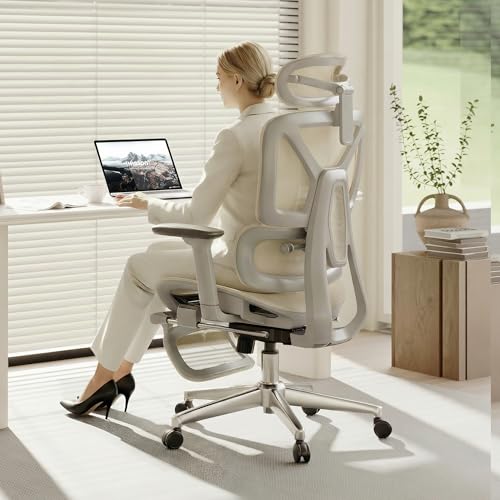
- Adjustable depth, height, tilt, and dynamic lumbar
- 3D armrests, headrest, and footrest
- Supports users up to 400 pounds
Best For: Flexible home-office and leisure use
Full-Support Recliner
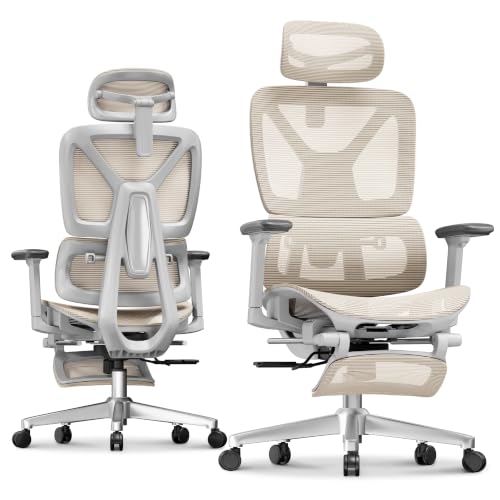
- Dynamic lumbar, 3D headrest, and five-level back
- Adjustable depth, height, arms, and recline
- Footrest supports work and relaxation
Best For: Multipurpose work, gaming, reading, and reclining
Best Value Mesh Pick
GABRYLLY Ergonomic Office Chair

- Wide breathable mesh seat supports up to 300 pounds
- Adjustable headrest, lumbar support, arms, and tilt
- Flip-up arms and smooth wheels suit flexible workspaces
Best For: Tall or larger users seeking breathable all-day support
Most Adaptive Support
Newtral Ergonomic Office Chair

- Auto-following backrest tracks movement for lumbar support
- 4D arms, adjustable seat depth, and four tilt positions
- Foldable footrest and foam seat support extended sessions
Best For: Users wanting extensive adjustments and adaptive lumbar support
Best Weight Capacity
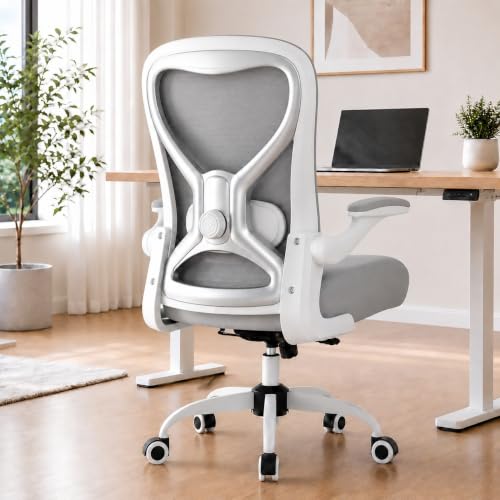
- 330-pound capacity with reinforced base and casters
- Thick foam cushion targets comfort during long sessions
- Adjustable lumbar support, rocking, and flip-up arms
Best For: Users seeking a higher-capacity chair for extended workdays
Best Standing-Desk Match
Adjustable Faux Leather Drafting Chair

- 24.5–34.1-inch pneumatic seat adjustment
- Flip-up arms and adjustable foot ring
- Contoured foam seat with waterfall edge
Best For: Standing desks, drafting tables, and counter-height work
Best Balanced Mesh Design
Marsail High-Back Office Chair

- Adjustable lumbar, headrest, recline, and 3D arms
- Breathable mesh back with thick foam seat
- 330-pound stated weight capacity
Best For: Customizable home-office comfort and airflow
Maximum Adjustability – ELABEST X100 Ergonomic Mesh Chair
For shoppers comparing premium ergonomic studio chairs for long work sessions, the ELABEST X100 stands out for its extensive adjustment range and integrated footrest. Its dynamic lumbar system, breathable mesh, reclining design, and 300-pound capacity make it suitable for both professional and gaming setups.
Best For: Users who want highly adjustable back, arm, head, and leg support in one chair.
Pros:
- Dynamic lumbar support adjusts in depth, height, and rotation.
- 5D flip-up armrests and an adjustable 3D headrest provide flexible positioning.
- 18-inch footrest, three-stage recline, and ventilated mesh support work-to-rest transitions.
- BIFMA-certified structure supports up to 300 pounds.
Cons:
- Its many adjustment features may require more setup time to dial in.
- The chair’s large feature set may be more than needed for basic desk use.
The X100 is a strong choice when customization and long-session comfort take priority. Its footrest and flip-up arms also make it practical for multipurpose rooms.
Versatile Premium Pick – FLEXISPOT ErgoX Cream-FT Chair
The FLEXISPOT ErgoX Cream-FT is a practical option among premium ergonomic studio chairs, combining adjustable seat depth, dynamic lumbar support, a three-position recline, and a footrest. Its design is intended for users from 5’1″ to 6’2″ and supports up to 400 pounds.
Best For: Home-office users seeking a broad fit range and support for work, reading, gaming, or relaxing.
Pros:
- Seat depth adjusts from 17 to 20 inches for a more personalized fit.
- Five-level back adjustment, dynamic lumbar support, and a 3D headrest address multiple support needs.
- 3D armrests adjust in height, forward/back position, and swivel.
- Available with mesh seating for airflow or cushioned foam for added cradling.
Cons:
- The listed seat-height range may not suit users outside its stated 5’1″–6’2″ fit range.
- At 38 pounds, it may be less substantial to move than heavier executive-style chairs.
With its combination of fit adjustments and multipurpose features, the ErgoX Cream-FT is a well-rounded choice for a bedroom, office, or gaming room.
Balanced Task Support – MOLENTS ML230BB Ergonomic Chair
The MOLENTS ML230BB offers a straightforward set of ergonomic features for shoppers seeking premium ergonomic studio chairs without an overly complicated setup. Adjustable lumbar support, 3D armrests, breathable mesh, and a 90°–120° tilt range suit focused work and shared office environments.
Best For: Company, home, and shared-office users who want adjustable support and a wide seat.
Pros:
- Lumbar support adjusts both vertically and forward/backward.
- 3D armrests help position the arms and shoulders during extended use.
- Breathable, elastic mesh is designed for cooler long-term seating.
- BIFMA X5.1 certification and a wide seat add practical office appeal.
Cons:
- The supplied notes do not specify a maximum weight capacity.
- Assembly requires attention to the component packaging and manual instructions.
- Its backrest reclines only from 90° to 120°.
The ML230BB is a sensible task-chair pick for users who value core ergonomic adjustments, breathable materials, and a conventional office profile.
Full-Support Recliner – FLEXISPOT ErgoX Cream Chair
The FLEXISPOT ErgoX Full Support brings the same adaptable approach expected from premium ergonomic studio chairs to work and relaxation spaces. It combines adjustable seat depth and height with dynamic lumbar support, a 3D headrest, adjustable arms, three-position recline, and a nap footrest.
Best For: Users who want a supportive chair for office work, gaming, reading, and reclining.
Pros:
- Adjustable seat depth from 17 to 20 inches helps fine-tune leg support.
- Five-level back adjustment, dynamic lumbar support, and a 3D headrest provide multiple fit options.
- Fully adjustable 3D armrests reduce the need to compromise on arm positioning.
- Mesh construction, foam fill, and a footrest support both active and relaxed use.
Cons:
- The chair’s overall dimensions and 20.1″–22.4″ height range may not suit every desk.
- The supplied specifications do not identify a separate weight limit beyond the 400-pound recommendation.
This ErgoX configuration is a strong fit for multipurpose rooms where one chair needs to cover concentrated computer work and occasional rest.
Best Value Mesh Pick – GABRYLLY Ergonomic Office Chair
For shoppers comparing premium ergonomic studio chairs, the GABRYLLY stands out for its roomy mesh seat, adjustable headrest, lumbar support, and practical flip-up arms. Its 90–120° tilt range and breathable design suit extended home-office sessions.
Best For: Tall or larger users who want a breathable, space-conscious chair for long workdays.
Pros:
- Wide mesh seat and high-back design support users from approximately 5’2″ to 6’1″ and up to 300 pounds.
- Adjustable headrest, seat height, backrest, lumbar support, and flip-up arms allow a customized fit.
- Breathable mesh, smooth PU wheels, and a 90–120° tilt range support comfortable daily use.
- Includes a three-year warranty and tools for assembly.
Cons:
- Its recommended height range may not suit users below 5’2″ or above 6’1″.
- The chair’s broad dimensions may be less suitable for compact desks.
This is a practical all-around option when adjustability, airflow, and a generous seat matter more than specialized recline features.
Most Adaptive Support – Newtral Ergonomic Office Chair
Among premium ergonomic studio chairs, the Newtral is designed for users who want highly adjustable lumbar support and a more flexible sitting setup. Its auto-following backrest, adjustable seat, 4D armrests, and footrest target long-session comfort.
Best For: Users who prioritize adaptive lumbar tracking, extensive adjustments, and occasional leg support.
Pros:
- Patented lockable auto-following backrest is designed to maintain lumbar support while leaning forward or backward.
- Offers adjustable seat height and depth, 4D armrests, and four tilt positions from 96° to 136°.
- Foldable footrest and foam seat add flexibility for breaks or reclined work.
- Supports up to 300 pounds and lists BIFMA and EN1335 certifications.
Cons:
- At 65 pounds, it may be less convenient to move than lighter office chairs.
- Its extensive adjustment system may take more time to configure.
The Newtral is the strongest fit here for buyers who want a feature-rich ergonomic chair with lumbar movement support and a built-in footrest.
Best Weight Capacity – Ergonomic Home Office Chair
CASASIO Ergonomic Home Office Chair, 4-Way Lumbar, Thick Cushion, 330LB (Gray/Silver)
Check Price On AmazonThis gray-and-silver model is a straightforward choice among premium ergonomic studio chairs, combining a thick foam cushion, dual-direction lumbar adjustment, flip-up arms, and gentle rocking. Its reinforced base and 330-pound rating make it suitable for demanding daily use.
Best For: Users who want a supportive, higher-capacity chair for long home-office sessions.
Pros:
- Virgin foam seat is designed to distribute weight evenly during 8-plus-hour workdays.
- Contoured mesh back and dual-direction lumbar cushion allow targeted lower-back adjustment.
- Flip-up arms help the chair fit under desks or adapt to shared workspaces.
- Reinforced metal base and premium casters support up to 330 pounds.
Cons:
- The frame and material details are less extensive than those of some feature-heavy models.
- Its listed dimensions may not provide the same wide-seat feel as larger chairs.
Choose this chair if cushion comfort, a higher weight rating, and simple workspace flexibility are more important than a headrest or footrest.
Best Standing-Desk Match – Adjustable Faux Leather Drafting Chair
For shoppers seeking premium ergonomic studio chairs for a standing desk, drafting table, or counter-height workspace, this mid-back stool emphasizes height flexibility and lower-leg support. Its pneumatic seat adjusts from 24.5 to 34.1 inches, making it a practical choice for alternating between seated and elevated work.
Best For: Standing desks, drafting tables, craft stations, and counter-height workspaces.
Pros:
- Wide pneumatic height range suits standard and elevated work surfaces.
- Contoured foam seat with a waterfall edge helps reduce pressure behind the legs.
- Flip-up, height-adjustable arms, 360-degree swivel, tilt, and an adjustable foot ring add flexibility.
- Wear-resistant faux leather upholstery and BIFMA-standard accessories give it a polished office look.
Cons:
- Its tall drafting-stool design is less suitable for a standard-height desk.
- Mid-back coverage provides less upper-back and neck support than a high-back chair.
- Assembly is required, although the manufacturer estimates about 25 minutes.
This is a specialized premium ergonomic studio chair rather than a conventional task chair. Choose it when seat height and foot support are central to your setup; for long sessions at a regular desk, a high-back model may be more appropriate.
Best Balanced Mesh Design – Marsail High-Back Office Chair
This Marsail model is a versatile option among premium ergonomic studio chairs, combining a breathable high-back mesh design with a headrest, adjustable lumbar support, and a thick foam seat. Its multiple adjustment points make it well suited to users who want to fine-tune posture throughout the workday.
Best For: Home offices and users who want adjustable support, airflow, and recline flexibility.
Pros:
- Lumbar support adjusts 1.18 inches forward and backward and 2.16 inches vertically.
- 2D headrest, 90-to-120-degree recline, and 3D armrests support different working positions.
- Breathable mesh back helps promote airflow, while the 3.14-inch high-density foam seat adds cushioning.
- Wide seat and a stated 330-pound weight capacity provide a supportive work surface.
Cons:
- The many adjustment options may take time to configure to individual preferences.
- Assembly is required.
- Its large dimensions may require careful desk and room measuring.
With a strong mix of adjustability, ventilation, and cushioning, this chair is a well-rounded choice for everyday desk work. It is especially appealing if you want customizable lumbar and arm support without giving up a breathable mesh back.
Best Heavy-Duty Support – CAPOT 400-Pound Ergonomic Chair
For users prioritizing robust construction in premium ergonomic studio chairs, the CAPOT combines micro-adjustable lumbar support with a large cooling mesh seat and a stated 400-pound capacity. Its high-back design and multi-position recline are aimed at extended desk sessions.
Best For: Long workdays, larger users, and people who want finely adjustable lumbar support.
Pros:
- Lumbar support offers 2 inches of adjustment across eight levels.
- High-back mesh seat measures 20 inches wide by 19.3 inches deep and is designed for airflow.
- Headrest adjusts for height and depth, while the backrest locks at 90, 110, or 125 degrees.
- Stainless steel base, leak-proof SGS gas lift, silent PU wheels, and a stated 400-pound capacity support durability.
Cons:
- The feature-rich design may feel more substantial than a basic office chair.
- Assembly is required and typically takes about 30 minutes.
- The manufacturer’s stated user range is approximately 5’5″ to 6’2″.
This is the strongest fit for shoppers who want a high-capacity chair with precise lower-back adjustment and long-session features. Its five-year warranty and complimentary parts coverage also add reassurance for a substantial office-chair investment.
How We Picked the Best Premium Ergonomic Studio Chairs
We focused on features that matter during extended desk and studio work rather than relying on appearance alone. Each selected chair was evaluated for adjustability, back and lumbar support, seat comfort, armrest flexibility, recline function, materials, and suitability for different body sizes. We also considered useful extras such as footrests, headrests, seat-depth adjustment, flip-up arms, and drafting-height compatibility.
Because product specifications and fit can vary, check the current listing for exact dimensions, weight limits, warranty details, and included accessories before purchasing.
Quick Comparison
| Best For | Features to Prioritize |
|---|---|
| Long editing or production sessions | Adjustable lumbar support, breathable mesh, seat-depth control |
| Larger users | Wide seat, reinforced base, and a clearly stated high weight capacity |
| Flexible workstation setups | 4D or 5D arms, tilt lock, adjustable seat height, and recline tension |
| Standing desks or high work surfaces | Drafting height, foot ring, and a stable elevated cylinder |
| Rest breaks between tasks | Headrest, deep recline, and an integrated footrest |
Key Buying Factors for Premium Ergonomic Studio Chairs
Support and Adjustability
Lumbar support should contact your lower back without forcing it forward. Look for adjustable height, depth, or tension when possible. Seat height and depth are equally important: your feet should rest flat while the seat supports your thighs without pressing behind your knees.
Armrests and Recline
Adjustable arms help keep your shoulders relaxed when switching between a keyboard, control surface, drawing tablet, or instrument. Multi-directional arms are useful, but only if they lock securely. A recline mechanism with multiple positions lets you change posture during long sessions instead of remaining fixed in one angle.
Materials and Studio Environment
Mesh promotes airflow in warm rooms, while faux leather and thick cushions can feel more substantial and are easy to wipe clean. Consider acoustic or recording spaces carefully: casters, arm movement, and a loose base can create unwanted noise. A stable frame and smooth-rolling wheels are preferable.
Size, Capacity, and Maintenance
Match the chair to your height, weight, and available floor space. “Big and tall” models may provide extra width and capacity but can be excessive for smaller users. Also confirm that replacement casters, cushions, and warranty support are available if the chair will receive daily use.
Who Should Buy Which Premium Ergonomic Studio Chairs?
Choose a mesh model with adjustable lumbar support if you work for hours in a warm studio. Larger users should prioritize wide seating and a clearly published capacity, while smaller users should verify minimum seat height and depth. If you alternate between sitting and standing, a drafting chair with a foot ring is the most practical fit. For frequent breaks, consider a chair with a headrest and footrest. Finally, creators who move between multiple controls should favor adjustable arms and a stable recline system over decorative features.
