
The best portable trail cameras make it easier to monitor wildlife, property, and hunting areas without visiting every location daily. This roundup compares cellular, Wi-Fi, solar-powered, compact, and traditional non-cellular models.
Use the buying guide below to match image quality, connectivity, battery life, weather resistance, and monitoring range to your outdoor setup.
Best 10 Portable Trail Cameras Picks for 2026
Best Non-Cellular Value

- 64MP photos and 4K video
- 0.2-second trigger with no-glow night vision
- LCD preview and included 16GB card
Best For: Local wildlife scouting and property monitoring
Best Nationwide Cellular Option
Moultrie Edge 2 Cellular Trail Camera

- 4G LTE Auto Connect across major U.S. networks
- 36MP photos and 1080p video with audio
- App alerts, remote control, and cloud storage
Best For: Remote scouting across cellular-connected properties
Best Solar-Powered Local Camera
MAXDONE Solar WiFi Trail Camera

- Solar charging with a 6000mAh battery
- 64MP photos, 4K video, and 0.1-second trigger
- Free local app access through a short-range hotspot
Best For: Low-maintenance monitoring near a home or campsite
Best Two-Camera Cellular System
Moultrie Edge 3 Cellular Trail Camera 2-Pack
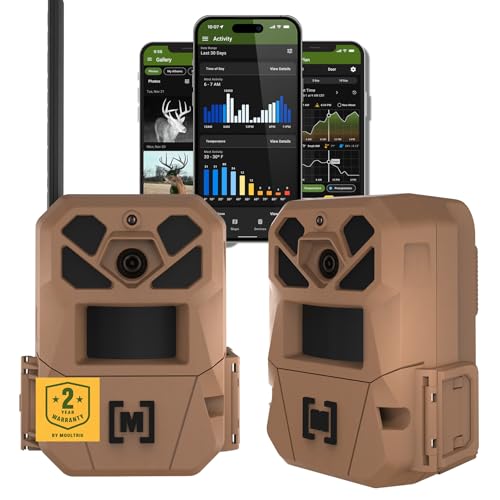
- Two 40MP cellular cameras with 1080p video
- AI buck detection, alerts, GPS, and Live Aim
- Four-carrier Auto Connect for remote delivery
Best For: Multi-location deer scouting with app-based intelligence
Best Value 2-Pack

- Two-camera bundle with two 16GB cards
- 48MP photos and 1080P video
- 0.3-second trigger with 60-foot detection
Best For: Covering multiple outdoor locations on a budget
Best Battery Life
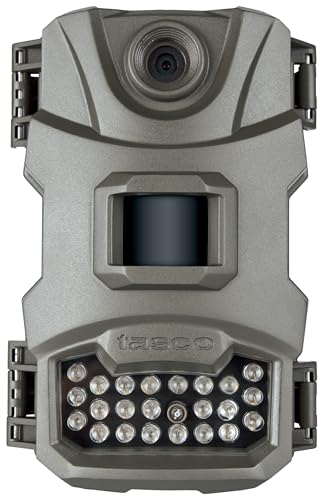
- Up to 12 months on eight AA batteries
- 70-foot motion detection and IR flash
- IP67 waterproof construction
Best For: Long-term outdoor monitoring with fewer battery changes
Best Fast-Trigger Camera
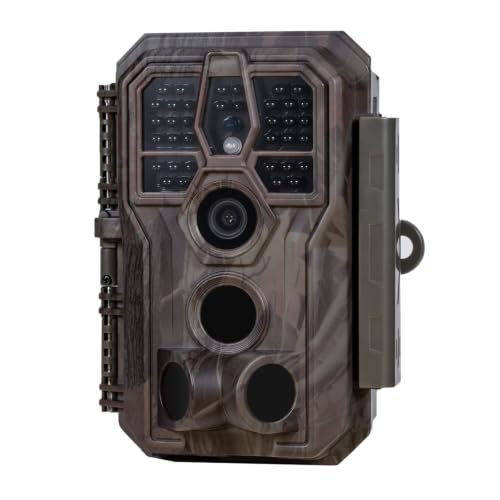
- 0.1-second trigger with three PIR sensors
- 64MP photos and 1296P video
- 100-foot no-glow night vision
Best For: Capturing fast-moving wildlife in detailed day or night footage
Best Budget Pick
WOSODA Mini Trail Camera 4-Pack

- 30MP photos and 1080P video
- Four cameras with SD cards and batteries included
- Compact, camouflage, and IP65-rated
Best For: Monitoring multiple outdoor areas on a budget
Best Cellular Option

- App-delivered photos and videos over cellular networks
- Dual-SIM coverage and GPS location features
- Includes two cameras with multiple capture modes
Best For: Remote monitoring across hunting or wildlife areas
Best Solar-Powered Pick
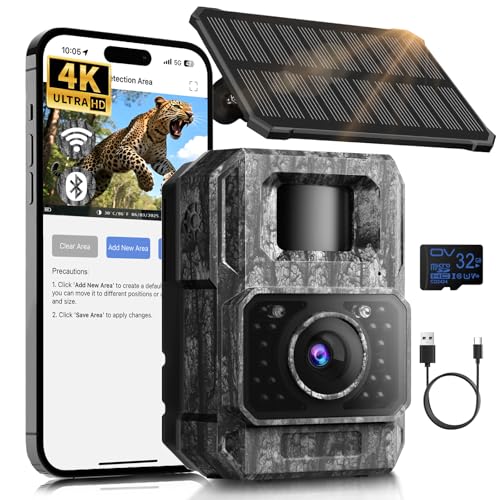
- Solar charging with a 6000mAh rechargeable battery
- 4K video, 64MP images, and 0.1-second triggering
- Local Wi-Fi/Bluetooth access with no monthly fees
Best For: Long-term monitoring near a backyard, farm, or property
Best Non-Cellular Value – WOSPORTS G600 4K Trail Camera
The WOSPORTS G600 is a practical choice for portable trail cameras when you want high-resolution recording without cellular fees or Wi-Fi dependence. It combines 64MP photos, 4K video, fast triggering, and no-glow night vision in a weather-resistant housing.
Best For: Wildlife scouting, property monitoring, farm surveillance, and backyard security where local storage is sufficient.
Pros:
- Captures 64MP photos and 4K video with adjustable recording options.
- Fast 0.2-second trigger, 120-degree detection angle, and burst shooting help capture movement.
- No-glow 940nm infrared LEDs and an 80-foot night-vision range support discreet nighttime monitoring.
- Includes a 16GB memory card and has a built-in 2-inch color LCD for reviewing footage.
Cons:
- Requires eight AA batteries unless you purchase a rechargeable battery or solar accessory separately.
- Does not provide cellular or Wi-Fi connectivity for remote alerts or viewing.
Choose this model if you prefer a straightforward, locally managed camera with strong image resolution and flexible power options. Its lack of remote connectivity makes it less suitable for checking a distant property without visiting the camera.
Best Nationwide Cellular Option – Moultrie Edge 2 Cellular Trail Camera
The Moultrie Edge 2 is one of the more connected portable trail cameras for remote scouting. Its Auto Connect cellular system works across major U.S. networks, while the Moultrie Mobile app provides remote viewing, alerts, battery updates, and camera management.
Best For: Hunters and property owners who need remote access, app alerts, and cellular coverage without swapping SIM cards.
Pros:
- Automatically connects to major U.S. networks through 4G LTE Auto Connect technology.
- Records 36MP photos and 1080p video with audio.
- Offers a 100-foot detection range and low-glow infrared night imaging.
- Uses 8GB of internal memory with unlimited cloud storage in the Moultrie Mobile app, so no SD card is required.
Cons:
- Requires a Moultrie data plan, starting at $9.99 per month.
- Solar and extended-power accessories are sold separately.
The Edge 2 makes sense when remote monitoring is more important than avoiding ongoing costs. Its app tools, internal storage, and broad cellular connectivity simplify long-term scouting, while the subscription requirement should be included in the budget.
Best Solar-Powered Local Camera – MAXDONE Solar WiFi Trail Camera
The MAXDONE Solar WiFi trail camera suits users who want portable trail cameras with rechargeable power and nearby phone access. Its solar panel and 6000mAh battery reduce routine battery changes, while Wi-Fi 6 and Bluetooth let you preview and download files through the camera’s own hotspot.
Best For: Backyard wildlife observation, local outdoor security, and installations where solar charging and subscription-free phone access are priorities.
Pros:
- Combines a 6000mAh rechargeable battery with solar charging for reduced maintenance.
- Records 64MP photos and 4K video, with night vision reaching up to 65 feet.
- Fast 0.1-second trigger, 130-degree detection angle, and five-shot burst mode help capture moving subjects.
- Includes a 32GB microSD card and supports app downloads without removing the card.
Cons:
- Its Wi-Fi connection is limited to a self-generated hotspot within about 55 feet.
- It does not support household Wi-Fi or cellular networks, so it cannot send remote long-distance alerts.
This camera offers a useful middle ground between a basic local camera and a subscription-based cellular model. It is especially convenient near a home or frequently visited site, but its short-range hotspot limits remote monitoring.
Best Two-Camera Cellular System – Moultrie Edge 3 Cellular Trail Camera 2-Pack
The Moultrie Edge 3 two-pack is designed for hunters who want to cover more ground with portable trail cameras while managing both units from one app. It adds AI buck detection, real-time alerts, GPS mapping, and multi-carrier cellular connectivity to a pair of 40MP cameras.
Best For: Deer hunters managing multiple locations who want remote alerts, buck identification, and app-based camera control.
Pros:
- Two cameras provide broader coverage for trails, feeders, or separate property areas.
- AI buck detection can identify bucks and help reduce irrelevant alerts.
- Four-carrier Auto Connect supports cellular delivery without manual SIM-card setup.
- Includes 40MP photos, 1080p video, 100-foot detection, GPS, Live Aim, and remote feeder controls.
Cons:
- Requires an active Moultrie data plan sold separately.
- Its IP55 rating is lower than the IP65 rating listed for the Edge 2, so placement and weather exposure deserve attention.
- Rechargeable battery packs and solar panels are optional accessories.
The Edge 3 two-pack is a strong fit when multiple camera positions and actionable app data matter more than the lowest upfront or operating cost. Its AI and mapping tools can streamline deer scouting, provided cellular service and a data plan are available.
Best Value 2-Pack – WOSODA G200 Trail Cameras
If you need portable trail cameras for monitoring more than one location, the WOSODA G200 2-pack offers a practical setup. Each camera combines 48MP photos, 1080P video, 0.3-second triggering, and low-glow night vision in a weather-resistant camouflage housing.
Best For: Wildlife monitoring, outdoor scouting, and basic property security across multiple locations.
Pros:
- Includes two cameras, two 16GB memory cards, mounting hardware, and batteries.
- Captures 48MP still images and 1080P video.
- 0.3-second trigger speed with motion detection up to 60 feet.
- IP65 waterproof design and 850nm low-glow infrared night vision.
Cons:
- Non-WiFi operation requires retrieving the SD card to review footage.
- AA batteries and included memory cards may require replacement or expansion for extended use.
Its two-camera bundle and included accessories make the G200 a convenient starting point for covering separate trails, entrances, or observation areas without adding wireless setup complexity.
Best Battery Life – Tasco 12MP Trail Camera
The Tasco 12MP is one of the more straightforward portable trail cameras for users who want dependable motion-triggered coverage without advanced image specifications. It records 12MP photos and 720P video, while its low-glow infrared flash and 70-foot detection range support discreet nighttime monitoring.
Best For: Long-term outdoor surveillance, hunting areas, camping sites, and general wildlife observation.
Pros:
- Up to 12 months of battery life from eight AA batteries.
- 70-foot PIR motion detection range.
- 70-foot low-glow infrared flash for discreet nighttime images.
- IP67 waterproof rating and a lifetime manufacturer warranty.
Cons:
- Eight AA batteries are not included.
- 720P video and 12MP photos are lower-resolution than the other cameras in this roundup.
- The supplied details do not indicate that a memory card is included.
The Tasco prioritizes simple, extended operation over high-resolution capture. It is a sensible choice when reducing battery changes matters more than recording the sharpest footage.
Best Fast-Trigger Camera – GardePro E5S Trail Camera
For fast-moving wildlife, the GardePro E5S is a strong portable trail camera option. Its three PIR sensors provide a 0.1-second trigger speed, while 64MP photos, 1296P video, and up to 100 feet of no-glow night vision help capture activity in detail.
Best For: Wildlife and game monitoring where fast triggers, detailed images, and extended night coverage are priorities.
Pros:
- 0.1-second trigger speed with three PIR motion sensors.
- 64MP photos and 1296P HD video.
- 100-foot no-glow night vision and a 120-degree field of view.
- IP66 weather resistance with support for an optional solar panel.
Cons:
- Eight AA batteries are not included.
- The optional GardePro SP350 solar panel is sold separately.
- Non-cellular, non-WiFi operation requires SD-card retrieval for viewing.
The E5S stands out for its quick response and stronger night-vision range. Choose it when capturing brief animal movement is more important than remote wireless access.
Best Budget Pick – WOSODA Mini Trail Camera 4-Pack
For shoppers seeking portable trail cameras for basic wildlife monitoring, the WOSODA Mini Trail Camera 4-Pack offers a compact, camouflage design and simple SD-card storage. It records 30MP photos and 1080P video, with a 0.3-second trigger and infrared night vision up to 65 feet.
Best For: Budget-conscious buyers monitoring several outdoor areas, such as backyards, gardens, farms, or wildlife trails.
Pros:
- Includes four 16GB SD cards and 16 AA batteries.
- Compact camouflage housing helps it blend into outdoor surroundings.
- Captures 30MP photos and 1080P video with a 0.3-second trigger speed.
- IP65 waterproof construction and low-power operation support outdoor use.
Cons:
- No phone connectivity; files must be accessed by removing the SD card.
- Requires four AA batteries per camera.
This is a practical choice when you want multiple small cameras without cellular service or app management. Its straightforward operation and included accessories are convenient, but reviewing footage requires physically retrieving the memory card.
Best Cellular Option – SPYPOINT FLEX-M Twin Pack
The SPYPOINT FLEX-M Twin Pack is among the more connected portable trail cameras, sending photos and videos to your phone through the SPYPOINT app. Its cellular design uses dual-SIM technology to seek coverage across major carriers, while GPS, remote management, and multiple capture modes support less disruptive monitoring.
Best For: Hunters and land managers who want to check two trail cameras remotely without relying on Wi-Fi.
Pros:
- Sends 32MP photos and 1080p video with sound to a smartphone through the app.
- Dual-SIM coverage automatically seeks the strongest available major-carrier signal.
- Supports photo, video, time-lapse, and Time-Lapse+ capture modes.
- Includes GPS location, remote management, and a free photo plan.
Cons:
- Cellular operation depends on network coverage in the deployment area.
- Compatible solar panels are sold separately.
- Its listed video specification is 720p in the product details despite the bullet describing 1080p video.
Choose this twin pack if remote access is more important than the simplest setup. It provides useful cellular and management features, but buyers should verify the applicable video specification and confirm service coverage before installation.
Best Solar-Powered Pick – MAXDONE 4K Solar Trail Camera
The MAXDONE 4K Solar Trail Camera is a flexible choice among portable trail cameras for longer-term outdoor monitoring. It combines a rechargeable 6000mAh battery, adjustable solar panel, local Wi-Fi and Bluetooth file access, and high-resolution 4K video and 64MP imaging without requiring a monthly subscription.
Best For: Backyard, farm, and deep-woods monitoring where extended battery life and convenient nearby phone access matter.
Pros:
- Uses solar, Type-C, and rechargeable-battery charging options.
- Records 4K video and 64MP images with a 0.1-second trigger.
- Wi-Fi and Bluetooth allow nearby phone access without removing the SD card.
- Includes a pre-installed 32GB SD card and IP66 waterproofing.
Cons:
- Its Wi-Fi hotspot does not connect to home Wi-Fi networks.
- Wireless access is short range, with the app recommended within 10 feet.
- Phone access depends on connecting to the camera’s local hotspot.
This model stands out for users who want reduced battery maintenance and high-resolution recording without cellular fees. The solar system is useful for extended deployments, while the short-range connection is best suited to retrieving footage when you are near the camera.
How We Picked the Best Portable Trail Cameras
We compared these Portable Trail Cameras by focusing on the features that matter most in the field: trigger speed, image and video resolution, night-vision performance, power options, connectivity, weather resistance, storage, and overall practicality. The list includes both simple SD-card cameras and connected models that can send images to a phone, so shoppers can choose based on location and monitoring needs rather than specifications alone.
We also considered portability and setup flexibility. Compact cameras suit discreet placement and short-term observation, while solar and cellular models are better for extended deployments where frequent visits are inconvenient.
Quick Comparison
- Best for remote alerts: Cellular cameras such as the Moultrie and SPYPOINT options.
- Best for low-maintenance power: Solar-assisted MAXDONE models.
- Best for straightforward operation: Non-cellular cameras that save footage to an SD card.
- Best for discreet placement: Mini trail cameras and no-glow night-vision models.
- Best for covering multiple locations: Two- and four-camera bundles.
Key Buying Factors for Portable Trail Cameras
Connectivity and Monitoring
Non-cellular cameras generally cost less and avoid monthly service fees, but you must retrieve the memory card to review footage. Wi-Fi models can simplify nearby transfers, while cellular cameras are more useful on remote land because they can transmit photos without a site visit. Check network compatibility, plan requirements, and signal strength before buying.
Power and Battery Life
Battery life depends on trigger frequency, temperature, video recording, and transmission activity. Solar-equipped cameras can reduce maintenance in sunny locations, but they still need suitable placement and backup power. For shaded areas or winter use, prioritize efficient operation and easy battery access.
Image Quality, Trigger Speed, and Night Vision
Higher megapixel ratings can provide more detail, but lens quality and image processing also affect results. A fast trigger helps capture moving animals before they leave the frame. No-glow infrared is preferable when minimizing visible illumination matters, while low-glow systems may offer a useful balance between range and discretion.
Durability and Installation
Look for weather-resistant construction, secure straps, a practical viewing screen, and controls that are easy to use outdoors. Consider the camera’s size and mounting angle, especially when placing it on narrow trees or in concealed locations.
Who Should Buy Which Portable Trail Cameras?
Choose a cellular trail camera if you need remote alerts for hunting properties, farms, or security monitoring. Choose a solar Wi-Fi model for a longer-term installation near a reliable wireless connection and good sunlight. A non-cellular camera is the sensible budget choice when occasional card retrieval is acceptable.
For broad coverage, multi-packs let you monitor several trails at once and provide useful backup units. Compact cameras work well for discreet observation, travel, and smaller properties. Finally, prioritize fast triggers and strong night vision when tracking active wildlife, while emphasizing battery efficiency and weather protection for unattended deployments.
