
The best portable single-board computer kits combine a capable board with the accessories you need to start building quickly. This roundup compares Raspberry Pi, Arduino, Intel, Allwinner, and UNIHIKER options across memory, storage, connectivity, cooling, and included hardware.
Whether you want a portable Linux computer, an embedded AI platform, or a beginner-friendly robotics system, use the guide below to match the kit’s performance and expansion options to your project.
Best 10 Portable Single-Board Computer Kits Picks for 2026
Best Ready-to-Use Kit
Raspberry Pi 5 4GB Starter Kit

- Includes board, active cooler, ABS case, and screwdriver
- Wi-Fi 5, Bluetooth 5.0, Ethernet, HDMI, USB, and GPIO
- Supports 4K video and sustained workloads with active cooling
Best For: Beginners and hobbyists starting IoT, robotics, or retro gaming projects
Best Keyboard-Style Computer
Pi 500 Portable Keyboard Computer

- Computer is built into a compact full-size keyboard
- Includes 32GB microSD card and core setup accessories
- Supports dual 4K displays, Wi-Fi, Bluetooth, and Ethernet
Best For: Compact desktop, classroom, and portable Linux computing
Best for AI and Robotics
Arduino UNO Q 4GB Hybrid Board

- Pairs a Qualcomm Linux processor with an STM32 microcontroller
- Includes 4GB RAM and 32GB eMMC storage
- Supports AI, Python, Arduino Sketches, Wi-Fi 5, and Bluetooth 5.1
Best For: AI vision, robotics, IoT, and hybrid embedded development
Best High-Capacity Bundle
CanaKit Raspberry Pi 5 8GB Starter Kit
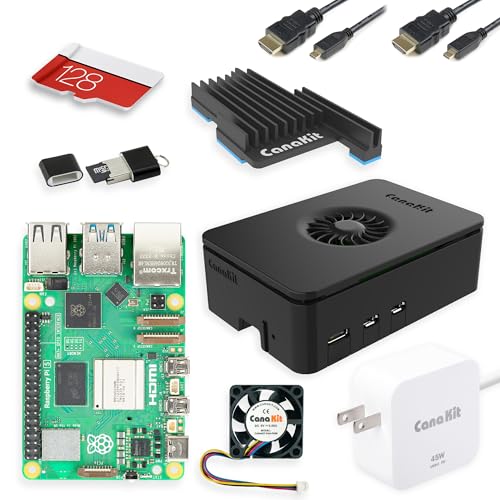
- Includes 8GB Raspberry Pi 5 and 128GB preloaded microSD card
- Adds case, cooling system, 45W power supply, and card reader
- Includes two display cables supporting up to 4K at 60Hz
Best For: Multitasking, media, development, and users wanting a complete bundle
Best Value Android/Linux Board

- H618 quad-core processor with Mali-G31 graphics
- Android 12 and Ubuntu 22.04 support
- 4K video decoding and 20-pin expansion
Best For: Affordable embedded, IoT, and multimedia projects
Best High-Performance Kit

- 8GB RAM and 2.4GHz Cortex-A76 CPU
- Includes case and active cooler
- Dual 4Kp60 display support with PCIe expansion
Best For: Demanding Raspberry Pi, desktop, and automation projects
Best x86 Expansion Platform

- Intel N100 x86 processor up to 3.4GHz
- 8GB RAM and 128GB eMMC in this kit
- Dual 4K displays, Wi-Fi 6, and dual Gigabit Ethernet
Best For: Windows/Linux edge computing and industrial expansion
Best Aluminum-Cased AI Kit
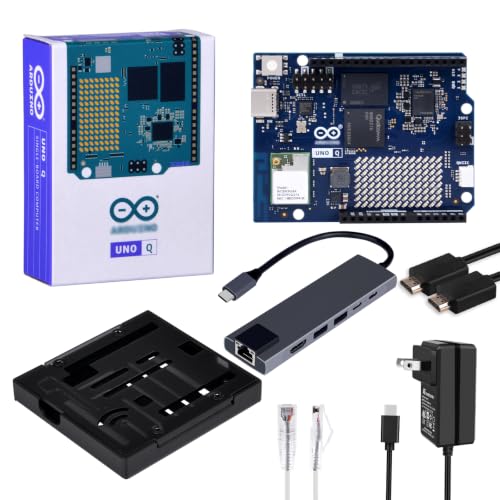
- 2GB RAM and 16GB eMMC storage
- Protective aluminum case with heat dissipation
- Includes USB-C hub, cables, power supply, and tools
Best For: AI and embedded development with the Arduino UNO Q
Best Beginner-Friendly IoT Kit

- Pre-installed Debian and Python environment
- Built-in touchscreen and multiple sensors
- Wi-Fi, Bluetooth, and broad accessory support
Best For: STEM learning and interactive Python IoT projects
Best Complete Raspberry Pi Kit

- 8GB Raspberry Pi 5 with 128GB preloaded microSD
- Includes case, cooling, power supply, and cables
- Four USB ports and extensive project connectivity
Best For: Plug-and-play coding, robotics, gaming, and smart-home projects
Best Ready-to-Use Kit – Raspberry Pi 5 4GB Starter Kit
For shoppers comparing portable single-board computer kits, this Raspberry Pi 5 bundle is a straightforward starting point. It includes the 4GB board, active cooler, ABS case, and screwdriver, making it suitable for projects that need a ready-to-assemble setup without sourcing basic accessories separately.
Best For: Beginners, students, and hobbyists building IoT, robotics, retro gaming, or home media projects.
Pros:
- Includes the Raspberry Pi 5 4GB board, cooler, case, and screwdriver.
- Active cooling is designed to help reduce heat during sustained workloads.
- Supports Wi-Fi 5, Bluetooth 5.0, Gigabit Ethernet, HDMI, USB, and GPIO connectivity.
- Supports up to 4K video output and Raspberry Pi OS.
Cons:
- The included case cannot accommodate an M.2 HAT add-on board and solid-state drive.
- Storage is not listed as included in the supplied specifications.
This is a practical Raspberry Pi 5 kit for buyers who value included cooling and basic protection. Check the expansion requirements of your project before choosing the case-based bundle.
Best Keyboard-Style Computer – Pi 500 Portable Keyboard Computer
This Pi 500 kit takes a different approach to portable single-board computer kits by building the computer into a compact keyboard. Add a monitor and mouse to create a small desktop setup, with an official 32GB microSD card, power supply, HDMI cable, card reader, and GPIO adapter board included.
Best For: Users who want a compact Linux desktop, classroom computer, or portable Raspberry Pi-style workstation.
Pros:
- Integrates the computer into a full-size QWERTY keyboard for a tidy setup.
- Includes 8GB RAM, a 32GB microSD card, mouse, 27W USB-C power supply, HDMI cable, card reader, and GPIO adapter.
- Provides dual-band Wi-Fi, Bluetooth 5.0, Gigabit Ethernet, and three USB ports.
- Supports dual 4K displays through its two micro-HDMI outputs.
Cons:
- A monitor is not included, so a separate display is required.
- The keyboard form factor is less flexible than a bare board for custom enclosures.
Choose this model when convenience and desk-friendly portability matter more than a traditional exposed board layout. Its built-in keyboard and included accessories make it one of the simplest kits to turn into a working mini computer.
Best for AI and Robotics – Arduino UNO Q 4GB Hybrid Board
For advanced portable single-board computer kits and development platforms, the Arduino UNO Q combines a Linux-capable Qualcomm processor with a real-time STM32U585 microcontroller. Its 4GB of RAM, 32GB of eMMC storage, wireless connectivity, and Arduino ecosystem support are aimed at projects that blend software, sensors, and embedded control.
Best For: Developers prototyping AI vision, voice, robotics, IoT, and mixed Arduino-Python applications.
Pros:
- Combines a quad-core Qualcomm Arm processor with a separate real-time STM32U585 microcontroller.
- Runs Linux Debian and supports Python, Arduino Sketches, and containerized AI models.
- Includes 4GB LPDDR4 RAM and 32GB built-in eMMC storage.
- Offers Wi-Fi 5, Bluetooth 5.1, an 8×13 LED matrix, Qwiic connectivity, and UNO shield compatibility.
Cons:
- Its advanced hybrid architecture may be more complex than a basic beginner board.
- The supplied notes list one USB port, so expansion may depend on shields, headers, or hubs.
The UNO Q is a strong fit when a project needs both Linux-level processing and responsive microcontroller control. It is less about an all-in-one starter bundle and more about building a capable development platform around Arduino-compatible expansion.
Best High-Capacity Bundle – CanaKit Raspberry Pi 5 8GB Starter Kit
CanaKit Raspberry Pi 5 Starter Kit PRO - Turbine Black (128GB Edition) (8GB RAM)
Check Price On AmazonThis CanaKit bundle is a well-equipped option among portable single-board computer kits, pairing an 8GB Raspberry Pi 5 with 128GB of preloaded Raspberry Pi OS storage. It also includes a case, cooling hardware, power supply, microSD reader, and two long display cables for a more complete setup.
Best For: Users who want generous memory, included storage, and cooling for desktop, media, development, or multitasking projects.
Pros:
- Includes the Raspberry Pi 5 with 8GB RAM and a 128GB microSD card.
- Comes with Raspberry Pi OS preloaded and includes a USB microSD card reader.
- Includes a 45W power supply, low-noise fan system, and mega heat sink.
- Two six-foot display cables support resolutions up to 4K at 60Hz.
Cons:
- The supplied notes do not specify the exact wireless networking standards.
- The included display cables may be more useful for a fixed setup than ultra-light travel.
This is a strong choice for buyers who prefer not to purchase storage, cooling, power, and display cables separately. The 8GB memory and 128GB card also give it more headroom than entry-level Raspberry Pi bundles.
Best Value Android/Linux Board – KICKPI K2B
The KICKPI K2B is a compact option for buyers comparing portable single-board computer kits for multimedia, IoT, and embedded projects. Its Allwinner H618 processor, 16GB eMMC storage, dual-band wireless connectivity, and Android 12/Ubuntu 22.04 support provide a flexible starting point for development and deployment.
Best For: Affordable Android or Ubuntu projects, media playback, IoT gateways, and hardware experimentation.
Pros:
- Quad-core Cortex-A53 processor with Mali-G31 MP2 graphics
- Supports 4K@60Hz hardware video decoding and HDMI output
- Includes 16GB eMMC storage, Gigabit Ethernet, dual-band Wi-Fi, and Bluetooth
- 20-pin expansion interface supports UART, SPI, PWM, I2C, I2S, SPDIF, and USB
Cons:
- Only 2GB of RAM, which may limit heavier multitasking
- Provides two USB ports, fewer than some larger SBC kits
The K2B makes the most sense when operating-system flexibility and a small footprint matter more than maximum performance. It is a capable, connectivity-focused board for custom embedded builds and everyday multimedia tasks.
Best High-Performance Kit – RasTech Raspberry Pi 5 8GB
For buyers seeking portable single-board computer kits with stronger desktop and development performance, this RasTech Raspberry Pi 5 package combines the 8GB board with an active cooler and case. The quad-core Cortex-A76 processor, dual 4K display support, and broad connectivity make it a versatile choice for demanding DIY builds.
Best For: Desktop-style Raspberry Pi projects, home automation, robotics, AI experimentation, and dual-display setups.
Pros:
- 8GB RAM and a 2.4GHz quad-core 64-bit processor
- Supports two 4K displays at 60Hz with HDR
- Includes an active cooler, case, screwdriver, and installation instructions
- Offers USB 3.0, Gigabit Ethernet, Wi-Fi, Bluetooth 5.0/BLE, and PCIe expansion
Cons:
- Power supply is not listed among the included kit components
- An M.2 HAT is required to use an NVMe SSD through the PCIe interface
This kit is a strong all-around pick when you want Raspberry Pi 5 performance without sourcing basic cooling and enclosure accessories separately. Its 8GB memory and fast I/O leave room for more ambitious software, display, and automation projects.
Best x86 Expansion Platform – youyeetoo K1 Intel N100
The youyeetoo K1 is aimed at shoppers who need portable single-board computer kits with PC-like x86 compatibility. Its Intel N100 processor, 8GB RAM, 128GB eMMC storage, Windows/Linux support, dual Gigabit Ethernet, and extensive display and expansion options suit edge computing and compact workstation builds.
Best For: Windows or Linux edge devices, industrial control, multi-display workstations, and storage-expandable embedded systems.
Pros:
- Four-core Intel N100 processor with burst speeds up to 3.4GHz
- 8GB LPDDR5 RAM and 128GB eMMC storage in the listed configuration
- Two HDMI 2.0 ports support dual 4K 60Hz displays
- Offers Wi-Fi 6, Bluetooth 5.2, dual Gigabit Ethernet, and M.2 SSD expansion
Cons:
- Core-board operation and some added functions may require an adapter or baseboard
- External NVMe or SATA storage is optional rather than included
- The broader interface set may be more than needed for simple beginner projects
The K1 stands apart from ARM-based boards by offering an x86 platform suited to Windows applications and PC-oriented workflows. It is the better fit when memory, storage expansion, multiple displays, and industrial connectivity take priority over a simple plug-and-play setup.
Best Aluminum-Cased AI Kit – Arduino UNO Q Starter Kit
For shoppers comparing portable single-board computer kits, this GeeekPi bundle pairs the Arduino UNO Q with 2GB of RAM, 16GB of eMMC storage, and the accessories needed to start building. It can operate independently with a monitor and keyboard or connect to a PC through USB-C.
Best For: AI, embedded development, and makers who want a protected, well-equipped UNO Q setup.
Pros:
- Includes 2GB RAM and 16GB eMMC storage for demanding projects.
- Aluminum case helps protect the board and dissipate heat.
- USB-C hub, power supply, HDMI cable, Ethernet cable, and tools are included.
- Supports standalone use or PC-connected Arduino development.
Cons:
- Designed specifically for the Arduino UNO Q, limiting compatibility with other boards.
- The kit has one listed total USB port on the board; expanded connectivity relies on the included hub.
This is a convenient choice when you want UNO Q hardware, protection, networking expansion, and essential cables in one package rather than assembling a kit piece by piece.
Best Beginner-Friendly IoT Kit – UNIHIKER M10 Python Computer
The UNIHIKER M10 stands out among portable single-board computer kits by combining a 2.8-inch touchscreen, pre-installed Debian, and a Python environment in a compact board. USB setup, built-in sensors, and wireless connectivity make it practical for learning and interactive IoT projects.
Best For: Beginners, STEM education, and Python-powered sensor or IoT projects.
Pros:
- Pre-installed Debian Linux and Python environment reduce setup work.
- Built-in touchscreen, microphone, gyroscope, accelerometer, light sensor, and buzzer support interactive projects.
- Wi-Fi and Bluetooth enable wireless control and monitoring.
- Supports Mind+ block programming, Python, micro:bit accessories, and Gravity interfaces.
Cons:
- Its 512MB of RAM is more modest than the memory offered by the other kits here.
- The board’s integrated design may be less suitable for projects requiring a conventional full-size Linux computer.
Choose this kit if fast onboarding and built-in experimentation matter more than maximum memory. Its touchscreen and sensors let learners create useful prototypes without immediately purchasing separate modules.
Best Complete Raspberry Pi Kit – Raspberry Pi 5 8GB MAX Kit
This Vilros bundle is one of the most complete portable single-board computer kits for Raspberry Pi users, including an 8GB Raspberry Pi 5, a 128GB microSD card with Raspberry Pi OS, case, cooling hardware, cables, and a quickstart guide. It is designed to reduce setup and extra-accessory shopping.
Best For: Beginners and experienced makers building coding, robotics, smart-home, or retro-gaming projects.
Pros:
- Powerful Raspberry Pi 5 configuration with 8GB RAM and a 2.4GHz processor.
- 128GB preloaded microSD card includes Raspberry Pi OS.
- Case, fan cooling, heat sinks, power supply, cables, and reader are included.
- Four USB ports plus Bluetooth, Ethernet, GPIO, HDMI, and I2C connectivity support varied projects.
Cons:
- The larger bundle may include accessories you do not need for a simple project.
- Raspberry Pi OS is preloaded, but project-specific software may still require configuration.
For buyers who want a high-memory Raspberry Pi 5 and a near plug-and-play starting point, this MAX bundle offers strong value through its storage, cooling, enclosure, and included setup accessories.
How We Picked These Portable Single-Board Computer Kits
We selected kits that offer a practical balance of computing performance, portability, expandability, included accessories, and project suitability. The lineup covers complete starter bundles as well as compact boards with features such as onboard storage, touchscreens, wireless connectivity, cooling, and standard expansion interfaces.
We also considered the ecosystem behind each platform. Raspberry Pi and Arduino generally offer extensive documentation and community support, while x86 and specialized AI boards may be better suited to users who need desktop software compatibility or focused edge-computing capabilities.
Quick Comparison
| Best For | What to Prioritize |
|---|---|
| First-time builders | Preloaded storage, case, power supply, and clear documentation |
| Robotics and IoT | GPIO access, sensor support, wireless networking, and low power use |
| AI and computer vision | Supported accelerators, camera compatibility, memory, and software tools |
| Desktop-style computing | CPU performance, RAM, storage, display outputs, and operating-system support |
| Portable development | Compact design, integrated display or keyboard, battery options, and durable cooling |
Key Buying Factors for Portable Single-Board Computer Kits
Performance and Memory
Choose memory based on the workload. A 2GB board can handle lightweight Linux, coding, and simple automation, while 4GB or 8GB is more suitable for multitasking, containers, desktop interfaces, compiling, and demanding development tools. An x86 board may provide better compatibility with Windows and conventional Linux applications.
Storage and Included Accessories
Check whether the kit includes a microSD card, eMMC storage, or another boot device. Preloaded storage reduces setup time, while larger capacities help with applications, datasets, and media files. A case, active cooler, power supply, HDMI cable, and USB hub can significantly improve the overall value of a starter kit.
Connectivity and Expansion
For connected projects, look for dual-band Wi-Fi, Bluetooth, Gigabit Ethernet, USB ports, and reliable display outputs. GPIO pins, camera connectors, and compatible expansion boards matter most for robotics, sensors, and embedded prototypes.
Software and Power Requirements
Confirm operating-system support before buying. Some boards are optimized for Debian or Raspberry Pi OS, while others support Windows, Linux, or specialized AI environments. Also verify the recommended power supply and cooling setup; higher-performance boards often need active cooling for sustained workloads.
Who Should Buy Which Portable Single-Board Computer Kits?
Beginners and students should favor a complete Raspberry Pi, Arduino UNO Q, or UNIHIKER kit with storage, cooling, and clear setup materials. IoT and robotics makers should prioritize GPIO access, wireless networking, and sensor compatibility. AI and vision developers should choose a platform with suitable software support, memory, and camera or accelerator compatibility. Desktop and server users may prefer the Intel N100 system or a higher-memory Raspberry Pi 5. Traveling makers should consider the keyboard-integrated Pi option or a board with a built-in touchscreen, provided the reduced expandability fits their plans.
