
Portable bike navigation computers can make long rides simpler, safer, and far less stressful by keeping routes, turn cues, and ride data right on your bars.
In this 2026 roundup, we focused on models that balance navigation quality, display clarity, battery life, and day-to-day usability for commuting, training, and touring.
Best 10 Portable Bike Navigation Computers Picks for 2026
Easy Navigation for Everyday Rides

- 3-inch touchscreen is glove- and rain-friendly
- Preloaded profiles work for road, off-road, and indoor rides
- Smartphone features add LiveTrack, GroupTrack, and incident detection
Best For: Riders who want simple GPS navigation and clear route maps
Voice-Guided Mapping and Long Runtime
iGPSPORT BSC500 GPS Bike Computer

- 3.3-inch touchscreen and button controls are easy to use
- Voice navigation and turn reminders help reduce missed turns
- 25-hour battery life supports long rides and training
Best For: Riders who want voice-guided navigation and a bigger display
Training-Focused Navigation
Garmin Edge 540 Compact GPS Cycling Computer

- Multi-band GNSS boosts positioning accuracy
- Up to 26 hours of battery life, or 42 in saver mode
- ClimbPro, workouts, and power guidance support training
Best For: Cyclists who want a compact GPS computer with advanced training tools
Offline Maps and Group Tracking
iGPSPORT BSC300T Wireless Bike Computer
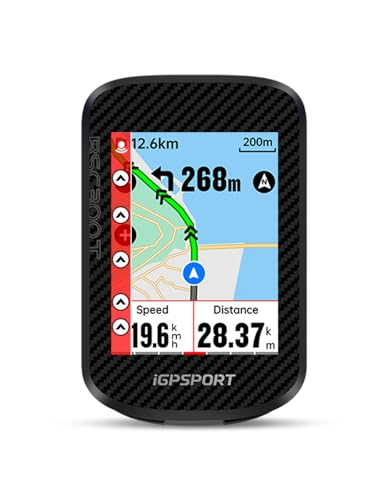
- Offline map download and route preview support navigation
- Off-course warnings and real-time tracking help on group rides
- Touchscreen plus buttons, with ANT+ and Bluetooth support
Best For: Riders who want offline navigation and lightweight group-riding support
Color Screen Navigation Pick
GEOID CC600 Wireless GPS Bike Computer

- 2.4-inch color screen with turn reminders and rerouting
- WiFi, Bluetooth, ANT+ support, and fast GPS positioning
- Indoor training plus export to STRAVA and TrainingPeaks
Best For: Riders who want a compact route-navigation computer with strong training and sensor support
Long Battery Touring Choice
Bryton Rider 650 Touchscreen GPS Computer

- 2.8-inch touchscreen with preloaded USA maps
- 33-hour battery life for long rides and commuting
- Turn-by-turn navigation, live tracking, and radar support
Best For: Touring riders and commuters who need long battery life and guided navigation
Compact App-Driven Navigator
iGPSPORT BSC200S Wireless Bike Computer

- One-touch navigation with route imports from major platforms
- 2.4-inch color display and IPX7 waterproofing
- 25-hour battery life with support for 100+ riding data
Best For: Riders who want a lightweight, app-driven navigation computer for everyday rides
Compact Color Navigation
Magene C506SE Wireless GPS Bike Computer

- 2.4-inch color screen with route prompts
- 5-second positioning with AGNSS and WiFi
- Supports 9 device types via ANT+ and Bluetooth
Best For: Riders who want a lightweight GPS computer with color navigation and broad sensor support.
Big Touchscreen Route Guide
GEOID CC700 Pro GPS Bike Computer

- 2.8-inch touchscreen with offline map support
- Turn prompts, street names, and re-route planning
- WiFi auto-sync plus ANT+/Bluetooth connectivity
Best For: Cyclists who want a larger touchscreen GPS computer for map navigation and route re-planning.
Long-Ride Navigation Pick
COOSPO CS600 Color Touchscreen GPS

- 2.4-inch color touchscreen with auto-backlight
- Route navigation and breadcrumb trail support
- 36-hour battery life with IPX7 waterproofing
Best For: Riders who want an affordable-style navigation computer with long battery life and easy route following.
Easy Navigation for Everyday Rides – Garmin Edge Explore 2
If you want portable bike navigation computers that are simple to live with on real rides, the Garmin Edge Explore 2 is built around easy setup and clear route guidance. Its 3-inch touchscreen is glove- and rain-friendly, and the preloaded ride profiles make it ready for road, off-road, or indoor use right out of the box.
Best For: Riders who want a straightforward GPS cycling navigator with strong map visibility and eBike-friendly guidance.
Pros:
- 3-inch high-resolution touchscreen is easy to read in sunlight and usable in wet conditions
- Preloaded road, off-road, and indoor profiles simplify setup
- Ride type-specific maps, searchable POIs, and high-traffic road alerts help route planning
- Smartphone pairing adds LiveTrack, GroupTrack, notifications, messaging, and incident detection
Cons:
- Battery life is rated at 16 hours, which is shorter than some performance-focused units
- Some rider metrics depend on separately sold sensors
- Advanced eBike routing requires a compatible eBike connection
Overall, this is a practical navigator for cyclists who care more about easy mapping and dependable guidance than deep training metrics. It fits well as a no-fuss portable bike navigation computer for commuting, touring, and casual exploration.
Voice-Guided Mapping and Long Runtime – iGPSPORT BSC500 GPS Bike Computer
The iGPSPORT BSC500 is a feature-rich option among portable bike navigation computers, especially if you want map guidance plus voice alerts. Its 3.3-inch touchscreen is large and easy to follow, and the unit supports route import from the iGPSPORT app and third-party apps like Strava and Komoot.
Best For: Riders who want a large-screen GPS bike computer with voice navigation, route import, and long battery life.
Pros:
- 3.3-inch touchscreen plus button control gives flexible operation on the bike
- Voice navigation and turn reminders reduce the need to keep looking down at the screen
- Dual-band positioning and support for GPS, Beidou, GLONASS, Galileo, and QZSS improve navigation accuracy
- 25-hour battery life supports longer rides and training sessions
Cons:
- Route planning depends on app import or file transfer rather than a fully self-contained mapping workflow
- Screen size is large, but the unit still uses a compact physical design
- Some advanced training tools may be more than casual riders need
This is a strong pick if you want a bike computer that balances navigation, climb planning, and training analysis in one device. The voice cues and longer runtime make it especially appealing for riders covering more distance.
Training-Focused Navigation – Garmin Edge 540 Compact GPS Cycling Computer
The Garmin Edge 540 is a compact choice for portable bike navigation computers when you want route guidance and training tools in one unit. It uses button controls, multi-band GNSS for better positioning accuracy, and improved ride type-specific maps that highlight roads, trails, and points of interest.
Best For: Cyclists who want a compact GPS computer with advanced navigation and adaptive training features.
Pros:
- Multi-band GNSS improves positioning in challenging environments
- Up to 26 hours of battery life, with up to 42 hours in battery saver mode
- Button controls keep operation straightforward on rough rides
- Training and ride-planning features include ClimbPro, suggested workouts, and power guide support
Cons:
- Smaller 2.6-inch screen may feel limited compared with larger touchscreen models
- Several training insights require compatible power meter and heart rate monitor
- Button-only control may not suit riders who prefer touch navigation
For riders who care as much about performance tracking as navigation, this model offers a well-rounded mix. It is especially useful if you want a compact device that can guide routes, manage climbs, and support structured training.
Offline Maps and Group Tracking – iGPSPORT BSC300T Wireless Bike Computer
The iGPSPORT BSC300T is aimed at riders who want portable bike navigation computers with offline map support and practical route alerts. It combines a touchscreen with physical buttons, supports global satellite coverage, and can show off-course warnings plus real-time teammate tracking for group rides.
Best For: Riders who want offline navigation, route alerts, and real-time tracking in a lightweight bike computer.
Pros:
- Offline map download and route preview help with navigation away from cellular coverage
- Off-course warnings notify you when you leave the planned route
- Real-time tracking is useful for group riding and keeping teammates visible
- Lightweight 67 g design with ANT+ and Bluetooth support for sensors and devices
Cons:
- 2.4-inch screen is smaller than some competing navigation computers
- USB cable is not included in the box
- Battery life is rated at 20 hours, which is solid but not class-leading
Overall, this is a flexible value-oriented navigator for riders who want offline maps without carrying extra gear. The mix of route guidance, tracking, and wide sensor compatibility makes it a versatile everyday cycling computer.
Color Screen Navigation Pick – GEOID CC600 Wireless GPS Bike Computer
If you want portable bike navigation computers that keep route following simple, the GEOID CC600 focuses on clear guidance, fast positioning, and easy data syncing. Its 2.4-inch color screen, turn reminders, rerouting support, and GPX import make it practical for riders who want navigation without relying on a phone.
Best For: Riders who want a compact, feature-rich computer for route navigation, indoor training, and broad sensor support.
Pros:
- Color route navigation with turn reminders, zooming, and reroute planning
- WiFi and Bluetooth syncing for AGNSS updates, firmware, and ride records
- Supports multiple satellite systems and fast 5-second positioning
- Compatible with ANT+ and Bluetooth sensors, plus indoor training features
Cons:
- 2.4-inch screen is smaller than larger touchscreen alternatives
- Navigation depends on uploaded GPX files and app-based setup
- Best features rely on keeping AGNSS data current
The CC600 is a strong fit if you value navigation tools, sensor compatibility, and flexible training pages over a larger display. It packs a lot into a compact unit, especially for riders who want a straightforward bike computer with route guidance and workout support.
Long Battery Touring Choice – Bryton Rider 650 Touchscreen GPS Computer
For riders comparing portable bike navigation computers, the Bryton Rider 650 stands out with a larger touchscreen, preloaded USA maps, and long battery life. It is built for riders who want a more phone-like interface, turn-by-turn guidance, and dependable navigation for longer rides.
Best For: Touring riders, commuters, and adventure cyclists who want a long-lasting GPS computer with color maps and safety features.
Pros:
- 2.8-inch color touchscreen with a user-friendly interface and ambient light sensor
- 33-hour battery life for long rides and extended use
- Preloaded OSM maps with turn-by-turn guidance, street names, and POIs
- Supports live tracking, rear-view radar, electronic shifting, and app syncing
Cons:
- Touchscreen control may not appeal to riders who prefer button-only operation
- More advanced than basic units, so casual riders may not use every feature
- Heavier than some minimalist cycling computers at 92 g
The Rider 650 is a practical option if battery endurance and mapping matter more than racing-style minimalism. It combines navigation, safety tools, and easy syncing in a package that is especially appealing for long, everyday rides.
Compact App-Driven Navigator – iGPSPORT BSC200S Wireless Bike Computer
The iGPSPORT BSC200S is a compact option among portable bike navigation computers, built around app-based route creation and quick one-touch navigation. It offers turn reminders, back-to-start routing, and a clear 2.4-inch color display, making it a useful pick for riders who want a lightweight navigator with practical ride tracking.
Best For: Riders who want a small, lightweight bike computer with easy route import and everyday navigation tools.
Pros:
- Route navigation with app creation, third-party imports, and one-touch start
- Supports turn reminders, yaw guidance, and back-to-start navigation
- 2.4-inch semi-transparent, semi-reflective color display for brighter conditions
- 25-hour battery life, USB-C charging, and IPX7 waterproofing
Cons:
- Navigation is app-centered rather than fully map-heavy
- Type-C cable is not included
- Smaller screen may feel limited for riders wanting richer map detail
The BSC200S is a sensible choice if you want a straightforward navigation computer with good battery life and broad route-import support. It keeps the feature set focused on ride planning, turn guidance, and basic connectivity rather than trying to do everything.
Compact Color Navigation – Magene C506SE Wireless GPS Bike Computer
If you want a portable bike navigation computer that keeps the essentials front and center, the Magene C506 SE is built around a 2.4-inch color display, fast positioning, and simple button control. It supports route navigation with turn prompts, off-course alerts, and route re-planning through the OnelapFit app, while WiFi helps speed up uploads and AGNSS syncing.
Best For: Riders who want a lightweight GPS computer with color navigation and broad sensor support.
Pros:
- 2.4-inch color screen with clear navigation prompts and automatic zoom
- Fast 5-second positioning with AGNSS support and WiFi syncing
- Supports 9 device types via ANT+ and Bluetooth, including radar and smart trainers
- Lightweight 74g body with simple three-button operation
Cons:
- Navigation features depend on connection to the OnelapFit app
- Smaller display than larger touchscreen models
The C506 SE makes sense if you value quick startup, easy handlebar use, and a compact format over a bigger screen. Its mix of routing tools, training support, and sensor compatibility gives it strong everyday usefulness for riders who want a straightforward cycling computer.
Big Touchscreen Route Guide – GEOID CC700 Pro GPS Bike Computer
The GEOID CC700 Pro is aimed at riders who want portable bike navigation computers with a larger touchscreen and more map-first guidance. Its 2.8-inch color display, offline map storage, turn prompts, street names, and re-route planning make it easier to stay on course, while WiFi and Bluetooth help keep data and firmware current.
Best For: Cyclists who want a larger touchscreen GPS computer for map navigation and route re-planning.
Pros:
- 2.8-inch touchscreen with a touch-and-button control setup
- Offline map support with turn prompts, street names, and zoom
- Re-route planning helps recover when you go off course
- WiFi auto-sync, FIT export, and ANT+/Bluetooth connectivity
Cons:
- Re-route planning requires the bike computer to stay connected to the app
- Touchscreen models can be more distracting than button-only units for some riders
This model stands out if navigation clarity matters more than keeping the smallest possible footprint. With offline maps, a bigger screen, and broad ecosystem support, it suits riders who regularly explore new routes and want easier on-bike guidance.
Long-Ride Navigation Pick – COOSPO CS600 Color Touchscreen GPS
The COOSPO CS600 is a practical option for portable bike navigation computers if you want a color touchscreen, built-in route guidance, and strong battery life. It uses GPS and GLONASS for tracking, supports route uploads or breadcrumb navigation, and pairs with the COOSPORIDE app for automatic syncing to Strava and TrainingPeaks.
Best For: Riders who want an affordable-style navigation computer with long battery life and easy route following.
Pros:
- 2.4-inch high-resolution color touchscreen with auto-backlight
- Built-in route navigation plus breadcrumb trail support
- 36-hour battery life with Type-C charging
- IPX7 waterproofing and support for radar, lights, and trainers
Cons:
- No included extra sensors or extension mounts
- Cadence, heart rate, and power tracking require compatible accessories sold separately
The CS600 is especially appealing for riders who care about staying on the road for long stretches without frequent charging. Its combination of navigation tools, weather protection, and app syncing makes it a solid everyday cycling computer for mixed training and adventure riding.
How We Picked These Portable Bike Navigation Computers
We prioritized navigation reliability, screen readability, battery endurance, GPS lock speed, waterproofing, and practical smart features such as route rerouting, offline maps, wireless syncing, and sensor compatibility. We also looked for models that serve different rider needs, from simple route-following to more advanced training and mapping use.
Quick Comparison
For straightforward riding, simpler units with route guidance and long battery life are usually enough. Riders who want more confidence on unfamiliar roads should look for map navigation, rerouting, and clear color displays. If you ride often in mixed conditions, prioritize fast positioning, glove-friendly screens, and robust waterproof ratings. Among Portable Bike Navigation Computers, the right choice usually comes down to how much mapping detail you need versus how much simplicity you prefer.
Key Buying Factors for Portable Bike Navigation Computers
Navigation Style
Some units offer basic turn-by-turn cues, while others provide full maps, rerouting, and off-course alerts. If you ride in new areas frequently, map-based navigation is worth paying extra for.
Display and Usability
Screen size, brightness, and touchscreen responsiveness matter a lot when riding in sun, rain, or gloves. A sharper color screen can make directions easier to follow at a glance.
Battery Life
Long rides and multi-day trips call for better battery endurance. If you commute or train daily, consistent battery performance may matter more than advanced mapping features.
Connectivity and Sensors
Bluetooth, ANT+, WiFi, and app syncing can improve setup and data sharing. Riders using radar, power meters, cadence sensors, or smart trainers should confirm compatibility before buying.
Durability and Weather Protection
Look for water resistance and a secure mount if you ride in bad weather or on rough roads. A rugged build helps keep your computer usable year-round.
Who Should Buy Which Portable Bike Navigation Computers?
Choose a simpler navigation computer if you mainly want clear directions, basic ride stats, and an easy setup. Pick a midrange map-enabled model if you explore unfamiliar routes or want rerouting and better on-screen guidance. Go for a higher-end option if you care about faster GPS acquisition, broader sensor support, stronger app integration, and a more polished ride experience. For most riders, the best Portable Bike Navigation Computers are the ones that match your route complexity, battery needs, and comfort with technology.
