
Plugable makes some of the most practical docks for turning a laptop into a desktop-style workstation. If you need more screens, more ports, and less cable clutter, the right dock can make a big difference.
This roundup of the best Plugable USB-C docking stations for 2026 focuses on real-world compatibility, display support, charging power, and value for different laptop setups.
Best 10 Plugable USB C Docking Stations Picks for 2026
Best for Triple-Monitor Teams
Plugable USB-C Triple Display Dock

- Drives up to three HDMI monitors
- Delivers 100W USB-C charging
- Adds 6 USB ports and Gigabit Ethernet
Best For: Teams and power users who need dependable triple-monitor docking across mixed laptop setups.
Best for Dual-4K Productivity
Plugable Dual Monitor USB-C Dock

- Dual 4K monitor support at 60Hz
- 6 USB ports plus Ethernet and audio
- Works with USB-C and USB 3.0 laptops
Best For: Users who want a productivity-first dock for dual monitors and a fully connected workstation.
Best for Triple Displays
Plugable 12-in-1 Triple Monitor Dock

- Triple 4K support with HDMI or DisplayPort
- 6 USB ports, Ethernet, and audio in one dock
- Up to 100W charging for compatible laptops
Best For: People who need three external monitors plus a full desktop hub.
Best for Mixed-OS Offices
Plugable Dual 1080p HDMI Docking Station

- Dual HDMI outputs for up to 1920x1200 on two screens
- USB-C and USB-A host cables included
- Works across Windows, ChromeOS, and macOS environments
Best For: IT-managed offices and productivity users who need simple dual-monitor support across different laptops.
Best for Dual-Monitor Windows Setups
Plugable Dual 4K 60Hz USB-C Dock

- Dual HDMI with up to 4K 60Hz on supported systems
- Driverless plug-and-play setup
- Ethernet, USB-C, USB-A, and audio built in
Best For: Windows and Chromebook users who need a simple dual-monitor dock with wired peripherals.
Best for Mac Dual-Monitor Workflows
Plugable USB-C Dual 4K Dock for Mac

- Dual 4K 60Hz support for Mac and USB-C systems
- 100W charging with Ethernet and 14-in-1 expansion
- DisplayLink enables extra monitor support on M1-M5 Macs
Best For: Mac users who need a reliable dual-monitor dock with strong port expansion and charging.
Best for Five-Display Setups
Plugable 5-Monitor DisplayLink Dock

- Drives up to five external displays
- 140W charging with 2.5Gbps Ethernet
- Works with Windows and macOS via DisplayLink
Best For: Power users who want a five-screen dock for a MacBook or Windows laptop.
Best for Dual-HD Productivity
Plugable Dual HDMI Docking Station

- Dual HDMI support for two-monitor productivity
- Six USB ports plus Ethernet and audio
- Works with USB-C or USB 3.0 hosts
Best For: Remote workers and office setups that need dependable dual-monitor expansion.
Best for Triple-Monitor Power Users
Plugable 13-in-1 USB C Docking Station
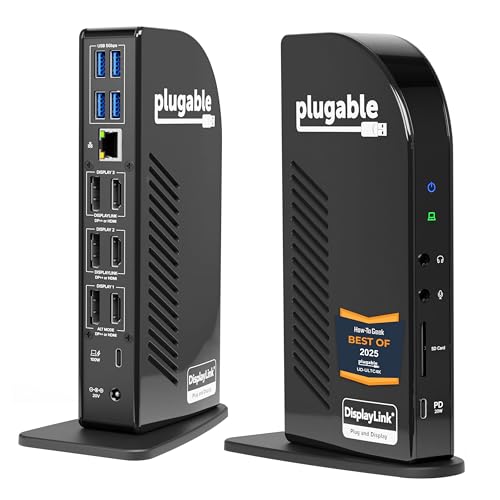
- Triple 4K support with HDMI and DisplayPort outputs
- 100W USB-C charging for compatible laptops
- 13 ports total for USB, Ethernet, SD, and audio
Best For: Users who need a full-featured dock for three monitors and laptop charging.
Best Simple Pick
Plugable USB-C Triple Monitor Dock
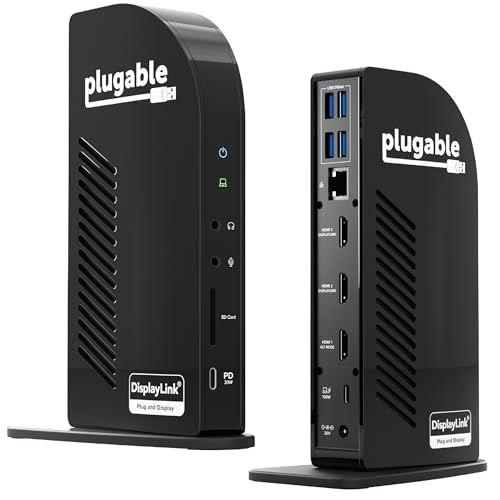
- Triple-monitor support with DisplayLink
- 100W laptop charging plus 20W device charging
- 3 HDMI, Ethernet, SD, and 4 USB-A ports
Best For: Users who want a full-featured dock for three displays and a clean all-in-one desk setup.
Best for Triple-Monitor Teams – Plugable USB-C Triple Display Dock
If you need one of the more capable plugable usb c docking stations for a hybrid office setup, this model stands out for driving three external monitors while keeping laptop charging and peripherals connected through a single cable. It’s a practical choice for users who want more desk expansion without moving up to a full desktop.
Best For: Multi-monitor workers, hot-desking environments, and mixed Windows, macOS, or ChromeOS fleets that need dependable USB-C expansion.
Pros:
- Supports up to three HDMI displays for a more productive workspace
- Includes 100W USB-C Power Delivery for charging while docked
- Offers six USB 5Gbps ports plus Gigabit Ethernet for full peripheral support
- Works across Windows, macOS, and ChromeOS with broad laptop compatibility
Cons:
- Two displays are limited to 1080p, so it’s not a full triple-4K solution
- Mac users need DisplayLink software for full multi-monitor support
- Not compatible with Linux
For buyers comparing plugable usb c docking stations, this one makes the most sense when triple-display output and broad business compatibility matter more than compact size or single-cable simplicity. It’s especially appealing for teams that need reliable, repeatable docking across multiple laptop brands.
Best for Dual-4K Productivity – Plugable Dual Monitor USB-C Dock
If you need plugable usb c docking stations that focus on real desktop expansion rather than charging or gaming, this Plugable dock is a strong fit. It adds dual monitor support, plenty of USB ports, wired networking, and audio through a single USB-C or USB 3.0 connection.
Best For: Office users, remote workers, and Chromebook or Windows laptop owners who want a reliable dual-monitor dock for productivity.
Pros:
- Supports dual 4K displays at 60Hz via HDMI or DisplayPort using DisplayLink
- Includes 6 USB 3.0 ports, Gigabit Ethernet, and an audio jack for full desk setup
- Works with USB-C and USB 3.0 host connections for broad laptop compatibility
- Plug-and-play on Windows and ChromeOS
Cons:
- Does not charge the connected laptop
- Requires a driver on macOS
- Not suited for gaming or protected video playback
This is one of the more practical plugable usb c docking stations for users who care most about adding dual monitors and everyday productivity ports. If you want a dependable workspace dock instead of an entertainment hub, it delivers the right mix of flexibility and value.
Best for Triple Displays – Plugable 12-in-1 Triple Monitor Dock
If you need one of the most flexible plugable usb c docking stations for a multi-monitor setup, this 12-in-1 model stands out with triple 4K display support, generous USB expansion, and wired networking. It’s a strong fit for desk setups that need both performance and broad compatibility across USB-C, USB4, and Thunderbolt systems.
Best For: Users who want to run three external monitors and keep a laptop charged with one dock.
Pros:
- Supports up to three 4K displays at 60Hz with HDMI or DisplayPort options
- Includes 6 USB 3.0 ports, Ethernet, and 3.5mm audio for a full desktop hub
- Delivers up to 100W Power Delivery for charging compatible laptops
- Works with Mac, Windows, ChromeOS, USB4, and Thunderbolt systems
Cons:
- macOS requires DisplayLink driver installation
- Triple-monitor support depends on compatible hardware and software setup
- Bulkier than simpler single-monitor docks
For shoppers comparing plugable usb c docking stations, this is a practical choice when display flexibility matters more than compact size. It’s especially compelling for power users who want a single cable to handle monitors, peripherals, networking, and charging.
Best for Mixed-OS Offices – Plugable Dual 1080p HDMI Docking Station
If you need plugable usb c docking stations that can standardize dual-monitor setups across Windows, ChromeOS, and macOS, the UD-3900Z is built for that job. It supports two HDMI displays, includes both USB-C and USB-A host cables, and keeps desk setups tidy with a vertical, 10-port design.
Best For: Office users, IT teams, and mixed-device workplaces that want reliable dual-display expansion without charging built into the dock.
Pros:
- Dual HDMI output supports up to 1920×1200 on two monitors
- Works with USB-C and USB-A laptops for broader compatibility
- Windows, ChromeOS, and macOS support makes deployment easier across fleets
- 10 total ports cover USB, Ethernet, and audio needs
Cons:
- Does not charge laptops
- Needs DisplayLink software on macOS
- Not ideal for gaming, HDCP video, or DisplayPort monitors
For productivity-focused buyers, this is one of the more practical plugable usb c docking stations because it prioritizes compatibility and simple dual-monitor expansion over entertainment features. If your workflow is office apps, web tools, and everyday multitasking, it delivers exactly that.
Best for Dual-Monitor Windows Setups – Plugable Dual 4K 60Hz USB-C Dock
If you want plugable usb c docking stations that can turn a USB-C laptop into a practical desktop rig, this Plugable model is a strong fit. It supports dual HDMI output at up to 4K 60Hz on compatible Windows, USB4, or Chromebook systems, while keeping the setup simple with driverless plug-and-play connectivity.
Best For: Windows or Chromebook users who need dual external displays, wired networking, and a clean one-cable desk setup.
Pros:
- Dual HDMI support with up to 4K 60Hz on supported hosts
- Driverless setup makes it easy to get working quickly
- Includes Gigabit Ethernet, USB-C, three USB-A ports, and audio
- 65W laptop charging helps reduce cable clutter
Cons:
- Dual extended displays are not a good fit for most Macs
- Full 4K 60Hz performance depends on host system support
- Requires a USB-C port with DisplayPort Alt Mode for video output
This is a practical pick if you need plugable usb c docking stations for productivity first, not portability gimmicks. It’s especially appealing for office or home-office users who want reliable monitor expansion and essential ports in one dock.
Best for Mac Dual-Monitor Workflows – Plugable USB-C Dual 4K Dock for Mac
If you need plugable usb c docking stations that can push two external displays on a Mac, this Plugable dock is built for that exact job. It combines DisplayLink video support with a full 14-in-1 hub layout, making it a practical pick for desk setups that need charging, wired networking, and plenty of ports in one compact unit.
Best For: MacBook users on M1 through M5 machines who want dual 4K monitors, reliable charging, and a dock that helps bypass Apple’s single-display limit.
Pros:
- Supports dual 4K 60Hz monitors over HDMI or DisplayPort
- 100W USB-C charging plus Ethernet, SD/microSD, and multiple USB ports
- Useful for Mac users who need DisplayLink to work around display limits
- Aluminum build and lifetime support add confidence for office use
Cons:
- Driver installation is required for full functionality
- HDCP is not supported
- Primarily a productivity dock, not a plug-and-play gaming solution
For buyers comparing plugable usb c docking stations, this model stands out when the main priority is getting two high-resolution displays running on a Mac without giving up essential peripherals. It is especially appealing for hybrid work, teaching, and business setups where stability matters more than simplicity.
Best for Five-Display Setups – Plugable 5-Monitor DisplayLink Dock
If you need one of the most capable plugable usb c docking stations for a serious multi-monitor workspace, this model stands out for sheer display output. It can drive up to five 4K displays on supported systems, while also adding fast Ethernet, USB/USB-C expansion, and strong laptop charging in one desk-friendly dock.
Best For: Power users, MacBook owners, and Windows laptop users who want to run a true five-screen desk setup.
Pros:
- Supports up to five external displays, including 4K at 60Hz on multiple outputs
- Includes 140W laptop charging plus 30W device charging
- 2.5Gbps Ethernet and multiple HDMI/USB-C ports expand a workstation cleanly
- Works with Windows and macOS, including base M1/M2/M3/M4 Macs
Cons:
- DisplayLink software is required for video output
- Not ideal if you only need a simple dual-monitor dock
- HDCP streaming video support is not available
For buyers who care more about monitor count and workstation flexibility than plug-and-play simplicity, this is one of the most specialized plugable usb c docking stations to consider. It is especially compelling for users who need broad compatibility and a desk setup that can scale far beyond a basic dock.
Best for Dual-HD Productivity – Plugable Dual HDMI Docking Station
If you want one of the more capable plugable usb c docking stations for a dual-monitor desk setup, the UD-3900 is built around simple expansion rather than cutting-edge video specs. It adds two HDMI outputs, wired Ethernet, audio jacks, and plenty of USB ports from a single USB 3.0 or USB-C connection, making it a practical hub for everyday workstations.
Best For: Office users, remote workers, and Mac or Windows owners who need reliable dual-HDMI connectivity for productivity apps.
Pros:
- Supports dual HDMI displays for a clean two-monitor workspace.
- Includes Gigabit Ethernet, audio ports, and six total USB ports for fuller desktop expandability.
- Works with Windows and macOS, with clear setup paths for each platform.
- Hybrid USB 3.0/USB-C cable makes it easy to use with a wide range of laptops.
Cons:
- Driver installation is required, especially on macOS.
- Does not support 4K output or gaming-focused use.
- Does not charge the host laptop.
As a work-focused dock, this model makes sense if you care more about adding ports and dual displays than chasing high-end video performance. Among plugable usb c docking stations, it stands out for dependable office expansion and broad compatibility rather than flashy specs.
Best for Triple-Monitor Power Users – Plugable 13-in-1 USB C Docking Station
If you need one of the most versatile plugable usb c docking stations for a serious multi-display desk setup, this 13-in-1 model is built to do a lot in one cable. It combines triple-monitor support, 100W charging, Ethernet, card reading, and extra USB ports into a single dock for Windows, macOS, ChromeOS, and Thunderbolt/USB4 systems.
Best For: Professionals who want to run three external monitors and charge a laptop through one USB-C connection.
Pros:
- Supports triple 4K output with 3x HDMI and 3x DisplayPort options
- Delivers up to 100W Power Delivery for charging laptops
- Includes 13 total ports, including USB-A, Ethernet, SD, and audio
- Works across Windows, macOS, and ChromeOS with DisplayLink support
Cons:
- Requires DisplayLink driver installation before full use
- HDCP streaming support is not available
- Not ideal if you want a simple plug-and-play dock
For buyers comparing plugable usb c docking stations, this one stands out for its rare triple-display flexibility and strong port mix. It is a smart pick if your priority is turning a laptop into a full workstation with minimal cable clutter.
Best Simple Pick – Plugable USB-C Triple Monitor Dock
If you need one of the most flexible plugable usb c docking stations for a multi-monitor desk setup, this Plugable dock is built for exactly that. It adds 13 ports, supports up to three extended HDMI displays, and delivers up to 100W laptop charging, so it can replace a lot of separate adapters on a busy workstation.
Best For: Mac, Windows, or ChromeOS users who want triple-monitor support, strong charging, and a full port selection in one dock.
Pros:
- Supports three external monitors, including systems that normally limit you to one display
- 100W USB-C charging for the laptop plus 20W front-port charging for accessories
- Wide connectivity with 3 HDMI, 4 USB-A, SD, Ethernet, and audio ports
- Works with Windows, macOS, and ChromeOS via DisplayLink
Cons:
- Mac users must install the DisplayLink Manager driver
- Does not support HDCP-protected streaming playback like Netflix or Hulu
This is a strong pick if your priority is a true productivity dock rather than a minimal charging hub. Among plugable usb c docking stations, it stands out for triple-monitor expansion, but it makes the most sense for users who are comfortable with a driver-based setup.
How We Picked the Best Plugable USB C Docking Stations
We focused on models that solve the most common desk setup problems: adding dual or triple monitors, delivering dependable charging, and offering enough USB and Ethernet ports for everyday work. We also looked at platform support, since Plugable USB C Docking Stations often rely on different driver and display technologies depending on whether you use Windows, macOS, or ChromeOS.
Priority went to docks that clearly state their display limits, power delivery wattage, and host compatibility. That makes it easier to match a dock to your laptop before you buy.
Quick Comparison
If you want the simplest setup, a dual-monitor dock with 65W to 100W charging is usually the best starting point. If you need a workstation for content creation or multitasking, triple-display and multi-monitor DisplayLink models offer more flexibility. For Mac users, it is especially important to check whether the dock supports native multi-monitor output or requires a driver.
Key Buying Factors for Plugable USB-C Docking Stations
Display Count and Resolution
Choose based on how many external displays you actually use. Dual 4K at 60Hz is ideal for crisp office productivity, while triple-monitor docks are better for heavier multitasking. Some models support 4K only on specific ports, so check the fine print carefully.
Charging Power
Power Delivery matters if you want one cable for both data and charging. Light ultrabooks may be fine with 65W, but larger laptops and power-hungry work machines often benefit from 100W or higher.
Operating System Compatibility
Not every dock behaves the same on Windows, macOS, and ChromeOS. Some plug-and-play options are easier on Windows and ChromeOS, while Mac setups may require drivers or may have display limitations depending on the chipset.
Ports and Expansion
Beyond monitors, check for USB-A, USB-C, Ethernet, audio, and SD or microSD support if you need a cleaner all-in-one workstation. More ports can reduce the need for extra hubs and adapters.
Who Should Buy Which Plugable USB C Docking Stations?
If you want a straightforward home office dock, choose a dual-monitor model with strong charging and Ethernet. If you run multiple applications side by side, a triple-display dock is a better fit. Creators, analysts, and power users who need maximum screen space should look at the higher-end DisplayLink models with five-monitor support.
For Mac users, the safest choice is to verify driver requirements and external display support before buying. For Windows users, Plugable USB C Docking Stations tend to offer the broadest range of feature-rich setups, from simple dual HDMI docks to full workstation-grade expansion.
