
When a PC won’t boot, random restarts begin, or a build simply refuses to post, the right diagnostic tool can save hours of guesswork. The best PC hardware diagnostic tools help you isolate power, motherboard, and startup issues fast.
This roundup focuses on practical options for builders, repair techs, and DIY troubleshooters who want clearer fault detection and quicker repairs in 2026.
Best 5 PC Hardware Diagnostic Tools Picks for 2026
Best Starter Kit
PC PSU & Motherboard Tester Kit

- All-in-one kit for legacy PC troubleshooting
- Includes PCI post card, PSU tester, and BIOS speaker
- Portable case keeps repair tools organized
Best For: Users repairing older desktops and laptops who want a bundled diagnostic starter kit.
Best for Full-System Diagnostics

- Full-system scan coverage with live data and freeze-frame info
- 30 service resets and relearns for common repair jobs
- CAN FD and FCA AutoAuth support for newer vehicles
Best For: DIYers and small-shop users who need deeper diagnostics than a basic code reader.
Best for Power Supply Checks

- LCD voltage and PG display for fast PSU checks
- Supports ATX, SATA, IDE, PCI-E, and 4/8-pin connectors
- Alarm alerts when readings fall outside normal range
Best For: PC builders and repair techs who need a quick PSU tester for common connectors.
Best for BIOS Beep Diagnostics
PC Motherboard Internal Speaker 3-Pack

- Restores BIOS beep codes on silent boards
- Fits most standard motherboard speaker headers
- Includes 3 buzzers for spare parts or multiple rigs
Best For: DIY PC builders and repair techs who need quick POST beep-code troubleshooting.
Best for USB-Based Diagnosis
New V8 PCIe USB Post Test Card Kit
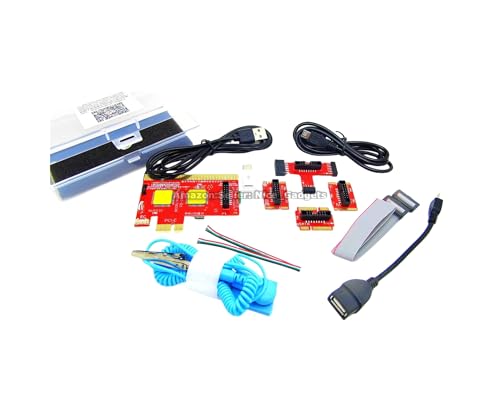
- USB app-based diagnosis instead of a basic POST display
- Works with PCs, Macs, Android devices, and mini PCs
- Includes guides, videos, and multi-port adapters
Best For: Technicians and DIY users who want a guided, app-driven motherboard diagnostic kit.
Best Starter Kit – PC PSU & Motherboard Tester Kit
If you want practical pc hardware diagnostic tools for older systems, this all-in-one kit covers the basics in one case. It combines a PCI motherboard post card, PSU tester, BIOS speaker, power switch cable, and anti-static strap to help narrow down no-power and no-POST issues without swapping in known-good parts.
Best For: Technicians, students, and DIY repairers working on older desktop PCs and laptops that still use legacy diagnostic slots and connectors.
Pros:
- Includes multiple diagnostic pieces in one portable kit
- Helps troubleshoot no power, no POST, and no display problems
- Comes with a BIOS speaker and motherboard power switch lead
- Portable carrying case keeps the tools organized
Cons:
- Requires a standard PCI slot, not PCIe, on the desktop motherboard
- Better suited to older hardware than modern systems
- Instructions matter, so setup is less plug-and-play than a simple tester
As pc hardware diagnostic tools go, this is a strong value pick if you routinely service legacy machines and want a compact kit that speeds up first-pass troubleshooting. It is especially useful when you need quick answers on power delivery, POST behavior, and basic board-level symptoms.
Best for Full-System Diagnostics – XTOOL D6S OBD2 Scanner
If you need a scan tool that goes well beyond basic code reading, the XTOOL D6S is a strong value pick for enthusiasts, DIY mechanics, and small shops. It brings OE-level full-system coverage, 30 maintenance resets, and modern-vehicle support, making it a practical alternative to many entry-level pc hardware diagnostic tools for people who want deeper troubleshooting without dealership pricing.
Best For: DIYers and home mechanics who want full-system diagnostics, service resets, and broad vehicle compatibility in one touchscreen scanner.
Pros:
- OE-style full-system scans with live data, freeze frame, and DTC clearing
- 30 maintenance and relearn functions, including ABS bleed, SAS, BMS, and crank sensor relearn
- Supports CAN FD and FCA AutoAuth for newer vehicles
- AutoVIN, touchscreen controls, and free lifetime updates add convenience
Cons:
- Some functions vary by vehicle, so compatibility checks are important
- FCA AutoAuth requires a personal account and active subscription
- More tool than casual users need if you only want basic code reads
Overall, the D6S is a smart middle-ground choice for drivers who want more than simple fault-code scanning. It fits especially well alongside other pc hardware diagnostic tools when the priority is accurate system-level troubleshooting and maintenance resets.
Best for Power Supply Checks – LCD Power Supply Tester
If you need a straightforward way to verify PSU health, this is one of the more practical pc hardware diagnostic tools for quick checks. It reads key voltage rails on an LCD, sounds an alarm for abnormal values, and supports common ATX-style connectors without much setup.
Best For: PC builders, repair shops, and resellers who want a fast, compact tester for ATX power supplies and common connectors.
Pros:
- LCD readout shows voltage and PG values for easier troubleshooting
- Supports 20/24-pin ATX plus SATA, IDE, PCI-E, and 4/8-pin connectors
- Buzzer alert helps flag abnormal voltage readings quickly
- Compact design makes it easy to keep in a bench toolkit
Cons:
- Focused mainly on power supply testing rather than full system diagnostics
- LCD voltage display is limited to the main 20/24-pin connection
- Not a substitute for deeper load testing under real-world conditions
This is a useful pick if your main job is confirming whether a PSU is delivering normal rails before swapping parts. For pc hardware diagnostic tools, it stands out as a simple, purpose-built tester that saves time during troubleshooting.
Best for BIOS Beep Diagnostics – PC Motherboard Internal Speaker 3-Pack
If you build, repair, or test PCs, this tiny buzzer is one of the most useful pc hardware diagnostic tools you can keep on hand. It restores BIOS beep codes to motherboards that have no built-in speaker, making it easier to track down boot issues without swapping parts blindly.
Best For: DIY builders, IT techs, and anyone troubleshooting a no-boot system that needs clear POST beep codes.
Pros:
- Turns silent boot failures into readable BIOS beep codes
- Standard 4-pin header works with most ATX, Micro-ATX, and Mini-ITX boards
- 3-pack gives you spares for repair kits or multiple builds
- Short cable helps keep internal wiring tidy
Cons:
- Only useful if your motherboard supports a speaker header
- Very small part, so it can be easy to misplace
This is a simple but high-value add-on for anyone who relies on pc hardware diagnostic tools to speed up troubleshooting. It won’t fix the problem for you, but it can save a lot of time by telling you where to start.
Best for USB-Based Diagnosis – New V8 PCIe USB Post Test Card Kit
If you want pc hardware diagnostic tools that go beyond a basic POST card, this New V8 kit stands out for its USB-based workflow and broad device support. It is aimed at users who can follow the included PDF/video instructions and prefer onscreen Android app results instead of a traditional numeric display.
Best For: Technicians, DIY repairers, and lab users who want a multi-port motherboard tester for desktops, laptops, servers, and USB-enabled devices.
Pros:
- USB diagnosis with app-based results can simplify code lookup
- Supports a wide range of machines, including PCs, Macs, Android devices, and mini PCs
- Includes guides, videos, and multi-port adapters for setup help
- Useful for troubleshooting without fully disassembling the system
Cons:
- Requires careful reading of the instructions before first use
- No traditional digital POST code display, so it depends on the app workflow
- USB cable and app pairing can be finicky if connected incorrectly
As pc hardware diagnostic tools go, this is more specialized than a simple test card, but that also makes it attractive for users who want guided, multi-device diagnostics. Its strength is convenience and breadth, while its main tradeoff is the learning curve around the app-based process.
How We Picked These PC Hardware Diagnostic Tools
We looked for tools that solve the most common desktop and small-form-factor troubleshooting problems: power supply verification, POST code reading, beep-code identification, and broader motherboard or system checks. Priority went to models that are simple to use, cover multiple hardware formats, and fit both one-off repairs and regular bench work.
Quick Comparison
For fast triage, PSU testers are the quickest way to confirm whether power rails are stable. POST cards and diagnostic analyzers are better when the machine powers on but fails to initialize. Motherboard speakers are inexpensive but still useful for decoding beep patterns when a board supports them. More advanced scanners can broaden coverage, but they are not always necessary for basic PC repair.
Key Buying Factors for PC Hardware Diagnostic Tools
Compatibility
Check whether the tool supports the connectors and platforms you actually service, such as 24-pin ATX, 4/8-pin CPU power, SATA, or PCIe POST interfaces. If you work on older systems, legacy support matters. If you service compact builds, confirm ITX and specialty connector compatibility.
Diagnostic Depth
Some tools only confirm power presence, while others provide rail readings, POST codes, or BIOS-related fault clues. Choose simpler PSU testers for power problems and more advanced POST testers when the issue looks like motherboard, CPU, RAM, or initialization failure.
Readability and Speed
Clear displays, labeled indicators, and audible alerts reduce errors during troubleshooting. In a repair environment, the best tools are the ones you can interpret quickly without digging through a manual for every test.
Build Quality and Frequency of Use
If you only troubleshoot occasionally, a compact tester may be enough. Frequent users should look for sturdier housings, reliable connectors, and a layout that can handle repeated bench use.
Who Should Buy Which PC Hardware Diagnostic Tools?
Home builders and casual troubleshooters should start with a PSU tester and a basic POST/beep-code option, since those cover many common failures at low cost. Repair shops and advanced enthusiasts will usually benefit most from broader PC Hardware Diagnostic Tools that combine POST analysis with multi-connector support. If your work extends beyond desktop PCs, choose a tool with the widest platform coverage so you are not limited by the next system on your bench.
In short, match the tool to the failure pattern: power issues call for PSU testing, no-boot problems call for POST diagnostics, and intermittent board faults often benefit from a combination of both.
