
When it comes to photo editing, your choice of monitor can make a significant difference in the quality of your work. The right OLED monitor not only enhances color accuracy but also brings out every intricate detail in your images. With various models available, understanding what features to prioritize is essential. Let’s explore the top contenders that can elevate your editing experience and help realize your creative vision.
ASUS ProArt Display 27” 4K HDR Professional Monitor (PA279CRV)

If you’re a professional photographer or graphic designer seeking unmatched color accuracy, the ASUS ProArt Display PA279CRV is an excellent choice. With its 27-inch 4K HDR resolution, this monitor delivers stunning visuals that bring your work to life. The IPS panel guarantees wide viewing angles and the Calman Verified color accuracy, pre-calibrated to Delta E < 2, assures true-to-life colors. You’ll appreciate the 99% DCI-P3 and Adobe RGB coverage, ideal for precise editing. Plus, with multiple connectivity options, including USB-C and HDMI, you can easily integrate it into your setup. Elevate your creative projects with this powerful monitor.
Best For: Professional photographers and graphic designers who require exceptional color accuracy and clarity in their work.
Pros:
- Calman Verified color accuracy with a Delta E < 2 for true-to-life colors.
- Wide color gamut coverage of 99% DCI-P3 and 99% Adobe RGB for precise editing.
- Multiple connectivity options including DisplayPort over USB-C, HDMI, and a USB hub for versatile integration.
Cons:
- Relatively heavy at 18.25 pounds, which may affect portability.
- Higher price point compared to standard monitors, making it a premium option.
- Limited ergonomic adjustments may not suit all user preferences for positioning.
ASUS ROG Swift 27” 1440P OLED Gaming Monitor (PG27AQDM)

The ASUS ROG Swift 27” 1440P OLED Gaming Monitor (PG27AQDM) is an exceptional choice for photo editing enthusiasts who demand vibrant colors and sharp details. With a QHD resolution of 2560 x 1440 and true 10-bit color support covering 99% DCI-P3, it brings your images to life. The 240Hz refresh rate and ultra-fast 0.03ms response time guarantee smooth visuals, while peak brightness of 1000 nits enhances HDR content. Designed with a custom cooling system and anti-glare coating, it maintains color accuracy. Plus, its versatile connectivity options make it easy to integrate into your workflow seamlessly.
Best For: The ASUS ROG Swift 27” 1440P OLED Gaming Monitor is best for photo editing enthusiasts and gamers seeking vibrant colors and smooth visuals.
Pros:
- Exceptional color accuracy with true 10-bit support and 99% DCI-P3 coverage.
- Ultra-fast refresh rate of 240Hz and response time of 0.03ms for seamless gaming experiences.
- Custom cooling system and anti-glare coating for enhanced performance and reduced reflections.
Cons:
- Higher price point compared to standard monitors.
- Weighing 15.21 pounds, it may require a sturdy desk or mount.
- Limited to QHD resolution, which may not satisfy users looking for 4K displays.
ASUS ProArt Display 32” 4K HDR Monitor (PA329CV)

For photographers and graphic designers seeking exceptional color accuracy, the ASUS ProArt Display 32” 4K HDR Monitor (PA329CV) stands out with its factory calibration and Delta E value of less than 2. Boasting a 32-inch IPS panel with 3840 x 2160 resolution, it delivers stunning visuals and a 178° wide viewing angle. You’ll appreciate its 100% sRGB and Rec. 709 color coverage, ensuring lifelike images. Plus, with versatile connectivity options like USB-C and HDMI, it fits seamlessly into your setup. Enjoy a height-adjustable design and a complimentary 3-month Adobe Creative Cloud offer to enhance your creative workflow.
Best For: Photographers and graphic designers who require exceptional color accuracy and a large, high-resolution display for their creative work.
Pros:
- Factory calibrated with a Delta E value of less than 2 for outstanding color precision.
- 32-inch IPS panel with 4K resolution and 178° wide viewing angle for immersive visuals.
- Versatile connectivity options including USB-C, HDMI, and a 3-month complimentary Adobe Creative Cloud subscription.
Cons:
- Relatively heavy at 27.8 pounds, which may require a sturdy desk or mount.
- Higher price point compared to standard monitors, which may not be suitable for budget-conscious buyers.
- Limited warranty information provided; may require additional steps to obtain manufacturer warranty details.
ASUS ProArt Display PA248QV 24.1” WUXGA Monitor
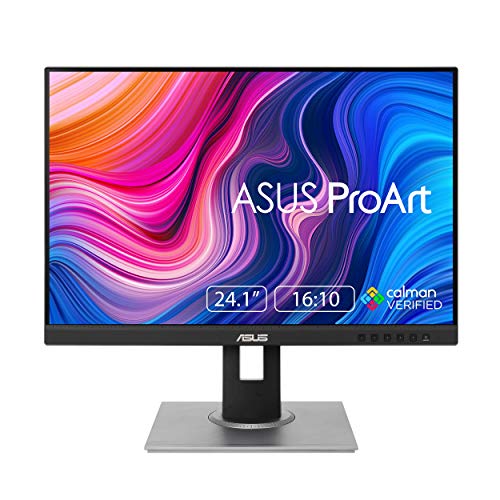
Designed specifically for creative professionals, the ASUS ProArt Display PA248QV 24.1” WUXGA Monitor excels in delivering stunning color accuracy with a ΔE of less than 2. With a resolution of 1920 x 1200 and 100% sRGB/Rec.709 color coverage, you’ll enjoy true-to-life hues and vivid images in your projects. Its IPS panel guarantees high color fidelity, enhancing your editing experience. The monitor’s ergonomic design offers tilt, pivot, swivel, and height adjustment for comfort. Plus, with multiple connectivity options, including USB and HDMI ports, you can easily connect your devices. It’s a fantastic choice for serious photo editing!
Best For: Creative professionals seeking a monitor that delivers exceptional color accuracy and ergonomic features for photo editing and design work.
Pros:
- High Color Fidelity: 100% sRGB/Rec.709 coverage and ΔE < 2 ensure accurate color reproduction.
- Ergonomic Design: Features like tilt, pivot, swivel, and height adjustment enhance user comfort during long editing sessions.
- Multiple Connectivity Options: Includes various ports such as USB 2.0, USB 3.0, HDMI, and DisplayPort for versatile device connections.
Cons:
- Weight: At 13.45 pounds, it may be cumbersome to move or mount.
- Limited Resolution: While WUXGA (1920 x 1200) is good, some professionals may prefer higher resolutions for detailed work.
- No Built-in Speakers: The absence of integrated audio may require external speakers for multimedia use.
ASUS ProArt 14” Portable Touchscreen Monitor (PA148CTV)

Photographers and graphic designers looking for a portable yet powerful display will appreciate the ASUS ProArt 14” Portable Touchscreen Monitor (PA148CTV). This 14-inch Full HD IPS monitor offers stunning visuals with a 178° viewing angle and a brightness of 300 cd/㎡. You’ll enjoy vibrant colors thanks to its 100% sRGB and Rec. 709 coverage, along with excellent color accuracy verified by Calman. The intuitive OSD control via ASUS Dial, along with a sturdy kickstand and tripod socket, enhances usability. With versatile connectivity options like USB Type-C and Micro HDMI, it’s perfect for on-the-go creativity while maintaining eye care standards.
Best For: Photographers and graphic designers in need of a portable, high-quality display for on-the-go creativity.
Pros:
- Excellent color accuracy with 100% sRGB and Rec. 709 coverage, verified by Calman.
- Portable design featuring a sturdy kickstand and tripod socket for easy setup.
- Versatile connectivity options including USB Type-C and Micro HDMI for compatibility with various devices.
Cons:
- Limited screen size may not meet the needs of users requiring larger displays for detailed work.
- Brightness level of 300 cd/㎡ may be insufficient for use in bright outdoor environments.
- Touchscreen functionality may not be necessary for all users, potentially adding to the cost.
ASUS ProArt Display PA32UCX-PK 32” 4K HDR Monitor

The ASUS ProArt Display PA32UCX-PK 32” 4K HDR Monitor stands out with its exceptional color accuracy, making it an ideal choice for creatives who demand precise color representation in their work. With a resolution of 3840 x 2160 and peak brightness of 1,200 nits, you’ll experience vibrant visuals. It covers 99% DCI-P3 and 99.5% Adobe RGB, ensuring true-to-life colors. The monitor features Thunderbolt 3 USB-C, HDMI, and DisplayPort connections for versatile compatibility. Plus, advanced technologies like off-axis contrast optimization enhance your viewing experience. Whether you’re editing photos or videos, this monitor delivers the precision you crave.
Best For: Professionals and creatives who require high color accuracy and HDR support for photo and video editing.
Pros:
- Exceptional color accuracy with DeltaE < 1, ideal for color-critical work.
- High peak brightness of 1,200 nits enhances HDR content viewing experience.
- Versatile connectivity options including Thunderbolt 3 USB-C, HDMI, and DisplayPort.
Cons:
- Weighty design at 32.3 pounds, making it less portable.
- Mixed customer ratings with a score of 3.2 out of 5 stars, indicating some dissatisfaction.
- Higher price point may not be suitable for casual users or those on a budget.
LG 32GX870A-B 32-inch Ultragear 4K UHD Gaming Monitor
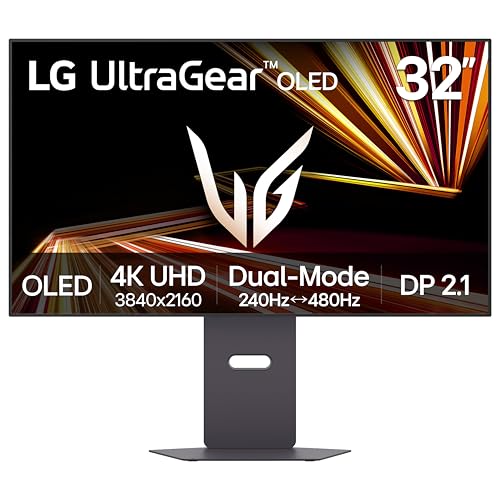
For anyone seeking a top-tier monitor for photo editing, the LG 32GX870A-B 32-inch Ultragear 4K UHD Gaming Monitor stands out with its stunning 4K resolution and impressive peak brightness of up to 1300 nits. Its 1.5M:1 contrast ratio and VESA DisplayHDR True Black 400 certification guarantee vibrant colors and deep blacks, perfect for editing. With a lightning-fast 0.03ms response time and compatibility with NVIDIA G-SYNC and AMD FreeSync, your editing experience will be smooth and lag-free. You’ll appreciate the virtually borderless design and ergonomic adjustments, making it a seamless addition to your workspace.
Best For: The LG 32GX870A-B 32-inch Ultragear 4K UHD Gaming Monitor is best for gamers and professionals who demand exceptional visual fidelity and performance for both gaming and photo editing.
Pros:
- Stunning 4K UHD resolution with peak brightness up to 1300 nits for vibrant visuals.
- Extremely low response time of 0.03ms, ensuring smooth gameplay and editing.
- Ergonomic design with adjustable height and tilt for comfortable long-term use.
Cons:
- The premium features may come at a higher price point compared to standard monitors.
- Limited to 32-inch size, which may not suit all workspace requirements.
- The anti-glare screen might not appeal to users who prefer a glossy finish for photo editing.
Samsung 32″ Odyssey OLED G8 Gaming Monitor (G80SD Series)

If you’re seeking an exceptional monitor for photo editing, the Samsung 32″ Odyssey OLED G8 Gaming Monitor (G80SD Series) stands out with its 4K QD-OLED technology, delivering a vibrant spectrum of colors and true black levels. With a response time of just 0.03ms and a 240Hz refresh rate, it guarantees smooth visuals, vital for detailed editing work. The glare-free technology minimizes distractions from external light, while its advanced cooling and burn-in prevention systems protect your images. Plus, the monitor’s G-Sync compatibility offers seamless performance, making it an ideal choice for both gaming and photo editing enthusiasts.
Best For: The Samsung 32″ Odyssey OLED G8 Gaming Monitor is best for gaming and photo editing enthusiasts who seek vibrant colors and smooth performance.
Pros:
- Exceptional color accuracy and true black levels thanks to QD-OLED technology.
- Ultra-fast response time of 0.03ms and a refresh rate of 240Hz ensures smooth visuals.
- Advanced cooling and burn-in prevention features protect against image retention.
Cons:
- Brightness may be limited to 250 nits, which could be less than some competitive monitors.
- Price point may be higher compared to traditional monitors without OLED technology.
- The reliance on HDMI 2.1 and DisplayPort may require additional investment in compatible cables or hardware.
Factors to Consider When Choosing Oled Monitors for Photo Editing
When you’re choosing an OLED monitor for photo editing, several key factors come into play. You’ll want to take into account color accuracy, resolution, and size to guarantee your images look their best. Additionally, panel technology, calibration capabilities, and connectivity options can greatly impact your editing experience.
Color Accuracy Importance
Color accuracy is essential in photo editing, as it guarantees the colors you see on your OLED monitor closely match the final output, whether printed or displayed. To achieve this, look for monitors with a Delta E value of less than 2, which indicates excellent color accuracy. A wide color gamut, such as 99% Adobe RGB or 100% sRGB coverage, allows you to represent vivid and detailed images accurately. Calibration capabilities, including hardware calibration and factory pre-calibrated settings, help you maintain consistent color accuracy over time. Additionally, choose monitors that support true 10-bit color, as they can display over a billion colors, ensuring smoother gradients and more precise color representation—key elements for your professional photo editing work.
Resolution and Size
Achieving accurate color representation is only part of the equation in photo editing; the resolution and size of your OLED monitor play a significant role in your editing experience. A higher resolution, like 4K (3840 x 2160), delivers greater detail and clarity, enabling you to edit images with precision. Opting for larger screen sizes, such as 27 inches or more, enhances your workspace, allowing you to view and edit multiple images side by side without constant zooming. This combination of high resolution and size improves your perception of color accuracy, essential for representing colors precisely. Additionally, consider the monitor’s aspect ratio, typically 16:9, which affects the layout of your editing software and overall efficiency during the editing process.
Panel Technology Types
Choosing the right panel technology is essential for optimizing your photo editing experience. OLED (Organic Light Emitting Diode) technology stands out with its superior color accuracy and contrast ratios, making it perfect for tasks requiring precise color representation. Each pixel emits its own light, allowing for true blacks and a higher dynamic range, which is vital when editing photos with varying light conditions. Many OLED monitors support wider color gamuts like 99% DCI-P3 or Adobe RGB, ensuring vibrant and true-to-life colors. Additionally, the rapid response time of OLED panels minimizes motion blur, helping you edit dynamic images seamlessly. Finally, wider viewing angles maintain color fidelity, making collaborative editing and presentations more effective.
Calibration Capabilities
When it comes to photo editing, calibration capabilities play a pivotal role in ensuring your monitor accurately reproduces colors. Look for monitors with a Delta E value of less than 2, as these offer high color accuracy essential for professional work. Advanced features like hardware calibration let you fine-tune color settings directly within the monitor’s firmware, enhancing consistency across devices. Some models come pre-calibrated from the factory, often including a calibration report to verify their accuracy, saving you valuable time. Additionally, make sure your monitor supports a wide color gamut, such as 99% DCI-P3 or Adobe RGB, to display a broader range of colors during your editing process. Accurate calibration is key to achieving true-to-life image representation.
Connectivity Options
As you’re diving into the world of photo editing with OLED monitors, considering connectivity options is vital for a seamless workflow. Look for monitors that offer multiple connections like HDMI, DisplayPort, and USB-C, guaranteeing compatibility with your devices. If you’re serious about speed, choose a monitor with Thunderbolt 3 USB-C ports for faster data transfer and power delivery. Integrated USB hubs can simplify your setup, allowing easy connections for external drives and input devices. If you plan on using multiple displays, check for daisy-chaining capabilities to reduce cable clutter. Finally, verify the monitor supports compatibility with color calibration tools via USB ports, as maintaining color accuracy is essential for your editing precision.
Brightness Levels
Brightness levels play a significant role in your photo editing experience, directly influencing color accuracy and the visibility of intricate details in both highlights and shadows. For HDR content, a peak brightness of at least 600 nits is vital to render bright areas effectively without clipping. Ideally, look for monitors with brightness ranges between 300 to 1000 nits, as this enhances dynamic range and contrast in your photos. Consistency in brightness is essential for accurate color grading; fluctuations can misrepresent tones and hues. Additionally, having control over brightness settings can help reduce eye strain during long editing sessions, ensuring a comfortable viewing experience. Choose wisely to elevate your editing game and capture every detail with precision.
User Ergonomics
Choosing the right OLED monitor for photo editing hinges on user ergonomics, which can greatly impact your comfort and productivity during long sessions. Look for adjustable height, tilt, and swivel features to reduce neck and eye strain. An anti-glare coating can also enhance your comfort, minimizing reflections and allowing you to work longer without discomfort. Opt for monitors with wide viewing angles, like 178°, to guarantee consistent color representation, especially during collaborative efforts. Additionally, eye care technologies, such as low blue light settings and flicker-free operation, help minimize eye fatigue. Finally, consider the monitor’s weight and footprint; a lighter monitor is easier to adjust for peak ergonomics, making your editing experience more enjoyable.
