
Reliable video storage can make remote workplace monitoring easier to manage, whether you are securing a home office, small business, or distributed property. The right network video recorder balances camera capacity, storage, remote access, and installation complexity.
We compare 10 NVR options with different channel counts, PoE features, storage configurations, and ecosystem requirements so you can choose a setup that fits your cameras and workflow.
Best 10 Network Video Recorders for Remote Work Picks for 2026
Compact Reolink Coverage
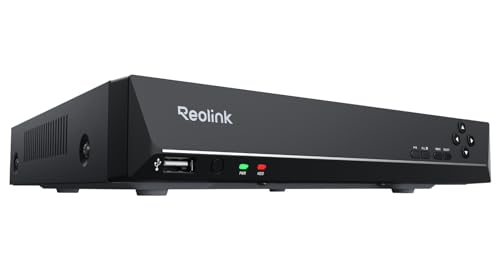
- Records up to eight compatible Reolink cameras
- Supports up to 16TB across internal and eSATA storage
- Free apps provide local and remote viewing
Best For: Small Reolink camera systems and home offices
Ready-to-Run ZOSI Value

- Includes a 2TB hard drive
- Supports remote alerts and smart playback
- Expandable from eight to 16 channels
Best For: New ZOSI PoE installations needing included storage
Enterprise Ubiquiti Scale
Enterprise Network Video Recorder
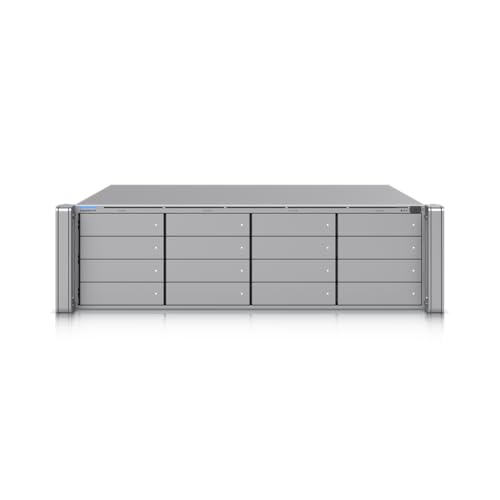
- Supports up to 70 camera channels
- Offers 16 HDD or SSD bays
- Includes 10GbE connectivity and redundant PSUs
Best For: Large Ubiquiti camera deployments and enterprise sites
High-Capacity Reolink Expansion

- Manages up to 36 Reolink IP cameras
- Supports up to 48TB across three drive bays
- Requires external PoE switches
Best For: Large Reolink systems needing extensive storage
UniFi Protect Pick

- Four-channel IP camera recorder
- Ethernet and USB connectivity
- Compact 2-pound design
Best For: Small UniFi Protect camera deployments
AI-Compatible Value

- Eight-channel 12MP recording
- PoE power and data over one cable
- Free remote access through ANNKE Vision
Best For: ANNKE home and small-business surveillance
Expandable Remote Access

- Eight PoE ports with 16-channel expansion
- Supports up to 4K/8MP cameras
- Free mobile and desktop remote access
Best For: Expandable Hiseeu camera installations
Best Integrated 8-Channel Option

- Includes a 2TB hard drive
- Supports up to eight cameras
- Remote viewing on major platforms
Best For: Anpviz camera owners needing built-in storage and remote access
Best for Expansion

- Supports up to 16 ZOSI cameras
- Dual-drive support up to 16TB total
- Includes smart detection and recording modes
Best For: Growing ZOSI PoE camera installations
Best Wireless Setup
Hiseeu 10-Channel Wi-Fi NVR with LCD

- Built-in Wi-Fi camera router
- Supports up to 10 cameras
- Integrated 10-inch LCD display
Best For: Hiseeu wireless-camera systems with cable-light installation
Compact Reolink Coverage – 8CH PoE NVR
For shoppers comparing network video recorders for remote work, the REOLINK RLN8-410 is a straightforward option for monitoring a home or small property. It supports up to eight compatible Reolink PoE cameras, offers 24/7 recording, and enables local or remote viewing through Reolink apps and clients.
Best For: Home offices and small properties already using, or planning to use, compatible Reolink PoE cameras.
Pros:
- Supports simultaneous recording from up to eight cameras.
- PoE uses one Ethernet cable for power and data, with runs up to 330 feet.
- Supports one internal hard drive up to 8TB plus an external eSATA drive up to 8TB.
- Includes free iOS, Android, Windows, and Mac apps for local and remote access without monthly fees.
Cons:
- Internal hard drive is not included.
- Works only with compatible Reolink IP cameras, excluding 4G LTE cameras.
- Firmware and camera compatibility should be checked before use.
The RLN8-410 is a practical small-system recorder when easy PoE installation and remote access matter. Its main limitation is the Reolink-only ecosystem and the need to add storage separately.
Ready-to-Run ZOSI Value – 4K 8CH PoE NVR
The ZOSI 4K 8CH PoE NVR is a convenient choice among network video recorders for remote work because it includes a 2TB hard drive and supports remote monitoring from a phone, tablet, or PC. Its PoE design simplifies camera installation, while configurable recording modes help balance storage and coverage.
Best For: Users wanting an included-storage, wired ZOSI system with remote alerts and room to expand.
Pros:
- Includes a 2TB security-grade hard drive for 24/7 recording.
- Provides motion zones, app push notifications, and email alerts.
- Eight built-in PoE ports can expand to 16 channels with an optional PoE switch.
- Supports continuous, scheduled, motion-triggered, and recycle recording modes.
Cons:
- Compatible only with specified ZOSI PoE IP cameras.
- Not compatible with analog, wireless, or non-PoE cameras.
- A 4K monitor or TV is recommended for the full 4K viewing experience.
With storage included and useful alert controls, this ZOSI model is well suited to a new wired installation. Confirm camera compatibility first, since the system is limited to the supported ZOSI PoE range.
Enterprise Ubiquiti Scale – Enterprise Network Video Recorder
For larger deployments, the Ubiquiti Enterprise Network Video Recorder is a high-capacity choice among network video recorders for remote work. It supports up to 70 camera channels and is built around flexible storage, fast network connectivity, and redundant power components.
Best For: Enterprise or multi-site Ubiquiti camera environments requiring substantial capacity and resilient hardware.
Pros:
- Supports up to 70 IP camera channels.
- Provides 16 bays for 3.5-inch hard drives or SSDs.
- Includes two 10G SFP+ uplinks and one 10GbE RJ45 port.
- Two hot-swappable power supplies provide power redundancy.
Cons:
- The supplied notes do not specify included storage.
- Its enterprise-oriented hardware may be more than a small office needs.
- The listed manufacturer warranty is six months.
The ENVR stands out when channel count, storage expansion, and network throughput take priority. It is best considered for a planned Ubiquiti infrastructure rather than a basic home-office setup.
High-Capacity Reolink Expansion – 36CH PoE NVR
The REOLINK RLN36 is designed for larger camera installations that need centralized recording and substantial storage. Among network video recorders for remote work, it suits businesses or properties managing many compatible Reolink cameras, with remote access available with or without an internet connection.
Best For: Large Reolink deployments that can use external PoE switches and need up to 36 camera channels.
Pros:
- Manages up to 36 compatible Reolink IP cameras.
- Three drive bays support up to 16TB per drive, for up to 48TB total.
- USB 3.0 supports faster footage backups to portable storage.
- Integrates supported Reolink detection, playback, and two-way audio features.
Cons:
- No PoE ports are built in; external PoE switches are required.
- Hard drives are not included.
- Works with Reolink IP cameras and requires compatibility and firmware checks.
The RLN36 is a strong expansion platform for a sizable Reolink system, especially where long retention and centralized management matter. Budget separately for compatible PoE switches and storage before buying.
UniFi Protect Pick – UniFi Network Video Recorder
The Ubiquiti UniFi Protect Network Video Recorder is a focused option for setups using compatible IP cameras over Ethernet. With four channels and USB connectivity, it may suit a small remote-monitoring installation where centralized recording is more useful than a large camera capacity.
Best For: Small UniFi Protect deployments and remote workspaces using up to four IP cameras.
Pros:
- Supports Ethernet connectivity for network-based camera recording.
- Four-channel design fits smaller surveillance systems.
- Dedicated compatibility with camera devices and a compact 2-pound weight.
Cons:
- Four channels provide less expansion room than larger NVRs.
- The supplied details do not confirm included storage capacity.
- Software update support is unspecified.
This is a straightforward choice for buyers already building around the UniFi Protect ecosystem. Confirm camera compatibility and storage requirements before selecting it for a broader network video recorder for remote work setup.
AI-Compatible Value – ANNKE 12MP 8CH PoE NVR
The ANNKE 12MP 8CH PoE NVR is built for ANNKE camera systems and combines eight channels with one-cable PoE connections. For network video recorders for remote work, its free ANNKE Vision app offers remote live viewing and playback on phones, tablets, and computers without a monthly fee.
Best For: ANNKE-based home or small-business surveillance requiring eight-channel recording and remote access.
Pros:
- Supports up to eight channels and up to 12MP recording.
- PoE carries power and data over one cable, with up to 30W output.
- H.265+ compression can reduce storage use and bandwidth needs.
- ANNKE Vision supports remote viewing and playback on iOS, Android, Windows, and Mac.
Cons:
- Hard drive is not included.
- Compatibility is limited primarily to ANNKE IP cameras.
- The NVR itself has no built-in AI functions; AI features depend on compatible cameras.
Its combination of PoE simplicity, remote access, and eight-channel capacity makes it practical for a growing ANNKE installation. Buyers should budget for a compatible hard drive and verify camera support before purchasing.
Expandable Remote Access – Hiseeu 4K PoE NVR
The Hiseeu 4K PoE Network Video Recorder provides eight built-in PoE ports and can expand to 16 channels with an additional PoE switch. It is a flexible candidate among network video recorders for remote work, with free Guard Live and Guard Station access for viewing footage from mobile and desktop devices.
Best For: Buyers who need eight PoE ports now and the option to expand an Hiseeu camera system later.
Pros:
- Supports up to 16 channels when paired with a PoE switch.
- Handles up to 4K/8MP PoE cameras according to the supplied specifications.
- Offers free remote access through Guard Live and Guard Station.
- H.265+ compression can save storage space.
Cons:
- No hard drive is included, and recording requires an HDD.
- A separate PoE switch is needed for expansion beyond eight cameras.
- Third-party camera setup is not fully plug-and-play and may require network changes.
This model stands out for its expansion path and no-monthly-fee remote viewing. It is best suited to buyers comfortable staying within the supported camera ecosystem or handling the extra configuration required for third-party cameras.
Best Integrated 8-Channel Option – Anpviz 12MP PoE NVR with 2TB
For remote work setups that need dependable access to recorded footage, the Anpviz 12MP 8-channel NVR combines PoE connectivity, built-in storage, and remote playback. It is a practical choice when you want a ready-to-use recorder without adding a separate hard drive.
Best For: Anpviz camera owners who want built-in storage and multi-device remote viewing.
Pros:
- Includes a 2TB hard drive and supports up to 8TB.
- Supports up to eight IP cameras and resolutions up to 12MP/4K.
- H.265+ compression can save storage space compared with H.264.
- Remote access is available through the Anpviz Viewer app on iOS, Android, Windows, and Mac.
Cons:
- Plug-and-play compatibility is limited to Anpviz IP PoE cameras.
- The NVR itself has no built-in AI functions; supported detection depends on compatible cameras.
- Only one USB port is listed.
This is a strong all-in-one option for remote work monitoring, especially if you already use Anpviz cameras. Its included drive reduces setup work, while the eight-channel capacity leaves room for a broader camera installation.
Best for Expansion – ZOSI 16-Channel 4K PoE NVR
The ZOSI 16-channel recorder is suited to remote work environments that may grow over time. It supports up to 16 ZOSI PoE cameras, offers customizable recording modes, and provides remote live viewing through the Zosi Smart app.
Best For: Larger or expanding ZOSI camera systems that need flexible recording and backup options.
Pros:
- Manages up to 16 compatible PoE cameras.
- Supports two hard drives of up to 8TB each for extended recording.
- Offers person, vehicle, face, and object detection features.
- Provides continuous, scheduled, motion-triggered, and recycling recording modes.
Cons:
- No hard drive is included, so storage must be installed separately.
- Compatibility is limited to ZOSI PoE cameras.
- The supplied warranty is one year.
Choose this model when channel capacity matters more than out-of-box storage. The dual-disk design and configurable recording modes make it flexible for a busy remote workspace, but the camera-brand restriction and separate hard-drive purchase should be planned for upfront.
Best Wireless Setup – Hiseeu 10-Channel Wi-Fi NVR with LCD
For remote work locations where running network cables is inconvenient, this Hiseeu wireless NVR combines a built-in Wi-Fi router with a 10-inch LCD monitor. It can record compatible wireless cameras locally and supports remote viewing when internet access is enabled.
Best For: Hiseeu wireless-camera users who want a cable-light installation and integrated display.
Pros:
- Built-in Wi-Fi router handles camera connectivity without consuming home-router bandwidth.
- Supports up to 10 channels and cameras up to 5MP.
- Allows playback through the phone app, computer software, or NVR monitor after installing a hard drive.
- Includes motion-detection zones and 24/7 recording support.
Cons:
- No hard drive is included; internal storage is supported up to 6TB.
- Works only with compatible Hiseeu wireless cameras and does not support ONVIF.
- Internet is required for viewing from elsewhere.
This is the most convenient fit for a wireless remote-work monitoring system built around Hiseeu cameras. Its local camera network can simplify installation, but buyers should verify camera compatibility and budget for a storage drive.
How We Picked the Best Network Video Recorders for Remote Work
We focused on the features that matter when cameras need to support remote oversight: channel capacity, PoE connectivity, recording resolution, storage, playback tools, remote-viewing support, and upgrade potential. We also considered whether each recorder includes a hard drive, requires a separate camera ecosystem, or is better suited to a simple installation versus a larger deployment.
Because “remote work” can mean anything from monitoring a home office to managing several locations, this list includes compact eight-channel units, expandable systems, and higher-capacity recorders. Compatibility is essential: verify that your cameras use a supported protocol and that your network can handle the intended video traffic.
Quick Comparison
- Best for straightforward home setups: An eight-channel PoE NVR with an included hard drive and a matching camera system.
- Best for expansion: A 16-channel or expandable recorder that leaves room for additional cameras.
- Best for larger installations: A 36-channel model designed for many cameras and centralized recording.
- Best for ecosystem integration: A recorder from the same platform as your cameras, apps, and network hardware.
- Best for budget flexibility: A no-HDD model if you already have a compatible surveillance drive.
Key Buying Factors for Network Video Recorders for Remote Work
Channel Count and Camera Compatibility
Choose more channels than you currently need if your office, entrances, or storage areas may require additional coverage. Check maximum supported resolution, ONVIF or proprietary compatibility, and whether PoE ports are built in.
Storage and Retention
An included 2TB drive may be convenient, but retention depends on resolution, frame rate, compression, and motion activity. A recorder without a drive can reduce upfront cost while allowing you to select a surveillance-rated HDD. Look for overwrite settings, scheduled recording, and backup options.
Remote Access and Network Security
Remote viewing should be supported by a dependable app or web interface. Use strong unique passwords, current firmware, two-factor authentication when available, and a separate camera network or VLAN where practical. Avoid exposing the recorder directly to the internet without appropriate security controls.
Recording Features and Reliability
Motion zones, smart playback, alerts, continuous recording, and event filtering can reduce the time spent reviewing footage. For a work environment, also consider fan noise, heat management, warranty coverage, and whether the recorder can continue recording during an internet outage.
Who Should Buy Which Network Video Recorders for Remote Work?
Home-office users and small teams will usually be best served by an eight-channel PoE recorder with simple remote access and included storage. Choose a 16-channel or expandable model if you expect to add cameras, cover multiple rooms, or monitor a small commercial site. Larger businesses or property managers should prioritize high channel capacity, centralized administration, dependable storage, and a platform that can scale.
If you already use a specific camera or networking ecosystem, staying within that brand can simplify setup and support. Finally, select a no-HDD recorder only when you are comfortable sourcing, installing, and maintaining a compatible surveillance drive.
