
Building or maintaining a home lab gets much easier when you can quickly verify every cable run, patch lead, and wall jack. The best testers save time, reduce guesswork, and help you catch faults before they slow down your network.
Below, we focus on practical options for home lab users, from simple continuity tools to advanced testers with PoE, tracing, and qualification features.
Best 10 Network Cable Testers for Home Labs Picks for 2026
Best for Simple RJ45 Checks
Klein Tools VDV526-100 LAN Tester

- Single-button operation for quick cable checks
- Works with RJ11, RJ12, RJ45, CAT3 to CAT6/6A
- Remote stores in body for easy portability
Best For: Home lab users who need a simple, portable tester for fast Ethernet and voice cable verification.
Best for Cable Tracing & PoE Checks

- Length testing with open/short fault detection
- PoE, port flash, and wire tracing support
- NCV and LED light for versatile troubleshooting
Best For: Home lab users and DIY installers who need a versatile Ethernet tester for tracing, PoE, and length checks.
Best for Fast Validation
NetAlly LinkRunner AT 1500 Copper Tester
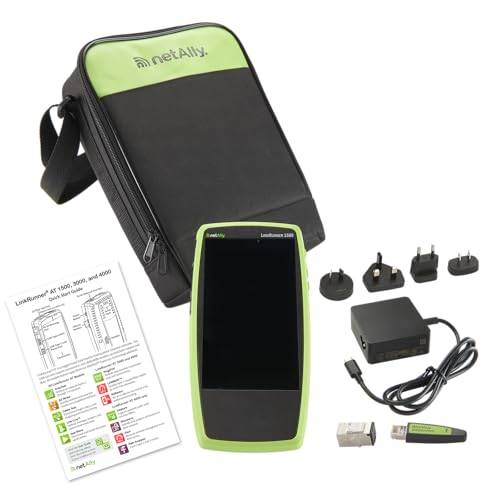
- 7-second AutoTest speeds up troubleshooting
- Tests PoE, VLAN, DHCP, DNS, and gateway
- Great for repeatable lab validation and reporting
Best For: Home lab builders who need quick, standardized copper and Ethernet diagnostics.
Best for Simple LAN/TEL Troubleshooting
TESMEN TLP-123A Network Tester

- RJ45 and RJ11 support for LAN and phone lines
- One-button testing with clear LED status indicators
- Detachable remote helps check long cable runs
Best For: Home lab users and DIY installers who need an easy continuity tester for Ethernet and telephone cables.
Best for Easy Cable Checks
TESMEN TLP-528A Network Cable Tester

- RJ45/RJ11 support for Ethernet and phone lines
- Detachable remote helps test long cable runs
- Fast/slow modes with clear LED indicators
Best For: Home lab users and DIY installers who need quick, no-fuss cable continuity checks.
Best Multi-Tool

- Multifunction tester for Ethernet, PoE, length, and port tracing
- Includes optical power meter and VFL for basic fiber checks
- Rechargeable design with Type-C charging and non-contact voltage test
Best For: Home lab users who want one versatile tester for Ethernet, PoE, and light fiber work.
Best for Cable Tracing

- Traces CAT5/CAT6, PoE, shielded, and phone lines
- Checks continuity, wire order, opens, shorts, and crimps
- Adds NCV detection, alligator clips, and a work light
Best For: Home lab users and DIY installers who need fast cable tracing and basic fault checks.
Best for Long Runs & Phone Lines

- Tests RJ45 and RJ11 cables up to CAT7
- Split design is handy for long or hidden runs
- LEDs show wiring faults, continuity, and shielding
Best For: Home lab builders and DIY installers who need a simple tester for long Ethernet or phone lines.
Best Simple Pick
TESMEN TLP-528C Network Cable Tester

- Cable tracer probe helps identify runs in bundles and hidden spaces
- LED sequence and continuity checks catch common wiring issues
- Detachable units improve testing on longer or wall-mounted cables
Best For: Home lab users who need a compact tracer and tester for cable sorting and basic fault checks.
Best for Simple RJ45 Checks – Klein Tools VDV526-100 LAN Tester
If you want one of the most straightforward network cable testers for home labs, the Klein Tools VDV526-100 is a compact, single-button option for quickly checking common RJ11, RJ12, and RJ45 cables. It gives clear LED results for pass, miswire, open, short, and shield faults, making it a practical choice for basic cable verification without a steep learning curve.
Best For: Home lab users who want a simple, portable tester for fast voice and Ethernet cable checks.
Pros:
- Single-button testing keeps setup fast and beginner-friendly.
- Supports RJ11, RJ12, RJ45, plus CAT3, CAT5e, and CAT6/6A cables.
- Remote stores in the tester body, so it is easier to carry and harder to lose.
- LED indicators are quick to read for common wiring faults.
Cons:
- Focused on basic continuity and wiring checks, not advanced diagnostics.
- Uses a 9V battery, so it is less convenient than rechargeable models.
For network cable testers for home labs, this Klein model stands out as a dependable, no-fuss tool that favors speed and simplicity over extra features. It is a solid fit if you mainly need to verify cable terminations and catch wiring mistakes before they become troubleshooting headaches.
Best for Cable Tracing & PoE Checks – NOYAFA NF-8209 Cable Tester
If you want one of the more capable network cable testers for home labs, the NOYAFA NF-8209 is built for troubleshooting more than just basic continuity. It combines wire tracing, length testing, PoE checks, port flashing, and NCV detection, making it a practical all-in-one tool for finding faults and identifying runs faster.
Best For: Home lab users and DIY network installers who need a feature-rich tester for Ethernet runs, PoE verification, and cable tracing.
Pros:
- Measures cable length with high accuracy and helps pinpoint opens or shorts
- Supports PoE testing, including voltage, polarity, and power mode checks
- Port flashing and wire tracing make it easier to identify active lines
- Includes NCV detection and LED lighting for mixed-use repair work
Cons:
- More advanced than a basic continuity-only tester
- Useful features may be overkill for simple one-off cable checks
For network cable testers for home labs, the NF-8209 stands out because it covers the everyday problems that come up during wiring, patching, and equipment setup. It is a strong fit if you want a single handheld tester that can do more than just verify pinout.
Best for Fast Validation – NetAlly LinkRunner AT 1500 Copper Tester
If you want one of the most capable network cable testers for home labs, the NetAlly LinkRunner AT 1500 focuses on quick, standardized validation instead of just basic continuity checks. It can confirm link speed, PoE, VLAN, DHCP, DNS, gateway, and switch details, which makes it useful when you need to diagnose whether the cable, the switch, or the endpoint is causing the problem.
Best For: Home lab builders and prosumers who need fast, repeatable copper and Ethernet troubleshooting with deeper network checks.
Pros:
- Fast 8-step AutoTest delivers results in about 7 seconds
- Checks PoE, ping, switch, VLAN, DHCP, DNS, and gateway
- Large touchscreen and Link-Live integration improve workflow and reporting
- Supports link speed testing from 10 Mbps up to 10 Gbps
Cons:
- More expensive than basic cable testers
- Overkill if you only need simple wire mapping
- Best value comes from frequent troubleshooting, not occasional use
This is a strong pick for network cable testers for home labs when you want more than a pass/fail cable check. It shines in mixed setups where you need to validate connectivity, isolate faults quickly, and document results without wasting time on manual guesswork.
Best for Simple LAN/TEL Troubleshooting – TESMEN TLP-123A Network Tester
If you want a straightforward tool for network cable testers for home labs, the TESMEN TLP-123A covers the basics without adding complexity. It checks RJ45 and RJ11 lines, helps spot opens, shorts, miswires, and shielding issues, and its LED readout makes quick cable checks easy.
Best For: Home lab users, DIY installers, and anyone who needs a simple continuity tester for Ethernet and phone cabling.
Pros:
- Supports RJ45 and RJ11 for LAN and TEL testing
- Clear LED indicators and one-button operation keep setup simple
- Detachable main and remote units help test long or wall-run cables
- Compact, portable design suits small tool kits
Cons:
- Focused on continuity and fault finding, not advanced certification
- Basic interface may feel limited for pro network technicians
For network cable testers for home labs, this is a practical pick if you mainly need fast go/no-go checks while wiring shelves, patch panels, or in-wall runs. It’s a good fit when simplicity, portability, and broad cable support matter more than high-end diagnostics.
Best for Pro-Grade Testing – Henkion LT-600 RJ45 Cable Tester
If you want one of the more capable network cable testers for home labs, the Henkion LT-600 goes well beyond simple wire-map checks. It combines cable tracing, TDR length testing, PoE++ detection, and basic network tools in a single rechargeable handheld, making it useful when you need to diagnose messy racks, mixed cabling, or flaky runs without carrying a bag of separate tools.
Best For: Home lab builders and prosumers who want a single tester for cable tracing, PoE checks, and deeper RJ45 diagnostics.
Pros:
- Large 4-inch IPS touch screen makes test results easier to read at a glance
- Includes tracing, wire sequence, TDR length, and POE++/PD detection
- Rechargeable emitter and receiver reduce battery hassle
- Built-in network utilities like ping, IP scan, and port flashing add flexibility
Cons:
- More expensive and complex than a basic continuity tester
- Some advanced measurements depend on correct cable-type selection
- Extra features may be more than casual users need
For network cable testers for home labs, the LT-600 stands out when you need more than a pass/fail result. It is a strong fit for users who regularly troubleshoot cabling, verify PoE devices, or map longer runs and want one tool that covers the most common Ethernet diagnostics.
Best for Easy Cable Checks – TESMEN TLP-528A Network Cable Tester
If you want a simple, portable tool for verifying Ethernet and phone lines, the TESMEN TLP-528A is a practical pick among network cable testers for home labs. It gives you quick continuity checks, clear LED readouts, and a detachable remote so you can test both ends of longer runs without extra hassle.
Best For: Home lab users, DIY installers, and small IT setups that need quick RJ45/RJ11 cable checks and basic QC testing.
Pros:
- Supports RJ45 and RJ11 cables for Ethernet and telephone line testing
- Detachable main and remote units make long-run testing easier
- Fast/slow modes and clear LEDs keep results easy to read
- Compact build with included batteries and storage box for portability
Cons:
- Focused on continuity and QC, not advanced certification or fault pinpointing
- Basic feature set may feel limited for larger pro AV or enterprise jobs
- Best suited to simple cable checks rather than deeper network diagnostics
For budget-conscious builders and tinkerers, this tester covers the core jobs most network cable testers for home labs need: fast verification, easy handling, and support for common cable types. It’s a straightforward utility tool rather than a high-end analyzer, but that makes it well matched to routine maintenance and cable sorting.
Best Multi-Tool – NOYAFA NF-8508 Cable Tester
The NOYAFA NF-8508 is a strong all-in-one option for network cable testers for home labs, especially if you want one handheld tool that can trace Ethernet runs, verify PoE, check cable length, and even handle basic fiber troubleshooting. It is more feature-packed than a simple continuity tester, making it useful when you manage mixed cabling in a rack, closet, or workbench setup.
Best For: Home lab users who want a multifunction tester for Ethernet, PoE, cable tracing, and some fiber checks in one device.
Pros:
- Combines continuity, cable scan, length test, port flash, PoE testing, and VFL in one tool
- Includes an optical power meter with multiple wavelengths for basic fiber diagnostics
- Useful 200 m cable length testing helps identify runs and verify installs
- Built-in rechargeable battery and Type-C charging make it easy to keep on hand
Cons:
- More complex than a basic tester if you only need simple wire mapping
- Fiber and advanced functions may be unnecessary for Ethernet-only home labs
If you want one of the most capable network cable testers for home labs, the NF-8508 stands out for its broad feature set and practical troubleshooting tools. It is a better fit for tinkerers and mixed-network setups than users who only need a basic pass/fail tester.
Best for Cable Tracing – TESMEN TLP-900AR Cable Tester
If you want one of the more capable network cable testers for home labs, the TESMEN TLP-900AR focuses on tracing, pairing, and basic fault checking in a single portable kit. It is especially handy when you need to identify unknown runs, verify RJ45/RJ11 connections, or sort cables without dragging out a larger bench tool.
Best For: Home lab users, DIY network installers, and anyone tracing Ethernet or phone lines through bundles, walls, or ceilings.
Pros:
- Tracks and locates CAT5/CAT6, PoE, shielded, and telephone lines.
- Checks continuity, wire order, opens, shorts, and crimp quality.
- Includes NCV detection, alligator clips, and a built-in work light.
- Comes with batteries and a storage case for easy grab-and-go use.
Cons:
- Not a full advanced certification tester for professional validation.
- Analog-style tracing tools take some practice to use confidently.
For practical troubleshooting and cable hunting, this is a solid pick among network cable testers for home labs because it covers the everyday jobs most enthusiasts actually face. It is less about deep diagnostics and more about fast identification, continuity checks, and safer on-site wiring work.
Best for Long Runs & Phone Lines – Network Cable Tester HT812A
If you want a simple, affordable tool for verifying patch cables, wall jacks, and phone lines, this is a practical pick among network cable testers for home labs. It checks RJ45 and RJ11 runs, flags common wiring faults, and makes it easier to confirm that a new crimp or in-wall drop is actually usable before you troubleshoot deeper.
Best For: Home lab builders, DIY installers, and anyone testing long cable runs, wall ports, or mixed Ethernet/telephone wiring.
Pros:
- Supports RJ45 and RJ11, including CAT5e/CAT6/CAT7 cabling.
- Split master/remote design helps test both ends of long or hidden runs.
- LED indicators and fast/slow modes make wiring faults easy to spot.
- Checks continuity, shorts, open pairs, miswiring, and shield status.
Cons:
- Basic tester only; it does not provide advanced certification or performance metrics.
- Best suited to verification and troubleshooting, not benchmarking cable quality.
- Small display-free design relies entirely on LED pattern reading.
For home lab use, this tester covers the essentials without adding complexity. It’s a sensible choice if you need a straightforward way to validate cable terminations, especially when working on long runs or mixed wiring environments where network cable testers for home labs need to be fast and reliable.
Best Simple Pick – TESMEN TLP-528C Network Cable Tester
If you want one of the more practical network cable testers for home labs, the TESMEN TLP-528C is built around fast cable tracing, line identification, and basic continuity checks. It’s a useful pick when you need to sort mystery runs, verify RJ45/RJ11 wiring, or chase down a cable hidden behind walls, ceilings, or under carpet.
Best For: Home lab users who need a compact tracer and tester for cable sorting, basic fault-finding, and routine network maintenance.
Pros:
- Tracer probe helps locate cables in bundles and across installed runs
- LED pinout and continuity checks make wiring mistakes easy to spot
- Detachable main and remote units help with longer cable runs
- Compact design is easy to keep in a home lab toolkit
Cons:
- More focused on tracing and basic testing than advanced certification
- Less useful if you mainly need detailed cable qualification results
For home-lab users who care more about finding the right cable quickly than running pro-grade certification, this TESMEN model hits a very useful middle ground. Among network cable testers for home labs, it stands out for straightforward tracing, simple feedback, and all-around cable maintenance convenience.
How We Picked the Best Network Cable Testers for Home Labs
For Network Cable Testers for Home Labs, we prioritized tools that solve the most common real-world problems: open pairs, miswires, shorts, split pairs, bad terminations, and confusing cable runs. We also looked at ease of use, readability, portability, and whether the feature set matched typical home lab needs instead of oversized enterprise deployments.
Quick Comparison
If you mainly need to confirm a cable is pinned correctly, a basic continuity tester is usually enough. If you frequently trace unknown runs or troubleshoot patch panels, a toner and tracer adds major value. For more demanding home labs with switches, access points, or PoE devices, a tester with PoE detection and basic network diagnostics can save time. Advanced qualification tools are best for users who want deeper visibility into link behavior and infrastructure issues.
Key Buying Factors for Network Cable Testers for Home Labs
Testing Depth
Start with continuity and pair mapping. These core functions catch most wiring mistakes. If you install or repurpose a lot of cabling, look for tone generation, cable length testing, or wire tracing.
Cable and Connector Support
Make sure the tester supports the cable types you actually use, such as Cat5e, Cat6, Cat6A, and sometimes shielded cable. RJ45 is the priority for Ethernet, but RJ11 support can be useful if your setup includes phone or alarm lines.
PoE and Active Network Features
Many modern home labs run cameras, access points, and mini switches over PoE. A tester that can identify PoE presence helps you avoid plugging in the wrong device or chasing a power issue that is really a cabling fault.
Display and Usability
Simple LED testers are fast and affordable, while screen-based models are easier when you need clearer results, fewer mistakes, or more detailed troubleshooting. Rechargeable designs can be more convenient if you test cables often.
Who Should Buy Which Network Cable Testers for Home Labs?
If you only need to verify patch cords and basic wall jacks, choose a straightforward continuity tester. If you regularly build racks, label runs, or hunt down unknown cables, a toner/tracer model is the better fit. For more advanced Network Cable Testers for Home Labs, users managing PoE devices, multiple switches, or mixed infrastructure should consider a tester with diagnostics and cable-length functions. If your home lab is closer to a small office or smart-home backbone, a higher-end qualification tester may be worth the extra cost.
The best choice is the one that matches your troubleshooting habits. Buy for the problems you actually solve most often, not the feature list you may never use.
