
When it comes to safeguarding your data and ensuring peak performance, choosing the right NAS drives optimized for RAID is essential. You’ll want to focus on reliability, performance, and features that enhance data security. With options like the Seagate IronWolf series and Exos drives, you have some solid contenders. Let’s explore the top picks that stand out in these areas and find the best fit for your storage needs.
Seagate IronWolf 12TB NAS Internal Hard Drive HDD
If you’re looking for a reliable storage solution for your multi-user NAS setup, the Seagate IronWolf 12TB NAS Internal Hard Drive is an excellent choice. Designed for 8-bay systems, this 3.5-inch HDD features a SATA 6Gb/s interface and operates at 7200 RPM with a 256MB cache. You’ll enjoy impressive read speeds of 180MB/s and write speeds of 240GB/s, making file sharing seamless. With a maximum operating temperature of 65°C and an MTBF of 1 million hours, it guarantees long-term reliability. Plus, the five-year warranty and Seagate Rescue Data Recovery Services provide peace of mind for your valuable data.
Best For: The Seagate IronWolf 12TB NAS Internal Hard Drive is best for users seeking a reliable and high-capacity storage solution for multi-user NAS environments.
Pros:
- Optimized for NAS use with reduced wear, noise, and vibration.
- High capacity of 12TB suitable for extensive data storage needs.
- Five-year warranty and Seagate Rescue Data Recovery Services for data protection.
Cons:
- May be overkill for single-user or low-capacity needs.
- 7200 RPM speed might not be necessary for all users, potentially leading to unnecessary power consumption.
- Limited to 8-bay systems, which might not suit all NAS configurations.
Seagate Exos 22TB SATA HDD (Renewed)

The Seagate Exos 22TB SATA HDD (Renewed) stands out as an exceptional choice for enterprise-grade applications, particularly in cloud data centers. With a massive 22TB capacity and a 3.5-inch form factor, it’s perfect for scale-out data center needs. Operating at 7200RPM, this drive guarantees reliable performance, allowing you to manage large volumes of data efficiently. Its Helium sealed design not only enhances durability but also lowers weight and power consumption. Plus, PowerBalance technology optimizes watts per terabyte, making it a smart choice for energy-conscious operations. Upgrade your storage solutions with this robust, high-capacity HDD for unmatched data security and performance.
Best For: Enterprises and cloud data centers seeking high-capacity, reliable storage solutions for large-scale data management.
Pros:
- High capacity: With 22TB of storage, it effectively supports massive data storage needs.
- Durable design: The Helium sealed design enhances the durability and longevity of the drive.
- Power efficiency: PowerBalance technology optimizes energy usage, making it cost-effective for large operations.
Cons:
- Weight: While lighter than traditional drives, the 3.5-inch form factor may still be bulkier compared to SSD options.
- Speed: Although 7200RPM provides decent performance, it may not match the speed of SSDs for certain applications.
- Renewed status: As a renewed product, it may not come with the same warranty or assurance as a brand new drive.
Seagate IronWolf 10TB NAS Internal Hard Drive

For those managing multi-user NAS workloads, the Seagate IronWolf 10TB NAS Internal Hard Drive stands out as an exceptional choice. With a 7200 RPM speed and a 256MB cache, it delivers impressive sustained data transfer rates of up to 210MB/s. Designed for 24×7 use, its AgileArray technology guarantees ideal RAID support, while dual-plane balancing enhances reliability. Capable of handling up to 180TB per year, it boasts an MTBF of 1 million hours and RV sensors for improved performance. Plus, with a 3-Year Rescue Data Recovery Service, you’ll have peace of mind knowing your data’s protected.
Best For: The Seagate IronWolf 10TB NAS Internal Hard Drive is best for users managing multi-user NAS workloads who require high performance and reliability for continuous data access.
Pros:
- Optimized for 24×7 NAS usage, ensuring consistent performance.
- High capacity of 10TB, making it suitable for extensive data storage needs.
- Includes a 3-Year Rescue Data Recovery Service with a 95% recovery success rate for added peace of mind.
Cons:
- 7200 RPM speed may generate more heat compared to lower RPM models.
- Higher price point compared to standard desktop hard drives.
- Limited to SATA connections, which may not be compatible with all systems.
Seagate BarraCuda 8 TB Internal Hard Drive HDD

Designed with creators in mind, the Seagate BarraCuda 8 TB Internal Hard Drive HDD is perfect for those who demand reliable storage for large files. With a 5400 RPM rotational speed and a 256 MB cache, it delivers impressive read and data transfer speeds of 190 MB/s. Weighing just 1.5 pounds and measuring 5.79 x 4 x 1.03 inches, it fits seamlessly in various PC setups. Ideal for designers, musicians, and gamers, this drive supports uninterrupted performance thanks to optimized read/write caching. Plus, with a 2-year warranty and excellent customer ratings, it’s a solid choice for your storage needs.
Best For: Creators such as designers, musicians, photographers, video editors, and gamers who need reliable and spacious storage for large files.
Pros:
- Optimized read/write caching technology ensures uninterrupted performance.
- Impressive read and data transfer speeds of 190 MB/s enhance productivity.
- Lightweight and compact design makes it easy to fit into various PC setups.
Cons:
- Rotational speed of 5400 RPM may be slower compared to higher RPM drives.
- No cables or installation kit included in the packaging.
- Limited to a 2-year warranty, which may be shorter than some competitors.
Seagate IronWolf 10TB NAS Internal Hard Drive (ST10000VN0008)

Seagate’s IronWolf 10TB NAS Internal Hard Drive (ST10000VN0008) is a standout choice for anyone looking to build a reliable RAID setup. With a massive 10TB capacity and a fast 7200 RPM spindle speed, it offers impressive performance with a max sustained transfer rate of 210 MB/s. Designed for multi-user environments, it supports up to 180 TB/year, making it perfect for your home server needs. Plus, the rotational vibration sensor enhances data integrity, while the halogen-free construction promotes environmental safety. When you choose the IronWolf, you’re investing in durability and efficiency for all your data storage requirements.
Best For: The Seagate IronWolf 10TB NAS Internal Hard Drive is best for users seeking a high-capacity, reliable storage solution for RAID setups and home servers.
Pros:
- High storage capacity of 10TB, suitable for extensive data storage needs.
- Fast spindle speed of 7200 RPM and a max sustained transfer rate of 210 MB/s for efficient data access.
- Designed for multi-user environments with support for up to 180 TB/year, enhancing performance in networked settings.
Cons:
- 3.5 inch size may require specific setup or compatible hardware.
- Halogen-free construction might limit some advanced manufacturing features.
- Premium pricing compared to lower-capacity drives might not be suitable for budget-conscious users.
Seagate IronWolf 10TB NAS Internal Hard Drive (ST10000VN0008)

The Seagate IronWolf 10TB NAS Internal Hard Drive (ST10000VN0008) stands out as an ideal choice for small to medium-sized businesses and tech-savvy individuals who need reliable, high-capacity storage solutions. With a robust 7200 RPM rotational speed and a 256MB cache, it delivers impressive read speeds of up to 210 MB/s. Designed for up to 8-bay NAS environments, you’ll enjoy optimized performance for multi-user access, reduced downtime, and lower power consumption. Plus, the integrated IronWolf Health Management system guarantees long-term reliability, backed by a three-year warranty and data recovery services, making it a smart investment for your storage needs.
Best For: Small to medium-sized businesses and tech-savvy individuals seeking reliable, high-capacity storage solutions for multi-user access.
Pros:
- Optimized for multi-user NAS environments, enhancing file-sharing performance.
- High-speed performance with read speeds up to 210 MB/s and lower power consumption.
- Integrated health management system ensures long-term reliability and data protection.
Cons:
- Limited to 8-bay NAS environments, which may not suit larger setups.
- Higher initial cost compared to lower-capacity drives.
- Requires compatible NAS hardware for optimal performance.
Seagate IronWolf 4TB NAS Internal Hard Drive (ST4000VNZ08)
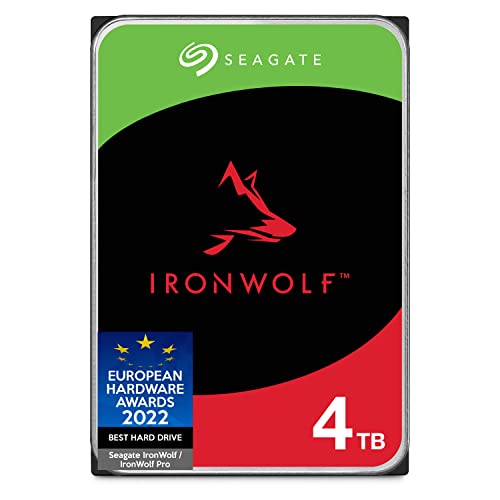
For those managing a multi-user environment with up to 8 bay NAS systems, the Seagate IronWolf 4TB NAS Internal Hard Drive (ST4000VNZ08) stands out as an excellent choice. With a SATA 6Gb/s interface and a 5900 RPM speed, it guarantees peak performance for file sharing. Its 64MB cache enhances efficiency, while the health monitoring system keeps track of drive status. You’ll appreciate the drive’s durability, boasting a 1 million hour MTBF, plus a five-year warranty. Designed specifically for NAS enclosures, this hard drive minimizes noise and vibration, providing a reliable and seamless storage solution for your needs.
Best For: Users managing multi-user environments with up to 8 bay NAS systems seeking reliable and high-performance storage solutions.
Pros:
- Optimized for RAID: Designed specifically for NAS environments, enhancing file sharing performance.
- Durable and Reliable: Features a 1 million hour MTBF and comes with a five-year warranty.
- Health Monitoring: Integrated IronWolf Health Management system provides proactive drive health monitoring.
Cons:
- 5900 RPM Speed: Slower compared to 7200 RPM drives, which may affect performance in high-demand scenarios.
- Limited Cache Size: At 64MB, it may not be sufficient for extremely large data transfers or workloads.
- Size Constraints: As a 3.5-inch drive, it may not fit in all compact or portable NAS enclosures.
Seagate IronWolf 10TB NAS Internal Hard Drive (ST10000VN0004)
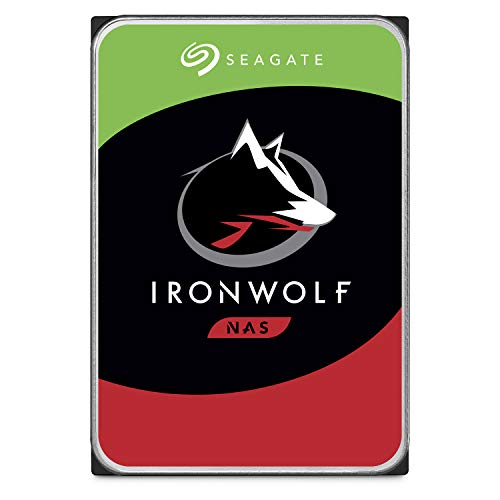
Designed specifically for multi-user environments, the Seagate IronWolf 10TB NAS Internal Hard Drive (ST10000VN0004) is an excellent choice for those looking to enhance their network-attached storage systems. With a 7200 RPM speed and a 256MB cache, it optimizes performance for up to 8-bay NAS setups. This drive is purpose-built for durability, minimizing wear and tear while delivering long-term reliability with a 1 million hours MTBF. You’ll appreciate the integrated IronWolf health management system, making it easy to monitor your drive’s status. Plus, you’ll benefit from a three-year limited warranty for added peace of mind.
Best For: Users seeking a reliable and high-capacity hard drive for multi-user NAS environments that demand enhanced performance and durability.
Pros:
- Optimized for multi-user performance in up to 8-bay NAS setups.
- Long-term reliability with a mean time between failures (MTBF) of 1 million hours.
- Integrated health management system for easy monitoring of drive status.
Cons:
- May be overkill for single-user or low-demand setups.
- 7200 RPM speed may not be as energy-efficient as slower alternatives.
- Storage capacity may vary based on configuration, which could lead to potential confusion.
Seagate Exos 28TB Internal Hard Drive (ST28000NM000C)
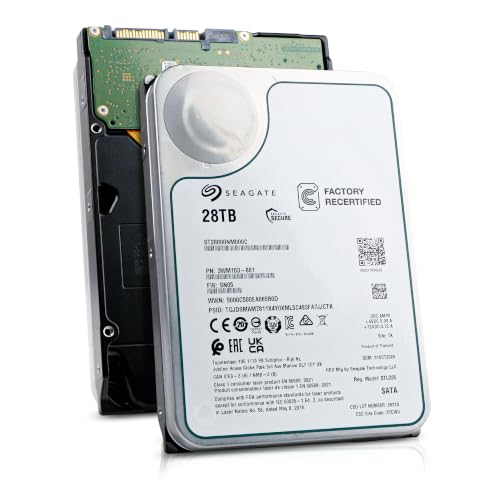
Ideal for data centers and large-scale backups, the Seagate Exos 28TB Internal Hard Drive (ST28000NM000C) stands out with its impressive 28 TB capacity. With a 7200 RPM spindle speed and SATA III 6Gb/s interface, you’ll enjoy fast data access and high transfer rates. Its 512 MB cache optimizes throughput, making it perfect for enterprise-class performance. Built for 24/7 operation, this drive boasts a remarkable MTBF of 2.5 million hours, ensuring reliability for mission-critical applications. Its standard 3.5-inch form factor allows seamless integration into various systems, enhancing your storage capabilities effortlessly.
Best For: Enterprises and data centers seeking high-capacity, reliable storage solutions for continuous operation and large-scale backups.
Pros:
- High Capacity: Offers an impressive 28 TB of storage space, ideal for large data demands.
- Fast Performance: 7200 RPM spindle speed and SATA III 6Gb/s interface provide quick data access and high transfer rates.
- Durable and Reliable: Designed for 24/7 operation with a high MTBF of 2.5 million hours, ensuring long-term reliability.
Cons:
- Weight: At approximately 1 unit count, it may be heavier than standard consumer drives, potentially complicating installation in some setups.
- Limited Warranty: Comes with a 90 days limited warranty, which may be shorter compared to some competitors.
- Not SSD: Being a traditional HDD, it may not match the speed of SSDs for certain applications.
Seagate IronWolf Pro 12 TB NAS Internal Hard Drive (ST12000NE0007)

The Seagate IronWolf Pro 12 TB NAS Internal Hard Drive (ST12000NE0007) stands out as a powerhouse for businesses and creative professionals who require vast storage capacity and reliable performance. With a generous 12 TB of space, you can easily store large data sets without worry. Its impressive 750 MB/s data transfer rate guarantees quick file access, while the 256 MB buffer enhances both performance and reliability. Designed with a compact 3.5-inch form factor, it fits seamlessly into most desktop setups. Plus, the SATA connectivity makes installation a breeze, and the included Data Recovery Rescue Service offers extra peace of mind.
Best For: Businesses and creative professionals who need extensive storage capacity and reliable performance for large data sets.
Pros:
- High Capacity: Offers 12 TB of storage for extensive data needs.
- Fast Data Transfer: Provides a data transfer rate of 750 MB/s for quick access to files.
- Data Recovery Service: Includes a Data Recovery Rescue Service for added security.
Cons:
- Size: The 3.5-inch form factor may not fit in all portable setups.
- Weight: Heavier than traditional SSDs, which could be a consideration for mobile use.
- Price: Higher cost compared to lower-capacity drives may not be suitable for budget-conscious consumers.
Factors to Consider When Choosing NAS Drives Optimized for RAID
When choosing NAS drives optimized for RAID, you need to weigh several important factors. Consider your storage capacity requirements, performance specs, and the reliability of the drives. Additionally, think about RAID compatibility features and energy efficiency to guarantee you’re making the best choice for your setup.
Storage Capacity Requirements
Choosing the right storage capacity for your NAS drives in a RAID setup is essential to meet both your current needs and future demands. Start by evaluating how much data you currently have and anticipate future growth. Drive capacities range from 4TB to 28TB, giving you flexibility based on your requirements. Keep in mind your workload demands; higher-capacity drives can accommodate larger data sets and more users without slowing down. It’s important to use identical drive capacities in your RAID configuration for best performance and redundancy. Finally, consider the annual workload limit of the drives—like 180TB/year—ensuring they can handle your usage patterns over time without compromising reliability.
Performance Specifications Comparison
To optimize your NAS drives for RAID, it’s vital to compare performance specifications that can directly influence your system’s efficiency. Start by considering spindle speed; drives with 7200 RPM offer faster data access than those at 5400 RPM. Next, look for larger cache sizes—256MB or more—as they enhance data throughput during high-demand tasks. Evaluate maximum sustained data transfer rates; some drives can reach up to 750 MB/s, which greatly boosts overall system performance. Finally, verify your drives are compatible with RAID configurations and features like dual-plane balancing and error recovery, as these are important for maintaining data integrity and minimizing downtime. By focusing on these factors, you’ll guarantee your NAS operates at peak performance.
Reliability and Durability
While selecting NAS drives optimized for RAID, reliability and durability should be top priorities. Look for drives with a high Mean Time Between Failures (MTBF) rating, ideally up to 2.5 million hours, indicating greater durability. Features like rotational vibration sensors are essential, as they help maintain performance in multi-user settings by reducing vibrations from adjacent drives. Additionally, drives designed for RAID often come equipped with advanced error recovery and dual-plane balancing technologies, enhancing continuous operation and minimizing data loss. Consider the construction of the drives as well; helium sealing can markedly reduce wear and tear while improving power efficiency. Finally, integrated health monitoring systems, such as IronWolf Health Management, provide alerts on drive status, ensuring long-term reliability.
RAID Compatibility Features
When setting up a NAS for RAID, it’s essential to take into account compatibility features that guarantee your drives can effectively work together. First, verify the drives support required RAID levels like RAID 0, 1, 5, 6, or 10, as this affects data redundancy and performance. Look for drives with rotational vibration (RV) sensors, which help reduce the impact of vibrations from multiple drives, enhancing reliability. A high mean time between failures (MTBF) of over 1 million hours is ideal for longevity. Additionally, drives with optimized caching and 6Gb/s interfaces improve read/write speeds, vital for RAID efficiency. Finally, compatibility with health management systems allows for proactive monitoring, making sure your data remains secure and intact.
Energy Efficiency Considerations
Choosing energy-efficient NAS drives for RAID not only helps reduce your power bills but also contributes to a more sustainable operation. Look for drives that incorporate technologies like PowerBalance, which optimizes watts per terabyte, minimizing overall power consumption. Helium-sealed drives are another excellent option, as the lighter gas reduces drag, enhancing performance while lowering energy usage. Consider drives with lower rotational speeds, like 5400 RPM, to cut down on power consumption for less demanding applications. Additionally, select drives with advanced power management systems that reduce power draw during idle periods. Finally, choosing drives with a lower operational temperature threshold can further enhance energy efficiency, requiring less power to maintain longevity and performance.
Health Management Systems
As you consider NAS drives optimized for RAID, the significance of integrated health management systems can’t be overstated. These systems, like the IronWolf Health Management, provide essential monitoring tools that keep you informed about your drives’ health status. By tracking parameters such as temperature and read/write errors, these systems help prevent data loss by alerting you to potential issues early on. Regular monitoring not only optimizes performance but also extends the lifespan of your drives, especially important in RAID setups where redundancy matters. With effective health management, you can achieve a lower mean time between failures (MTBF), ensuring better data integrity and operational efficiency. Prioritize drives with robust health management systems to safeguard your data.
Warranty and Support Options
Integrated health management systems enhance the reliability of NAS drives for RAID setups, but warranty and support options are also essential factors in your decision-making process. When selecting your drives, consider the warranty period; a longer warranty often reflects greater manufacturer confidence in durability. Look for options that include data recovery services, providing peace of mind if data loss occurs. Checking the mean time between failures (MTBF) can also give you insight into a drive’s reliability—higher values suggest a longer lifespan. Additionally, enhanced support options like 24/7 technical assistance can be invaluable for businesses needing continuous access. Features like health monitoring systems can help with proactive maintenance, ensuring data integrity and extending drive life before issues arise.
Noise and Vibration Levels
When it comes to optimizing your NAS drives for RAID, noise and vibration levels play an essential role in maintaining a productive environment. Excessive noise can disrupt your focus and impair the performance of nearby devices. That’s why drives designed for NAS usage often incorporate reduced vibration technology, minimizing wear and tear while enhancing stability. Look for NAS drives engineered to operate quietly, with specifications indicating lower decibel levels during operation. Some models even feature rotational vibration (RV) sensors to detect and mitigate vibrations, improving data integrity and performance. By selecting drives with advanced noise reduction features, you’ll enjoy a quieter operation, which is particularly beneficial in home offices or shared spaces. Prioritize these factors for an ideal RAID experience.
