
If you want to run local LLMs without building a full desktop, USB4 mini PCs offer a compact path to strong CPU performance, fast storage, and flexible expansion.
This roundup focuses on models that balance AI-friendly horsepower, memory capacity, and practical connectivity for modern local inference workflows.
Best 10 Mini PCs with Usb4 for Local LLMs Picks for 2026
Best for Local AI

- 97 TOPS AI stack with NPU, GPU, and CPU acceleration
- USB4 plus dual M.2 storage expansion for fast local workflows
- Compact AI-focused mini PC with 8K triple-display support
Best For: Users who want a USB4 mini PC for local LLMs, AI tasks, and flexible storage expansion.
Best for Clean Multi-Monitor Workstations

- Ryzen 9 7940HS with Radeon 780M for fast everyday performance
- Dual USB4 and dual HDMI support up to four displays
- Upgradeable DDR5 and Gen4 SSD for better long-term flexibility
Best For: Compact desktop buyers who want USB4, strong multitasking, and light local LLM use.
Best for Local AI Expansion
MINISFORUM MS-02 Ultra Mini Workstation
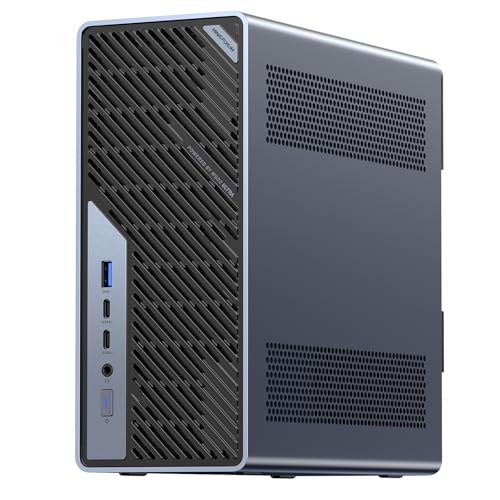
- Core Ultra 9 285HX with 13 TOPS NPU for AI-heavy workloads
- USB4 v2 80Gbps and PCIe 5.0 x16 for serious expansion
- 4× DDR5 slots, 4× M.2 slots, and dual 25GbE networking
Best For: Power users building a compact local AI box for LLM inference, fast storage, and high-speed networking.
Best USB4 Value for Local AI

- Dual USB4 ports for fast peripherals, docks, and eGPU support
- 13th Gen i5-13600H with 16GB RAM for responsive multitasking
- 1TB Gen4 SSD plus easy upgrade options for growing workloads
Best For: Buyers who want a compact, upgrade-friendly mini PC for light local LLM work and everyday productivity.
Best for Local LLMs
GMKtec EVO-X2 Ryzen AI Mini PC

- Ryzen AI Max+ 395 targets demanding local AI workloads
- 128GB unified LPDDR5X memory helps with larger models
- Dual USB4, Wi‑Fi 7, and 2.5GbE boost connectivity
Best For: People who want a compact, high-memory mini PC for local LLM inference and fast USB4 expansion.
Best for Plex and 24/7 Workloads

- Dual USB4 ports support fast expansion and high-res display output.
- Intel i5-12450H handles Plex, office work, and light local AI tasks.
- Upgradeable RAM and storage improve long-term flexibility.
Best For: Compact, low-noise business users who want a capable Plex and light local LLM mini PC.
Best for Heavy Local AI
GMKtec EVO-X2 Ryzen AI Max+ 395 Mini PC

- Ryzen AI Max+ 395 is built for demanding local AI workloads
- 64GB LPDDR5X and dual USB4 suit serious multitasking
- Strong integrated graphics add gaming and creator flexibility
Best For: Power users running local LLMs who want maximum compact performance.
Best for Local AI Workloads
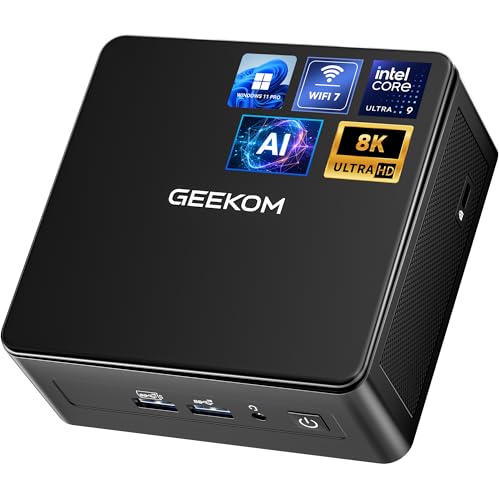
- Ultra 9 285H with 99 TOPS AI performance
- Dual USB4 ports with eGPU support
- 32GB DDR5 RAM and 1TB Gen 4 SSD
Best For: Developers, creators, and power users who want a compact AI-ready mini PC with USB4.
Best for Local LLM Power
GMKtec EVO-X2 Ryzen AI Max+ 395 Mini PC

- 128GB unified LPDDR5X memory for larger local models
- Dual USB4 plus Wi-Fi 7 for fast workstation connectivity
- Ryzen AI Max+ 395 with XDNA 2 NPU targets heavy AI workloads
Best For: Power users running local LLMs who want maximum memory and strong on-device AI performance in a compact desktop.
Best for Local AI – GMKtec K17 AI Mini PC
The GMKtec K17 is a strong fit for shoppers comparing mini pcs with usb4 for local llms, thanks to its Core Ultra 5 226V chip, dedicated NPU, and high-bandwidth LPDDR5X memory. It also adds USB4, dual M.2 expansion, and modern connectivity, making it a practical compact system for running local models, multitasking, and fast storage access without needing a discrete GPU.
Best For: Buyers who want a compact, AI-focused mini PC for local LLMs, productivity, and flexible expansion.
Pros:
- 97 TOPS AI platform with CPU, GPU, and NPU acceleration for local AI workloads
- USB4, dual M.2 slots, and 2.5G LAN make it easy to build a fast local setup
- LPDDR5X 8533MT/s memory helps with smoother multitasking and model loading
- Triple-display support up to 8K adds useful desktop versatility
Cons:
- 16GB RAM may feel tight for larger local LLMs
- Premium specs likely push it above entry-level mini PC pricing
- Expansion is strong, but the base configuration still favors lighter workloads
For mini pcs with usb4 for local llms, the K17 stands out as a well-rounded AI-ready option rather than a pure budget play. It makes the most sense if you want modern ports, fast storage expansion, and enough AI hardware to experiment with local inference in a compact desktop footprint.
Best for Clean Multi-Monitor Workstations – GEEKOM A7 MAX Ryzen 9 Mini PC
If you want one of the more practical mini pcs with usb4 for local llms, the GEEKOM A7 MAX stands out for its Ryzen 9 7940HS, dual USB4 ports, and upgrade-friendly DDR5/SSD setup. It’s a strong fit for running smaller local models, multitasking, and creator work without giving up a compact desk footprint.
Best For: Buyers who want a compact Windows 11 Pro desktop with fast USB4 connectivity, strong CPU performance, and easy multi-display support.
Pros:
- Ryzen 9 7940HS and Radeon 780M deliver strong everyday speed and light AI/creative performance
- Dual USB4 ports plus dual HDMI support up to four displays for a tidy workstation
- 16GB DDR5 and 1TB Gen4 SSD are upgradeable, helping it scale for heavier workloads
- 3-year coverage adds extra peace of mind for long-term use
Cons:
- 16GB RAM is fine for lighter local LLM use, but serious model work will want an upgrade
- Not the best choice if you need a dedicated GPU for larger AI workloads
For buyers comparing mini pcs with usb4 for local llms, this model is appealing because it pairs a fast Zen 4 CPU with practical expandability and clean USB4-based connectivity. It’s less about chasing workstation-class AI throughput and more about delivering a balanced, compact machine that can handle light local inference, editing, and everyday productivity well.
Best for Local AI Expansion – MINISFORUM MS-02 Ultra Mini Workstation
If you want one of the most expandable mini pcs with usb4 for local llms, the MINISFORUM MS-02 Ultra stands out with a Core Ultra 9 HX chip, USB4 v2, and serious PCIe and networking headroom. It is aimed at users who want a compact workstation that can handle local inference, fast data movement, and future GPU upgrades without immediately moving to a full tower.
Best For: Power users building a compact local AI box for LLM inference, fast storage, and high-speed networking.
Pros:
- Core Ultra 9 285HX and 13 TOPS NPU give it strong CPU-side AI and multitasking performance.
- USB4 v2 (80Gbps) plus PCIe 5.0 x16 support makes external and internal expansion unusually flexible.
- Four DDR5 slots, four M.2 slots, and RAID support provide workstation-class memory and storage options.
- Dual 25GbE, 10GbE, 2.5GbE, and Wi-Fi 7 are excellent for large model transfers and shared AI workflows.
Cons:
- It is expensive and overkill if you only need a basic mini PC.
- To really benefit from local LLM workloads, you may need to add a discrete GPU and compatible memory/storage.
- The advanced expansion and compatibility checks make it less plug-and-play than simpler systems.
For buyers comparing mini pcs with usb4 for local llms, this is a true workstation-style option rather than a small general-purpose desktop. The MS-02 Ultra makes the most sense when you care about upgradeability, fast I/O, and networking as much as raw processor speed.
Best USB4 Value for Local AI – GEEKOM IT13 Mini PC 2026
If you want one of the more capable mini pcs with usb4 for local llms without jumping to a full desktop tower, the GEEKOM IT13 is worth a look. Its 13th Gen Core i5-13600H, dual USB4 ports, and 1TB NVMe SSD give it the connectivity and responsiveness you need for light local inference, model testing, and everyday multitasking in a compact Windows 11 Pro system.
Best For: Buyers who want a compact, upgrade-friendly mini PC for light local LLM work, coding, and mixed office use.
Pros:
- Dual USB4 ports make it easy to connect fast external storage, docks, or an eGPU setup.
- 13th Gen i5-13600H and 16GB RAM handle multitasking better than entry-level mini PCs.
- 1TB PCIe Gen4 SSD and easy upgrade paths help if your local AI workflow grows.
- WiFi 6E, 2.5GbE, and quad-display support add real desk setup flexibility.
Cons:
- 16GB RAM is workable for lighter local LLM tasks, but power users may want an upgrade.
- Not a dedicated AI box, so larger models will still be limited by the iGPU and thermals.
- Performance is strong for a mini PC, but it cannot match a full desktop with a discrete GPU.
For mini pcs with usb4 for local llms, this model stands out more for practicality than raw AI horsepower: solid CPU performance, strong connectivity, and a design that leaves room to expand as your workloads get heavier.
Best for Local LLMs – GMKtec EVO-X2 Ryzen AI Mini PC
If you want one of the most capable mini pcs with usb4 for local llms, the GMKtec EVO-X2 stands out thanks to its Ryzen AI Max+ 395, 128GB of unified LPDDR5X memory, and dual USB4 ports. It’s built for running larger models locally, while still handling gaming, creative work, and multi-display setups.
Best For: Users who want a compact workstation for local LLMs, high-memory AI workloads, and fast USB4 expansion.
Pros:
- Ryzen AI Max+ 395 offers top-tier APU performance for local AI use
- 128GB LPDDR5X unified memory is ideal for larger model loads
- Dual USB4, Wi‑Fi 7, and 2.5GbE make it versatile and future-ready
- Strong cooling and 8K multi-display support add flexibility
Cons:
- Very expensive compared with mainstream mini PCs
- Soldered memory means no RAM upgrades later
- Overkill if you only need a basic desktop or light AI tasks
For buyers focused on mini pcs with usb4 for local llms, this is a standout pick if you want maximum memory and APU performance in a compact box. It’s more machine than most people need, but it’s one of the most compelling all-in-one options for serious local inference.
Best for Plex and 24/7 Workloads – GEEKOM IT12 Business Mini PC
If you want one of the more practical mini pcs with usb4 for local llms, the GEEKOM IT12 stands out for its Intel i5-12450H, dual USB4 ports, and quiet business-first design. It is better suited to compact AI inference, Plex, and always-on office tasks than to heavy model training, but its expandability and cooling make it a solid workstation base.
Best For: Buyers who want a compact, low-noise mini PC for Plex, office work, and light local LLM inference with strong I/O.
Pros:
- Dual USB4 plus dual HDMI gives strong display and high-speed peripheral support.
- i5-12450H and Intel Quick Sync are a good fit for Plex and multitasking.
- Upgradeable memory and storage help it stay useful as workloads grow.
- Three-year coverage and US-based support are a plus for business buyers.
Cons:
- 16GB RAM and 512GB SSD are modest for larger local LLM setups.
- Integrated graphics are fine for inference, but not for serious GPU-heavy AI work.
- Feature set is business-oriented, so it may cost more than bare-bones alternatives.
For mini pcs with usb4 for local llms, this model is appealing when you value stable 24/7 operation, easy connectivity, and a balance of performance and low noise over raw AI horsepower.
Best for Heavy Local AI – GMKtec EVO-X2 Ryzen AI Max+ 395 Mini PC
If you want one of the most capable mini pcs with usb4 for local llms, the GMKtec EVO-X2 stands out for its Ryzen AI Max+ 395 chip, 64GB of fast LPDDR5X, and dual USB4 ports. It is built for users who want to run larger local models, multitask across multiple displays, and still have enough headroom for light gaming or creator work.
Best For: Power users who want a compact Windows AI workstation for local LLMs, high-speed USB4 accessories, and multi-monitor setups.
Pros:
- Ryzen AI Max+ 395 delivers top-tier APU performance for local AI workloads
- 64GB LPDDR5X memory is well-suited for larger models and heavy multitasking
- Dual USB4, Wi‑Fi 7, and 2.5GbE make it easy to build a fast desktop setup
- Strong integrated Radeon graphics help with gaming and creative use too
Cons:
- Premium hardware means a much higher price than mainstream mini PCs
- Memory is soldered, so upgrades are not part of the plan
- Cooling and fan noise may rise under sustained AI loads
For buyers comparing mini pcs with usb4 for local llms, this is a serious performance-first option rather than a value pick. It makes the most sense if you want desktop-class AI capability in a very small system and are willing to pay for it.
Best for Local AI Workloads – GEEKOM IT15 AI Mini PC
If you want one of the stronger mini pcs with usb4 for local llms, the GEEKOM IT15 is built around Intel Core Ultra 9 285H, 32GB of DDR5 memory, and dual USB4 ports for fast peripherals, expansion, or an eGPU. It is a practical fit for users who want a compact Windows machine for AI experimentation, coding, and content work without moving to a full desktop tower.
Best For: Developers, creators, and power users who want a compact AI-ready mini PC with USB4, strong multitasking, and room to expand.
Pros:
- Intel Ultra 9 285H with 99 TOPS AI performance for demanding local workloads
- Dual USB4 ports plus eGPU support for faster expansion and high-speed accessories
- 32GB DDR5 RAM and 1TB Gen 4 SSD handle heavy multitasking well
- WiFi 7, 2.5GbE, and quad-display support make it easy to build a capable workstation
Cons:
- Not the cheapest option if you only need basic office computing
- Integrated graphics are capable, but serious local LLM users may still want an external GPU
- Overkill for buyers who do not need USB4 or AI-oriented performance
The GEEKOM IT15 stands out in the mini pcs with usb4 for local llms category because it combines modern connectivity with unusually strong CPU and AI acceleration for its size. If you want a compact machine that can handle everyday work now and scale into more ambitious AI or creator tasks later, this is an easy one to shortlist.
Best for Local LLM Power – GMKtec EVO-X2 Ryzen AI Max+ 395 Mini PC
If you want mini pcs with usb4 for local llms, the GMKtec EVO-X2 is one of the most capable all-in-one options thanks to its Ryzen AI Max+ 395 APU, 128GB of LPDDR5X memory, and dual USB4 ports. It is built for heavy on-device AI work, but it also brings strong gaming, multi-monitor, and fast storage support, making it a flexible desktop replacement.
Best For: Developers and power users who want a compact machine for running larger local LLMs, experimenting with AI apps like LM Studio, and keeping plenty of memory headroom.
Pros:
- Huge 128GB LPDDR5X memory pool is ideal for larger local models.
- Dual USB4, Wi-Fi 7, and 2.5GbE make it easy to build a fast workstation.
- Ryzen AI Max+ 395 with XDNA 2 NPU offers serious on-device AI performance.
- Quad-display support adds flexibility for coding, monitoring, and multitasking.
Cons:
- Likely overkill if you only need a basic mini PC for light AI tasks.
- Premium specs usually mean a much higher price than mainstream mini PCs.
- Performance benefits depend on software support and cooling under sustained loads.
This is a standout choice among mini pcs with usb4 for local llms because it pairs unusually large unified memory with a high-end AMD AI platform, giving it real headroom for serious local inference and experimentation.
Best for Quiet Local AI Workloads – GEEKOM AX8 Max Ryzen 7 USB4 Mini PC
The GEEKOM AX8 Max is a strong pick for buyers comparing mini pcs with usb4 for local llms, especially if you want a compact system that stays quiet while still offering solid CPU and integrated GPU performance. With a Ryzen 7 8745HS, USB4, dual 2.5GbE, and 16GB DDR5 paired with a 1TB SSD, it has the core ingredients for light local AI inference, multitasking, and small home lab or NAS duties.
Best For: Users who want a quiet, well-connected mini PC for local AI experiments, office productivity, and lightweight NAS setups.
Pros:
- USB4 and dual 2.5GbE make it flexible for fast peripherals, networking, and small server builds
- Ryzen 7 8745HS with Radeon 780M handles multitasking and lighter local LLM workloads well
- Silent cooling design is appealing for desks, studios, and 24/7 home use
- Upgradeable RAM and SSD give it room to grow as your local AI needs increase
Cons:
- 16GB RAM is usable, but local LLMs will benefit from a memory upgrade
- Integrated graphics are fine for efficiency, not for heavy model training
- USB4 helps with expansion, but eGPU setups add cost and complexity
As one of the more versatile mini pcs with usb4 for local llms, the AX8 Max stands out more for balance and quiet operation than raw AI horsepower. It makes sense if you want a compact machine that can multitask, run small models, and double as an office PC or lightweight NAS without adding much noise.
How We Picked the Best Mini PCs with Usb4 for Local LLMs
We prioritized Mini PCs with Usb4 for Local LLMs that offer a sensible mix of CPU power, memory capacity, SSD speed, and thermals. For local AI use, sustained performance matters more than peak marketing numbers, so we favored systems with modern Intel Core Ultra or Ryzen AI-class chips, expandable storage where possible, and enough RAM to keep model loading smooth.
We also looked at real-world usability: USB4 or high-bandwidth I/O for external SSDs and peripherals, multi-monitor support, quiet operation, and chassis designs that can handle long inference sessions without throttling.
Quick Comparison
For heavier local models and multitasking, systems with 64GB to 128GB of RAM are the safest bet. If you are mainly testing smaller models, coding assistants, or lightweight inference, 16GB to 32GB can work, but you will feel the limits sooner. Intel Core Ultra systems often stand out for efficiency and integrated AI features, while Ryzen-based units can offer strong CPU throughput and graphics performance.
Key Buying Factors for Mini PCs with Usb4 for Local LLMs
Memory First
RAM is the biggest limiter for local LLMs. More memory means larger models, fewer swaps to disk, and smoother multitasking. If your budget allows it, prioritize 32GB minimum and 64GB or more for serious local use.
CPU, NPU, and Sustained Power
For most Mini PCs with Usb4 for Local LLMs, the CPU still does much of the work. Look for high-core-count chips with strong boost clocks and good cooling. An NPU can help with certain AI workloads, but it does not replace system memory or CPU throughput for many local LLM tasks.
USB4 and Expansion
USB4 is valuable for fast external storage, docks, and sometimes eGPU-style expansion depending on the system. Just as important are M.2 slots, SO-DIMM support when available, and multiple display outputs if you use the machine as a desktop replacement.
Storage and Cooling
Fast NVMe storage reduces load times for large models and datasets. Cooling quality affects long-term stability, especially if you run inference for hours at a time. Quiet fans are a bonus, but not at the expense of throttling.
Who Should Buy Which Mini PCs with Usb4 for Local LLMs?
If you are a developer, power user, or local AI hobbyist, choose a higher-memory model with the best sustained CPU performance you can afford. If you mainly want an office machine that can also handle smaller local models, a 16GB to 32GB USB4 mini PC is usually enough. For media servers, home labs, and always-on workloads, prioritize efficiency, storage expandability, and reliable thermals over raw top-end specs.
In short, the best choice depends on model size, how long you run workloads, and whether this machine is a primary AI box or a flexible everyday PC that can also handle local inference.
