
A good low-power server should handle the jobs you actually run without taking up much space or adding unnecessary complexity. Mini PCs can be a practical fit for file sharing, home automation, lightweight containers, and other always-on services.
These 10 picks span efficient Intel N-series systems and more capable AMD options. The right choice depends less on headline clock speed than on your workload, upgrade plans, and network needs.
Best 10 Mini PCs for Low Power Servers Picks for 2026
Compact Ryzen Pick
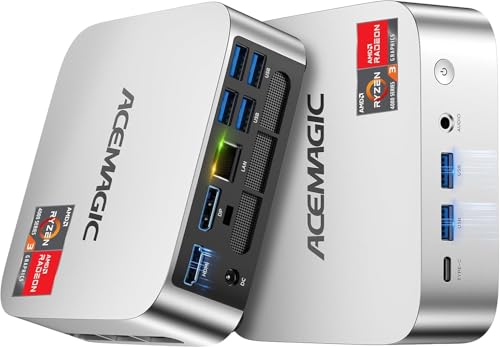
- Four-core, eight-thread Ryzen 3 7330U
- 16GB non-expandable RAM; 256GB SSD
- Gigabit LAN and built-in power supply
Best For: A compact home server that doubles as a desktop
Upgradeable Memory Pick

- Two-core, four-thread Ryzen 3 3200U
- 16GB RAM upgradeable to 32GB
- 500GB SSD and Gigabit Ethernet
Best For: A basic home server with room for a RAM upgrade
Dual-LAN Homelab Pick

- Dual 2.5GbE wired networking
- Four-core, eight-thread Ryzen 3 5300U
- RAM upgrades and a second M.2 SSD slot
Best For: A firewall, software router, or expandable homelab
N100 Server Pick

- Four-core Intel N100 processor
- 16GB RAM and 500GB SSD included
- Single 2.5GbE port; four USB 3.2 Gen 2 ports
Best For: Modest home-server workloads on one wired connection
Best for Demanding Workloads

- 8-core, 16-thread Ryzen 7 7730U
- 32GB RAM; supports up to 64GB
- 2.5G LAN and 500GB SSD
Best For: Multiple services and memory-heavy automation
Best for Basic Services

- Four-core Intel N95
- 8GB RAM and 256GB SSD
- Gigabit Ethernet; four USB ports
Best For: A few lightweight home-server services
Best for Network Convenience

- Intel N100 with 16GB RAM
- 512GB SSD; listed expansion to 4TB
- 2.5G LAN, Wake on LAN, and PXE
Best For: Light services needing 2.5G networking
Best Budget 2.5GbE Pick
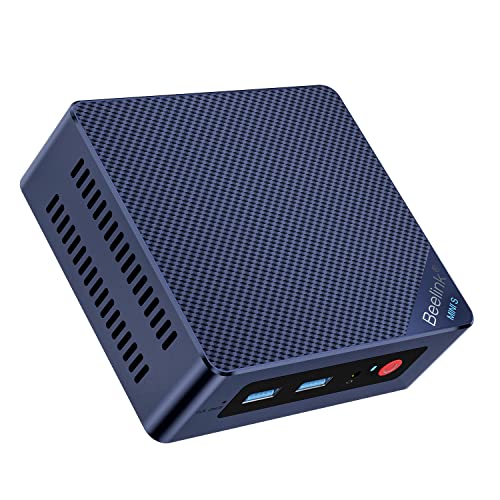
- Single 2.5GbE LAN port
- 8GB DDR4 and 480GB SSD
- Listed 10W power consumption
Best For: Light home servers needing faster wired networking
Best Low-TDP Starter Server

- N100 with stated 6W TDP
- 16GB RAM and 500GB SSD
- Extra 2.5-inch SATA interface
Best For: Light home servers and starter NAS builds
Compact Ryzen Pick – ACEMAGIC K1 Ryzen 3 7330U
Among mini pcs for low power servers, the ACEMAGIC K1 is a compact option for buyers who want four cores, eight threads, and a built-in power supply. Its Ryzen 3 7330U is listed at 28W, though actual system power draw will depend on the workload.
Best For: A small home server that also needs to serve as a general-purpose PC.
Pros:
- Ryzen 3 7330U offers four cores and eight threads.
- 16GB memory, a 256GB SSD, and a stated storage expansion path up to 2TB.
- Gigabit Ethernet, six USB-A ports, and a built-in power supply simplify a compact setup.
Cons:
- LPDDR4 memory is not expandable.
- Only one Gigabit Ethernet port is listed, limiting its appeal for multi-port networking projects.
The K1 makes sense when processing headroom and a tidy installation matter more than RAM upgrades or multiple network ports. Check that its storage configuration fits your planned services before buying.
Upgradeable Memory Pick – Beelink SER3 Ryzen 3 3200U
The Beelink SER3 is worth considering among mini pcs for low power servers if you want a compact machine with upgradeable memory and a 500GB SSD included. Its Ryzen 3 3200U has two cores and four threads, so it is better suited to a modest number of services than heavier multitasking.
Best For: A starter home server or Plex setup with straightforward storage and memory needs.
Pros:
- 16GB DDR4 is installed and can be upgraded to 32GB.
- 500GB M.2 PCIe SSD provides more included storage than several smaller configurations here.
- Gigabit Ethernet and four USB 3.2 ports support basic wired networking and peripherals.
Cons:
- The two-core processor offers less room for concurrent workloads than the four-core Ryzen options.
- Only one Gigabit Ethernet port is listed.
Choose the SER3 for a basic server where the included SSD and replaceable RAM are useful. For more demanding services or advanced networking, a four-core model with faster or additional LAN ports is a stronger fit.
Dual-LAN Homelab Pick – BOSGAME E5 Ryzen 3 5300U
For buyers comparing mini pcs for low power servers, the BOSGAME E5 stands out for its two 2.5GbE ports and four-core, eight-thread Ryzen 3 5300U. That combination is particularly useful if your plans include a software router, firewall, or network-focused homelab.
Best For: A compact firewall, software router, or home server that needs two fast wired connections.
Pros:
- Dual 2.5GbE ports suit separate network connections without relying on a USB adapter.
- Two RAM slots support upgrades from the included 8GB to a stated maximum of 64GB.
- An empty M.2 2280 NVMe slot allows a second SSD alongside the included 256GB drive.
Cons:
- Its included 8GB RAM may need upgrading for a larger homelab.
- The 256GB system SSD is modest if you plan to store substantial local data.
The E5 offers the clearest networking upgrade path of these four machines. Its dual LAN ports and internal expansion make it a practical choice if you expect your server project to grow beyond a few lightweight services.
N100 Server Pick – Beelink MINI S12 Pro
The Beelink MINI S12 Pro is a straightforward Intel N100 option among mini pcs for low power servers. It pairs a four-core, four-thread processor with 16GB RAM, a 500GB SSD, and a listed 2.5GbE port for a compact single-network-connection setup.
Best For: A small home server running modest workloads on one wired network connection.
Pros:
- 16GB RAM and a 500GB M.2 SSD are included.
- One 2.5GbE port offers faster-than-Gigabit wired connectivity with compatible network equipment.
- Four USB 3.2 Gen 2 ports provide connections for peripherals or external drives.
Cons:
- The listed maximum RAM is 16GB, leaving no stated memory upgrade headroom.
- A single LAN port is less convenient than dual LAN for router or firewall builds.
The MINI S12 Pro is appealing if its included memory and storage already meet your needs. Pick the dual-LAN BOSGAME instead if separate network interfaces or future RAM expansion are priorities.
Best for Demanding Workloads – GEEKOM A7 Ryzen 7 Mini PC
Among mini pcs for low power servers, the GEEKOM A7 is the higher-performance choice for running several background tasks. Its Ryzen 7 7730U has 8 cores and 16 threads, while the supplied 32GB RAM gives it room for heavier multitasking.
Best For: Always-on automation, multiple services, and memory-hungry home-server workloads.
Pros:
- 15W CPU TDP and cooling designed for extended operation.
- 32GB RAM and a 500GB PCIe Gen4 SSD; supports up to 64GB RAM and 4TB storage.
- 2.5G LAN, Wi-Fi 6E, and a broad selection of USB and display ports.
Cons:
- The stated 15W figure is CPU TDP, not a measured whole-system power draw.
- Only one LAN port is listed, limiting direct use as a multi-port router.
Choose the A7 when extra CPU threads and memory matter more than a bare-minimum server setup. Its 2.5G LAN is useful for faster local transfers, but check your storage and network requirements before buying.
Best for Basic Services – GMKtec G3 S Intel N95 Mini PC
The GMKtec G3 S is a modest option among mini pcs for low power servers. Its four-core Intel N95, 8GB RAM, and 256GB SSD suit basic, lightweight tasks without committing desk space to a full-size PC.
Best For: A compact home server running a few light services or handling simple network tasks.
Pros:
- Intel N95 provides four cores with burst speeds up to 3.4GHz.
- Preinstalled 8GB DDR4 RAM and 256GB M.2 SSD make it ready for a basic setup.
- Gigabit Ethernet and four USB ports support wired networking and peripherals.
Cons:
- Listed maximum RAM is 8GB, leaving little headroom for memory-heavy services.
- Gigabit Ethernet is slower than the 2.5G ports listed for the other two models.
The G3 S makes sense when your service list is short and your storage needs are small. The supplied 6W power-consumption figure is worth noting, but it does not establish what your complete setup will draw during 24/7 use.
Best for Network Convenience – Beelink Mini S12 Pro N100
For shoppers comparing mini pcs for low power servers, the Beelink Mini S12 Pro pairs an efficient Intel N100 with 16GB RAM, a 512GB SSD, and 2.5G Ethernet. It offers a practical middle ground for home services that need more memory or faster wired networking than a basic 8GB, Gigabit-equipped model provides.
Best For: A compact home server for light services, network storage tasks, and setups that benefit from 2.5G LAN.
Pros:
- 16GB DDR4 RAM and 512GB NVMe SSD; storage is listed as expandable to 4TB.
- 2.5G Ethernet plus Wi-Fi 6 for flexible connectivity.
- Auto Power On, Wake on LAN, and PXE functions support remote setup and recovery workflows.
Cons:
- The four-core, four-thread N100 is better suited to light workloads than heavily parallel tasks.
- Listed maximum RAM is 16GB, limiting memory expansion.
Its startup and remote-wake features are especially useful for a machine tucked out of sight. If you expect many simultaneous workloads, consider whether the fixed 16GB memory ceiling is enough.
Best for Network Labs – GMKtec G11 Ryzen Embedded R2514
Among mini pcs for low power servers, the GMKtec G11 is the more networking-focused option: its Ryzen Embedded R2514, 16GB of dual-channel DDR4, and dual 2.5GbE ports suit a compact home lab or network appliance. The processor is described as validated for continuous operation, though its available 35W performance mode is worth considering if electricity use is your priority.
Best For: Home labs, firewall or router projects, and compact servers that benefit from two fast Ethernet ports.
Pros:
- Dual 2.5GbE ports provide separate connections for routing or isolated networks.
- Quad-core, eight-thread Ryzen Embedded processor and 16GB dual-channel RAM offer room for multitasking.
- 256GB PCIe M.2 SSD is included for the operating system and applications.
Cons:
- 35W performance mode is less attractive when minimizing power use is the main goal.
- The included 256GB SSD may be limiting for storage-heavy server projects.
Choose this one when networking flexibility matters more than chasing the lowest stated processor power. Its dual Ethernet ports are the clearest advantage over a basic single-port mini PC.
Best Budget 2.5GbE Pick – Beelink Mini S12 N95
The Beelink Mini S12 is a straightforward choice among mini pcs for low power servers if you want a compact Intel N95 system with a 2.5GbE connection. Its listed 8GB of DDR4 and 480GB SATA3 SSD make sense for a small, modestly loaded server rather than a large virtual-machine host.
Best For: A basic home server or network-connected appliance that benefits from one 2.5GbE port.
Pros:
- 2.5GbE LAN supports faster wired networking than a standard gigabit port.
- 480GB SATA3 SSD provides relatively generous included storage for a starter setup.
- Compact chassis and an advertised 10W power-consumption figure suit space-conscious setups.
Cons:
- 8GB of included RAM limits headroom for heavier multitasking.
- A single LAN port is less convenient for a dedicated two-network firewall.
This is the practical pick if your server needs are light but you still want 2.5GbE. Treat the listed 10W figure as a product specification, not a guarantee of your complete system’s power draw under every workload.
Best Low-TDP Starter Server – Beelink Mini S12 Pro N100
For shoppers comparing mini pcs for low power servers, the Beelink Mini S12 Pro pairs an Intel N100 with a stated 6W processor TDP, 16GB of DDR4, and a 500GB SSD. It is a sensible starting point for light server duties or a small NAS build, provided a single gigabit Ethernet port meets your needs.
Best For: Light home-server or NAS duties where a low stated CPU TDP and included 16GB of RAM matter more than multi-gigabit networking.
Pros:
- Intel N100 has a stated 6W processor TDP.
- 16GB of included RAM and a 500GB SSD offer useful starter capacity.
- Separate 2.5-inch SATA drive interface allows an additional HDD or SSD.
- Wake on LAN, PXE, and auto power-on are listed for remote or unattended setups.
Cons:
- Its single 1000Mbps LAN port limits wired networking to gigabit speeds.
- The single RAM slot supports up to 16GB, leaving no listed memory upgrade beyond the included capacity.
The extra SATA connection and startup features make this more adaptable than its small size suggests. Remember that the 6W figure describes the processor’s standard TDP, not measured whole-PC power use.
How We Picked the Best Mini PCs for Low Power Servers
We prioritized hardware that makes sense for always-on use: capable processors, useful amounts of RAM and storage, compact size, and configurations suited to common home-server tasks. We also considered the trade-off between Intel N-series chips, which are appealing for modest workloads, and AMD Ryzen systems, which offer more headroom for heavier multitasking. Listed specifications are a starting point, not proof of measured wall-power consumption or long-term reliability.
Quick Comparison: Which Type Fits Your Workload?
For a small Home Assistant installation, DNS filtering, or a few lightweight containers, an Intel N95 or N100 model is a sensible place to start. The GMKtec G3S and Beelink Mini S12 configurations cover that basic tier; the Beelink Mini S12 Pro listings pair an N100 with 16GB of RAM for more breathing room.
If you expect several services or a growing home lab, consider the four-core AMD options: the ACEMAGIC K1, BOSGAME E5 11 Pro, or GMKtec G11. The GEEKOM A7 offers the most listed RAM here at 32GB and suits buyers who value additional multitasking headroom. The Beelink SER3 is another option, but its two-core Ryzen 3 3200U makes workload expectations particularly important. Several S12 Pro listings appear very similar; compare the exact configuration and seller rather than treating each listing as a different class of machine.
Key Buying Factors for Mini PCs for Low-Power Servers
Power and Cooling
Processor family alone does not tell you what a complete system will draw from the wall. SSDs, connected USB devices, BIOS settings, and background load all matter. If electricity use is a priority, look for credible idle-power measurements for the exact configuration. Check fan behavior and ventilation, too, especially if the PC will sit in a cupboard or run near living space.
RAM and Storage
8GB can cover simple single-purpose services, while 16GB provides a more comfortable starting point for multiple containers or a few virtual machines. Choose 32GB if you already know your workloads need it. Verify whether RAM and SSDs are replaceable, how many storage drives the chassis accepts, and whether the included capacity leaves room for logs, updates, and backups.
Networking and Server Setup
Confirm Ethernet speed, port count, and any required features using the specific listing; similar model names can hide different configurations. One network port is fine for many home servers, but router or firewall projects may call for two. Also check BIOS options for automatic restart after power loss and verify operating-system and driver support before buying. A mini PC is not a backup: keep important data copied elsewhere.
Who Should Buy Which Mini PCs for Low Power Servers?
Choose an N95 or N100 system for straightforward, budget-conscious services. Pick a 16GB N100 configuration if you want room for a few additional applications. Step up to a four-core Ryzen model when you expect more concurrent work, and consider the 32GB GEEKOM A7 for memory-hungry plans. Whatever you choose, match the exact ports, upgrade options, and return terms to your setup before ordering.
