
If you want a quiet, compact server for Jellyfin, the right mini PC can handle everyday streaming and light transcoding without taking up much space.
This roundup focuses on practical choices for home media use, from budget-friendly Intel N-series systems to faster AMD-based options for heavier workloads.
Best 10 Mini PCs for Jellyfin Transcoding Picks for 2026
Best for Quiet 24/7 Jellyfin Homes

- Low-power N150 suits light Jellyfin transcoding and 24/7 use
- Dual 2.5G LAN and Wi‑Fi 6 work well for NAS-style setups
- Quiet cooling and built-in power supply keep the footprint tidy
Best For: Jellyfin users who want a quiet, compact box for light transcoding and home server duties.
Best for Silent 24/7 Use

- Fanless design for silent always-on operation
- Gigabit Ethernet and USB 3.0 for basic expansion
- 4K @ 60Hz output with Windows 10 Pro preloaded
Best For: Quiet, low-power installs where you need a tiny Windows box for basic media tasks, signage, or light Jellyfin use.
Best Dual-LAN Pick
BOSGAME E4 Mini PC with Ryzen 5

- Ryzen 5 3550H with 4C/8T for light multitasking
- Dual RJ45 ports for stable wired networking
- 16GB RAM and 512GB SSD for quick everyday use
Best For: Users who want a compact, wired-first mini PC for Jellyfin and general home-office tasks.
Best for Small Spaces

- Quiet cooling for always-on home server use
- 16GB RAM and SSD help with smooth daily multitasking
- Dual HDMI and DP support flexible multi-monitor setups
Best For: Quiet home media servers, light Jellyfin use, and compact everyday computing.
Best for 24/7 Home Servers

- Good for light Jellyfin transcoding and 4K streaming
- Expandable memory and storage for server-style growth
- Windows 11 Pro and 3-year warranty boost everyday practicality
Best For: Home users who want an always-on mini PC for Jellyfin, 4K playback, and everyday computing.
Best Budget Transcoder Starter
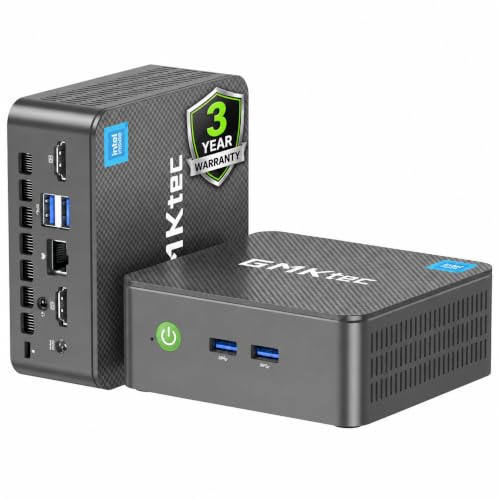
- Intel N95 is a solid low-cost option for light Jellyfin transcoding
- Dual HDMI and AV1 support fit a compact media-center setup
- 8GB RAM / 256GB SSD is enough for basic streaming and server tasks
Best For: Budget-conscious Jellyfin users who need a compact mini PC for light transcoding and streaming.
Best Value Entry-Level Transcoding
ACEMAGIC V1 Mini PC N150, 16GB/512GB

- Intel N150 offers a nice bump over older N100-class chips
- 16GB RAM and 512GB SSD give it a ready-to-use baseline
- Dual 4K outputs and AV1 decoding help for media setups
Best For: Budget-conscious buyers who need a quiet starter mini PC for light Jellyfin transcoding and everyday use.
Best for Triple-Display Jellyfin Setups
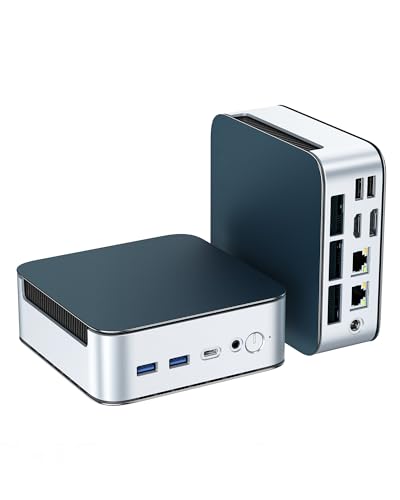
- Ryzen 3 5300U with 4C/8T for everyday media-server tasks
- Triple 4K display support via HDMI, DP, and USB-C
- Dual 2.5G LAN plus WiFi 6 for flexible network connectivity
Best For: Users who want a compact, well-connected mini PC for Jellyfin playback, light transcoding, and multi-monitor use.
Best Value N95 Pick

- Low-cost Intel N95 platform for light media server use
- Dual 4K HDMI and AV1 decoding for HTPC setups
- Compact, VESA-mountable design with Ethernet and WiFi 5
Best For: Budget-conscious Jellyfin users who want a compact starter PC for light transcoding and media playback.
Best for Quiet 24/7 Jellyfin Homes – Beelink ME mini N150 Mini PC
If you want one of the more compact mini pcs for jellyfin transcoding for a low-power home server, the Beelink ME mini is built around the Intel N150, 16GB of LPDDR5 memory, and a 1TB SSD. It is a better fit for light streaming duties, media indexing, and always-on home lab tasks than for heavy multi-stream transcoding, but its quiet cooling and dual 2.5G LAN make it easy to place in a living room, closet, or network rack.
Best For: Jellyfin users who want a small, quiet, always-on box for light transcoding, media storage, and NAS or router duties.
Pros:
- Very low-power Intel N150 chip is ideal for 24/7 home server use
- 16GB LPDDR5 and 1TB SSD give you a ready-to-go media and app base
- Dual 2.5G LAN plus Wi-Fi 6 suit NAS and network-heavy setups
- Quiet vertical airflow cooling helps keep operation unobtrusive
Cons:
- Not the best choice for heavier Jellyfin transcoding workloads
- Intel N150 is modest compared with faster Core-based mini PCs
- Storage expansion is flexible, but you may still want more RAM for bigger labs
For buyers comparing mini pcs for jellyfin transcoding, this Beelink stands out more for efficiency, silence, and storage/network flexibility than raw encoding muscle. It makes the most sense if your library is mostly direct play, occasional light transcoding, and other always-on services alongside Jellyfin.
Best for Silent 24/7 Use – Fanless Mini PC Stick J3455
If you want a low-noise, always-on option in your search for mini pcs for jellyfin transcoding, this fanless J3455 stick is better suited to light-duty media serving than heavy transcoding. Its compact size, 4K output, and wired Ethernet make it a simple, space-saving choice for a small home server, office kiosk, or secondary playback box.
Best For: Quiet, low-power installs where you need a tiny Windows box for basic media tasks, signage, or light Jellyfin use.
Pros:
- Completely fanless, so it runs silently for 24/7 use
- Gigabit Ethernet and dual USB 3.0 ports help with stable networking and expansion
- 4K @ 60Hz output makes it useful for media playback and signage
- Pre-installed Windows 10 Pro for quick setup
Cons:
- 4GB RAM and 64GB eMMC are very limited for transcoding-heavy workloads
- Celeron J3455 is an older, entry-level chip
- Not a strong pick if you expect multiple simultaneous Jellyfin transcodes
For mini pcs for jellyfin transcoding, this model makes sense only if your library mostly direct plays or you need a whisper-quiet box for very light server duties. It’s a practical pick for budget-conscious users, but not the right choice for demanding transcoding loads.
Best Dual-LAN Pick – BOSGAME E4 Mini PC with Ryzen 5
If you want a compact box that can handle light server duties and everyday streaming, the BOSGAME E4 is a practical option to consider for mini pcs for jellyfin transcoding. Its Ryzen 5 3550H, 16GB of RAM, and PCIe SSD give it enough responsiveness for a small media setup, while the dual Ethernet ports make it easier to separate network traffic or keep a stable wired connection.
Best For: Users who want an affordable mini PC for Jellyfin, office tasks, and reliable dual-LAN connectivity in a small footprint.
Pros:
- Ryzen 5 3550H with 4 cores and 8 threads for light multitasking
- 16GB DDR4 and 512GB PCIe SSD for faster app launches and media storage
- Dual RJ45 ports for stable wired networking
- Triple-display support adds flexibility for a home office or media desk
Cons:
- Older Ryzen 5 3550H platform is not the fastest choice for heavy transcoding
- Wi-Fi 5 only, so wireless speeds lag behind newer Wi-Fi 6 models
- Integrated Vega 8 graphics are fine for basic use, but not ideal for demanding media workloads
For mini pcs for jellyfin transcoding, this BOSGAME model makes sense when you value wired stability and decent everyday performance more than top-tier encoding power. It is a sensible pick for smaller libraries, light concurrent streams, and users who also want a versatile desktop machine.
Best for Small Spaces – KAMRUI Essenx E1 N97 Mini PC
The KAMRUI Essenx E1 is a practical pick if you want a compact Windows box that can handle light server duties, streaming, and everyday multitasking without much noise. For shoppers comparing mini pcs for jellyfin transcoding, it makes the most sense as a budget-friendly option for modest 1080p workloads, media playback, and always-on home use.
Best For: Home users who want a quiet, low-power mini PC for Jellyfin, streaming, basic NAS tasks, and general daily computing.
Pros:
- Intel N97, 16GB RAM, and SSD storage give it enough headroom for light multitasking
- Dual HDMI plus DisplayPort support make it easy to run multiple monitors
- Silent cooling, WOL, and RTC auto-boot suit 24/7 media server setups
- Expandable storage helps if you want to build a small media library or backup box
Cons:
- Not the strongest choice for heavy 4K transcoding or multiple simultaneous streams
- 256GB included storage is modest for a media-centric setup
- Wi-Fi 5 is fine, but newer wireless standards are missing
Overall, the Essenx E1 is a sensible entry-level option rather than a powerhouse, but it covers the basics well for mini pcs for jellyfin transcoding when your needs are light and your priority is quiet, dependable uptime.
Best for 24/7 Home Servers – GEEKOM A5 Ryzen 5 Mini PC
If you want a compact Windows mini PC that can pull double duty as a media box and small home server, the GEEKOM A5 is a practical option to consider for mini pcs for jellyfin transcoding. Its Ryzen 5 7430U, 16GB of RAM, and upgrade-friendly design make it a solid fit for light-to-moderate Plex or Jellyfin workloads, office tasks, and 4K streaming.
Best For: Home users who want an always-on mini PC for Jellyfin, 4K playback, and everyday computing.
Pros:
- Ryzen 5 7430U and 16GB RAM provide enough headroom for light transcoding and multitasking
- Upgradeable to 64GB/96GB RAM and multiple storage options for server-style flexibility
- Windows 11 Pro, WiFi 6, and quad-display support make setup versatile
- 3-year warranty adds confidence for 24/7 use
Cons:
- Integrated Vega graphics are fine for light transcoding, but not ideal for heavy multi-stream loads
- Not as power-efficient as newer low-watt Intel N-series systems for always-on use
- Storage and memory upgrades may be needed for a serious Jellyfin server build
For buyers comparing mini pcs for jellyfin transcoding, the A5 stands out more for its balanced feature set and expandability than for raw media-server horsepower. It makes sense if you want one machine that can handle a home server role now and still leave room to grow later.
Best Budget Transcoder Starter – GMKtec Nucbox G3S N95 Mini PC
If you’re comparing mini pcs for jellyfin transcoding on a tight budget, the GMKtec Nucbox G3S is a practical entry point. Its Intel N95 chip, AV1 decoding support, dual HDMI outputs, and compact footprint make it a sensible home server or media box for light transcoding and everyday streaming tasks.
Best For: Jellyfin users who want an affordable, small-footprint mini PC for light transcoding, streaming, and simple home server use.
Pros:
- Intel N95 plus integrated graphics can handle light Jellyfin transcoding and AV1 playback support
- Dual HDMI, WiFi 5, Bluetooth 5.0, and Gigabit Ethernet make it easy to place in a media setup
- 8GB RAM and 256GB SSD are enough for a basic server or streaming box out of the box
Cons:
- 8GB RAM may feel limiting for heavier multitasking or multiple services
- Not ideal if you expect frequent high-bitrate or multi-stream transcoding
For mini pcs for jellyfin transcoding, this GMKtec model makes sense when you want low cost, low power, and simple setup over raw headroom. It is better suited to modest libraries and one-user or small-household workloads than demanding server builds.
Best Value Entry-Level Transcoding – ACEMAGIC V1 Mini PC N150, 16GB/512GB
If you want a compact, affordable box for light media duties, this ACEMAGIC V1 is worth a look among mini pcs for jellyfin transcoding. The Intel N150, 16GB RAM, and SSD storage give it enough headroom for direct play, basic server tasks, and modest hardware-accelerated workloads, while the small metal chassis keeps it easy to tuck beside a router or TV.
Best For: Users who want a budget-friendly mini PC for a lightweight Jellyfin server, everyday home office use, and quiet always-on operation.
Pros:
- Intel N150 is a solid step up from older N100-class entry chips
- 16GB RAM and 512GB SSD are a strong out-of-box starting point
- Dual 4K outputs and AV1 decoding help with media playback setups
- Compact metal build and quiet cooling suit small spaces
Cons:
- Not ideal for heavy multi-stream 4K transcoding workloads
- Single-user performance focus means it is more entry-level than powerhouse
- Storage expansion is available, but the base capacity may fill quickly for large libraries
For anyone comparing mini pcs for jellyfin transcoding on a tighter budget, this model makes sense when the workload is mostly direct play with occasional light transcoding. It is a practical starter option, but serious multi-transcode homes will want more CPU and GPU headroom.
Best for Triple-Display Jellyfin Setups – Glorlin Ryzen 5300U Mini PC
If you want one of the more flexible mini pcs for jellyfin transcoding, this Glorlin system stands out for its Ryzen 3 5300U, 16GB of RAM, and triple-display output support. It’s a compact pick for a home media server or living-room PC when you need smooth library browsing, light multitasking, and enough connectivity to fit into a broader setup.
Best For: Users who want a compact, well-connected mini PC for Jellyfin playback, light transcoding tasks, and multi-monitor use.
Pros:
- Ryzen 3 5300U with 4 cores and 8 threads handles everyday media-server duties well.
- 16GB RAM and 512GB NVMe SSD provide a solid baseline for responsive use and fast boot times.
- HDMI, DisplayPort, and USB-C support up to three 4K displays.
- Dual 2.5G LAN, WiFi 6, and Bluetooth 5.3 make it easy to wire into a home network or media stack.
Cons:
- Integrated graphics are fine for light media work, but not ideal for heavy transcoding loads.
- Included storage is good, but serious media libraries may need an upgrade later.
Overall, this is a practical value pick among mini pcs for jellyfin transcoding if you care more about connectivity, quiet operation, and upgrade flexibility than raw server horsepower. It’s especially appealing for users building a compact media box that can also handle office or home-lab duties.
Best Value N95 Pick – GMKtec Mini PC N95 8GB/256GB
If you want an inexpensive entry point for mini pcs for jellyfin transcoding, the GMKtec G3 S is a practical choice with Intel N95, 8GB RAM, and a 256GB SSD. It is not a powerhouse, but it covers light server duties, 4K display output, and everyday HTPC use without taking much desk space.
Best For: Budget-minded Jellyfin users who need a compact box for light transcoding, media playback, and basic home server tasks.
Pros:
- Intel N95 with up to 3.4GHz offers solid low-power performance for the price
- Intel UHD graphics support AV1 decoding and dual 4K@60Hz output
- 8GB RAM and 256GB SSD provide a usable out-of-box setup
- WiFi 5, Gigabit Ethernet, and VESA mount add flexible placement
Cons:
- 8GB RAM may feel limiting for heavier Jellyfin workloads or multitasking
- N95 is fine for light transcoding, but it is not ideal for multiple demanding streams
- Storage is modest if you also want to host a large media library locally
For buyers comparing mini pcs for jellyfin transcoding, this GMKtec model stands out more for value and simplicity than raw headroom. It is a sensible starter option for a small, efficient media box, especially if your workload is mostly direct play with occasional light transcodes.
Best Budget Pick – Mini PC with 8GB RAM, 256GB SSD
If you want a simple, low-cost box for light media duties, this mini PC is a practical entry point for mini pcs for jellyfin transcoding. Its Intel Celeron N3150, 8GB of RAM, and 256GB SSD make it better suited to basic streaming, dashboard hosting, or casual home server use than heavy-duty video conversion.
Best For: Budget shoppers who need a compact desktop for light Jellyfin use, web browsing, and everyday home office tasks.
Pros:
- Comes ready to use with 8GB RAM and a 256GB SSD
- Dual HDMI 4K output supports a tidy dual-monitor setup
- Small, quiet, and energy-efficient for 24/7 use
- WiFi 5, Bluetooth 4.2, and Ethernet cover basic connectivity
Cons:
- Intel Celeron N3150 is very modest for transcoding workloads
- Limited headroom for multiple streams or heavier Plex/Jellyfin tasks
- Older wireless and CPU platform compared with newer mini PCs
For mini pcs for jellyfin transcoding, this is a budget-friendly starting point rather than a performance pick. It makes sense for lightweight libraries and direct-play setups, but buyers expecting smooth multi-stream transcoding should look higher up the stack.
How We Picked These Mini PCs for Jellyfin Transcoding
We focused on Mini PCs for Jellyfin Transcoding that offer the best mix of CPU efficiency, hardware capability, storage options, and networking. For Jellyfin, that means looking beyond raw specs and prioritizing steady performance under load, low power draw, and reliable connectivity for local streaming or remote access.
We also gave extra weight to systems with newer Intel processors, stronger AMD mobile chips, dual LAN on some models, and enough memory and SSD capacity to keep the OS, metadata, and transcode cache responsive.
Quick Comparison: What Matters Most
At a glance, the main trade-offs are simple: Intel N-series mini PCs are usually the most power-efficient and affordable, while AMD Ryzen models tend to offer more headroom for multiple streams and heavier transcoding tasks. If you mostly direct play and only transcode occasionally, a lower-power unit can be enough. If you expect more simultaneous users or 4K-to-1080p conversions, choose a faster CPU with better cooling and more RAM.
Key Buying Factors for Mini PCs for Jellyfin Transcoding
CPU and Transcoding Capability
CPU performance matters most when software transcoding is involved. Intel N95, N97, N150, and similar chips are fine for light-duty media servers, while Ryzen 5-class systems are better for more demanding libraries and concurrent streams. If your Jellyfin setup will rely on hardware acceleration, make sure the platform and operating system support it cleanly.
Memory and Storage
For smooth metadata handling and background services, 8GB RAM is a practical minimum, while 16GB is a safer target for a long-term home server. SSD storage is strongly preferred over eMMC because it improves responsiveness, indexing, and cache performance. If you store a large media library locally, choose a system with room for expansion.
Networking and I/O
Stable Ethernet is more important than flashy ports. Gigabit LAN is the baseline, while 2.5G LAN can be useful for faster transfers and heavier local network traffic. Dual LAN may be valuable if you want to separate media traffic, virtualization, or other homelab tasks.
Thermals and Noise
Jellyfin servers often run for long periods, so cooling quality matters. Fanless models can be attractive for silence, but they are best suited to lighter workloads. Actively cooled mini PCs generally handle sustained transcoding better, especially in warm rooms or enclosed cabinets.
Who Should Buy Which Mini PCs for Jellyfin Transcoding?
If you want the lowest-cost route into media serving, pick a compact Intel N-series or N95/N97 mini PC with 8GB to 16GB RAM. If you need a more capable all-rounder for multiple users, choose an AMD Ryzen model with 16GB RAM and upgradeable storage. If your setup includes other services like Proxmox, containers, or home-office duties, a system with dual LAN and more memory headroom is usually the smartest choice.
In short, the best Mini PCs for Jellyfin Transcoding are the ones that match your stream count, codec needs, and upgrade plans rather than simply chasing the highest processor number.
