
Choosing the right compact desktop for GPU-accelerated work is about more than raw specs. For mini PCs for CUDA development, you need strong CPU performance, reliable cooling, enough RAM, fast storage, and the right ports for external displays and peripherals.
The five picks below focus on practical developer needs: stable multitasking, upgrade potential, and low-noise operation for home offices, labs, and small workspaces.
Best 5 Mini PCs for Cuda Development Picks for 2026
Best for Multi-Display Workflows

- Ryzen 9 7940HS with DDR5 for fast everyday development
- USB4 plus dual HDMI for up to four displays
- Upgradeable RAM and SSD for longer-term flexibility
Best For: Developers who need a compact, quiet mini PC for coding and multi-monitor productivity, not native CUDA acceleration.
Best for 24/7 Plex Nodes

- Quiet 24/7 operation with business-focused support
- Dual USB4, dual HDMI, and 2.5GbE connectivity
- Upgradeable RAM/SSD for flexible light dev and office use
Best For: Users who need a compact, reliable mini PC for Plex, office work, and light development.
Best for AI-Accelerated Workflows
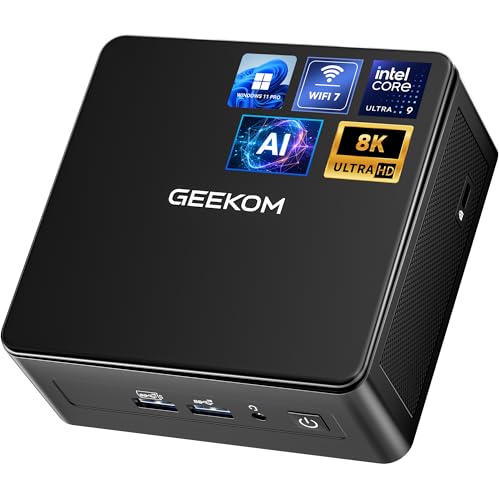
- Intel Ultra 9 285H with 99 TOPS AI performance
- 32GB DDR5 RAM and 1TB Gen 4 SSD
- Dual USB4, dual HDMI, and WiFi 7 for flexible setups
Best For: Developers and creators who want a compact AI-capable desktop for coding, editing, and multitasking.
Best Expandable Value
GEEKOM A5 2026 Edition Mini PC
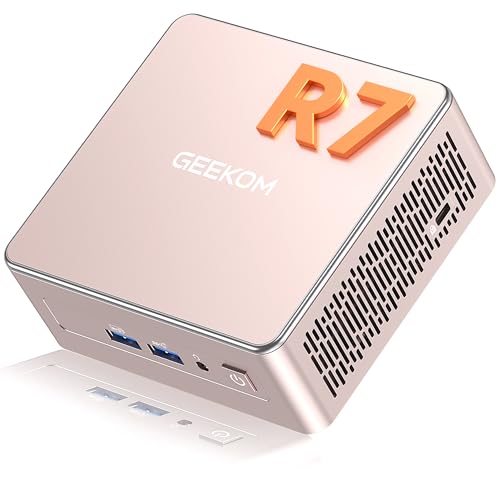
- Upgradeable RAM and storage for long-term flexibility
- Ryzen 5 7430U is good for coding and multitasking
- Three-year warranty stands out for business use
Best For: Developers and office buyers who want a compact, upgradeable mini PC for productivity and light dev work.
Best for Quiet AI Workstations

- Intel Core Ultra 9 185H for strong local AI and dev workloads
- Dual 2.5GbE LAN, Wi-Fi 7, and quad-display support
- Quiet cooling and Linux/Windows compatibility
Best For: Developers and power users who want a quiet compact workstation for AI prototyping, coding, and multi-monitor productivity.
Best for Multi-Display Workflows – GEEKOM A7 MAX Ryzen 9 Mini PC
If you want one of the more capable mini pcs for cuda development in a compact desktop format, the GEEKOM A7 MAX is worth a look for its Ryzen 9 7940HS, DDR5 memory, and upgrade-friendly storage. It doesn’t include an NVIDIA GPU, so it’s not a true CUDA box out of the gate, but it can still serve well as a fast, quiet host machine for code, containers, testing, and multi-monitor productivity.
Best For: Developers who want a small, well-connected mini PC for coding, light creation, and multi-display workflows, while planning to rely on an external CUDA-capable GPU or separate workstation when CUDA acceleration is required.
Pros:
- Ryzen 9 7940HS and DDR5 deliver strong general-purpose performance
- USB4 and dual HDMI support up to four displays for busy workspaces
- Upgradeable RAM and SSD add flexibility for longer-term use
- 3-year coverage adds peace of mind for a desktop replacement
Cons:
- No discrete NVIDIA GPU, so it cannot run CUDA workloads natively
- 16GB RAM is fine to start, but heavier dev stacks may want an upgrade
- Not the best fit if your main goal is local AI training on the machine itself
This is a strong compact productivity pick, but buyers looking specifically for mini pcs for cuda development should treat it as a capable host system rather than a full CUDA workstation.
Best for 24/7 Plex Nodes – GEEKOM IT12 i5-12450H Mini PC
If you want a compact workstation that can stay on around the clock, this GEEKOM IT12 is a practical pick for mini pcs for cuda development workflows that don’t require a discrete NVIDIA GPU. Its Intel i5-12450H, dual USB4 ports, 2.5GbE, and expandable memory/storage make it a flexible small-form-factor option for media servers, remote dev boxes, and general testing labs.
Best For: Buyers who want a quiet, business-friendly mini PC for always-on Plex, office use, and lightweight development tasks in a small footprint.
Pros:
- Intel i5-12450H with Intel UHD graphics and Quick Sync for efficient media handling
- Dual USB4, dual HDMI, and 2.5GbE for strong connectivity and multi-display setups
- Upgradeable RAM and SSD capacity with business-oriented 3-year coverage
Cons:
- No dedicated NVIDIA GPU, so it’s not ideal for serious CUDA training or heavy model work
- Better suited to light dev, media, and office workloads than high-end AI compute
As one of the more polished business mini PCs in this size class, the IT12 makes sense if you value reliability, low noise, and expandability over raw GPU power. For mini pcs for cuda development, it’s mainly a host machine or test box unless you plan to add separate GPU-capable hardware elsewhere.
Best for AI-Accelerated Workflows – GEEKOM IT15 Mini PC
The GEEKOM IT15 is a strong pick for mini pcs for cuda development if your workflow leans more toward portable AI, coding, and creative workloads than heavy CUDA-specific GPU acceleration. Its Intel Ultra 9 285H, 32GB DDR5 RAM, fast Gen 4 SSD, and USB4 expansion make it a capable compact workstation for multitasking, model prototyping, and dev environments.
Best For: Developers and creators who want a compact AI-capable desktop for coding, editing, and multitasking.
Pros:
- Intel Ultra 9 285H with claimed 99 TOPS AI performance for fast AI-assisted tasks
- 32GB DDR5 RAM and 1TB Gen 4 SSD support smooth multitasking and quick project loads
- Dual USB4 ports plus dual HDMI let you build a flexible multi-monitor setup
- WiFi 7, 2.5GbE, and quiet cooling make it practical for a desk-based work machine
Cons:
- Integrated Arc graphics are useful, but not a substitute for an NVIDIA CUDA GPU
- Not the best choice if your CUDA development depends on strong local GPU training
- Performance is good for compact computing, but still below full desktop workstations
For buyers comparing mini pcs for cuda development, the IT15 makes most sense as a compact dev and AI workstation that can handle code, testing, and light model work, while eGPU support gives it more flexibility than many small-form-factor PCs.
Best Expandable Value – GEEKOM A5 2026 Edition Mini PC
If you want a compact desktop that leaves room to grow, the GEEKOM A5 is a practical pick among mini pcs for cuda development workflows that don’t require an NVIDIA GPU inside the box. Its Ryzen 5 7430U, 16GB of RAM, and 512GB NVMe SSD make it a solid fit for coding, testing, remote containers, and everyday multitasking, while the upgradeable memory and storage give it more flexibility than many soldered mini PCs.
Best For: Developers, office users, and multitaskers who want a small, upgradeable mini PC for coding, productivity, and light creative work.
Pros:
- Upgrade-friendly design with dual-slot RAM, extra storage options, and room to expand
- Ryzen 5 7430U handles everyday development, office apps, and smooth multitasking well
- Four-display support and 8K output via Type-C help if you run dense workstation setups
- Three-year warranty adds welcome long-term peace of mind
Cons:
- Not ideal for local CUDA training or GPU-heavy ML work without an external GPU solution
- Integrated Radeon graphics are fine for display output, but not a substitute for NVIDIA CUDA horsepower
- 512GB storage may feel tight for larger dev environments until upgraded
For buyers comparing mini pcs for cuda development, this model makes sense as a dependable CPU-first workstation, but not as a native CUDA machine. It’s strongest when you need a small, reliable system for coding, orchestration, and daily work with plenty of upgrade room.
Best for Quiet AI Workstations – GEEKOM IT13 Max AI Mini PC
If you want mini pcs for cuda development-style AI work, the GEEKOM IT13 Max is a strong compact option for local inference, coding, and mixed productivity. Its Intel Core Ultra 9 185H, dual 2.5GbE LAN, and Wi-Fi 7 make it appealing for developers who need a small, flexible machine for labs, homelabs, and everyday dev workflows.
Best For: Developers, engineers, and power users who want a quiet small-form-factor mini PC for AI prototyping, containers, multi-monitor work, and Linux or Windows environments.
Pros:
- Intel Core Ultra 9 185H with strong integrated AI features for local workloads
- Dual 2.5GbE LAN plus Wi-Fi 7 for fast networking and homelab setups
- Supports up to four displays, including 8K output over USB-C
- Quiet cooling design suited to offices, shared spaces, and long sessions
Cons:
- Integrated Arc graphics are useful, but not a substitute for an NVIDIA CUDA GPU
- 16GB RAM is workable, yet many dev users will want to upgrade quickly
- 1TB SSD is solid, but larger datasets and containers may need more storage
For mini pcs for cuda development, this model is better seen as a compact AI-capable workstation than a true CUDA rig. It makes sense if you value quiet operation, strong CPU performance, and broad OS support, but teams needing actual NVIDIA acceleration should look elsewhere.
How We Picked the Best Mini PCs for Cuda Development
We prioritized mini PCs that make sense for CUDA development workflows, especially systems that can handle IDEs, containers, local services, browsers, and test tools at once. Because CUDA work usually depends on an external NVIDIA GPU or remote GPU access, CPU speed, memory headroom, storage responsiveness, and connectivity matter a lot.
We also looked at chassis cooling, RAM and SSD expandability, port selection, and overall value for developers who want a small system without sacrificing day-to-day usability.
Quick Comparison
In broad terms, the Intel Core Ultra-based models are the strongest fit for heavier multitasking and longer development sessions, while the Ryzen options are attractive for efficient everyday coding and lighter lab setups. If you want maximum headroom for multiple tools, containers, and larger projects, choose the most powerful CPU and the most RAM you can afford. If you want a quieter, lower-power machine for editor work, scripting, and remote CUDA access, a midrange option can be enough.
Key Buying Factors for Mini PCs for Cuda Development
CPU Performance and Thermals
CUDA compilation, preprocessing, data loading, and general development tasks still lean heavily on the CPU. Look for sustained performance rather than only peak boost clocks. Better cooling helps avoid throttling during long builds.
Memory Capacity
For most developers, 16GB is the minimum comfortable starting point, while 32GB is a smarter target if you use Docker, WSL, VMs, or large codebases. More memory reduces slowdowns when you are switching between tools and datasets.
Storage Speed and Upgrade Room
A fast NVMe SSD improves boot times, project indexing, dependency installs, and local dataset handling. Expandable storage is useful if you keep multiple environments, containers, or scratch data on the machine.
Ports, Networking, and Display Support
Since Mini PCs for Cuda Development often sit in tight workspaces, dependable USB-C, USB-A, HDMI, or DisplayPort options are important. Strong Wi-Fi and ideally wired Ethernet support matter for remote GPU access, source control, and cloud workflows.
Noise, Power, and Reliability
If the system runs all day, quieter cooling and efficient power use become real advantages. Business-oriented models with better support coverage can also be appealing for developers who need uptime and predictable maintenance.
Who Should Buy Which Mini PCs for Cuda Development?
If you want the best overall development machine in a compact size, prioritize the strongest CPU, 32GB of RAM, and the most flexible upgrade path. If your CUDA workloads run on a remote server or desktop GPU, a balanced midrange mini PC is often the best value. If you mainly code, manage containers, or prep datasets in a quiet office, an efficient, lower-power model can be the smartest choice.
For most buyers, the best Mini PCs for Cuda Development are the ones that stay cool, remain responsive under load, and leave room to grow as projects get bigger.
