
Mini PCs with Oculink are a smart pick when you want compact AI-ready performance without giving up upgrade headroom. They can pair well with external GPUs and fast storage setups, making them attractive for creators, developers, and power users.
This roundup focuses on the best mini pc with oculink for ai options for 2026, with an emphasis on performance, expansion, and value.
Best 10 Mini PC with Oculink for AI Picks for 2026
Best for AI Workloads
GMKtec EVO-X1 Ryzen AI 9 HX-370 Mini PC

- 50 TOPS NPU for AI-accelerated tasks
- Oculink port for higher-bandwidth eGPU use
- Radeon 890M plus triple 8K display output
Best For: Users who want an AI-focused mini PC with Oculink for external GPU expansion.
Best for eGPU Power
GMKtec K15 AI Mini PC with Oculink

- Oculink port for higher-bandwidth eGPU expansion
- Intel Core Ultra 5 125U with 16GB DDR5 and 1TB SSD
- Dual 2.5GbE, Wi-Fi 6E, and USB4 for flexible connectivity
Best For: Users who want an efficient mini PC with Oculink for AI-adjacent workflows and eGPU expansion.
Best for AI Expansion
MINISFORUM AI X1 Pro Ryzen AI 9 Mini PC
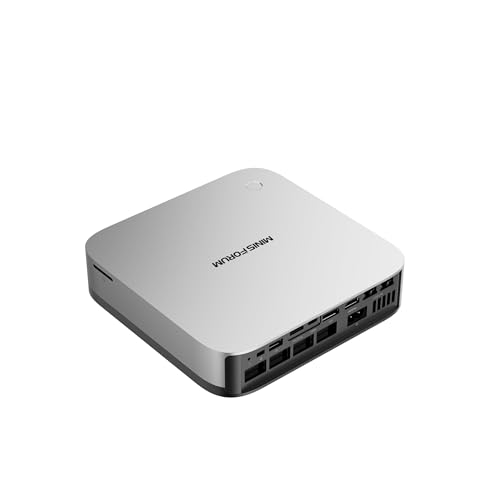
- Ryzen AI 9 HX 370 with up to 80 TOPS for AI tasks
- OCuLink and dual USB4 for eGPU and fast expansion
- Four-display output, WiFi 7, and dual 2.5GbE
Best For: Power users who want a compact AI-ready desktop with OCuLink support and strong multitasking.
Best for AI + eGPU Flexibility

- Intel Core Ultra 9 285H with AI Boost NPU
- Oculink for lower-latency eGPU expansion
- 64GB DDR5, 1TB SSD, and 3x M.2 slots
Best For: People who want an AI-ready mini PC with strong expansion options and an Oculink eGPU path.
Best for USB4 eGPU
BOSGAME P3 Lite Ryzen 7 Mini PC

- Ryzen 7 6800H delivers strong 8-core/16-thread performance
- USB4 supports eGPU-style expansion and fast peripherals
- 32GB DDR5, 1TB SSD, and dual 2.5GbE LAN come included
Best For: Productivity buyers who want a compact mini PC with strong connectivity and upgrade paths.
Best for Oculink eGPU Upgrades
GMKtec K15 Core Ultra 5 125U Mini PC

- Intel Core Ultra 5 with AI Boost NPU
- Oculink port for eGPU expansion
- 32GB DDR5, 1TB SSD, 3x M.2 slots
Best For: Buyers who want a compact AI-ready mini PC with room to add an external GPU later.
Best for Comfort
GMKtec K12 Oculink Ryzen 7 Mini PC

- Oculink for external GPU upgrades
- 32GB DDR5 and Ryzen 7 H-series CPU
- 3x M.2 slots plus dual 2.5G LAN
Best For: Users who want a compact AI-ready mini PC with strong upgrade potential.
Best for AI + Oculink Expansion
GMKtec K15 Ultra 5 125U Mini PC

- Oculink and USB4 for external expansion
- Triple M.2 slots for large storage builds
- Core Ultra 5 with AI Boost NPU
Best For: AI-focused buyers who want a customizable barebones mini PC with strong expansion options.
Best for eGPU AI Expansion
GMKtec K15 AI Mini PC with Oculink

- Oculink port for low-lag eGPU expansion
- 32GB DDR5 with 512GB SSD included
- 3x M.2 slots and dual 2.5GbE networking
Best For: Users who want a compact Intel mini PC with Oculink and strong upgrade flexibility.
Best for eGPU AI Builds

- Oculink is ideal for lower-latency eGPU expansion.
- 48GB DDR5 RAM and 1TB SSD are ready out of the box.
- Three M.2 slots and dual 2.5GbE add serious flexibility.
Best For: Buyers who want an AI-capable mini PC with Oculink for an eGPU and lots of expansion.
Best for AI Workloads – GMKtec EVO-X1 Ryzen AI 9 HX-370 Mini PC
If you want a mini pc with oculink for ai that also handles everyday productivity and light gaming well, the GMKtec EVO-X1 is a strong all-around pick. Its Ryzen AI 9 HX-370 chip, 50 TOPS NPU, Radeon 890M graphics, and Oculink port make it especially appealing if you plan to pair local AI tasks with an external GPU later.
Best For: Buyers who want an AI-ready mini PC with strong integrated graphics and a high-bandwidth Oculink connection for future eGPU expansion.
Pros:
- Ryzen AI 9 HX-370 with up to 50 TOPS NPU for AI-accelerated workloads
- Oculink interface offers better eGPU bandwidth than typical Thunderbolt setups
- Radeon 890M, dual 2.5GbE ports, and triple 8K display support add flexibility
Cons:
- On-board LPDDR5X memory is not user-upgradeable like SODIMM-based systems
- Premium specs mean it is less of a budget option than simpler mini PCs
This is a compelling mini pc with oculink for ai if you want strong CPU and NPU performance now, plus the option to scale graphics performance later with an external GPU. It is best suited to users who value versatility, fast connectivity, and a compact workstation footprint.
Best for eGPU Power – GMKtec K15 AI Mini PC with Oculink
The GMKtec K15 is a practical mini pc with oculink for ai if you want a compact desktop that can scale beyond its integrated graphics. Its Intel Core Ultra 5 125U, DDR5 memory, PCIe 4.0 SSD, and Oculink port make it a flexible choice for AI workloads, eGPU use, and everyday productivity without drawing much power.
Best For: Buyers who want a low-power mini PC with Oculink, dual 2.5GbE networking, and multi-display support for AI-adjacent workstations or home lab setups.
Pros:
- Oculink support offers higher-bandwidth eGPU expansion than typical Thunderbolt-only mini PCs.
- Core Ultra 5 125U plus 16GB DDR5 and 1TB SSD deliver a solid balance of efficiency and responsiveness.
- Dual 2.5GbE ports, Wi-Fi 6E, and Bluetooth 5.2 are useful for networking-heavy setups.
- HDMI 2.1, USB4, and multi-screen support make it easy to build a flexible desktop station.
Cons:
- Integrated graphics are not ideal if you need strong local AI acceleration without an external GPU.
- Cooling and RGB features add flair, but this is still a compact 15W-class machine rather than a performance workstation.
- 16GB RAM is workable, though heavier AI and multitasking users may want more headroom.
As a mini pc with oculink for ai, the K15 stands out more for expandability and efficient daily use than for raw onboard GPU power. If you plan to pair it with an external GPU or need a small system with strong I/O and networking, it is a compelling option.
Best for AI Expansion – MINISFORUM AI X1 Pro Ryzen AI 9 Mini PC
If you want a mini pc with oculink for ai that can also handle serious multitasking, the MINISFORUM AI X1 Pro is built around AMD’s Ryzen AI 9 HX 370, Radeon 890M graphics, and flexible expansion options. It’s aimed at buyers who want a compact system for AI-assisted workflows, creative work, and light gaming without giving up modern connectivity.
Best For: Power users who want a compact AI-ready desktop with OCuLink support for eGPU expansion, strong integrated graphics, and lots of display output.
Pros:
- Ryzen AI 9 HX 370 delivers strong CPU performance and up to 80 TOPS for AI workloads.
- OCuLink plus dual USB4 makes it easy to expand with faster external GPU and storage setups.
- Supports up to four displays with HDMI, DisplayPort, and USB4 for productive multitasking.
- WiFi 7, dual 2.5GbE, and fingerprint unlock add modern convenience and security.
Cons:
- Barebone configuration means you must supply your own RAM and SSDs.
- Premium parts and AI-focused features push it above basic mini PC pricing.
- OCuLink benefits depend on adding compatible external hardware.
For buyers comparing a mini pc with oculink for ai, this model stands out because it combines a high-end AI processor, practical expansion, and broad display support in one compact box. It’s a strong fit if you want a future-ready mini desktop rather than a simple office machine.
Best for AI + eGPU Flexibility – GMKtec EVO-T1 Ultra 9 285H
The GMKtec EVO-T1 is a strong pick if you want a mini pc with oculink for ai that can also handle everyday productivity, light creative work, and external GPU expansion. Its Core Ultra 9 285H, Intel AI Boost NPU, and Oculink port make it especially appealing for users who want a compact system with room to scale.
Best For: Buyers who want a compact AI-ready mini PC with fast memory, lots of storage expansion, and Oculink for lower-latency eGPU use.
Pros:
- Core Ultra 9 285H with Intel AI Boost NPU for AI-accelerated tasks
- Oculink adds a stronger eGPU upgrade path than typical USB4-only minis
- 64GB DDR5, 1TB SSD, and 3x M.2 slots offer excellent expansion potential
- Supports quad-display output, including 8K over HDMI 2.1
Cons:
- Integrated graphics are solid, but serious gaming still benefits from an eGPU
- Feature-rich configuration may be more than casual users need
For shoppers comparing a mini pc with oculink for ai, the EVO-T1 stands out for balancing new Intel AI hardware, high memory capacity, and expansion-friendly design in a very compact footprint.
Best for USB4 eGPU – BOSGAME P3 Lite Ryzen 7 Mini PC
If you want a compact workstation that can stretch toward AI-adjacent workloads, the BOSGAME P3 Lite is worth a look as a practical mini pc with oculink for ai-style setups, even though it uses USB4 rather than native OCuLink. Its Ryzen 7 6800H, 32GB DDR5, and 1TB SSD make it a capable everyday machine for coding, media, light virtualization, and multitasking, while the USB4 port gives you a path to external GPU expansion.
Best For: Buyers who want a fast, compact Windows mini PC with strong connectivity, dual LAN, and USB4 expansion for productivity or light AI experimentation.
Pros:
- Ryzen 7 6800H with 8 cores and 16 threads handles demanding multitasking well
- USB4 support is useful for eGPU expansion and high-speed peripherals
- 32GB DDR5 RAM and a 1TB PCIe 4.0 SSD come ready to use
- Dual 2.5GbE LAN plus Wi-Fi 6E make it a strong networking option
Cons:
- Does not include native OCuLink, so it is not ideal for dedicated AI GPU builds
- Integrated graphics are fine for media and light gaming, but not heavy local AI inference
- One of the pricier options if you only need a basic office mini PC
This is a flexible choice if you want a mini pc with oculink for ai capabilities in spirit, but are comfortable using USB4 as the expansion route. It makes more sense for productivity users who may later add external GPU power than for buyers seeking a purpose-built AI box.
Best for Oculink eGPU Upgrades – GMKtec K15 Core Ultra 5 125U Mini PC
If you want a mini pc with oculink for ai that can also handle everyday productivity and light creative work, the GMKtec K15 is a compelling middle-ground option. Its Intel Core Ultra 5 125U brings AI Boost NPU support, while the Oculink port gives you a cleaner path to external GPU expansion when you need more graphics power.
Best For: Buyers who want a compact AI-ready mini PC with Oculink for future eGPU upgrades, multi-display setups, and fast storage expansion.
Pros:
- Intel Core Ultra 5 125U with built-in AI NPU support for on-device AI tasks
- Oculink port for higher-bandwidth eGPU expansion than typical USB-C options
- 32GB DDR5 RAM, 1TB PCIe 4.0 SSD, plus three M.2 slots for easy storage growth
- Quad-display support with 8K output and modern wireless/connectivity features
Cons:
- Integrated graphics are fine for casual use, but serious AI or gaming workloads may still need an eGPU
- Expansion-heavy builds can get expensive once you add extra SSDs or external graphics
For shoppers comparing a mini pc with oculink for ai, this model stands out because it combines a capable Intel AI platform with practical upgrade options instead of forcing you to choose one or the other. It is a smart pick if you want a compact base system that can scale later.
Best for Comfort – GMKtec K12 Oculink Ryzen 7 Mini PC
If you want a mini pc with oculink for ai that can grow with your workflow, the GMKtec K12 is built around expandability. It pairs a Ryzen 7 H-series chip with Radeon 780M graphics, 32GB of DDR5 memory, Oculink, USB4, and multiple M.2 slots, making it a practical base for light AI work, fast storage, and external GPU upgrades.
Best For: Buyers who want a compact desktop with strong baseline performance and upgrade paths for AI, storage, and graphics.
Pros:
- Oculink support gives you an easy path to add an external GPU for AI acceleration.
- Ryzen 7 H-series CPU and 32GB DDR5 are solid for multitasking and creator workloads.
- Three M.2 2280 slots plus dual 2.5G NICs add storage and networking flexibility.
- USB4 and HDMI 2.1 make it versatile for modern displays and peripherals.
Cons:
- Integrated graphics are fine for everyday use, but serious AI workloads will still want an external GPU.
- Storage and expansion are strong, but the best AI setup may require extra spending beyond the base unit.
This is a smart pick if you want a mini pc with oculink for ai and prefer a machine that can start small, then scale up as your workloads grow.
Best for AI + Oculink Expansion – GMKtec K15 Ultra 5 125U Mini PC
If you want a mini pc with oculink for ai that also leaves room to grow, the GMKtec K15 is built around a Core Ultra 5 125U, an Intel AI Boost NPU, and a highly expandable barebones design. It is a strong fit for compact AI labs, edge compute setups, and multi-display workstations where external GPU or storage expansion matters more than a turnkey out-of-box setup.
Best For: Buyers who want a barebones mini PC for AI tasks, fast storage expansion, and Oculink-based eGPU flexibility.
Pros:
- Oculink plus USB4 gives you flexible high-bandwidth expansion for AI and graphics workflows.
- Three PCIe 4.0 M.2 slots support very large internal storage builds.
- Core Ultra 5 with NPU and Arc graphics handles light AI acceleration and everyday creator use.
- Dual 2.5GbE, Wi-Fi 6E, and quad-display output make it versatile for desk setups and servers.
Cons:
- No RAM, SSD, or OS included, so it requires extra parts and setup time.
- Integrated graphics are fine for light work, but serious AI or gaming builds may want an eGPU.
- Barebones configuration may not suit users who want plug-and-play simplicity.
As a mini pc with oculink for ai, the K15 stands out more for expandability and connectivity than convenience, making it a smart pick if you plan to customize the system around your workload.
Best for eGPU AI Expansion – GMKtec K15 AI Mini PC with Oculink
If you want a mini pc with oculink for ai that can grow beyond integrated graphics, the GMKtec K15 is a strong modular pick. Its Intel Core Ultra 5 125U, 32GB of DDR5 memory, and Oculink support make it a practical base for light AI workloads, eGPU use, and everyday productivity without a lot of power draw.
Best For: Builders who want a compact Intel mini PC with Oculink, dual 2.5GbE, and room for storage expansion.
Pros:
- Oculink port is ideal for lower-latency eGPU expansion
- 32GB DDR5 and 512GB PCIe 4.0 SSD give it a solid starting point
- 3x M.2 2280 slots offer unusually strong internal storage expansion
- Dual 2.5GbE, Wi-Fi 6E, and USB4 add flexibility for networking and peripherals
Cons:
- Core Ultra 5 U-series chip is efficient, but not a top-tier AI powerhouse by itself
- Best results for demanding AI or graphics tasks will still depend on an external GPU
- Feature-rich design may be more than casual users need
For buyers who want a mini pc with oculink for ai and a clear upgrade path, the K15 stands out more for expandability than raw onboard muscle. It makes the most sense if you plan to add an eGPU, build a compact lab machine, or keep storage and networking flexible over time.
Best for eGPU AI Builds – GMKtec K15 AI Mini PC
If you want a mini pc with oculink for ai that also works as a compact daily driver, the GMKtec K15 stands out for its Core Ultra 5 chip, 48GB of DDR5 RAM, and built-in Oculink port for higher-bandwidth external GPU setups. It also adds plenty of storage flexibility, so you can scale local AI models, creative tools, and general productivity without quickly running out of room.
Best For: Buyers who want an AI-capable mini PC with Oculink for an eGPU, lots of RAM, and strong expansion options.
Pros:
- Oculink support is a strong fit for lower-latency eGPU use.
- 48GB DDR5 RAM and 1TB PCIe 4.0 SSD give it a ready-to-work baseline.
- Three M.2 2280 expansion slots make storage upgrades unusually generous.
- Dual 2.5GbE ports plus Wi‑Fi 6E add flexible networking for labs and homelabs.
Cons:
- Core Ultra 5 U-series performance is efficient, but not class-leading for heavy local AI compute.
- Oculink benefits depend on adding an external GPU and compatible setup.
- The feature set is broad enough that it may be overkill for simple office use.
This is a smart pick if you want a mini pc with oculink for ai and care more about expandability, connectivity, and balanced efficiency than raw workstation muscle. It makes the most sense for users planning an eGPU path or a flexible compact system that can grow over time.
How We Picked the Best Mini PC with Oculink for AI
For this Mini PC with Oculink for AI roundup, we prioritized CPUs with strong NPU or AI acceleration, solid integrated graphics, Oculink support, and practical expansion options such as multiple M.2 slots, USB4, and dual LAN. We also favored systems with enough memory and storage to handle local AI workloads, multitasking, and fast project loads.
Quick Comparison
At a high level, compare these systems by three things: raw compute, upgrade path, and connectivity. Ryzen AI 9 and Intel Core Ultra-class chips are the strongest picks for demanding AI work, while lower-power Ultra 5 systems can be better for always-on office, edge, or light inference use. If you plan to add an external GPU, Oculink matters more than the integrated graphics on day one.
Key Buying Factors for Mini PC with Oculink for AI
Processor and AI Acceleration
Look for a modern CPU with an NPU or strong hybrid cores. For AI tasks, the CPU still matters for preprocessing, model management, and general responsiveness, while the NPU can help offload supported workloads.
Memory and Storage
AI apps, containers, and development tools consume RAM quickly. For most buyers, 32GB is the practical floor; 64GB is better if you run larger local models or keep many apps open. Multiple M.2 slots are a major plus for datasets, scratch drives, and separation of OS and project storage.
Oculink and Expansion
Oculink is valuable because it offers a more direct path for external GPU setups than many standard options. If you think you may scale into heavier AI inference or content creation, choose a system with clear Oculink support plus USB4 and extra M.2 expansion.
Thermals, Ports, and Networking
Compact AI systems can throttle if cooling is weak, so prioritize better chassis design and sensible power tuning. Dual 2.5GbE LAN is useful for NAS access, lab environments, and fast local transfers. Multiple display outputs are also helpful for monitoring models, dashboards, and dev tools.
Who Should Buy Which Mini PC with Oculink for AI?
If you want the strongest all-around performance, choose a Ryzen AI 9 or Core Ultra 9 model. If you want a balanced, lower-cost Mini PC with Oculink for AI development or office-heavy use, Intel Core Ultra 5 options are a good fit. Buyers planning an external GPU should make Oculink a must-have. If your priority is storage-heavy workflows, pick the model with the most M.2 expansion and the memory configuration that leaves room to grow.
In short, buy for your workload first, then confirm the Oculink implementation, RAM ceiling, and storage layout before you decide.
