
Building a capable home lab does not have to mean buying a loud tower or spending a fortune. The right compact system can run containers, light virtualization, media services, and network tools while staying quiet and power-efficient.
In this roundup, we focus on practical choices for a mini pc for home lab under 500, with an eye on CPU performance, memory support, storage expandability, and networking.
Best 9 Mini PC for Home Lab Under 500 Picks for 2026
Best for 2.5GbE Homelabs
GMKtec G10 Ryzen 5 3500U Mini PC

- Ryzen 5 3500U is better for multitasking than typical N100/N97 mini PCs.
- 2.5GbE LAN makes it a strong fit for homelabs, routers, and servers.
- Includes 16GB RAM, 512GB SSD, and triple 4K display support.
Best For: Home lab beginners and budget buyers who want fast wired networking, upgrade room, and decent multitasking power.
Best for AI Workloads
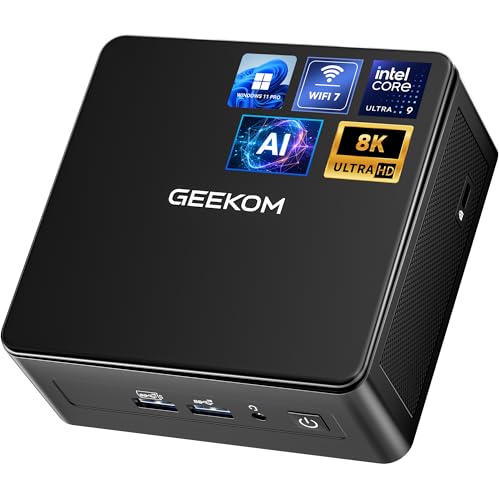
- Intel Core Ultra 9 285H with Arc 140T graphics
- 32GB DDR5 RAM and 1TB Gen 4 SSD
- WiFi 7, 2.5GbE, and dual USB4 for flexible setups
Best For: Power users who want a compact AI-ready PC for editing, coding, and multitasking.
Best for Networking
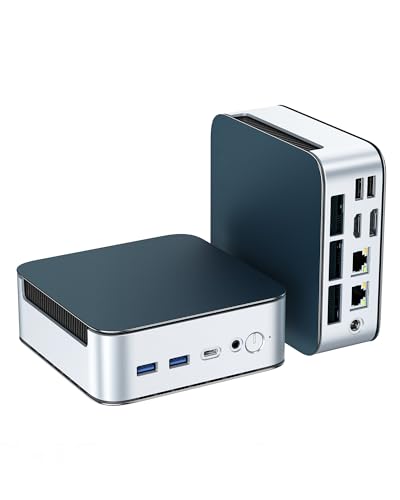
- Dual 2.5G LAN for home lab networking
- Triple 4K display support for multitasking
- Upgradeable to 64GB RAM and 4TB storage
Best For: Home lab users who want strong networking, upgrade headroom, and compact size.
Best for AI Home Labs

- Intel Core Ultra 9 performance for Proxmox, Docker, and local AI
- Dual 2.5G LAN plus Wi‑Fi 7 for serious home lab networking
- Quiet, compact design with Windows and Linux support
Best For: Home lab builders and developers who want a compact, high-performance mini PC with modern networking.
Best Dual 2.5G Home-Lab Pick

- Dual 2.5G Ethernet for home-lab networking
- 16GB RAM and 500GB NVMe included
- Quiet, compact design with PXE and WoL support
Best For: Home-lab users who want a low-cost, quiet starter box with strong networking.
Best Refurbished Business Micro

- 6-core i5-9500 is solid for multitasking and light homelabs
- 16GB RAM + 500GB SSD offer strong value out of the box
- Tiny Micro chassis works well in cramped desks or rack-adjacent spaces
Best For: Home lab beginners and budget-minded buyers who want a compact business PC.
Best for Plex and 24/7 Use

- Quick Sync helps Plex transcoding
- Dual USB4 plus 2.5GbE expands lab flexibility
- 3-year coverage adds support confidence
Best For: Home lab users who want a quiet, efficient Plex server and light virtualization box.
Best for Expandability
GEEKOM A5 2026 Ryzen 5 Mini PC
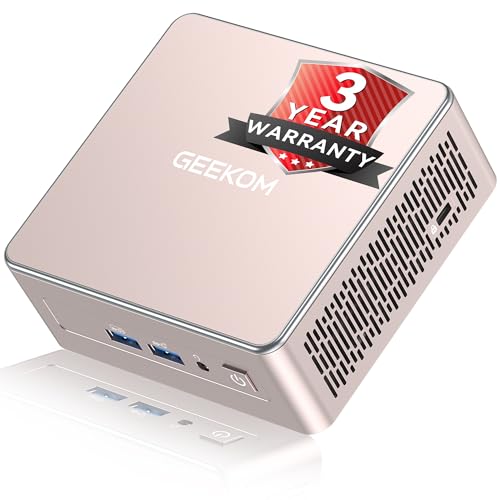
- Upgradeable to 64GB RAM and multiple storage options
- Ryzen 5 7430U handles multitasking and light home lab use
- 3-year warranty is unusually strong for this class
Best For: Home lab users and multitaskers who want upgrade flexibility and long-term support.
Best for 2.5GbE Homelabs – GMKtec G10 Ryzen 5 3500U Mini PC
If you want a mini pc for home lab under 500 that can do more than bare-minimum desktop duties, the GMKtec G10 is a practical pick. Its Ryzen 5 3500U, dual-channel 16GB RAM, 512GB SSD, and 2.5GbE port make it a stronger fit for light virtualization, network services, and everyday multitasking than entry-level N-series mini PCs.
Best For: Home lab beginners, Proxmox users, media server builds, and buyers who want fast wired networking without overspending.
Pros:
- Ryzen 5 3500U offers solid 4-core/8-thread performance for light homelab workloads and multitasking.
- 2.5GbE LAN is a big plus for server, router, and storage-heavy setups.
- Includes 16GB RAM and a 512GB SSD, with room to expand storage further.
- Triple 4K display support adds flexibility for desktop or monitoring use.
Cons:
- Older Ryzen 5 3500U platform is not as efficient as newer low-power chips.
- WiFi 5, not WiFi 6, so wireless performance is more basic.
- Best suited to light-to-moderate homelab tasks rather than heavy workloads.
Overall, the G10 stands out because it balances usable CPU power, upgrade options, and 2.5GbE networking at a low price. For shoppers comparing a mini pc for home lab under 500, it’s a sensible choice when networking and flexibility matter more than having the newest processor.
Best for AI Workloads – GEEKOM IT15 Mini PC
If you want a mini pc for home lab under 500 only for lightweight virtualization, the GEEKOM IT15 is actually more of a high-end productivity and AI box than a budget lab node. Its Intel Core Ultra 9 285H, fast DDR5 memory, and PCIe Gen 4 SSD make it a strong fit for coding, media work, and heavy multitasking, while WiFi 7 and 2.5GbE help in modern connected setups.
Best For: Buyers who need a powerful compact PC for AI-assisted work, editing, coding, and multi-display setups rather than a strict low-cost homelab build.
Pros:
- Very strong CPU, NPU, and Arc graphics performance for demanding creator and dev tasks
- Upgradeable memory and fast 1TB SSD support smooth multitasking
- Dual USB4, dual HDMI, WiFi 7, and 2.5GbE give it excellent connectivity
- Quiet cooling and 3-year warranty improve long-term usability
Cons:
- Overkill for most budget home lab users looking only for basic virtualization
- Pricier than typical entries in the mini pc for home lab under 500 category
- Focused more on performance than maximum value per dollar
This is a great pick if your mini pc for home lab under 500 search is really about finding a compact all-rounder with headroom, but it makes the most sense for users who care about speed, ports, and creator-grade features more than the lowest possible price.
Best for Networking – Glorlin Ryzen 5300U Mini PC
If you want a mini pc for home lab under 500 that leans more toward connectivity and expansion than raw horsepower, the Glorlin Ryzen 5300U is a smart pick. It pairs a 4-core/8-thread AMD chip with 16GB of RAM, a 512GB NVMe SSD, dual 2.5G LAN, and support for three 4K displays, making it a flexible small box for light virtualization, routing, media, and everyday admin tasks.
Best For: Home lab users who want dual 2.5G networking, triple-display support, and easy upgrade room in a compact desktop.
Pros:
- Dual 2.5G LAN is a strong fit for home lab networking and server-style tasks
- Triple 4K display outputs help with dashboards, monitoring, and multitasking
- 16GB RAM and a 512GB NVMe SSD provide a solid ready-to-use starting point
- Upgradeable to 64GB RAM and 4TB storage for future growth
Cons:
- Ryzen 3 5300U is capable, but not ideal for heavy virtualization or large containers
- Integrated graphics are fine for basics, but not meant for demanding gaming or GPU work
- The feature set is great for utility, though it may not be the cheapest option in this price range
For buyers who care most about network ports and expandability, this model stands out as a practical mini pc for home lab under 500. It is best viewed as a compact, versatile utility machine rather than a performance monster, but that balance makes it easier to recommend for always-on home projects.
Best for AI Home Labs – GEEKOM IT13 Max AI Mini PC
If you want a mini pc for home lab under 500 that leans more toward high-end performance than bare-bones value, the GEEKOM IT13 MAX is a strong fit. Its Intel Core Ultra 9 chip, dual 2.5G LAN, Wi‑Fi 7, and Linux-friendly support make it a versatile pick for Proxmox, Docker, local AI, and other serious test environments in a compact chassis.
Best For: Home lab builders, developers, and power users who want fast networking, strong CPU performance, and quiet 24/7 operation in a compact system.
Pros:
- Intel Core Ultra 9 185H brings strong multicore performance for lab tasks, coding, and light AI workloads.
- Dual 2.5G LAN and Wi‑Fi 7 are excellent for networking, virtualization, and segmented lab setups.
- Quiet cooling and a small footprint make it easier to run in a desk-side or shared-space environment.
- Supports Windows and major Linux distros, which is helpful for home lab flexibility.
Cons:
- 24GB RAM and 500GB SSD are solid, but not ideal if you plan to run multiple heavy VMs right away.
- It is more performance-focused than value-focused, so some budget shoppers may prefer a cheaper mini PC.
Overall, this is a compelling mini pc for home lab under 500 if you care more about speed, networking, and modern platform features than absolute lowest cost. It is a better fit for users who want a compact machine that can handle real workloads, not just basic server duties.
Best Dual 2.5G Home-Lab Pick – Beelink Mini S13 Mini PC
If you want a mini pc for home lab under 500 that leans more toward networking and light server duties than raw horsepower, the Beelink Mini S13 is a practical fit. Its Intel N150 chip, 16GB of RAM, 500GB NVMe SSD, and dual 2.5G Ethernet ports make it a strong little box for basic virtualization, Docker, file sharing, or a compact always-on lab.
Best For: Home-lab users who want dual 2.5G LAN, quiet operation, and enough memory/storage to get started without spending much.
Pros:
- Dual 2.5G Ethernet is a big plus for routing, lab networking, or server tasks
- 16GB RAM and 500GB NVMe storage give it a solid starting point
- Quiet, compact design works well for an always-on desk or shelf setup
- Supports Wake on LAN, Auto Power On, and PXE Boot for lab use
Cons:
- Intel N150 is fine for light workloads, but not ideal for heavy virtualization
- Single HDMI output limits multi-monitor flexibility
- More of a starter lab machine than a powerful homelab server
For buyers narrowing down a mini pc for home lab under 500, this Beelink stands out because of its dual 2.5G networking and low-noise operation. It is not the fastest option, but it covers the core basics well for a compact, affordable lab box.
Best Refurbished Business Micro – Dell OptiPlex 3070 Micro
If you want a practical mini pc for home lab under 500, the Dell OptiPlex 3070 Micro is a smart business-class option with enough headroom for light virtualization, homelab services, and everyday productivity. Its 6-core i5-9500, 16GB of RAM, and 500GB SSD make it a capable compact machine without taking up much desk space.
Best For: Home lab beginners, small-office users, and buyers who want a compact refurbished PC with solid everyday performance.
Pros:
- 6-core Intel Core i5-9500 handles multitasking and light homelab workloads well
- 16GB RAM and 500GB SSD provide a strong out-of-box balance for the price
- Ultra-small Micro form factor fits easily on a desk, under a monitor, or in a tight rack setup
- Windows 11 Pro plus Wi-Fi and Bluetooth add convenience for general use
Cons:
- Refurbished unit may vary in cosmetic condition
- Limited expandability compared with larger mini PCs or small towers
- Not ideal for heavy server workloads or large multi-VM labs
For shoppers prioritizing value and footprint, this Dell is a sensible mini pc for home lab under 500 because it delivers dependable CPU performance and fast storage in a quiet, space-saving package. It is best viewed as a compact starter platform for light lab work rather than a high-end virtualization box.
Best for Plex and 24/7 Use – GEEKOM IT12 i5 Mini PC
If you want a mini pc for home lab under 500 that can also double as a media server, the GEEKOM IT12 is a practical pick. Its Intel Core i5-12450H, 16GB RAM, and 512GB SSD give it enough headroom for Plex, light virtualization, remote access tools, and everyday admin tasks without feeling underpowered.
Best For: Home lab users who want a quiet, energy-efficient mini PC for Plex, light VM work, and 24/7 uptime.
Pros:
- Intel i5-12450H with Quick Sync helps with smoother Plex transcoding
- Dual USB4, dual HDMI, and 2.5GbE make it flexible for lab and media setups
- Expandable memory and storage leave room to grow beyond the base config
- Three-year coverage and U.S.-based support add peace of mind
Cons:
- Base 16GB/512GB setup may feel limited for heavier VM stacks
- Higher-end home lab builds may want more storage expansion out of the box
- It is not the cheapest option if your main goal is bare-bones budget savings
Overall, this is a strong mini pc for home lab under 500 if your priorities are reliable Plex performance, solid connectivity, and low-power 24/7 operation rather than maximum raw compute per dollar.
Best for Dual-LAN Labs – BOSGAME E5 Ryzen 5300U Mini PC
If you want a mini pc for home lab under 500 that stretches beyond basic desktop use, the BOSGAME E5 is a practical pick. The Ryzen 5300U, dual 2.5G LAN ports, and triple-display support make it a handy fit for light virtualization, network testing, or a compact homelab workstation.
Best For: Budget-minded buyers who want dual LAN and flexible display support in a compact home-lab box.
Pros:
- Dual 2.5G LAN is excellent for home lab networking and router/firewall-style setups
- Triple-display output adds flexibility for monitoring and everyday multitasking
- 16GB RAM and 512GB NVMe SSD give it a solid starting point out of the box
- Small VESA-mountable design keeps it easy to tuck into tight spaces
Cons:
- Ryzen 5300U is capable, but not ideal for heavy virtualization or CPU-intensive workloads
- Wi‑Fi 5 is dated compared with newer Wi‑Fi 6/6E systems
- Single included RAM stick may limit memory bandwidth until upgraded
This is a strong value option if your mini pc for home lab under 500 needs dual networking and a clean, compact footprint more than raw performance. It’s better suited to light lab work, home office duties, and network projects than to serious server-grade workloads.
Best for Expandability – GEEKOM A5 2026 Ryzen 5 Mini PC
If you want a mini pc for home lab under 500 that can grow with your projects, the GEEKOM A5 is a smart pick. Its Ryzen 5 7430U, dual-slot RAM support, and multiple storage expansion options make it better suited to tinkering, light servers, and multitasking than many soldered-memory minis at this price.
Best For: Home lab users, power buyers, and small-office multitaskers who want upgrade headroom instead of a fixed, locked-down configuration.
Pros:
- Upgradeable to 64GB RAM with room for more storage, including extra slots and a 2.5″ bay
- Ryzen 5 7430U delivers solid performance for office work, virtualized tasks, and everyday home lab use
- Compact, durable chassis with 3-year warranty adds long-term confidence
- Supports up to four displays and 8K output over USB-C for flexible setups
Cons:
- Not a high-core-count workstation chip, so heavier server workloads may outgrow it
- Integrated graphics are fine for utility use, but not ideal for GPU-heavy projects
- Business-oriented features add value, but they may be more than casual users need
For shoppers comparing a mini pc for home lab under 500, the A5 stands out because it prioritizes expandability and warranty coverage over flashy specs. That makes it a practical choice if you want a compact box you can upgrade rather than replace.
How We Picked the Best Mini PC for Home Lab Under 500
For a Mini PC for Home Lab Under 500, value matters more than raw spec sheets. We prioritized systems that make sense for lab workloads such as Proxmox, Docker, Plex, Home Assistant, lightweight VMs, and general server tasks. That means looking closely at CPU generation, core count, RAM capacity, SSD speed, and whether the system has at least one fast wired network port.
We also favored models with usable cooling, sensible power draw, and upgrade paths. A budget mini PC should be easy to live with, not just fast on paper.
Quick Comparison
Entry-level Intel N-series chips are best for low-power services, basic file sharing, and always-on roles. Ryzen U-series and H-series systems usually offer better multitasking and virtualization headroom. If you plan to run several containers or a couple of VMs, aim for more memory, dual LAN when possible, and a CPU that can handle sustained loads rather than short bursts.
Key Buying Factors for a Mini PC for Home Lab Under 500
CPU and Real-World Performance
Look beyond marketing terms like “AI” or “Pro.” For home lab use, sustained multi-thread performance matters more. Older but higher-power chips can still outperform newer low-end processors when running multiple services.
RAM and Upgradeability
16GB is a useful starting point, but 32GB is often the sweet spot if you want to virtualize, cache, or run several containers at once. Upgradeable memory gives you more flexibility as your lab grows.
Storage Options
A fast NVMe SSD improves boot times and responsiveness. If the system supports a second drive or larger SSD upgrades, that is a major plus for logs, VM images, and backups.
Networking
For lab work, 2.5GbE is a strong advantage, and dual LAN can be especially useful for routing, firewall, or segmentation projects. Wi-Fi is convenient, but wired networking should be the priority.
Ports, Video Output, and Form Factor
Multiple display outputs are helpful for setup and troubleshooting, but the real focus should be on USB ports, Ethernet, and expansion options. A tiny chassis is great only if it still gives you the ports you need.
Who Should Buy Which Mini PC for Home Lab Under 500?
If you want the cheapest always-on box for light duties, an Intel N-series model is usually enough. If your goal is a more serious home lab with containers and virtualization, a Ryzen 5 or Core i5-class system is the better target. If you want the most headroom for future projects, choose the strongest CPU you can find while keeping memory and storage upgrade paths open.
For most buyers, the best mini PC is the one that balances power, expandability, and networking without wasting budget on features you will not use. That is the key to getting a reliable Mini PC for Home Lab Under 500 that can grow with your projects.
