
Choosing the right mini PC for a Proxmox home lab comes down to more than raw CPU speed. For most users, stability, memory headroom, storage expandability, and network throughput matter just as much as benchmark numbers.
This roundup focuses on compact systems that can handle virtual machines, containers, lightweight services, and always-on lab use without wasting space or power.
Best 10 Mini PC for Home Lab Proxmox Picks for 2026
Best 2.5GbE Pick

- 2.5GbE networking is ideal for a Proxmox home lab starter.
- 16GB dual-channel RAM and 512GB SSD come ready to use.
- Wake-on-LAN, PXE boot, and auto power-on fit server use.
Best For: Home lab users who want a compact Proxmox host with fast wired networking and basic VM capacity.
Best for Budget Proxmox Labs
GMKtec Nucbox G10 Ryzen 5 3500U

- 2.5GbE LAN is ideal for lab networking and firewall use
- Includes 16GB DDR4 and 1TB NVMe SSD out of the box
- Dual M.2 and up to 64GB RAM support future expansion
Best For: Home lab builders who want an affordable Proxmox starter box with fast wired networking.
Best Value Starter
KAMRUI Pinova P1 Ryzen Mini PC

- Ryzen R2544 is a step up from N95/N150-class budget chips
- 16GB RAM + 512GB SSD make it ready for light Proxmox use
- Tiny VESA-friendly case fits neatly into space-limited setups
Best For: Home lab beginners who want an affordable Proxmox starter box for light virtualization and always-on services.
Best for Entry-Level Proxmox

- 2.5GbE LAN for fast lab networking and VM traffic
- 16GB dual-channel RAM plus 1TB SSD included
- Dual M.2 expansion and up to 64GB RAM support
Best For: Home lab builders who want an affordable Proxmox host with fast wired networking and room to expand.
Best for Lightweight Proxmox Labs

- Ryzen R2544 beats many common entry-level mini PC chips
- 16GB RAM suits light Proxmox VMs and containers
- 256GB SSD is fine for a small homelab starter build
Best For: Budget-minded homelab users who want a compact Proxmox starter machine.
Best Expandable Starter
GEEKOM A5 2026 Edition Ryzen 5 Mini PC
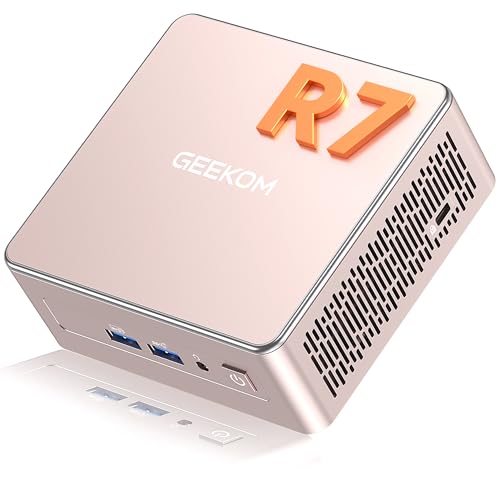
- Upgradeable RAM up to 64GB and flexible storage expansion
- Ryzen 5 7430U is capable for light Proxmox and everyday use
- 3-year warranty is strong for always-on home lab duty
Best For: Buyers who want a compact, upgradeable mini PC for light Proxmox use, home office work, and 24/7 reliability.
Best Entry-Level Proxmox Starter

- Good starter CPU for light Proxmox use
- Includes 8GB RAM and 256GB SSD
- Gigabit Ethernet with dual 4K HDMI
Best For: Beginners who want an affordable Proxmox mini PC for basic home lab tasks.
Best for CPU-Heavy VMs

- HX-class i5-14500HX is a strong fit for VM-heavy workloads
- Dual M.2 slots and up to 64GB RAM support future expansion
- Compact design works well in desk setups or small home labs
Best For: Home lab users running Proxmox VMs, containers, and other CPU-demanding workloads.
Best for 2.5GbE Labs

- Ryzen 5 3500U beats basic N97/N100-class chips
- 2.5GbE LAN is great for Proxmox and lab traffic
- 16GB RAM and dual M.2 slots make upgrades easy
Best For: Home lab builders who want a compact Proxmox node with stronger-than-N100 class performance and 2.5GbE.
Best Budget Proxmox Starter

- Affordable entry point for Proxmox labs
- 8GB RAM / 256GB SSD for light VMs and containers
- Dual HDMI and Gigabit Ethernet simplify setup
Best For: Budget users building a compact, low-power Proxmox starter node.
Best 2.5GbE Pick – GMKtec G3 Pro i3 Mini PC
For a mini pc for home lab proxmox build, the GMKtec G3 Pro stands out for its Intel i3-10110U, dual-channel 16GB RAM, and 2.5GbE networking. It’s a practical choice if you want a compact box for light virtualization, network services, and everyday admin tasks without jumping to a higher-priced SFF system.
Best For: Home lab users who want an affordable Proxmox host with fast wired networking, dual HDMI output, and enough memory to run a few lightweight VMs or containers.
Pros:
- 2.5GbE Ethernet is a big plus for Proxmox, NAS access, and lab networking.
- 16GB dual-channel RAM and 512GB SSD give you a solid out-of-box starting point.
- Supports Wake-on-LAN, PXE boot, and auto power-on for server-style use.
- Dual HDMI, Wi‑Fi 6, and Bluetooth 5.2 make it flexible as a compact desktop too.
Cons:
- Older 10th-gen i3 platform is fine for light virtualization, but not ideal for heavy VM counts.
- Storage and RAM capacity are modest compared with more expandable lab-focused mini PCs.
- Single NIC limits more advanced routing or firewall lab setups.
This is a sensible entry-level mini pc for home lab proxmox use if you value 2.5GbE and a usable memory/storage base more than raw compute. It’s best viewed as a small, efficient starter node rather than a high-density virtualization host.
Best for Budget Proxmox Labs – GMKtec Nucbox G10 Ryzen 5 3500U
If you want a capable mini pc for home lab proxmox without paying for newer high-end silicon, the GMKtec Nucbox G10 is a practical fit. Its Ryzen 5 3500U, 16GB DDR4, 1TB NVMe SSD, and 2.5GbE port give it the basics needed for lightweight virtualization, networking tasks, and compact all-in-one use.
Best For: Home lab builders who want an affordable Proxmox starter box with fast wired networking and enough storage out of the gate.
Pros:
- 2.5GbE LAN is a strong match for Proxmox, firewall, and NAS-adjacent lab setups
- Comes with 16GB DDR4 and a 1TB NVMe SSD, so it is ready to deploy quickly
- Dual M.2 slots and up to 64GB RAM support leave room for future expansion
- Triple-display output adds flexibility for admin consoles and desktop use
Cons:
- Ryzen 5 3500U is older than newer mini PC chips, so heavy VM loads will be limited
- WiFi 5 is fine, but not as modern as WiFi 6 or 6E options
- Only one Ethernet port, which may be limiting for some firewall or routing builds
For a mini pc for home lab proxmox, this model stands out as a value-first option with sensible specs rather than raw performance. It is better suited to light-to-moderate virtualization, network services, and storage-friendly expansion than to demanding multi-VM workloads.
Best Value Starter – KAMRUI Pinova P1 Ryzen Mini PC
If you want a compact mini pc for home lab proxmox use without jumping to pricier business hardware, the KAMRUI Pinova P1 is a practical entry point. Its Ryzen R2544 chip, 16GB of RAM, and 512GB SSD give it enough headroom for lightweight virtualization, basic services, and everyday host duties in a small footprint.
Best For: Home lab users who want an affordable Proxmox starter box for small VMs, containers, and always-on services.
Pros:
- Ryzen R2544 offers stronger entry-level performance than common N95/N150-class mini PCs
- 16GB RAM and 512GB SSD are a solid out-of-box base for Proxmox testing and light workloads
- Supports Linux, PXE, Wake-on-LAN, RTC wake, and auto power-on for lab flexibility
- Very small VESA-mountable design keeps desk and rack-adjacent setups tidy
Cons:
- 4-core/4-thread CPU is fine for light virtualization, but not a heavy multi-VM host
- Single-drive, integrated mini PC design limits expansion compared with true homelab hardware
- WiFi 5 and Bluetooth 4.2 are serviceable, but wired networking is the better choice for Proxmox
For a budget-friendly mini pc for home lab proxmox setups, this KAMRUI model makes sense when you value low power, simple setup, and just enough performance for learning, testing, or running a few essential services. It is not the most expandable option, but it is a strong starter machine for compact virtualization.
Best for Entry-Level Proxmox – GMKtec Nucbox G10 Ryzen 5
If you want a practical mini pc for home lab proxmox without jumping to a pricey newer platform, the GMKtec Nucbox G10 is a sensible starting point. The Ryzen 5 3500U, 16GB of dual-channel RAM, 1TB SSD, and 2.5GbE LAN give it the basics needed for lightweight virtualization, routers, and general lab use.
Best For: Home lab builders who want an affordable Proxmox host with fast wired networking, dual-storage expansion, and triple-display flexibility.
Pros:
- 2.5GbE LAN is useful for NAS, lab networking, and VM traffic
- 16GB dual-channel RAM and 1TB SSD included out of the box
- Dual M.2 slots and up to 64GB RAM support leave room to grow
- Quiet, low-power 15W-class CPU suits always-on home lab use
Cons:
- Older Ryzen 5 3500U is fine for light workloads, but not a heavy VM stack
- No built-in Wi-Fi 6 or newer networking features
- Triple-display features matter less if this is a headless lab box
For a mini pc for home lab proxmox, this model makes the most sense when you value storage expansion, 2.5GbE, and a usable included memory/SSD combo over raw CPU horsepower. It is a competent entry-level host for learning, testing, and running a small set of services.
Best for Lightweight Proxmox Labs – KAMRUI Pinova P1 Mini PC
If you want a compact starter box for a mini pc for home lab proxmox setup, the KAMRUI Pinova P1 is a practical low-cost option with a Ryzen R2544, 16GB RAM, and a 256GB SSD. It’s not a powerhouse for heavy virtualization, but it has the basics you want for small Proxmox hosts, simple containers, and a few always-on services.
Best For: Beginners or budget-minded homelab users who need a small, quiet Proxmox box for light VMs, containers, and everyday server tasks.
Pros:
- Ryzen R2544 offers a stronger starting point than N95/N150-class mini PCs
- 16GB RAM is enough for lightweight Proxmox labs and basic self-hosted apps
- 256GB SSD gives decent room for OS, containers, and a few VMs
- Dual-display outputs, Wi‑Fi, and Gigabit Ethernet add flexibility
Cons:
- Only 4 cores/4 threads, so it’s not ideal for larger virtualization workloads
- 256GB storage may feel tight once you add multiple VMs or datasets
- Single-SSD build means upgrade headroom is limited compared with richer homelab minis
Overall, this is a sensible entry-level mini pc for home lab proxmox use if you value affordability and a small footprint more than expansion. It’s best suited to learning, testing, and running modest services rather than building a heavy-duty VM cluster.
Best Expandable Starter – GEEKOM A5 2026 Edition Ryzen 5 Mini PC
If you want a compact system that can double as a mini pc for home lab proxmox experiments, the GEEKOM A5 2026 Edition is appealing because it pairs a Ryzen 5 7430U with upgrade-friendly RAM and storage. It is a practical pick for light virtualization, homelab services, office work, and everyday multitasking without taking up much desk space.
Best For: Buyers who want a compact, upgradeable mini PC for light Proxmox use, home office work, and 24/7 reliability.
Pros:
- Upgradeable design with dual-slot DDR4 RAM up to 64GB and expandable storage options
- Ryzen 5 7430U delivers solid efficiency for light VMs, containers, and daily productivity
- Multiple display outputs and USB-C/USB-A ports make it easy to use as a desktop host
- 3-year warranty adds confidence for a small server or always-on workstation
Cons:
- Not as strong as higher-core mini PCs for heavier Proxmox workloads
- DDR4 platform is less future-proof than newer DDR5-based systems
- Included 512GB SSD is fine to start, but homelab users will likely want more storage
For a mini pc for home lab proxmox setup, this model stands out more for flexibility and value than raw compute. It makes the most sense if you want a compact box that can run a handful of services now and scale modestly later.
Best Entry-Level Proxmox Starter – GMKtec N95 Mini PC 8GB/256GB
If you want a compact mini pc for home lab proxmox without spending much, the GMKtec G3 S is a straightforward starter option. Its Intel N95 chip, 8GB of RAM, and 256GB SSD are enough for light virtualization, small services, and general home-server experimentation, while the dual HDMI and Gigabit Ethernet make it easy to drop into a desk or rack-adjacent setup.
Best For: Beginners building a low-cost Proxmox box for learning, lightweight VMs, and basic home lab services.
Pros:
- Intel N95 offers solid entry-level performance for light Proxmox workloads
- 8GB RAM and 256GB SSD get you started right away
- Gigabit Ethernet plus WiFi 5 for flexible network placement
- Dual 4K HDMI outputs can double as a compact desktop or HTPC
Cons:
- 8GB RAM may feel tight for multiple VMs or heavier containers
- 256GB storage is limited if you plan to grow your lab quickly
- No enterprise-class networking or upgrade-focused features
As a budget-minded mini pc for home lab proxmox, this GMKtec model makes sense when you care more about getting started than maximizing expansion. It’s a practical choice for small services, test environments, and everyday use, but power users will likely want more memory and storage headroom.
Best for CPU-Heavy VMs – ACEMAGIC M5 Mini PC
If you want a mini pc for home lab proxmox that leans more toward raw CPU power than entry-level efficiency, the ACEMAGIC M5 is worth a look. Its Intel Core i5-14500HX, dual M.2 support, and expandable memory make it a strong fit for virtualization, light storage tasks, and always-on testing.
Best For: Home lab users who want stronger single-core and multi-core performance for Proxmox VMs, containers, and general-purpose lab workloads.
Pros:
- HX-class i5-14500HX should handle multiple VMs and container tasks well
- Dual M.2 slots and up to 64GB RAM support make expansion easier
- Triple display outputs and Wi-Fi 6 add flexibility for mixed-use setups
- Compact size is easy to fit on a desk or in a small rack area
Cons:
- Comes with only 16GB RAM out of the box, so Proxmox users may want an upgrade
- 512GB SSD is usable, but storage can fill quickly in a home lab
- No built-in 2.5GbE, which may matter for faster lab networking
For a mini pc for home lab proxmox, this model stands out because the HX processor gives it more headroom than typical low-power minis. It is a better fit for users who prioritize compute capacity and upgrade potential over bare-minimum cost.
Best for 2.5GbE Labs – GMKtec Ryzen 5 3500U Mini PC
If you want a practical mini pc for home lab proxmox use without jumping to a much pricier platform, the GMKtec NucBox G10 is a solid middle ground. The Ryzen 5 3500U gives you 4 cores, 8 threads, 16GB of RAM, and a 512GB SSD out of the box, plus 2.5GbE networking for fast VM, storage, and management traffic.
Best For: Home lab builders who want a compact Proxmox node with stronger-than-N100 class performance and 2.5GbE.
Pros:
- Ryzen 5 3500U offers noticeably more headroom than entry-level N97/N100 mini PCs
- 2.5GbE LAN is ideal for Proxmox, NAS access, and other lab networking tasks
- 16GB dual-channel RAM and dual M.2 slots provide a flexible starting point
- Triple-display output and small footprint make it easy to use as a lab and desktop box
Cons:
- Older Zen+ chip is efficient, but not as strong as newer low-power Intel and AMD options in per-watt performance
- WiFi 5 is fine, but not as current as WiFi 6 or 6E
For a mini pc for home lab proxmox, this model stands out because it pairs usable multi-core performance with 2.5GbE and upgrade-friendly storage. It is a smart choice if you care more about balanced value and lab connectivity than about chasing the newest CPU platform.
Best Budget Proxmox Starter – Bmax B3 Pro Mini PC
If you want an affordable mini pc for home lab proxmox, the Bmax B3 Pro is a simple entry point for light virtualization, testing, and basic services. Its Intel N4500, 8GB RAM, and 256GB SSD are enough for learning Proxmox, running a few small VMs or containers, and keeping power use low.
Best For: Budget-minded users who want a compact Proxmox box for lightweight home lab tasks, media, or always-on utility services.
Pros:
- Low-cost way to get started with Proxmox in a tiny footprint
- 8GB RAM and 256GB SSD are fine for light VMs, LXC containers, and test labs
- Dual HDMI, Wi‑Fi 5, and Gigabit Ethernet make it easy to deploy
- Very power-friendly for an always-on home lab node
Cons:
- Intel N4500 is limited for heavier virtualization or multiple busy VMs
- 8GB of memory can feel tight once your lab grows
- Not ideal if you want lots of headroom for ZFS, databases, or CPU-heavy workloads
For a starter mini pc for home lab proxmox, this Bmax model makes sense when low price, small size, and modest power draw matter more than raw performance. It is a practical learning box, but serious expansion plans will quickly push you toward a stronger CPU and more RAM.
How We Picked the Best Mini PC for Home Lab Proxmox
For a Mini PC for Home Lab Proxmox, we prioritized processors with enough cores for virtualization, at least 16GB of RAM on most picks, SSD-based storage, and practical connectivity such as 2.5GbE where available. We also looked for models that make sense as always-on lab hardware: efficient, compact, and generally quiet.
We favored systems that offer a sensible balance of cost and capability rather than chasing the highest specs alone. That means entry-level boxes for light containers and DNS/ad-blocking duties, plus stronger options for users planning multiple VMs, media services, or heavier multitasking.
Quick Comparison
Lower-power Intel N-series and similar chips are best for simple services, routers, monitoring, and small test environments. Ryzen 5-class systems tend to be the sweet spot for mixed VM and container workloads. Higher-end HX-class mini PCs are better if you plan to run several demanding guests, compile software, or host more ambitious lab stacks.
Key Buying Factors for Mini PC for Home Lab Proxmox
CPU Headroom
Proxmox performance depends heavily on CPU capacity once you move beyond a couple of containers. Look for at least a modern 4-core processor, and prefer 6-core or better if you expect multiple VMs, nested services, or scheduled workloads.
Memory Capacity and Upgradability
RAM is often the first bottleneck in a home lab. For most buyers, 16GB is the starting point, while 32GB or more is a better target if the system will host several VMs. Upgradable memory is a major advantage because it extends the useful life of the machine.
Storage and Expansion
An NVMe SSD is strongly preferred for fast boot times and responsive VM storage. If the system supports a second drive or larger SSD upgrades, that improves flexibility for backups, ISOs, and extra VM space.
Networking
For a Mini PC for Home Lab Proxmox, Ethernet quality matters. 2.5GbE is a meaningful bonus for VM traffic, backups, and file transfers, though 1GbE is still workable for lighter labs.
Power Draw and Reliability
Because home labs often run 24/7, efficient processors can save real money over time. Choose a machine with a cooling design and power profile suited to continuous operation rather than peak burst performance alone.
Who Should Buy Which Mini PC for Home Lab Proxmox?
If you are starting small, an N-series or low-power Intel option is usually enough for containers, Pi-hole, Home Assistant, or simple testing. If you want the most balanced choice for a growing lab, a Ryzen 5 mini PC is often the best fit thanks to better multitasking and virtualization overhead.
If your lab will include multiple active VMs, heavier services, or occasional productivity work, step up to a higher-performance model with more CPU headroom and upgradeable RAM. In short, match the machine to your workload today, but leave room for the projects you are likely to add tomorrow.
