
If you want a compact system that can handle storage, containers, and light virtualization, a mini PC for home lab NAS use can be a smart all-in-one choice. The best models combine efficient CPUs, multiple SSD bays, and fast networking without taking over your desk.
In this roundup, we focus on practical options for builders who want a quiet, small-footprint server for file sharing, Proxmox, media, and everyday lab tasks.
Best 10 Mini PC for Home Lab Nas Picks for 2026
Best for Power-User Labs
AOOSTAR WTR PRO R7 5825U 4+2 Bay NAS
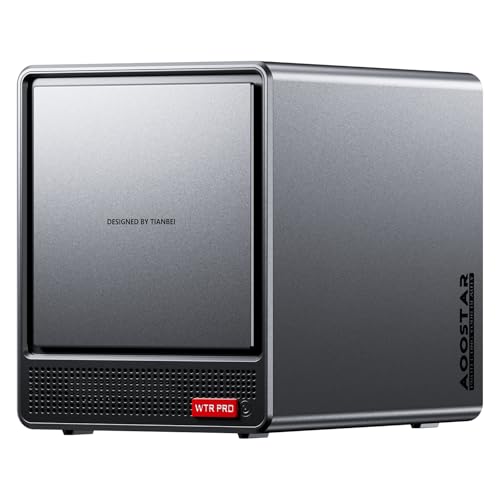
- Ryzen 7 5825U is strong for VMs, Docker, and multitasking
- 4+2 bay design with RAID support and expandable storage
- Dual 2.5GbE and M.2 slots suit a flexible home lab build
Best For: Home lab users who want a compact NAS platform for storage, virtualization, and always-on services.
Best for Fast Networking

- 2.5GbE port for faster NAS and lab networking
- 16GB dual-channel RAM helps with multitasking and light VMs
- Compact, low-power Intel i3 build fits 24/7 home use
Best For: Home lab users who want a compact NAS-capable mini PC with faster-than-gigabit networking.
Best Upgrade-Friendly Pick

- Good balance of performance for home server and daily work
- Upgradeable RAM and storage for NAS expansion
- Quad-display support and Windows 11 Pro included
Best For: Home-lab users who want a compact, upgradeable system that can also serve as a NAS starter.
Best for Home Lab Networking
BOSGAME P4 Ultra Ryzen 7 Mini PC

- Dual 2.5GbE LAN for NAS, firewall, and homelab setups
- Ryzen 7 7730U with 16GB RAM suits multitasking and light virtualization
- 1TB NVMe SSD with room to expand storage later
Best For: Home lab users who want a compact NAS or server box with fast networking and easy expandability.
Best Quiet NAS Mini PC
GEEKOM AX8 Max Ryzen 7 8745HS Mini PC

- Dual 2.5GbE LAN works well for NAS and lab networking
- Quiet cooling keeps noise down for 24/7 use
- Upgradeable RAM and SSD give it room to grow
Best For: Home lab builders who want a quiet, compact mini PC for NAS and multitasking.
Best Entry-Level NAS

- Affordable starter mini PC for light NAS and home lab use
- Intel N95, 8GB RAM, and 256GB SSD handle basic services
- Dual HDMI, VESA mount, and Gigabit Ethernet add flexibility
Best For: Budget buyers setting up a small Proxmox, Docker, or light NAS starter system.
Best High-Capacity NAS

- 6 M.2 slots for up to 24TB of storage
- Dual 2.5G LAN for faster home network transfers
- Quiet Intel N150 design for always-on NAS use
Best For: Home lab users who want a compact NAS with expandable storage and fast wired networking.
Best for Power-User Labs – AOOSTAR WTR PRO R7 5825U 4+2 Bay NAS
If you want a mini pc for home lab nas duties that can do more than basic file sharing, the AOOSTAR WTR PRO stands out with an AMD Ryzen 7 5825U, dual 2.5GbE, and support for VMs, Docker, and 24/7 services. Its 4+2 bay design also gives you room for a serious storage pool without moving up to a full tower server.
Best For: Home lab builders who want a compact NAS that can also run virtualization, routing, and multiple always-on services.
Pros:
- 8-core/16-thread Ryzen 7 5825U handles multitasking, Docker, and virtualization well
- 4+2 bay layout with RAID support and up to 96TB advertised capacity
- Dual 2.5GbE plus M.2 expansion for faster networking and storage flexibility
- Metal chassis, rear fan, and 24/7-focused design for more stable operation
Cons:
- Ships without RAM, SSD, or OS, so setup cost is higher
- More of a build-it-yourself system than a plug-and-play NAS
- Overkill if you only need simple backup and media storage
For buyers who want a mini pc for home lab nas use cases with routing, virtualization, and heavier multitasking in one box, this AOOSTAR model offers a very capable foundation. It is especially appealing if you plan to expand storage and services over time rather than buying a fixed-spec appliance.
Best for Fast Networking – GMKtec G3 Pro i3 Mini PC
If you want a mini pc for home lab nas duties without jumping to a full server box, the GMKtec G3 Pro is a practical low-cost option. Its Core i3-10110U, 16GB dual-channel RAM, 512GB SSD, and 2.5GbE port make it a solid fit for light virtualization, file sharing, and always-on services.
Best For: Home lab users who need a compact, affordable NAS or server node with 2.5GbE and basic Proxmox/Linux compatibility.
Pros:
- 2.5GbE networking is a strong advantage for NAS transfers and home lab traffic
- 16GB dual-channel RAM and 512GB SSD are ready for light multitasking and quick boot times
- Dual HDMI, Wi‑Fi 6, and Bluetooth 5.2 add flexibility for desktop or server use
- Low-power Intel Core i3 chip is suitable for 24/7 small services and basic virtualization
Cons:
- Not ideal for heavy VM stacks, large ZFS pools, or demanding transcode workloads
- Storage capacity is modest if you plan to host many local containers or datasets
- Cooling and performance are good for the class, but still limited versus larger mini PC NAS models
For a mini pc for home lab nas setup, this GMKtec stands out more for networking and everyday server friendliness than raw horsepower. It makes the most sense when you need a compact machine that can handle file sharing, light labs, and 2.5GbE-backed storage access on a budget.
Best for Storage-Heavy Builds – Beelink ME Mini N95
If you want a compact mini pc for home lab nas use, the Beelink ME Mini stands out for storage expansion more than raw CPU power. Its Intel N95 chip, dual 2.5GbE, Wi-Fi 6, and six M.2 slots make it a practical choice for shared storage, light virtualization, and always-on network tasks.
Best For: Home lab users who want a tiny NAS or soft-router box with unusually large SSD expansion potential.
Pros:
- Six M.2 slots support a flexible, high-capacity NVMe NAS setup.
- Dual 2.5GbE is useful for link aggregation, routing, and fast file transfers.
- Built-in power supply and vertical cooling help keep the footprint tidy.
- 12GB LPDDR5 and 1TB SSD give it a ready-to-go starting point.
Cons:
- Intel N95 is fine for light lab work, but not ideal for heavier compute jobs.
- Storage drives are not included beyond the 1TB system SSD.
For a mini pc for home lab nas projects that prioritize dense local storage and network flexibility, this Beelink model is more interesting than it first looks. It is best treated as a compact storage and services box rather than a performance-first mini PC.
Best Upgrade-Friendly Pick – GEEKOM A5 Ryzen 7430U Mini PC
If you want a mini pc for home lab nas use that can also handle everyday work, the GEEKOM A5 is a flexible AMD-powered option with Windows 11 Pro, 16GB of RAM, and a 512GB NVMe SSD out of the box. It has the connectivity and display support to do double duty as a compact server, media box, or light productivity machine.
Best For: Home-lab users and NAS builders who want strong upgrade potential, multi-display support, and a ready-to-run Windows setup.
Pros:
- Ryzen 5 7430U with Radeon Vega 7 is capable enough for light server tasks, office work, and casual gaming
- Expandable memory and storage make it a better long-term fit for a mini pc for home lab nas builds
- Quad-display support and WiFi 6 add versatility for desktop, media, and monitoring setups
- 3-year warranty is reassuring for always-on use
Cons:
- Not as powerful as higher-end mini PCs for heavy virtualization or demanding transcodes
- Single-drive setup out of the box may require upgrades for NAS-style storage needs
- Integrated graphics are fine for basics, but not for serious gaming
Overall, the A5 is a practical middle-ground pick if you want a compact system that can start as a desktop and grow into a mini pc for home lab nas duties with minimal fuss.
Best for High-Capacity NAS Builds – Beelink ME Mini NAS
If you want a compact mini pc for home lab nas duties with unusually strong storage potential, the Beelink ME Mini is built around that idea first. With six M.2 NVMe slots, dual 2.5G LAN, and support for NAS-focused systems like TrueNAS, UNRAID, and FNOS, it gives DIY users a flexible base for a private cloud, media server, or file share.
Best For: Home lab users who want a tiny, high-storage NAS box with room to grow and enough networking to handle serious file sharing.
Pros:
- Six M.2 SSD slots allow massive storage expansion for a small footprint
- Dual 2.5G LAN is a strong fit for fast transfers and basic soft-routing tasks
- Quiet cooling design keeps noise low during transfers and media playback
- Works with popular NAS and media center operating systems
Cons:
- Intel N95 is fine for NAS tasks, but not ideal for heavy virtualization
- Storage expansion requires buying multiple NVMe drives separately
- 64GB eMMC is enough for the OS, but not a substitute for real SSD storage
For builders who care more about compact storage density than raw CPU power, this is a smart mini pc for home lab nas setup. It stands out most when you want a small, quiet enclosure that can scale into a capable network storage box without taking up much desk or shelf space.
Best for Home Lab Networking – BOSGAME P4 Ultra Ryzen 7 Mini PC
The BOSGAME P4 Ultra is a strong mini pc for home lab nas builds if you want dual 2.5GbE networking, a capable Ryzen 7 chip, and enough memory and storage to get started right away. It is a practical pick for Plex, firewall, light virtualization, and general multitasking without taking up much desk or rack space.
Best For: Home lab users who want a compact NAS or server box with dual fast LAN ports, a solid CPU, and room to expand.
Pros:
- Dual 2.5GbE LAN makes it a better fit for NAS, router, and homelab duties than basic single-port minis.
- Ryzen 7 7730U and 16GB RAM handle everyday server tasks, media streaming, and light virtualization well.
- 1TB NVMe SSD plus expandable dual SODIMM and extra M.2 support give you good starting capacity.
- Triple 4K display output and Wi-Fi 6E add flexibility for office and media use.
Cons:
- Not ideal for heavy AAA gaming or demanding workstation workloads.
- 16GB RAM is usable, but many homelab setups will want an upgrade sooner than later.
- Limited to one internal drive included, so NAS builds still require planning for storage expansion.
If you want a compact, well-connected mini pc for home lab nas use, the P4 Ultra stands out for its dual 2.5GbE ports and balanced Ryzen performance. It is best for users who care more about networking, expandability, and low-noise operation than raw graphics power.
Best for NAS Expansion – Beelink ME Pro N95 Mini PC NAS
If you want a mini pc for home lab nas duties with a strong storage-first design, the Beelink ME Pro N95 is built around expansion. It pairs an Intel N95 chip with dual high-speed Ethernet, WiFi 6, and room for multiple SSDs and hard drives, making it a practical base for file sharing, backups, and lightweight self-hosted services.
Best For: Home users who want a compact NAS and home-lab box with lots of storage expansion and fast wired networking.
Pros:
- Supports major storage expansion with multiple M.2 slots plus dual HDD bays
- 2.5G + 5G Ethernet is great for fast transfers and network aggregation
- Quiet, vibration-reducing design suits always-on home server use
- Upgradeable drawer-style layout adds flexibility for future builds
Cons:
- Intel N95 is fine for light workloads, but not ideal for heavy virtualization
- 128GB included SSD is only a starting point for NAS use
- Storage and memory expandability may require more DIY planning than a turnkey NAS
This is a strong pick if your mini pc for home lab nas needs prioritize bays, ports, and network speed over raw CPU power. It is especially appealing for users who want to build a flexible private cloud or file server without jumping straight to a full-size NAS chassis.
Best Quiet NAS Mini PC – GEEKOM AX8 Max Ryzen 7 8745HS Mini PC
If you want a mini pc for home lab nas that can stay discreet while still handling real workloads, the GEEKOM AX8 Max is a strong fit. It pairs a Ryzen 7 8745HS, dual 2.5GbE LAN, USB4, and expandable RAM/storage in a compact aluminum chassis, making it a flexible choice for a small server, desktop, or mixed-use lab box.
Best For: Home users and hobbyists who want a quiet, compact mini PC for NAS duties, light virtualization, and everyday multitasking.
Pros:
- Dual 2.5GbE LAN is useful for NAS builds, link aggregation, and network segmentation
- Ryzen 7 8745HS and Radeon 780M provide plenty of headroom for multitasking and light creative work
- Quiet cooling mode helps keep a home lab or server setup low-noise
- Upgradeable to 128GB RAM and 8TB SSD for future expansion
Cons:
- 16GB RAM may feel limited if you plan to run multiple VMs right away
- Not a purpose-built NAS enclosure, so storage expansion still depends on your setup
- Performance mode may be more than you need for simple file-serving tasks
For a mini pc for home lab nas setup, the AX8 Max stands out because it combines quiet operation, strong CPU performance, and genuinely useful networking in a small footprint. It is a practical pick if you want one machine that can do NAS work, lab testing, and everyday desktop use without taking over your desk.
Best Entry-Level NAS – GMKtec Mini PC N95 8GB/256GB
If you want an affordable mini pc for home lab nas duties, the GMKtec G3 S is a simple starting point with a 12th Gen Intel N95, 8GB RAM, and a 256GB SSD. It’s not a powerhouse, but it has the basics you need for light virtualization, Docker, file sharing, or a compact media box.
Best For: Budget-conscious buyers setting up a small home lab, light NAS, or Proxmox starter system with modest power needs.
Pros:
- Intel N95 is a solid step up from older N-series and low-end Celeron chips
- Gigabit Ethernet plus WiFi 5 covers basic networking for home services
- Dual HDMI 2.0 supports two 4K displays for admin work or HTPC use
- Compact, VESA-mountable design fits neatly into small setups
Cons:
- 8GB RAM may feel tight once you add multiple containers or VMs
- Single Gigabit LAN limits performance for heavier NAS workloads
- 256GB storage is modest if you plan to host lots of local data
As a mini pc for home lab nas use, this model makes the most sense when you prioritize low cost, low space, and light-duty services over raw expandability. It’s a practical entry point, but serious storage or virtualization users will likely outgrow it quickly.
Best High-Capacity NAS – Beelink ME Mini PC
If you want a compact mini pc for home lab nas duties with lots of local storage options, the Beelink ME Mini stands out for its six M.2 slots, dual 2.5G LAN, and quiet design. It’s built to handle file sharing, private cloud tasks, and lightweight media serving without taking much desk space.
Best For: Home lab users who want a small NAS box with room to grow, fast wired networking, and easy media-server potential.
Pros:
- Six M.2 NVMe slots support up to 24TB of storage expansion.
- Dual 2.5G LAN is useful for faster transfers and network segmentation.
- Quiet, low-power Intel N150 platform works well for always-on NAS tasks.
- WiFi 6, Bluetooth 5.2, and Wake-on-LAN add flexibility for home setups.
Cons:
- Storage expansion depends on buying your own SSDs, which raises total cost.
- The N150 is fine for NAS use, but not ideal for heavier virtualization workloads.
- Best results come from hands-on setup rather than true plug-and-play simplicity.
For buyers prioritizing dense storage and quiet operation, this mini pc for home lab nas use case makes a lot of sense. It’s a smart fit if you want a small, network-friendly box for storage, media streaming, and light services more than raw CPU power.
How We Picked the Best Mini PC for Home Lab Nas
For a Mini PC for Home Lab Nas, the most important factors are not raw gaming performance. We looked for models with efficient processors, enough memory headroom, multiple M.2 slots or drive bays, and networking that can actually move files quickly. We also favored systems that fit common home-lab uses such as NAS duties, Docker containers, light VMs, and 24/7 operation.
Quick Comparison
The lineup spans entry-level Intel N95/N150 systems for basic storage and low-power services, midrange Ryzen-based models for better multitasking, and higher-performance options for users who want a mini server that can do more than simple file sharing. Some systems prioritize drive expandability, while others lean toward stronger CPU and graphics performance for mixed workloads.
Key Buying Factors for a Mini PC for Home Lab Nas
Storage Expandability
Check how many M.2 slots or bays the system offers, plus whether they support SATA, NVMe, or both. If you plan to run RAID-like redundancy, virtual disks, or multiple services, extra drive positions matter more than a slightly faster CPU.
Networking
Dual 2.5GbE is a strong baseline for a Mini PC for Home Lab Nas. It helps with faster transfers, better router flexibility, and easier separation of lab traffic from storage traffic. If your switch is still gigabit-only, you may not see the full benefit yet.
CPU and Memory
Low-power chips like Intel N95 and N150 are fine for file serving, lightweight Docker, and basic Proxmox nodes. Ryzen 5 and Ryzen 7 options make more sense if you want more concurrent services, transcoding, or multiple virtual machines. Memory should be upgradeable when possible, especially if you plan to add ZFS, VMs, or caching.
Noise, Cooling, and Power
Home lab gear often runs all day, so stable thermals and low noise matter. Efficient chips can save power and reduce heat, but confirm the chassis can handle sustained loads without throttling.
Who Should Buy Which Mini PC for Home Lab Nas?
If you want the lowest power and simplest setup, choose an Intel N95 or N150-based model. If your home lab needs a better balance of storage and multitasking, a Ryzen 5-class system is a safer middle ground. If you expect heavier virtualization, multiple services, or broader flexibility, the stronger Ryzen 7 mini PCs are the better long-term pick.
In short, the best Mini PC for Home Lab Nas is the one that matches your storage plan, networking setup, and service load—not just the one with the highest specs on paper.
