
When you’re in the thick of editing, having the right monitor can make a world of difference. Mini LED monitors are designed to deliver impressive color accuracy and high resolutions that can enhance your creative process. But with so many options out there, which ones truly stand out? Let’s explore the top choices that can elevate your workflow and help you achieve stunning results in your projects.
ASUS ProArt Display PA278QV 27” WQHD Monitor

The ASUS ProArt Display PA278QV 27” WQHD Monitor is an ideal choice for professional editors who demand exceptional color accuracy and detail in their work. With a resolution of 2560 x 1440 pixels and an IPS display, you’ll enjoy vibrant visuals from any angle. Its 100% sRGB and Rec. 709 color gamut, along with factory calibration, guarantee a Delta E < 2 color accuracy. You’ll appreciate the ergonomic stand for comfortable adjustments and eye care features that reduce fatigue. Plus, extensive connectivity options and a 3-year warranty make it a reliable tool for elevating your editing workflow.
Best For: Professionals and creative editors seeking a monitor with exceptional color accuracy and ergonomic features to enhance their workflow.
Pros:
- 100% sRGB and Rec. 709 color gamut ensures vibrant and accurate colors for professional editing.
- Ergonomic stand allows for tilt, pivot, swivel, and height adjustments for comfortable viewing.
- Extensive connectivity options including multiple ports and USB 3.0 make it versatile for various setups.
Cons:
- Limited refresh rate of 75 Hz may not be ideal for fast-paced gaming or high-frame-rate content.
- 5 milliseconds response time could be slower for competitive gaming enthusiasts.
- No built-in speakers, which may require external audio solutions for some users.
ASUS ProArt Display 27″ Monitor PA278CV

For creative professionals seeking precise color accuracy in their editing projects, the ASUS ProArt Display 27″ Monitor PA278CV stands out with its factory calibration and impressive Delta E rating of less than 2. With a WQHD resolution of 2560 x 1440 and a 178° viewing angle, you’ll enjoy vibrant visuals and sharp details. The monitor features 100% sRGB and Rec. 709 color gamut coverage, ensuring accurate color representation. Connectivity is a breeze with multiple ports, including USB-C and HDMI. Its ergonomic design allows for height adjustments, making it a versatile choice for any workspace. Plus, you get 3 months of Adobe Creative Cloud access!
Best For: Creative professionals looking for a high-quality monitor with exceptional color accuracy and ergonomic features.
Pros:
- Factory calibrated for precise color representation with a Delta E of less than 2.
- Extensive connectivity options including USB-C, HDMI, and DisplayPort, along with daisy-chaining capability for multiple monitors.
- Ergonomic design allows for height adjustments, tilt, and pivot, enhancing comfort during long editing sessions.
Cons:
- Limited refresh rate of 75 Hz may not be suitable for high-end gaming.
- Some users may find the 27-inch screen size less immersive compared to larger displays.
- The non-glare screen finish may not appeal to those preferring glossy screens for enhanced contrast.
LG 27GM950B-B Ultragear 27-inch 5K Gaming Monitor

With a stunning 5K resolution and advanced Hyper Mini LED technology, the LG 27GM950B-B Ultragear monitor stands out as an excellent choice for professional editors and gamers alike. Its 27-inch IPS display boasts a remarkable 218 PPI, ensuring crystal-clear visuals. With a dual-mode refresh rate of 165Hz at 5K and 330Hz at QHD, you’ll enjoy smooth performance during editing and gaming sessions. The impressive brightness of up to 1250 nits and 99% DCI-P3 color coverage enhances your creative work. Plus, the ergonomic stand and multiple connectivity options make it easy to set up for any workflow.
Best For: The LG 27GM950B-B Ultragear monitor is best for professional editors and gamers seeking exceptional resolution and color accuracy for their work and play.
Pros:
- Stunning 5K resolution with over 14 million pixels for unparalleled visual clarity.
- High refresh rates (165Hz at 5K and 330Hz at QHD) ensure smooth performance during fast-paced gaming and editing tasks.
- Robust connectivity options including HDMI 2.1 and USB-C, allowing for versatile setups and easy connections to various devices.
Cons:
- High price point compared to standard monitors, which may not fit all budgets.
- Limited built-in audio quality from speakers may not meet the needs of audiophiles.
- Heavyweight design may require a sturdy desk or monitor arm for optimal setup.
LG 27US500-W Ultrafine Monitor 27-Inch 4K UHD

Engineered for creative professionals, the LG 27US500-W Ultrafine Monitor delivers stunning 4K UHD resolution that brings your projects to life. With a 1000:1 contrast ratio and HDR10 support, you’ll experience deeper blacks and vibrant colors across a wide viewing angle. Onscreen Control lets you customize your workspace effortlessly, whether you want to split the display or tweak monitor settings. Its ergonomic stand allows for flexible tilt adjustments, ensuring you find the perfect viewing position. Plus, the borderless design adds a sleek touch to your setup, making it a fantastic choice for any editing workflow.
Best For: Creative professionals seeking a high-quality display for editing and design tasks.
Pros:
- Stunning 4K UHD resolution enhances clarity and detail for creative projects.
- Wide viewing angles provide consistent color and contrast from different positions.
- Ergonomic stand allows for flexible tilt adjustments to achieve optimal viewing comfort.
Cons:
- Limited connectivity options may require additional adapters for some setups.
- The 1000:1 contrast ratio may not meet the expectations of some high-end users.
- The borderless design, while sleek, may lack the durability of thicker bezels in some environments.
MSI MPG 274URDFW E16M 27-inch UHD Gaming Monitor

The MSI MPG 274URDFW E16M 27-inch UHD Gaming Monitor stands out as a top choice for professional editors who demand exceptional color accuracy and detail in their work. With a stunning 3840 x 2160 resolution and 100% color gamut, your images will pop with vibrant hues. Its Mini-LED technology, featuring 1,152 zones for local dimming, guarantees consistent brightness and contrast. Plus, the rapid IPS panel offers a 178-degree viewing angle for collaborative editing. Connectivity is versatile with HDMI, DisplayPort, and USB-C options. At a 160Hz refresh rate and 0.5ms response time, this monitor delivers a fluid editing experience.
Best For: Professional editors and gamers seeking exceptional color accuracy and fast performance.
Pros:
- High resolution (3840 x 2160) for stunning detail and clarity in images.
- Rapid IPS panel with a 178-degree viewing angle for collaborative work and immersive gaming.
- Multiple connectivity options including USB-C with power delivery for versatile setups.
Cons:
- Price may be higher compared to standard monitors, which could be a barrier for budget-conscious users.
- Limited USB ports (only 1) may require additional accessories for extensive connectivity.
- Heavyweight design may not be ideal for portable use or frequent relocation.
Lian Li 8.8″ Universal Screen for PC (SM088X)

For professionals seeking a compact and versatile display, the Lian Li 8.8″ Universal Screen for PC (SM088X) stands out with its USB-powered functionality. This mini monitor features an IPS LCD with a sharp HD resolution of 1920×480, ensuring vibrant visuals. Weighing only 530 grams, it offers flexible mounting options and customizable height and tilt. With L-Connect 3 software, you can personalize your viewing experience and synchronize stunning ARGB lighting. Plus, it’s easy to install and compatible with various setups, though Linux isn’t supported. Enjoy a 1-year warranty and a solid customer support system for peace of mind.
Best For: Professionals seeking a compact and versatile display solution for their PC setup.
Pros:
- USB-powered functionality allows for easy plug-and-play use, making it a convenient secondary monitor.
- Customizable viewing experience through L-Connect 3 software, enabling personalization of themes and ARGB lighting.
- Lightweight and flexible mounting options, allowing for adjustable height and tilt to fit various setups.
Cons:
- Limited compatibility as L-Connect 3 does not support Linux operating systems.
- Small screen size may not be suitable for users needing a larger display for detailed work.
- Only one USB port may limit connectivity options for additional peripherals.
MSI MAG 274QPF Gaming Monitor (27-inch, QHD)
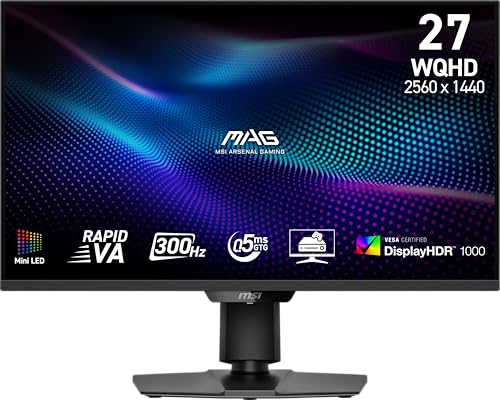
With a remarkable refresh rate of 300Hz and a blistering response time of just 0.5ms, the MSI MAG 274QPF Gaming Monitor is perfect for gamers and professional editors alike who demand top-tier performance. This 27-inch QHD monitor boasts Mini-LED technology, delivering stunning brightness at 1370.4 lumens and a 99% color gamut. You’ll appreciate the vivid visuals thanks to Quantum Dot and DisplayHDR 1000 features. The adjustable design allows for comfortable viewing angles, while the integrated speakers and multiple ports enhance your setup. Weighing 21.3 pounds, it’s a solid choice that elevates your editing workflow efficiently.
Best For: Gamers and professional editors who require high refresh rates and exceptional color accuracy for an immersive experience.
Pros:
- Ultra-fast refresh rate of 300Hz and response time of just 0.5ms for smooth gameplay.
- Stunning visuals with Mini-LED technology, Quantum Dot, and DisplayHDR 1000 for vibrant colors and brightness.
- Adjustable design with tilt and height features, plus integrated speakers for an enhanced viewing experience.
Cons:
- Weight of 21.3 pounds may be cumbersome for some users to mount or relocate.
- Limited to two HDMI ports and one DisplayPort, which may not accommodate multiple devices easily.
- Average customer rating of 3.9 out of 5 stars suggests mixed user experiences.
ASUS ProArt 24″ Monitor (PA248QV)
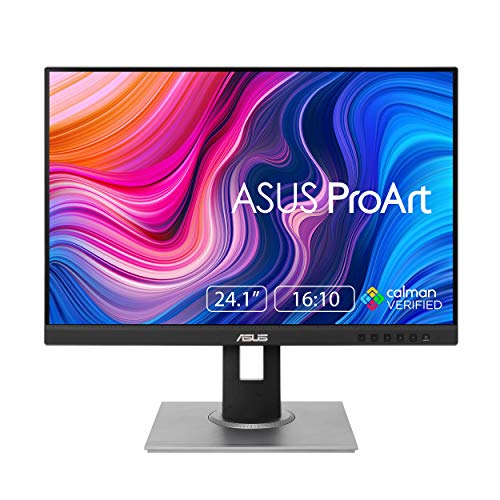
Professionals in creative fields will find the ASUS ProArt 24″ Monitor (PA248QV) an exceptional choice, thanks to its impressive 100% sRGB and Rec.709 color space coverage. With a WUXGA resolution of 1920 x 1200, you’ll experience vivid colors and sharp images, making your editing tasks a breeze. The IPS panel guarantees high clarity and accurate color reproduction, while a DeltaE of less than 2 assures color fidelity. Plus, its versatile design features—like tilt, pivot, and height adjustment—offer comfort during long hours. You even get three months of complimentary access to Adobe Creative Cloud, enhancing your creative workflow further.
Best For: Professionals in creative fields seeking high color fidelity and accurate image representation.
Pros:
- 100% sRGB/Rec.709 color space coverage ensures vivid colors and sharp images.
- DeltaE < 2 guarantees exceptional color accuracy for precise editing.
- Adjustable design features (tilt, pivot, swivel, height adjustment) provide comfort during extended use.
Cons:
- Limited resolution of 1920 x 1200 may not meet the needs of users requiring higher resolutions for detailed work.
- Connectivity options are limited to DisplayPort and HDMI, which may not suit all setups.
- The monitor’s size may be too small for users who prefer larger displays for multitasking.
AOC Q27G3XMN 27″ QHD Gaming Monitor
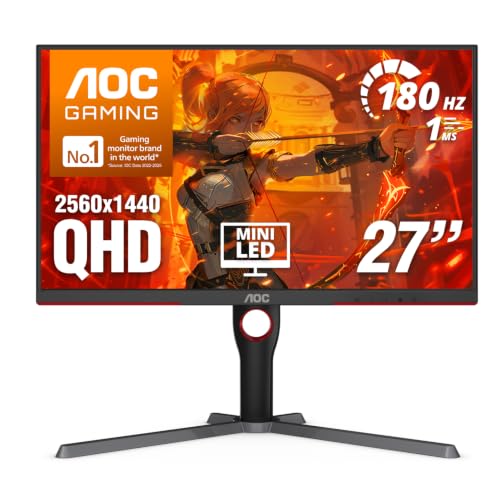
The AOC Q27G3XMN 27″ QHD Gaming Monitor stands out as an exceptional choice for gamers and content creators alike, thanks to its Mini-LED backlight technology that delivers breathtaking image quality. With a resolution of 2560×1440 and a refresh rate of 180Hz, you’ll experience ultra-smooth visuals and responsive gameplay. The 336 dimming zones provide true blacks and vibrant colors, covering 134% of the sRGB gamut. Plus, its frameless design immerses you in every detail. Adaptive Sync technology guarantees tear-free gameplay, while the 1ms response time eliminates ghosting. Enjoy seamless connectivity with HDMI and DisplayPort options.
Best For: Gamers and content creators seeking high-performance visuals and immersive experiences.
Pros:
- Exceptional image quality with Mini-LED backlight technology and 336 dimming zones for true blacks and vibrant colors.
- Ultra-smooth gameplay with a 180Hz refresh rate and 1ms response time, ensuring no ghosting or tearing.
- Wide color gamut coverage at 134% sRGB, perfect for accurate color reproduction in gaming and content creation.
Cons:
- Limited connectivity options with only one HDMI port and one DisplayPort.
- The high-end features may come at a premium price compared to other monitors.
- Potential for blooming effects due to the Mini-LED backlight technology in certain scenarios.
KTC 27 Inch Dual Mode Mini LED Monitor
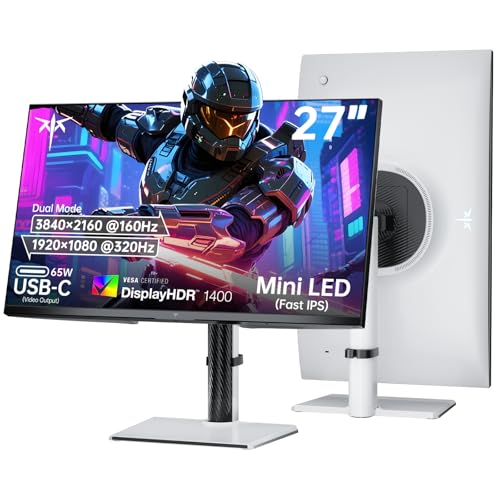
For those seeking exceptional color accuracy and detail in their editing work, the KTC 27 Inch Dual Mode Mini LED Monitor stands out with its impressive 145% sRGB color gamut. You’ll appreciate the dual mode functionality, offering 160Hz at 4K or 320Hz at 1080P, paired with a fast IPS panel and HDR1400 for stunning visuals. With 1152 dimming zones, your images remain precise and vibrant. Plus, the monitor’s Adaptive Sync Technology guarantees tear-free gameplay. Connectivity options like a Type-C port and adjustable angles enhance versatility, making it perfect for gaming or professional editing. Enjoy a three-year warranty and responsive customer support.
Best For: Professionals in graphic design and gaming enthusiasts seeking high color accuracy and rapid refresh rates.
Pros:
- Exceptional Color Accuracy: With a 145% sRGB color gamut and HDR1400 support, it delivers stunning visuals for editing and gaming.
- Fast Refresh Rates: Dual mode functionality allows for 160Hz at 4K and 320Hz at 1080P, ideal for smooth gameplay.
- Versatile Connectivity: Includes a Type-C port and multiple HDMI options, making it suitable for various devices and setups.
Cons:
- Higher Price Point: Premium features may come at a higher cost compared to standard monitors.
- Weight: At 6.8 kg, it may be less portable for users who need to move their setup frequently.
- Limited Adjustability: While it offers height adjustment and VESA mount compatibility, some users may prefer more extensive ergonomic features.
Factors to Consider When Choosing Mini Led Monitors for Professional Editing
When you’re choosing a mini LED monitor for professional editing, there are several key factors to keep in mind. You’ll want to reflect on color accuracy standards, resolution and screen size, as well as connectivity options available to guarantee a seamless workflow. Don’t forget about ergonomics and adjustability, along with refresh rate considerations, as these can greatly impact your editing experience.
Color Accuracy Standards
While choosing a Mini LED monitor for professional editing, it is vital to prioritize color accuracy standards. Look for monitors with a Delta E value of less than 2, which indicates colors are reproduced closely to their true shades. Confirm the monitor covers 100% of the sRGB and Rec. 709 color gamuts for a wide range of accurate colors essential for your editing tasks. Factory calibration is key, so consider models with Calman verification for consistent color fidelity. Additionally, HDR capability enhances color depth and contrast, providing a more realistic image representation. Advanced panel technologies like IPS and Mini-LED also improve viewing angles and color consistency, essential for detailed work. Choosing wisely will elevate your editing experience considerably.
Resolution and Screen Size
Color accuracy lays the foundation for effective editing, but resolution and screen size greatly impact your workflow as well. For professional editing, you’ll want a higher resolution, like 4K (3840 x 2160) or WQHD (2560 x 1440), to achieve greater detail and clarity in your projects. A larger monitor, ideally 27 inches or more, creates an immersive experience and offers ample workspace for multiple applications. Consider pixel density too; a higher PPI, such as 218 for 5K displays, guarantees sharper images and improved color accuracy. While a standard 16:9 aspect ratio works for most tasks, wider ratios can provide extra horizontal space for timelines. Finally, a monitor with a refresh rate of 75Hz or higher enhances motion smoothness during video editing.
Connectivity Options Available
Multiple connectivity options play an essential role in choosing mini LED monitors for professional editing. Look for models that offer HDMI, DisplayPort, and USB-C connections, as these facilitate easy integration with various devices. Many monitors also come with USB hubs, giving you extra ports for peripherals, which can streamline your setup. If you’re working in a multi-screen environment, consider models that support daisy-chaining via DisplayPort; this lets you connect multiple monitors through one output. Additionally, features like Power Delivery over USB-C allow your monitor to charge compatible devices while transmitting video and data. Finally, pay attention to the resolutions and refresh rates supported by these connections, as they greatly impact your editing performance and overall experience.
Ergonomics and Adjustability
When choosing mini LED monitors for professional editing, prioritizing ergonomics and adjustability can greatly enhance your workflow. Look for ergonomic stands that offer height adjustment, tilt, pivot, and swivel capabilities to achieve ideal viewing angles and reduce neck strain. An adjustable monitor helps you maintain a comfortable posture during long editing sessions, boosting productivity and minimizing fatigue. Additionally, monitors with anti-glare finishes reduce reflections, allowing for clearer visibility of details. Consider VESA-compatible options that enable flexible workspace organization, freeing up desk space for other tools. Finally, some monitors come equipped with eye care technologies like blue light filters and flicker-free technology, ensuring your comfort during extended editing hours.
Refresh Rate Considerations
While selecting mini LED monitors for professional editing, refresh rate is an essential factor that can greatly impact your editing experience. A higher refresh rate, like 75Hz or above, provides smoother motion and reduces motion blur, particularly beneficial during fast-paced editing tasks. If you’re focused on video editing, opt for monitors with refresh rates of 160Hz or more for precise cuts and shifts. For gaming-focused editing, a 300Hz refresh rate guarantees real-time feedback when working with high-speed footage. Additionally, consider monitors with Adaptive Sync technologies to prevent screen tearing and stuttering. Variable refresh rates can also be advantageous, allowing you to tailor the refresh rate for different content types, whether static images or dynamic videos.
Panel Technology Types
Choosing the right panel technology is essential for achieving ideal performance in mini LED monitors for professional editing. IPS (In-Plane Switching) panels excel in color accuracy and wide viewing angles, making them perfect for tasks where color fidelity matters. On the other hand, VA (Vertical Alignment) panels deliver better contrast ratios and deeper blacks, enhancing shadow detail in your edits. Mini-LED technology further boosts LCD backlighting, allowing for precise local dimming and improved HDR performance. However, keep in mind that IPS panels typically have slower response times compared to VA panels, which can impact fast-moving edits. Additionally, aim for monitors with 100% sRGB and 100% Adobe RGB color gamut coverage to guarantee consistent and accurate colors in your professional work.
Calibration and Customization Features
To achieve ideal color accuracy in your mini LED monitor, it’s important to take into account calibration and customization features. Look for monitors with factory calibration boasting a Delta E of less than 2, ensuring precise color reproduction essential for your editing tasks. Displays supporting 100% sRGB and Rec. 709 color gamuts will provide optimal color representation, enhancing consistency across your projects. Customization features like adjustable color parameters, presets, and calibration tools can streamline your workflow and improve color fidelity. High-quality IPS panels are also significant for wide viewing angles and consistent color reproduction, allowing you to assess your edits accurately. Finally, models with advanced calibration options let you fine-tune brightness, contrast, and color settings to achieve your desired visual output.
