
If your MacBook is the center of your podcast setup, the right dock can save time and reduce cable clutter fast. A good hub keeps your mic interface, external drive, monitor, and accessories connected without constant swapping.
Below, we focus on the best MacBook docking station for podcasters based on port mix, monitor support, power delivery, and real-world workflow flexibility.
Best 10 Macbook Docking Station for Podcasters Picks for 2026
Best for Ergonomic Desk Setup
Tobenone Mac Docking Stand Hub
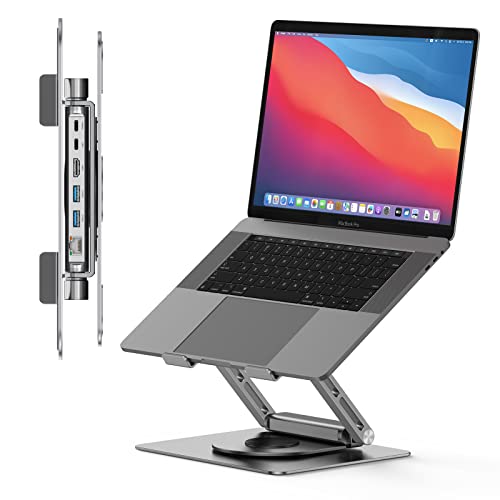
- 6-in-1 hub with HDMI, USB-A, Ethernet, and USB-C charging
- 360° rotating, adjustable stand helps with screen sharing and posture
- 100W PD passthrough and Gigabit Ethernet support reliable workflows
Best For: Podcasters and remote workers who want a space-saving MacBook dock with ergonomic height and wired connectivity.
Best Dual-Monitor Hub
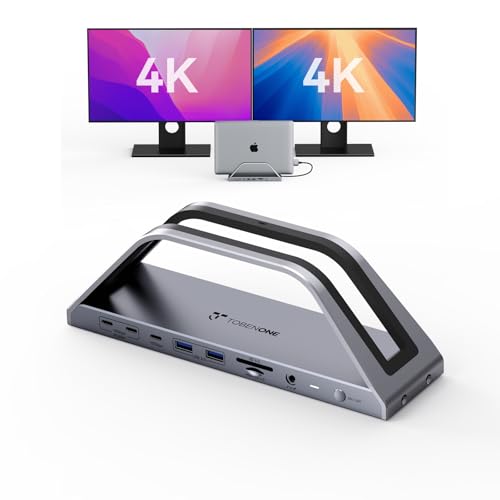
- Dual 4K@60Hz support for multitasking and editing
- Seven USB ports plus 2.5G Ethernet for a fuller studio setup
- 150W power adapter with 30W PD charging for devices
Best For: Podcasters and MacBook users who want an all-in-one dock for monitors, peripherals, and wired networking.
Best for Multi-Display Setups

- 2x HDMI and DisplayPort for monitor-heavy desks
- 10Gbps USB-C/USB-A ports for fast accessory hookups
- Ethernet and audio/mic jack fit podcast workflows
Best For: Podcasters who need lots of ports for displays, storage, and wired networking.
Best with Extra Features
MacBook Pro 9-in-1 Dual HDMI Dock

- Dual HDMI support for one or two external monitors
- 100W USB-C charging plus Ethernet and SD/microSD
- Slim aluminum body with plug-and-play setup
Best For: Podcasters and MacBook users who want dual displays and a wired all-in-one desk dock.
Best for Ergonomic Desk Setup – Tobenone Mac Docking Stand Hub
If you want a macbook docking station for podcasters that also cleans up your desk, this Tobenone stand is a practical all-in-one pick. It combines a raised laptop stand with core ports, 4K HDMI output, Ethernet, PD charging, and a rotating base for easy screen sharing during recording sessions.
Best For: Podcasters, streamers, and remote workers who want an ergonomic MacBook dock that saves space and adds reliable wired connections.
Pros:
- 6-in-1 hub adds HDMI, USB-A, Ethernet, and USB-C charging in one compact stand
- 360° rotating base and adjustable Z-style design make it easier to collaborate and monitor sessions
- 100W PD passthrough and Gigabit Ethernet support stable, low-lag workflow
- Foldable, aluminum build with good airflow helps keep a recording desk tidy
Cons:
- Only one external display via HDMI, so it is not ideal for multi-monitor setups
- Requires USB-C DisplayPort Alt Mode support for video output
- More of a desk dock than a travel-first hub despite the detachable mini hub
For creators who care about posture, cable management, and dependable wired connectivity, this is a strong macbook docking station for podcasters. It is especially useful if your laptop sits at the center of your editing, livestreaming, and recording workflow.
Best Dual-Monitor MacBook Dock – TobenONE 16-in-2 USB-C Dock
If you want a macbook docking station for podcasters that can handle a full desktop setup, this TobenONE dock is built for multi-screen workflows, fast wired networking, and plenty of accessory ports. It’s a strong fit for creators who want to run recording software, notes, chat, and media tools without constantly swapping cables.
Best For: Podcasters and MacBook users who need dual external displays, reliable Ethernet, and a tidy one-cable desk setup.
Pros:
- Drives two 4K@60Hz monitors on compatible MacBook Pro models.
- Includes 7 USB ports plus a 20W USB-C charging port for accessories.
- 100W pass-through charging keeps your MacBook powered through the dock.
- 2.5Gbps Ethernet is a plus for uploads, livestreams, and stable remote sessions.
Cons:
- Not compatible with Windows laptops.
- Some M1/M2/M3 non-Pro/Max MacBooks can only extend one external monitor.
- Apple Studio Display support is not included.
For a macbook docking station for podcasters, the appeal here is less about flashy extras and more about practical desk control: dual monitors, wired internet, and enough ports to keep mics, drives, and peripherals connected. If your workflow lives on a MacBook and you want fewer setup headaches, this is a capable all-in-one hub.
Best for Dual-Monitor Editing – Selore Dual HDMI MacBook Dock
If you need a macbook docking station for podcasters that can handle a clean desk setup and flexible peripheral support, this Selore hub is built around dual HDMI output plus the core ports most creators use every day. It’s a practical pick if you want one cable to connect displays, storage, audio accessories, and cards without juggling adapters.
Best For: Podcasters and MacBook users who want a compact dock for dual monitors, card transfers, and everyday studio peripherals.
Pros:
- Dual HDMI support for running two external displays in a streamlined workflow
- Includes USB-C, two USB-A ports, and SD/TF card readers for common creator gear
- USB-C PD passthrough helps keep a MacBook charged during long sessions
- Compact all-in-one layout reduces cable clutter on a recording desk
Cons:
- Dual-monitor behavior may depend on your MacBook model and display settings
- Not as feature-rich as higher-end docks with more ports or faster networking
For podcasters who value a tidy workstation more than advanced extras, this is a solid macbook docking station for podcasters because it covers the essentials: external displays, storage access, and charging in one affordable hub.
Best Dual-Monitor Hub – TobenONE 17-in-2 MacBook Dock
If you want a macbook docking station for podcasters that can also handle a serious multitasking setup, the TobenONE 17-in-2 is built for a tidy desk and a fast workflow. It combines dual 4K display support, lots of USB ports, 2.5G Ethernet, and onboard charging in one stand-style dock, which is handy when you’re juggling audio gear, drives, and a laptop during recording days.
Best For: Podcasters, creators, and MacBook users who want a single dock for monitors, storage, peripherals, and reliable wired networking.
Pros:
- Dual 4K@60Hz output helps with editing, scripting, and side-by-side workflows.
- Seven USB ports make it easier to connect audio accessories, drives, and input devices.
- 2.5G Ethernet adds a stable wired connection for uploads, livestreams, and remote sessions.
- 150W power adapter and 30W PD ports help keep your MacBook and accessories charged.
Cons:
- MacBook M1/M2/M3 base chips only support one external monitor.
- It is MacBook-focused, so it won’t suit Windows or ChromeOS setups.
- The feature set is strong, but it may be more dock than some minimal podcasters need.
For creators who need a macbook docking station for podcasters that can keep a studio-style desk organized, this TobenONE dock is especially compelling. It’s more of a full workstation hub than a simple adapter, so it makes sense when your recording setup also doubles as an editing and production station.
Best Dual-Monitor Pick – MacBook Pro/Air Docking Station with Dual HDMI
If you want a macbook docking station for podcasters that can handle a multi-screen workflow, this USB-C dock is built around dual HDMI output, plenty of USB ports, and pass-through charging. It’s a practical fit for creators who need to run recording software, notes, and stream tools at the same time without constantly swapping cables.
Best For: Podcasters who want dual-monitor support, wired accessories, and one-cable charging on a MacBook.
Pros:
- Dual HDMI outputs support two external displays at up to 4K/60Hz.
- Includes 3 USB 3.0 ports plus SD and TF card readers for quick file access.
- 100W USB-C power delivery helps keep a MacBook charged while docked.
Cons:
- Dual-display behavior can vary depending on MacBook model and display settings.
- No built-in Ethernet port for wired networking.
For podcasters who edit, stream, or manage a lot of peripherals, this is a versatile macbook docking station for podcasters that prioritizes screen space and everyday connectivity over niche extras. It’s a strong pick if your desk setup is centered on monitors, storage cards, and reliable charging.
Best for Multi-Display Setups – 13-in-1 LIONWEI USB-C Dock
If you want a macbook docking station for podcasters that can handle a busy desk, the LIONWEI 13-in-1 hub gives you a strong mix of video outputs, wired networking, and plenty of USB ports for mics, drives, and peripherals. It’s especially useful if you record, edit, and stream from the same workstation and need a clean single-cable setup.
Best For: Podcasters who want a dock with lots of ports for displays, audio accessories, external storage, and stable Ethernet.
Pros:
- 2x HDMI plus DisplayPort for flexible multi-monitor setups
- Fast 10Gbps USB-C and USB-A connectivity for accessories and drives
- 100W Power Delivery support helps keep a laptop charged
- Built-in Ethernet and 3.5mm audio/mic jack suit recording workflows
Cons:
- Mac users can only extend one external monitor
- Uses some power for itself, so charging output is reduced
For a macbook docking station for podcasters who mainly need a highly connected desk hub, this model stands out more for port variety than Mac multi-display flexibility. It’s a practical pick if your priority is plugging in everything at once and keeping your workflow organized.
Best for Dual-Display Studios – TobenONE 16-in-2 MacBook Docking Station
If you want a macbook docking station for podcasters that can handle cameras, drives, audio gear, and dual monitors without a messy desk, this TobenONE dock is built for that kind of workflow. It gives MacBook users a simple plug-and-play setup with plenty of ports for recording sessions, editing, and live streaming.
Best For: Podcasters and creators who need a clean MacBook hub for dual monitors, fast file transfers, and reliable wired networking.
Pros:
- Dual 4K@60Hz output supports a productive two-screen editing setup
- Lots of connectivity for accessories, storage, SD cards, and USB devices
- 100W PD charging keeps your MacBook powered during long recording or edit sessions
- Gigabit Ethernet helps reduce Wi-Fi issues for uploads and remote calls
Cons:
- Mac-only compatibility rules out Windows and ChromeOS users
- M1/M2/M3 base chips are limited to a single external display
- No included power adapter
For Mac-based creators who need a dependable macbook docking station for podcasters, this model stands out for its dual-monitor support and broad port selection. It’s a strong fit if your studio setup needs both screen space and practical connectivity in one dock.
Best with Extra Features – MacBook Pro 9-in-1 Dual HDMI Dock
If you need a macbook docking station for podcasters who work with multiple displays, this 9-in-1 hub is built around screen expansion, wired connectivity, and all-in-one desk convenience. It gives newer MacBook Pro and Air models dual HDMI output, USB ports for accessories, SD/microSD card access, Ethernet, and pass-through charging in one compact aluminum dock.
Best For: Podcasters, creators, and MacBook users who want dual monitors plus reliable wired connections for a cleaner recording and editing setup.
Pros:
- Dual HDMI support makes it easier to run one or two external displays
- Includes Ethernet, USB-A ports, SD/microSD, and 100W USB-C charging
- Aluminum build keeps the dock slim, portable, and better at dissipating heat
- Plug-and-play setup is simple for desk-based workflows
Cons:
- Works only with compatible MacBook Pro/Air models that have two Thunderbolt 3 ports on one side
- Dual HDMI output is limited to 4K at 30Hz on two monitors
- Not ideal if you need broad laptop compatibility beyond newer MacBooks
For a macbook docking station for podcasters who value dual screens and stable wired peripherals, this model covers the essentials without adding clutter. It is especially practical if your workflow includes recording, editing, file transfers, and charging from a single hub.
Best Dual-Monitor Dock – MacBook Pro Docking Station Dual Monitor 4K
If you want a macbook docking station for podcasters that can handle two displays, wired networking, and fast peripheral hookups, this PULWTOP stand-dock is built for a busy desk. It combines a laptop riser with a 11-in-1 hub, making it a practical pick for editing, recording, and managing a multi-app workflow on MacBook Pro or Air models that support dual external screens.
Best For: Podcasters and creators who want a dock-and-stand combo with dual 4K monitor support, Ethernet, and lots of USB options.
Pros:
- Dual HDMI outputs support up to 2 x 4K@60Hz for a flexible editing setup
- Built-in stand helps reduce clutter and reclaim desk space
- Includes 10Gbps USB-C/USB-A ports, SD/microSD, audio, and Gigabit Ethernet
Cons:
- Requires a separate USB-C power adapter of 65W or higher
- Clamshell mode is required for the laptop-stand function
- Not compatible with all MacBook chip variants or Windows laptops
For a macbook docking station for podcasters who value screen real estate and reliable wired connectivity, this model stands out more for versatility than simplicity. Just make sure your MacBook supports the dual-display setup and you’re comfortable using it closed-lid.
Best for Dual 4K Monitor Setups – MacBook Pro Dual Monitor Docking Station
If you need a macbook docking station for podcasters that also handles a multi-screen workflow, this model is built for exactly that kind of desk setup. It adds dual 4K HDMI output, fast USB ports, Ethernet, and SD/TF card slots in one compact hub, making it easier to plug in a mic interface, storage, and displays without piling up adapters.
Best For: Podcasters and MacBook users who want a dual-monitor dock with fast wired connectivity and cleaner cable management.
Pros:
- Dual 4K@60Hz HDMI outputs for a flexible two-screen editing or streaming setup
- Includes USB-C and USB-A 10Gbps ports plus Ethernet for a streamlined studio desk
- 100W input / 95W output PD support helps keep your MacBook charged during long sessions
- SD/TF slots make it easy to offload audio, photo, or video files quickly
Cons:
- Dual-display support is not compatible with base M1/M2/M3 MacBook chips
- Power adapter is not included, and a 65W+ charger is required
- USB-C data ports do not support video or charging
For creators who want a macbook docking station for podcasters with a stronger focus on display expansion and wired workflow than on portability, this is a solid fit. Just make sure your MacBook model is compatible before buying, especially if dual monitors are a must.
How We Picked the Best Macbook Docking Station for Podcasters
For a Macbook Docking Station for Podcasters, the most important factors are dependable connectivity, enough ports for audio gear and peripherals, and stable external display support. We prioritized models that offer modern USB-C compatibility, Ethernet for reliable uploads, and power delivery strong enough to keep a MacBook charged during long recording or editing sessions.
We also looked for options that reduce friction in a busy workflow: multiple USB-A and USB-C ports for interfaces and drives, dual-monitor support for multitasking, and layouts that make it easier to keep your desk organized.
Quick Comparison
Some buyers need a simple hub for a compact home studio, while others want a full-featured dock with dual 4K displays and lots of expansion. If your setup is minimal, a smaller adapter may be enough. If you run editing software, remote interviews, and live stream tools at once, a higher-port-count dock is usually the smarter choice.
Think of the lineup in three groups: lightweight USB-C hubs, midrange dual-monitor docks, and more advanced docking stations with extra USB ports, Ethernet, and stronger power supplies.
Key Buying Factors for Macbook Docking Station for Podcasters
Audio and Accessory Connectivity
Podcasters often need at least one dependable port for an audio interface, plus room for a microphone receiver, storage drive, and keyboard or controller. Extra USB ports matter more than they may first appear, especially if you record and edit on the same machine.
Display Support
Dual-monitor support is valuable for keeping a timeline, notes, chat, and browser tabs visible at once. If you work in video podcasts or livestreams, look closely at whether the dock supports 4K at 60Hz, since that usually delivers smoother day-to-day use.
Power Delivery
A dock with strong USB-C power delivery helps you avoid juggling a separate charger. For podcasters who record for long stretches or edit large files, this can be the difference between a clean setup and a constantly unplugged laptop.
Network Stability
Ethernet is especially helpful if you upload large media files, use remote recording platforms, or want a more stable connection than Wi-Fi can provide. It is not essential for everyone, but it is a major plus in a professional setup.
Who Should Buy Which Macbook Docking Station for Podcasters?
If you want a compact, everyday solution, choose a simpler USB-C dock with the ports you actually use. If you record, edit, and manage guests at the same time, a dual-monitor model with extra USB and Ethernet support is usually the best fit.
Creators building a desk-based production setup should lean toward higher-output docks with multiple display outputs and stronger charging. Mobile podcasters or hybrid users may prefer a smaller hub that travels easily and still covers the essentials. In short, the best Macbook Docking Station for Podcasters is the one that matches your workflow, not just the one with the longest spec sheet.
