
When it comes to maximizing your Mac Studio’s capabilities, choosing the right docking station is essential. With a variety of options available, each designed to enhance connectivity and performance, you’ll want to contemplate which features matter most for your workflow. From multiple ports to high-speed data transfer, these docking stations can greatly impact your productivity. Let’s explore the top contenders that could transform the way you work.
TobenONE 18-in-2 Docking Station for MacBook Pro/Air
If you’re a MacBook Pro or Air user looking to elevate your workspace, the TobenONE 18-in-2 Docking Station is a top choice. This sleek docking station offers 18 ports, including dual HDMI outputs for stunning 4K@60Hz displays. You’ll enjoy seamless multitasking and high-speed file transfers at 10Gbps. Plus, it supports fast charging with a powerful 150W adapter—30W for other devices. With its 2.5G Ethernet, you’ll experience stable internet connections, perfect for remote work. Compatible with M1 to M5 models, it’s backed by a 2-year warranty and boasts stellar reviews, making it a must-have for any MacBook user.
Best For: MacBook Pro and Air users seeking a versatile docking station with extensive connectivity options for enhanced productivity and high-quality display capabilities.
Pros:
- 18 ports including dual HDMI outputs for multiple high-resolution displays.
- Fast data transfer speeds of up to 10Gbps and fast charging capabilities.
- Stable internet connection with 2.5G Ethernet, ideal for remote work.
Cons:
- Limited compatibility; only works with MacBook models and not with other devices like Mac Studio or Windows laptops.
- M1/M2/M3 users can only extend a single monitor, limiting dual monitor functionality.
- Higher price point compared to basic docking stations.
Anker Prime TB5 Docking Station (14-in-1 Thunderbolt 5)

The Anker Prime TB5 Docking Station stands out as a top choice for Mac Studio users who need robust connectivity and high performance. With 14 ports, including Thunderbolt 5 and USB-C options, you can easily connect multiple devices. Experience lightning-fast transfers, moving a 150GB file in just 25 seconds. It supports dual displays up to 8K@60Hz, perfect for multitasking. Plus, you’ll appreciate the 140W charging capability and active cooling system that prevents overheating. Weighing only 2.4 pounds and backed by a 24-month warranty, it’s a reliable solution for enhancing your workspace. Check it out and elevate your setup!
Best For: The Anker Prime TB5 Docking Station is best for Mac Studio users and professionals seeking high-performance connectivity and multitasking capabilities.
Pros:
- Supports dual displays up to 8K@60Hz, enhancing productivity for graphic-intensive tasks.
- Lightning-fast file transfer speeds, allowing for quick data management.
- Features an active cooling system that prevents overheating during high loads.
Cons:
- The relatively high price point may not be suitable for casual users.
- Limited compatibility with non-Thunderbolt devices may restrict use.
- The weight of 2.4 pounds may be cumbersome for portable use.
iVANKY 23-in-1 Thunderbolt 5 Docking Station
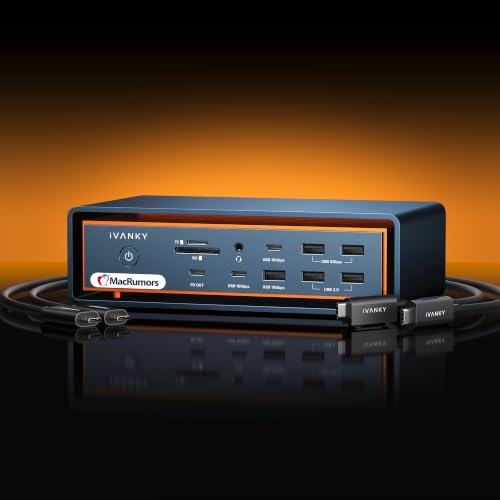
For Mac users seeking a powerful and versatile docking solution, the iVANKY 23-in-1 Thunderbolt 5 Docking Station stands out with its exceptional support for triple displays. With compatibility for Mac M1-M5 Pro/Max, you can enjoy dual 6K@60Hz and 4K@60Hz output, making multitasking seamless. It features 120Gbps data transfer through three Thunderbolt 5 ports and ten USB ports for rapid connectivity. The hybrid cooling system guarantees efficient heat management, so you won’t have to worry about overheating. Backed by a 24-month warranty and responsive support, this dock delivers impressive performance for your Mac setup.
Best For: Mac users looking for a high-performance docking station that supports multiple displays and high-speed connectivity.
Pros:
- Exceptional triple display support with dual 6K@60Hz and 4K@60Hz output capabilities.
- High-speed data transfer with 120Gbps through Thunderbolt 5 ports and rapid connectivity via 10 USB ports.
- Efficient cooling system with a hybrid design and built-in fan to prevent overheating during intensive tasks.
Cons:
- Incompatible with Windows and Chrome laptops, limiting its user base.
- The high price point may not be suitable for casual users or those on a budget.
- Relatively heavy and bulky design may not be portable for users needing to travel frequently.
Anker Prime Docking Station (DL7400) – 14-Port Triple Display
Designed for professionals who need extensive connectivity, the Anker Prime Docking Station (DL7400) offers an impressive 14 ports, making it an ideal choice for multitasking with multiple devices. You can connect up to three external displays, including one in stunning 8K, enhancing your workflow efficiency. With 140W max power, the upstream USB-C port charges your laptop while providing high-speed data transfer. Its built-in fan and ActiveShield 3.0 guarantee stability during heavy use. Plus, you’ll appreciate the included USB-C cable and AC power cord, backed by a 24-month warranty for peace of mind.
Best For: Professionals seeking extensive connectivity and multitasking capabilities with multiple external displays.
Pros:
- Supports triple external monitors, including one in 8K, enhancing productivity.
- 140W max power allows for fast charging and data transfer simultaneously.
- Built-in fan and ActiveShield 3.0 ensure stability during heavy use.
Cons:
- Requires the latest DisplayLink driver for optimal performance.
- Front USB-C ports do not support media display.
- DRM-protected streaming may result in a black screen without adjustments to browser settings.
Plugable Thunderbolt 4 Dock with 100W Charging (TBT4-UD5)
With its robust 100W Power Delivery, the Plugable Thunderbolt 4 Dock (TBT4-UD5) is an ideal choice for creative professionals and power users looking to enhance their Mac Studio experience. You’ll enjoy dual 4K 60Hz HDMI or a single 8K display setup, perfect for demanding tasks. This dock offers blazing-fast 40Gbps speeds and an extensive 13-port configuration, including USB-C, SD/microSD, and Gigabit Ethernet. It’s compatible with various systems, ensuring versatility. With a customer rating of 4.3 stars and recognized as the Best Thunderbolt Dock by Wirecutter, it’s a reliable investment that meets your connectivity needs seamlessly.
Best For: Creative professionals and power users seeking high-performance connectivity and display options for their Mac Studio.
Pros:
- Dual display support for dual 4K 60Hz or single 8K setups enhances productivity.
- 40Gbps Thunderbolt 4 speed ensures fast data transfer and robust performance for peripherals.
- Extensive 13-port configuration provides versatility for various devices and connections.
Cons:
- Higher price point compared to standard docking stations may not suit budget-conscious users.
- Weight and size may limit portability for users needing a lightweight solution.
- Limited macOS compatibility for some models (base M1 and M2 only support single display).
Anker Nano Laptop Docking Station with Detachable Hub

The Anker Nano Laptop Docking Station with Detachable Hub stands out for its versatility, making it an ideal choice for professionals who require a flexible workstation setup. With its 13-in-1 USB-C triple display capability, you can easily connect to multiple devices, including Dell, Lenovo, and HP laptops. The detachable 6-in-1 hub guarantees you can work on the go. Enjoy stunning 4K resolution on external screens, fast 10 Gbps data transfer, and power delivery up to 100W. Compact in size, it features various ports for all your connectivity needs. Plus, it comes with a solid customer support system for peace of mind.
Best For: Professionals seeking a flexible and versatile docking solution for enhanced productivity across multiple devices.
Pros:
- Detachable 6-in-1 hub offers mobile access, making it convenient for on-the-go professionals.
- Supports up to 4K resolution on external displays, ensuring high-quality visuals for presentations and multitasking.
- Fast data transfer speeds of 10 Gbps via USB-C, allowing quick file transfers and efficient workflows.
Cons:
- Compatibility may vary with some non-listed laptop brands, potentially limiting its user base.
- Limited color options, as it is only available in black, which may not suit all preferences.
- Size may be a concern for those with limited desk space, despite its compact dimensions.
StarTech Thunderbolt 5 Docking Station

For creative professionals and multitaskers, the StarTech Thunderbolt 5 Docking Station stands out as an exceptional choice. You can effortlessly connect dual 6K displays on Mac or triple 4K monitors on Windows, enhancing your visual workspace. With driverless compatibility for Windows 11 and macOS 15/26, setup is a breeze. The 140W power delivery keeps your MacBook Pro charged while you work, and the 2.5GbE Ethernet guarantees fast file transfers. Plus, built-in SD and microSD slots make accessing memory cards quick and easy. This dock elevates your productivity, making it a must-have for anyone serious about their craft.
Best For: Creative professionals and multitaskers who need high-performance connectivity and multiple display options.
Pros:
- Supports dual 6K displays for Mac and triple 4K monitors for Windows, enhancing productivity.
- 140W power delivery keeps high-powered laptops charged during use.
- Fast file transfers with 2.5GbE Ethernet and built-in SD/microSD card slots for easy access.
Cons:
- Higher price point compared to standard docking stations.
- Limited to Thunderbolt 5/4 and USB4 host devices, which may not be compatible with older models.
- Requires a specific setup to achieve maximum display capabilities, which may be complex for some users.
Acer USB C Docking Station with Dual Monitor Support

Acer’s USB-C Docking Station shines for users needing dual monitor support alongside robust connectivity options. With two HDMI ports supporting 4K@60Hz, you can easily extend your workspace. Plus, it features three USB-A ports and one USB-C port for fast data transfer at 5Gbps, alongside SD/MicroSD slots. You’ll appreciate the 100W Power Delivery, which can charge your laptop while you work. Its aluminum alloy body adds durability, and a built-in cable keeps things tidy. Just verify your laptop supports DisplayPort Alt Mode for peak performance. Setup is simple—just plug and play for Windows or adjust settings on macOS.
Best For: Users looking for a versatile docking station that supports dual monitors and offers extensive connectivity options for enhanced productivity.
Pros:
- Supports dual HDMI ports with 4K@60Hz resolution for an expansive display setup.
- Fast data transfer capabilities with multiple USB-A and USB-C ports at 5Gbps.
- 100W Power Delivery allows for charging your laptop while using the docking station.
Cons:
- macOS users can only utilize one external monitor in Extended mode.
- Requires a USB-C port with Power Delivery support for optimal charging.
- 65W+ power adapter is not included, which may need to be purchased separately.
Anker Laptop Docking Station Dual Monitor (8-in-1 USB C Hub)

Equipped with dual HDMI ports, the Anker Laptop Docking Station Dual Monitor (8-in-1 USB C Hub) is perfect for creative professionals or anyone who needs to maximize their screen real estate. It supports 4K dual monitor setups, allowing you to stream or mirror content at impressive resolutions. With an 85W Power Delivery feature, you can charge your device while using the hub. Additionally, it offers multiple connectivity options, including USB-A ports, an Ethernet hub, and card readers. Compatible with various operating systems, this docking station guarantees you stay connected and productive without hassle.
Best For: Creative professionals and users who require an efficient dual monitor setup for enhanced productivity.
Pros:
- Supports 4K dual monitor configurations, providing high-resolution streaming and mirroring capabilities.
- Offers multiple connectivity options, including USB-A ports, Ethernet, and card readers for extensive functionality.
- Features 85W Power Delivery for fast charging while using the hub, ensuring your device stays powered.
Cons:
- Requires a separate 100W PD wall charger and USB-C to C cable for optimal power delivery.
- Not compatible with Linux operating systems, limiting its usability for some users.
- macOS users may only see identical displays on external monitors, which could restrict display flexibility.
Kensington USB-C & USB-A DisplayLink Docking Station with Dual 4K Display

The Kensington SD4781P USB-C & USB-A DisplayLink Docking Station is an ideal choice for creative professionals and remote workers who need to connect multiple displays seamlessly. With its 12-in-1 design, you get 14 ports, including two HDMI and two DisplayPort, enabling dual 4K video support at 60Hz. You can enjoy fast data transfer speeds up to 10Gbps, and it delivers up to 100W of power to USB-C laptops. The secure cable lock guarantees reliable connectivity, and it’s constructed with 50% post-consumer recycled content for sustainability. Plus, you benefit from a 3-year warranty for added peace of mind.
Best For: Creative professionals and remote workers who require multiple display connections and fast data transfer.
Pros:
- Dual 4K video support at 60Hz for high-resolution displays.
- Up to 100W power delivery for USB-C laptops, ensuring devices stay charged.
- Made with 50% post-consumer recycled content, promoting environmental sustainability.
Cons:
- USB-A laptops require an optional power splitter for full functionality.
- Limited compatibility with older operating systems (Windows 7+ and macOS 10.14+).
- Some users may find the number of ports overwhelming or unnecessary.
Factors to Consider When Choosing Mac Studio Docking Stations
When choosing a Mac Studio docking station, you need to take into account several key factors. Think about compatibility with your specific Mac model, the number of ports you’ll need, and the display resolution support. Don’t forget to check data transfer speeds and power delivery capacity to guarantee a seamless experience.
Compatibility With Mac Models
Choosing the right docking station for your Mac Studio is vital to maximizing its performance. First, make sure the docking station explicitly states compatibility with your specific Mac model. Many docks are tailored for MacBook Pro/Air or newer models like M1, M2, M3, and M4. Additionally, check if it supports your desired display capabilities, as some models only allow for a single external monitor. It’s also important to confirm that the power delivery meets your Mac’s requirements, since wattage can vary between docks. Finally, consider the connection type; many docking stations require Thunderbolt 3 or 4 compatibility for best performance, and be aware that options may be limited for Mac Studio, Mac mini, Mac Pro, or iMac users.
Number of Ports Available
A good docking station can make all the difference in your Mac Studio setup, especially when it comes to the number of ports available. You’ll want to take into account the total number of ports, as this determines your connectivity options for peripherals and displays. Look for a mix of USB-C, USB-A, HDMI, DisplayPort, Ethernet, and card readers to accommodate all your devices. Pay special attention to USB ports—they’re vital for connecting external drives, keyboards, and mice, with options for fast data transfer and charging. Also, evaluate the display capabilities; some models support dual or triple monitor setups, requiring additional HDMI or DisplayPort connections. Verify the docking station aligns with your device’s compatibility for seamless connectivity.
Display Resolution Support
Understanding display resolution support is essential for maximizing your Mac Studio’s potential. When choosing a docking station, check its maximum display resolution. Some can handle dual 8K displays, while others only support 4K or lower. Make certain the docking station’s capabilities match your Mac’s specifications, especially if you have M1 or M2 models that may limit you to a single external monitor. Look for options that offer specific refresh rates, like 60Hz for 4K, to guarantee smooth performance during video editing or gaming. Additionally, confirm how many external monitors the docking station can support—some allow triple displays, while others may only manage one or two. Advanced features like HDR or high refresh rates can greatly enhance your viewing experience.
Data Transfer Speeds
While selecting a docking station for your Mac Studio, data transfer speeds play an essential role in guaranteeing efficient workflow. Docking stations can vary greatly, with USB-C connections offering speeds up to 10Gbps, perfect for rapid file transfers. For even faster performance, consider Thunderbolt 5 options, which can reach up to 120Gbps, allowing you to move large files, like 150GB, in about 25 seconds. Remember to check the number of USB ports and their individual speeds; connecting multiple devices to slower ports can bottleneck performance. Finally, verify your cables and connectors support high-speed protocols like Thunderbolt and USB 3.2 for peak data transfer, especially if you’re working with large files in video editing or data analysis.
Power Delivery Capacity
When choosing a docking station for your Mac Studio, power delivery capacity greatly impacts your overall experience. This capacity determines how much power your Mac can receive while using the dock, with some models offering up to 140W for high-powered laptops. A higher power delivery guarantees your laptop charges quickly, even when multiple peripherals are connected, reducing downtime during intensive tasks. Look for docks that comply with the latest PD protocols, like PD 3.1, for peak charging efficiency. Many docks feature dedicated USB-C ports with capacities ranging from 30W to 140W, affecting charging speeds for devices. Higher wattage also lets you charge multiple devices simultaneously while keeping the dock’s other ports fully functional.
Cooling System Efficiency
A docking station’s cooling system plays an essential role in maintaining both performance and longevity. Efficient cooling prevents overheating during high-performance tasks, keeping your dock and connected devices stable. Look for a hybrid cooling system that combines passive heat dissipation with active cooling methods. This setup can greatly enhance performance by maintaining ideal temperatures, especially when supporting multiple high-resolution displays that generate extra heat.
Some models feature built-in fans and elevated structures to promote airflow, improving heat dispersion. Regularly monitoring your dock’s temperature can help you spot cooling issues early, allowing for timely adjustments and preventing performance degradation. Prioritizing an effective cooling system guarantees your Mac Studio docking station will work efficiently for years to come.
Warranty and Support Options
Choosing the right Mac Studio docking station involves more than just evaluating performance specs; warranty and support options are essential too. Start by checking the warranty duration. Some brands offer up to 24 months of coverage, which gives you peace of mind. Look for a return policy that allows returns within 30 days if the product doesn’t meet your expectations. Assess customer support options, as responsive service can make troubleshooting much easier. It’s also wise to take into account the availability of software updates or driver support, which can affect long-term performance and compatibility. Finally, understand warranty terms, especially any limitations on coverage for specific types of damage, to avoid surprises down the line.
