
Choosing the right local LLM computer for Ollama comes down to the right mix of CPU speed, memory, storage, and thermals—not just raw specs. For most buyers, a well-balanced mini PC is the smartest way to get reliable on-device AI without overspending.
In this roundup, we focus on practical machines and the key factors that affect real-world local inference, so you can match the hardware to your model size, workload, and budget.
Best 9 Local LLM Computer for Ollama Picks for 2026
Best for Triple Displays

- Ryzen R2544 with 4 cores and 8 threads
- 16GB RAM + 256GB SSD, expandable later
- Triple 4K display support in a tiny case
Best For: Home-office users and light AI tinkerers who want a compact multi-monitor mini PC.
Best for Learning the Stack

- Practical on-device inference and deployment focus
- Helps size hardware for local LLM workflows
- Good fit for Ollama and llama.cpp users
Best For: Developers and technical buyers who want to understand local LLM performance before buying hardware.
Best for Multi-Display Ollama Labs

- Ryzen 4300U is strong for the price and better than common budget chips
- 16GB RAM + 512GB SSD gives a usable base for Ollama and multitasking
- Triple 4K display support helps build a productive local AI workstation
Best For: Users who want a compact mini PC for Ollama, office work, and dual- or triple-monitor setups.
Best for Ollama Learning
The Ollama Handbook for Local AI Apps

- Covers Ollama-first local AI workflows
- Explains RAG, agents, and automation
- Helps you plan a capable local setup
Best For: Developers and hobbyists building local AI apps with Ollama.
Best for Triple-Display Workspaces

- Ryzen R2544 for everyday productivity and light multitasking
- 16GB RAM + 256GB SSD for a responsive compact setup
- Supports up to three 4K displays for office flexibility
Best For: Home office and small-business buyers who want a quiet mini PC for productivity and light local AI use.
Best for Model Management
GGUF Model Packaging for Local Inference
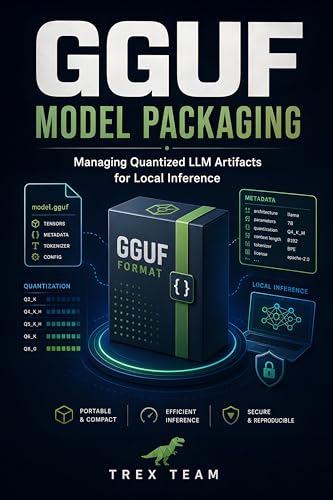
- Standardizes quantized model packaging
- Fits Ollama-centered local inference workflows
- Helps keep model artifacts organized
Best For: Developers and power users managing GGUF models for Ollama-based local inference.
Best for Compact Ollama Setups

- Ryzen R2544 is a step up from common ultra-budget chips
- 16GB RAM is the minimum-friendly baseline for light Ollama use
- Tiny VESA-mountable design keeps your desk uncluttered
Best For: Compact desks, home labs, and budget buyers running smaller Ollama models.
Best for Triple-Display Budget Labs

- Ryzen Embedded R2544 is stronger than many entry-level mini PC chips.
- Triple 4K output is ideal for dashboards and multitasking.
- Upgradeable RAM and SSD improve flexibility for home lab use.
Best For: Budget buyers who want a compact mini PC for light Ollama testing, office work, and triple-monitor setups.
Best for Triple Displays – KAMRUI Pinova P1 Mini PC
If you want a compact local llm computer for ollama without jumping to a full tower, the KAMRUI Pinova P1 is a practical entry point. Its Ryzen R2544 chip, 16GB of RAM, and SSD storage make it better suited to lightweight local models, document workflows, and everyday multitasking than ultra-budget mini PCs.
Best For: Home-office users, traders, and multitaskers who want a small desktop that can run basic local AI tools, drive multiple screens, and stay out of the way.
Pros:
- Ryzen R2544 with 4 cores and 8 threads offers solid responsiveness for everyday use
- 16GB RAM and a 256GB SSD provide a workable base for light local AI and office tasks
- Triple-display support is great for dashboards, code, chat, and reference windows
- Very small footprint with VESA mounting for a cleaner desk setup
Cons:
- Not ideal for larger local LLMs or heavier model inference workloads
- 256GB storage is modest if you plan to keep multiple models locally
- Better as a light Ollama machine than a serious AI workstation
Overall, the Pinova P1 makes sense if your local llm computer for ollama needs are modest and you value compact size, upgrade options, and multi-monitor support over raw AI horsepower.
Best for Learning the Stack – llama.cpp On-Device LLM Guide
llama.cpp in the Real World: On‑Device LLM Inference, Profiling, and Deployment
Check Price On AmazonIf you’re choosing a local llm computer for ollama, this title is less of a hardware spec sheet and more of a practical field guide. It focuses on on-device inference, profiling, and deployment with llama.cpp, which makes it useful for understanding how to size, tune, and actually use local hardware for private LLM workflows.
Best For: Developers, tinkerers, and technical buyers who want to run and optimize local models instead of just reading benchmark numbers.
Pros:
- Practical focus on real on-device inference and deployment
- Helps you understand performance tradeoffs before buying hardware
- Useful for anyone planning local LLM workflows with Ollama or llama.cpp
Cons:
- Not a turnkey “buy this computer” recommendation
- More technical than a beginner-friendly overview
This is a strong pick if you want to make a smarter local llm computer for ollama purchase by learning what actually affects speed, memory use, and deployment quality. It’s best viewed as an informed buyer’s companion rather than a ready-made system guide.
Best for Multi-Display Ollama Labs – KAMRUI Pinova P2 Mini PC
If you want a compact local llm computer for ollama that can handle everyday multitasking plus a few light AI experiments, the KAMRUI Pinova P2 is a practical pick. Its Ryzen 4300U, 16GB RAM, and 512GB SSD give it a much better balance of speed and responsiveness than entry-level N95 mini PCs, while the triple 4K display outputs make it easy to build a productive desktop setup.
Best For: Buyers who want a small, affordable mini PC for Ollama, office work, and multi-monitor use without stepping up to a full desktop.
Pros:
- Ryzen 4300U offers stronger sustained multi-core performance than typical budget mini PC chips.
- 16GB RAM and 512GB SSD provide a solid baseline for local models, apps, and multitasking.
- Triple 4K output support is great for productivity and monitoring side-by-side workflows.
- Compact, space-saving design with Wi-Fi, Bluetooth, and Gigabit LAN for flexible setups.
Cons:
- Integrated graphics and 16GB memory are fine for light local AI, but not ideal for larger LLMs.
- Storage is expandable, but the included 512GB drive may fill up quickly with models and datasets.
- Not the best choice if you want maximum Ollama performance or GPU acceleration.
Overall, this is a sensible value option if you need a local llm computer for ollama and also want a dependable mini desktop for work and streaming. It is better suited to lightweight inference, testing, and general productivity than to heavy-duty model hosting.
Best for Ollama Learning – The Ollama Handbook for Local AI Apps
If you want a practical local llm computer for ollama workflow, this handbook is a strong companion for getting from setup to real projects faster. It focuses on building with open-source LLMs, RAG, agents, and automation, making it useful if you want to run models locally and actually put them to work.
Best For: Developers, hobbyists, and technical buyers who want a hands-on guide to building local AI applications with Ollama.
Pros:
- Covers Ollama-focused local AI workflows in a practical, project-driven way
- Includes modern topics like RAG, agents, and automation
- Helpful for turning a capable local llm computer for ollama into a real dev setup
Cons:
- It is a guidebook, not hardware, so it won’t replace system specs advice
- Most useful for readers comfortable with technical concepts
For buyers pairing software knowledge with the right machine, this book is best viewed as a roadmap: it helps you understand what your local llm computer for ollama should be capable of and how to use it effectively once you have the hardware.
Best for Triple-Display Workspaces – KAMRUI Pinova P1 Mini PC
If you want a compact office machine that can also serve as a practical local llm computer for ollama, the KAMRUI Pinova P1 is a sensible entry-level pick. Its Ryzen R2544 chip, 16GB of RAM, and SSD storage give it enough headroom for everyday productivity, light multitasking, and smaller local AI workloads without taking up much desk space.
Best For: Home office users, small businesses, and anyone who wants a quiet mini PC with support for multiple displays and light local AI experimentation.
Pros:
- Ryzen R2544 with 4 cores and 8 threads handles office work and light multitasking well.
- 16GB RAM and a 256GB SSD provide a responsive base for productivity and smaller models.
- Supports up to three 4K displays for a flexible, clutter-free workspace.
- Compact design with VESA mount support and low-noise cooling.
Cons:
- 256GB storage is modest if you plan to keep larger models or many files locally.
- Integrated graphics and this class of CPU are better for light AI use than heavy inference.
For buyers prioritizing space savings, connectivity, and a stable desktop experience, this mini PC makes a good everyday machine and a starter local llm computer for ollama. It is most convincing when the goal is practical productivity first, with AI experimentation as a secondary use.
Best for Model Management – GGUF Model Packaging for Local Inference
If you’re building a local llm computer for ollama, this product is a useful fit when your focus is organizing, packaging, and moving quantized GGUF model artifacts cleanly between systems. It’s aimed at practical local inference workflows rather than general-purpose hardware, so it makes more sense for users who care about model handling, repeatability, and deployment hygiene.
Best For: Developers and power users who need a structured way to manage GGUF models for Ollama-based local inference setups.
Pros:
- Helps standardize how quantized models are packaged for local use
- Well-suited to Ollama-oriented workflows and repeatable deployment
- Useful for keeping model artifacts organized across multiple runs or machines
Cons:
- Not a hardware purchase for raw CPU/GPU performance
- Less useful if you want a simple plug-and-play consumer setup
Overall, this is a niche but practical pick if your main challenge is model management rather than machine specs. For anyone assembling a local llm computer for ollama, it fits best as a workflow-focused aid for handling quantized models efficiently.
Best for Compact Ollama Setups – KAMRUI Pinova P1 Mini PC
If you want a small, low-power local llm computer for ollama without spending on a full tower, the KAMRUI Pinova P1 is a practical entry point. Its Ryzen R2544, 16GB RAM, and 256GB SSD make it better suited for lightweight models, testing, and everyday multitasking than ultra-budget N95/N150 boxes.
Best For: Home labs, compact desks, and buyers who want a budget-friendly Windows mini PC for small Ollama workloads, coding, and office use.
Pros:
- Ryzen R2544 offers a noticeable bump over common low-end mini PC chips.
- 16GB RAM and SSD storage give it a usable baseline for local AI experimentation.
- Very small footprint with VESA mounting for clean desk setups.
- Triple-display support and multiple ports add everyday flexibility.
Cons:
- Not powerful enough for larger local LLMs or heavy multi-user inference.
- 256GB storage is modest if you plan to keep many models on-device.
- Bluetooth 4.2 and Wi‑Fi 5 are functional, but not cutting-edge.
For a starter local llm computer for ollama, this mini PC makes sense if you care more about low cost, small size, and reasonable responsiveness than raw model speed. It is a better fit for compact productivity and smaller models than for serious high-throughput AI hosting.
Best Budget Windows Mini PC – KAMRUI AK1PLUS Mini PC
If you want a compact, low-cost starting point for a local llm computer for ollama, the KAMRUI AK1PLUS is better suited to light experimentation than serious model work. Its 16GB RAM and SSD storage make it a practical everyday mini PC for office tasks, browsing, and simple local AI workflows where speed and efficiency matter more than raw horsepower.
Best For: Buyers who need an inexpensive mini PC for basic productivity, quiet operation, and light local AI testing.
Pros:
- 16GB RAM and SSD storage help with smoother multitasking and faster boot times.
- Dual 4K HDMI outputs are useful for a productive dual-monitor setup.
- Very compact, quiet, and energy-efficient for desks, kiosks, or home offices.
Cons:
- Intel Celeron N5095 is entry-level, so it is not ideal for demanding local LLM inference.
- 256GB included storage is modest if you plan to keep larger models and datasets locally.
- Best used for smaller models or lightweight Ollama experiments, not heavy workloads.
Overall, this is a sensible value pick if you need a local llm computer for ollama on a tight budget and can accept slower performance. It makes the most sense for light model testing, not for users expecting desktop-class AI speed.
Best for Triple-Display Budget Labs – KAMRUI Mini PC P1 Ryzen R2544
If you want a compact, low-power local llm computer for ollama without jumping to a full desktop, this KAMRUI Mini PC is a practical place to start. Its Ryzen Embedded R2544 chip, upgradeable memory, and small footprint make it better suited to light local inference, testing, and everyday productivity than most entry-level mini PCs.
Best For: Budget-conscious buyers who want a small 3-display mini PC for light Ollama experiments, office work, and home lab use.
Pros:
- Ryzen Embedded R2544 offers stronger everyday performance than many N-series and older i3 mini PCs.
- Triple 4K display support is great for multitasking, dashboards, and workstation-style setups.
- Compact, 28W design is easy to tuck into a desk, rack, or media center.
- Upgradeable RAM and SSD make it more flexible for small lab and storage tasks.
Cons:
- 8GB RAM is limiting for serious local LLM workloads unless you upgrade it.
- Not a GPU-equipped machine, so larger models will run slowly.
- Best suited to smaller models and experimentation rather than heavy production inference.
For a starter local llm computer for ollama, this KAMRUI makes sense if you care more about compact size, low power draw, and multitasking than raw AI throughput. Add more memory and keep expectations realistic, and it can serve well as a light Ollama box or general-purpose home lab mini PC.
How We Picked the Best Local LLM Computer for Ollama
We prioritized systems that make sense as a Local LLM Computer for Ollama: enough RAM for model loading and multitasking, SSD storage for faster model access, and CPUs that can sustain longer inference sessions without excessive noise or throttling. We also favored compact desktops that are easy to place beside a workstation or server rack.
Quick Comparison
The strongest options here are the 16GB RAM mini PCs, since memory is usually the first bottleneck for local inference. The 8GB model is better suited to smaller quantized models, lightweight chat use, or testing. Among the included titles, the books are useful references for deployment, quantization, and Ollama workflows, but they are not hardware replacements.
Key Buying Factors for a Local LLM Computer for Ollama
Memory Matters Most
For Ollama, RAM is often more important than marketing claims about CPU speed. If you want smoother performance with larger quantized models or multiple apps open at once, 16GB should be the baseline. Go higher if you plan to experiment with bigger models or want more headroom.
CPU and Cooling
Look for efficient multi-core processors that can maintain performance under sustained load. A strong burst clock helps, but steady output matters more during long chats or repeated prompts. Better cooling also means more consistent performance and less fan noise.
Storage and Expandability
Fast SSD storage helps with model downloads, loading times, and everyday responsiveness. Extra room for a second drive or easy upgrades is a plus if you expect to test multiple models or store larger GGUF files locally.
Model Size and Quantization
Your hardware should match the models you actually plan to run. Smaller, heavily quantized models are much more forgiving, while larger models demand more RAM and better thermal behavior. If you are unsure, start with a balanced 16GB system and pair it with efficient quantized models.
Who Should Buy Which Local LLM Computer for Ollama?
If you want the safest all-around choice, pick a 16GB mini PC. If you are building a budget test bench or learning Ollama basics, the lower-cost 8GB option can still work for smaller models. If you care more about understanding deployment than buying hardware, the books on llama.cpp, Ollama, and GGUF packaging are the best supplemental picks for deepening your setup knowledge.
For most buyers, the sweet spot is a quiet, compact system with 16GB RAM, an SSD, and efficient cooling. That combination gives you the best chance of smooth local AI use without paying for more machine than you need.
