
Choosing the right desktop for Linux development is about more than raw specs. You want dependable hardware support, quiet thermals, fast storage, and enough memory to keep containers, editors, and VMs moving smoothly.
This roundup focuses on Linux-compatible desktops for developers that balance performance, value, and everyday usability in 2026.
Best 10 Linux Compatible Desktops for Developers Picks for 2026
Best for Linux Power Users
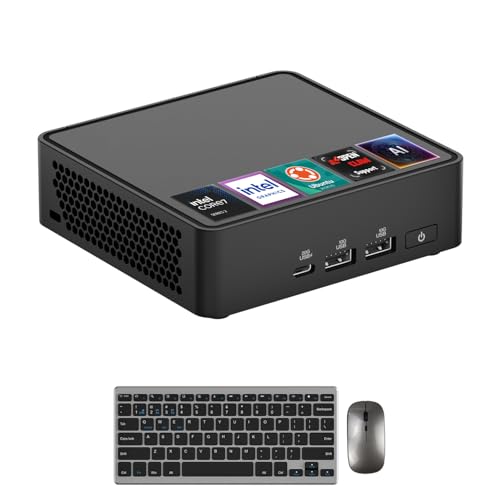
- 10-core Intel Core 7 240H for builds, VMs, and multitasking
- 64GB DDR5 RAM and 2TB SSD included for immediate headroom
- Ubuntu Linux 24.04 with Thunderbolt 4, WiFi 7, and quad-display support
Best For: Developers who want a compact Ubuntu workstation for demanding multitasking and reliable 24/7 use.
Best for Linux Install Trials
32GB 9-in-1 Linux Bootable USB Drive

- Nine Linux installers in one bootable USB
- Live-boot, install, and boot-repair support
- Works on most BIOS and UEFI PCs
Best For: Developers and beginners who want a simple multiboot USB for testing or installing Linux on standard PCs.
Best Command Cheat Sheet Desk Mat
Pixiecube Linux Command Mouse Pad

- Extra-large mat doubles as a desktop workspace and command cheat sheet
- Covers common Linux/Unix commands across major distributions
- Non-slip base and stitched edges suit everyday developer use
Best For: Developers and Linux users who want a roomy mouse pad with quick terminal reference.
Best for Fanless Networking Labs
Fanless N2840 Mini PC with Dual LAN

- Silent fanless operation for always-on use
- Dual Gigabit LAN and serial ports for lab work
- Linux and OPNsense/OpenWrt compatibility
Best For: Developers and home-lab users who need a quiet Linux-friendly mini PC for networking, testing, or light desktop tasks.
Best Linux Dual-Boot Starter

- 17 tested OS images in one USB drive
- Supports UEFI and legacy boot modes
- Helpful for live testing and Linux setup
Best For: Developers and beginners who want a portable multi-boot USB for testing Linux on different machines.
Best Linux Out of the Box
BOSGAME P4 Ultra Ryzen 7 Mini PC

- Ubuntu pre-installed for immediate Linux use
- Ryzen 7 7730U with 16GB RAM handles dev work smoothly
- 1TB SSD, dual 2.5G LAN, and triple-display support
Best For: Developers who want a compact Ubuntu-ready desktop for coding and multitasking.
Best for Ready-to-Use Linux

- Linux preinstalled for quick Ubuntu setup
- 32GB RAM + 1TB SSD for smooth daily multitasking
- Dual LAN and triple-display support for dev workspaces
Best For: Developers who want a compact Linux desktop that works right away.
Best for Heavy Linux Multitasking
CyberGeek Ubuntu Linux Mini PC

- Fast 11th Gen Core i9 CPU for demanding dev tasks
- Ubuntu Linux preinstalled for a smoother start
- 4K triple-display support for productive workflows
Best For: Developers who want a compact Ubuntu mini PC with strong multitasking and display flexibility.
Best Value Linux Mini PC
Alder Lake N100 Ubuntu Mini PC 16GB/1TB

- Ubuntu preinstalled for quick Linux setup
- 16GB RAM and 1TB SSD for everyday dev work
- Dual 4K display support for multitasking
Best For: Developers who want a compact, affordable Linux desktop for coding and productivity.
Best for Linux Power Users – ASUS NUC 15 Pro Mini Desktop
If you want one of the most capable linux compatible desktops for developers, this ASUS NUC 15 Pro pairs a fast Intel Core 7 240H CPU with Ubuntu Linux 24.04, generous 64GB DDR5 memory, and a roomy 2TB SSD. It is a strong fit for coding, containers, local testing, and light AI workflows where responsiveness and reliability matter more than size.
Best For: Developers who need a compact Ubuntu workstation for heavy multitasking, virtualization, and long runtime stability.
Pros:
- 10-core, 16-thread Intel Core 7 240H handles development, VMs, and background builds well
- 64GB RAM and 2TB SSD provide plenty of headroom for projects, tools, and datasets
- Ubuntu Linux 24.04 preinstalled, with Thunderbolt 4 and WiFi 7 for modern connectivity
- Supports multiple high-resolution displays, including up to four 4K HDR screens
Cons:
- More expensive than basic mini PCs
- Integrated graphics are fine for productivity, but not ideal for serious GPU compute
- Compact size means limited internal expansion compared with a full tower
This is a polished pick for linux compatible desktops for developers who want a ready-to-run Ubuntu mini workstation with strong specs and flexible I/O. It makes the most sense if you value a quiet, space-saving system that can still handle demanding day-to-day development work.
Best for Linux Install Trials – 32GB 9-in-1 Linux Bootable USB Drive
If you need a quick way to test distros or recover a machine, this 32GB multiboot drive is a practical pick for linux compatible desktops for developers. It bundles several popular Linux options so you can try, install, and boot-repair without building your own installer media first.
Best For: Developers, hobbyists, and beginners who want a simple all-in-one USB for trying Linux distributions on standard desktop and laptop PCs.
Pros:
- Includes multiple mainstream Linux distributions in one bootable USB
- Lets you live-boot and test before installing to the hard drive
- Useful for boot repair and general Linux setup troubleshooting
- Works with legacy BIOS and UEFI on most non-ARM PCs
Cons:
- Not suitable for Macs, Chromebooks, or ARM-based devices
- Secure Boot may need to be disabled on some UEFI systems
- Focused on Linux installation media, not a general-purpose storage drive
This is a strong convenience tool rather than a full workstation accessory, but it can save time when evaluating linux compatible desktops for developers or setting up a fresh Linux box. If you want one drive that covers multiple distros and basic recovery tasks, it’s an easy starting point.
Best for Linux Dev Power – ASUS NUC 14 Pro Mini PC
If you want one of the more polished linux compatible desktops for developers, this ASUS NUC 14 Pro stands out for pairing a Core Ultra 7 155H, 64GB DDR5 RAM, and a 2TB PCIe SSD in a tiny, VESA-mountable chassis. With Linux Mint pre-installed, it’s aimed at developers who want a ready-to-run open-source setup for coding, containers, virtualization, and light AI work.
Best For: Developers, power users, and small teams who want a compact Linux desktop with strong multitasking headroom and modern connectivity.
Pros:
- Linux Mint pre-installed, so setup is fast and developer-friendly out of the box.
- Core Ultra 7, 64GB RAM, and 2TB SSD make it well suited to heavy multitasking and large projects.
- Thunderbolt 4, WiFi 6E, 2.5GbE, and dual HDMI 2.1 support flexible desk and lab setups.
- Compact, VESA-mountable design is ideal for small workspaces or clean dual-monitor rigs.
Cons:
- More expensive than basic mini PCs.
- Integrated graphics are capable, but not a substitute for a true discrete GPU.
- Best value comes from users who will actually use the extra RAM and storage.
Overall, this is a strong pick if you’re comparing linux compatible desktops for developers and want something that feels closer to a workstation than a starter mini PC. It’s especially appealing when reliability, Linux readiness, and compact size matter more than gaming-focused graphics.
Best Command Cheat Sheet Desk Mat – Pixiecube Linux Command Mouse Pad
If you want one of the more practical accessories for linux compatible desktops for developers, this Pixiecube mouse pad doubles as a large desk mat and a quick-reference Linux command cheat sheet. It gives you a roomy surface for a laptop and mouse while keeping common CLI syntax visible for everyday work on Ubuntu, Debian, Arch, Kali, Red Hat, and other distros.
Best For: Developers, students, and Linux users who want a handy desktop reference while coding, troubleshooting, or learning command-line basics.
Pros:
- Extra-large 31.5 x 11.8-inch layout fits a laptop and mouse comfortably.
- Includes a broad, well-organized Linux/Unix command reference for faster lookups.
- Non-slip base and stitched edges help it hold up well on daily workstations.
- Bright, durable print keeps commands readable after repeated cleaning.
Cons:
- More useful as a desk reference than a true learning tool for beginners.
- The command layout may feel cramped if you prefer a very minimalist desk setup.
- Not a technical peripheral, so it won’t improve system performance or compatibility.
For linux compatible desktops for developers, this is a smart pick if you value convenience and a cleaner workflow over flashy extras. It won’t replace documentation, but it can speed up frequent terminal tasks and keep your workspace organized.
Best for Fanless Networking Labs – Fanless N2840 Mini PC with Dual LAN
If you want a compact machine that can double as a tiny lab box, firewall, or light desktop, this fanless mini PC is worth a look. It fits the needs of linux compatible desktops for developers who value quiet operation, dual Ethernet, and broad OS support more than raw speed.
Best For: Developers, home-lab users, and network tinkerers who want a silent Linux-friendly mini desktop for routing, testing, or basic workstation tasks.
Pros:
- Fanless design keeps noise at zero and reduces dust-related maintenance.
- Dual Gigabit LAN, serial ports, and PXE support make it useful for network and embedded work.
- Linux compatibility plus OPNsense, OpenWrt, and ESXi support broaden its use cases.
- Dual-display output with HDMI/VGA adds flexibility for a simple desktop setup.
Cons:
- Celeron N2840 is very low power and not suited to demanding development workloads.
- Older platform and DDR3L memory limit upgrade headroom.
- Storage and general performance are basic compared with modern mini PCs.
For linux compatible desktops for developers who mainly need a quiet, always-on utility box rather than a fast compile machine, this model makes sense. It is strongest as a compact networking or test environment, not as a primary production workstation.
Best Linux Dual-Boot Starter – 17-in-1 Bootable USB Drive
If you’re comparing linux compatible desktops for developers and want an easy way to test distros before installing anything, this 17-in-1 bootable USB drive is a practical shortcut. It includes a wide spread of Linux options plus Windows 11, and it supports both UEFI and legacy systems, making it useful for checking compatibility, recovery, and live-boot workflows.
Best For: Developers, testers, and beginners who want a ready-made multi-boot USB for trying Linux distros on different PCs.
Pros:
- Includes 17 tested operating system images, including Mint, Ubuntu, Kali, Debian, Zorin, and more
- Works with UEFI and legacy boot modes for broader desktop and laptop compatibility
- Useful for live testing, troubleshooting, and running Linux from USB without installation
- Good entry point for beginners thanks to included boot instructions and hot-key guidance
Cons:
- It’s a USB tool, not a desktop PC, so you still need your own compatible hardware
- Some systems may require Secure Boot to be disabled before booting
- Multi-boot convenience may be overkill if you only need one distro
For linux compatible desktops for developers, this is more of a setup and testing accessory than a full workstation, but it can save time when evaluating distro support across machines. If you regularly swap between Linux environments or need a portable recovery kit, it’s a flexible option.
Best Linux Out of the Box – BOSGAME P4 Ultra Ryzen 7 Mini PC
If you want one of the more hassle-free linux compatible desktops for developers, the BOSGAME P4 Ultra is a compelling pick thanks to Ubuntu pre-installed, a Ryzen 7 7730U, and enough memory and storage to handle coding, containers, and everyday multitasking without immediate upgrades.
Best For: Developers who want a compact Ubuntu-ready desktop for programming, light virtualization, and multi-monitor productivity.
Pros:
- Ships with Ubuntu 24.1 already installed for quick Linux setup
- Ryzen 7 7730U and 16GB RAM deliver solid everyday developer performance
- 1TB PCIe SSD plus upgradeable RAM/storage gives room to grow
- Dual 2.5G LAN, Wi-Fi 6E, and triple 4K display support fit a serious workstation
Cons:
- 16GB RAM may feel limited for heavier local VMs and large builds
- Integrated graphics are fine for productivity, not demanding GPU work
- Linux-first buyers may still want to verify peripheral compatibility
Overall, this is a practical choice for linux compatible desktops for developers who value fast setup, strong wired networking, and a compact footprint over workstation-class expansion. It covers the essentials well and leaves a clear upgrade path if your projects get bigger.
Best for Ready-to-Use Linux – DreamQuest Mini PC Ubuntu N95
If you want a plug-and-play option among linux compatible desktops for developers, the DreamQuest Mini PC stands out for shipping with Linux preinstalled, enough memory and storage for everyday dev work, and a compact chassis that fits easily on a desk or behind a monitor. It’s a practical choice for scripting, lightweight containers, remote SSH sessions, and general Ubuntu-based workflows.
Best For: Developers and home-office users who want a compact Linux desktop that’s ready to use out of the box.
Pros:
- Linux OS preinstalled, which reduces setup time for Ubuntu-based workflows
- 32GB DDR4 and 1TB SSD provide strong multitasking headroom and fast storage
- Dual LAN, Wi‑Fi, Bluetooth, and plenty of USB ports support flexible dev setups
- Triple-display support with 4K@60Hz output is useful for multi-window productivity
Cons:
- Intel N95 is efficient, but it’s still a low-power chip for heavier builds or VMs
- Internal expansion is more limited than a full-size desktop tower
For linux compatible desktops for developers who value fast deployment over maximum performance, this DreamQuest mini PC is an appealing middle ground. It covers the basics well, offers modern connectivity, and keeps maintenance simple for everyday coding, testing, and admin tasks.
Best for Heavy Linux Multitasking – CyberGeek Ubuntu Linux Mini PC
If you want a compact machine that can handle IDEs, containers, browser tabs, and external monitors without much fuss, this CyberGeek mini PC is a strong pick among linux compatible desktops for developers. The 11th Gen Core i9, Ubuntu Linux preload, and triple-display support make it a practical choice for workspace-heavy setups.
Best For: Developers who want a small Ubuntu desktop with strong multitasking performance and flexible display connectivity.
Pros:
- Core i9-11900H delivers high multicore performance for compiling, testing, and multitasking.
- Ubuntu Linux preinstalled makes setup easier for Linux-first workflows.
- Supports 4K triple displays, which is great for coding, logs, and docs side by side.
- Six USB ports plus dual LAN and Wi-Fi 6 add useful connectivity for desk setups.
Cons:
- 16GB RAM and 512GB SSD may feel limiting for heavier dev environments unless upgraded.
- Integrated Intel UHD Graphics are fine for productivity, but not ideal for GPU-heavy work.
Overall, this is a solid fit for linux compatible desktops for developers who care more about CPU performance, monitor support, and a ready-to-use Ubuntu setup than about graphics power. It is especially appealing for compact home offices and multi-screen coding stations.
Best Value Linux Mini PC – Alder Lake N100 Ubuntu Mini PC 16GB/1TB
If you want one of the more practical linux compatible desktops for developers without paying for a larger tower, this Alder Lake N100 mini PC is worth a close look. It ships with Ubuntu, includes 16GB of DDR4 RAM and a 1TB SSD, and keeps the footprint small enough for cramped desks, homelabs, and office setups.
Best For: Developers who want an inexpensive Linux-ready desktop for coding, light container work, dual-monitor productivity, and everyday office tasks.
Pros:
- Ubuntu preinstalled for faster Linux setup and fewer compatibility hassles
- 16GB RAM and 1TB SSD give it a solid baseline for everyday dev workflows
- Dual 4K display support helps with code, docs, and terminal multitasking
- WiFi 6, Bluetooth 5.2, and Gigabit Ethernet cover modern connectivity needs
Cons:
- N100 performance is best for light-to-moderate development, not heavy builds
- Integrated graphics and mini PC thermals limit workstation-style expansion
- Not the best fit if you need lots of upgrade room or high-end GPU support
As a compact, Linux-ready option, this mini PC makes sense for developers who value simplicity, low desk clutter, and dependable basics over raw horsepower. For linux compatible desktops for developers, it stands out as a sensible value pick for coding and daily productivity.
How We Picked the Best Linux Compatible Desktops for Developers
We focused on Linux-compatible desktops for developers that are practical for coding workloads, local testing, and multitasking. Priority went to systems with proven Ubuntu support, modern CPUs, at least 16GB of RAM, NVMe SSD storage, and strong connectivity such as USB-C, dual LAN, or multi-display output. We also considered fanless and low-power models for quieter desks, plus higher-end mini PCs for heavier builds and virtualization.
Quick Comparison
If you want the short version: high-performance mini PCs are best for compiling, container work, and multiple tools open at once; midrange models are the sweet spot for most developers; and entry-level systems are better for light coding, documentation, and server-side access. Bootable USB tools and cheat-sheet accessories can also simplify Linux installation and daily workflow, especially when you’re setting up or testing distributions.
Key Buying Factors for Linux Compatible Desktops for Developers
CPU and Core Count
For serious development, prioritize newer Intel Core Ultra, Core i7/i9-class, or Ryzen 7-class processors. More cores help with builds, Docker containers, local databases, and running a browser with many tabs.
Memory and Storage
16GB RAM is the minimum comfortable baseline; 32GB or 64GB is better if you use VMs, Android Studio, large codebases, or heavy multitasking. Prefer NVMe SSDs with 1TB or more when possible, since Linux toolchains and project caches grow quickly.
Linux Driver Support
Look for systems advertised with Ubuntu or Linux preinstalled, since that usually indicates better out-of-box compatibility. Wi-Fi, Bluetooth, sleep behavior, and graphics support matter more than peak benchmark numbers if you want a frictionless daily driver.
Ports, Displays, and Networking
Developers often benefit from multiple display outputs, USB 3.x ports, and fast networking. Dual 2.5G LAN can be especially useful for homelab work, container labs, or acting as a local test machine.
Noise, Size, and Power
Mini PCs are ideal when desk space is tight, but fanless units are best reserved for lighter workloads. If you compile often or run sustained loads, active cooling will usually deliver better performance consistency.
Who Should Buy Which Linux Compatible Desktops for Developers?
Choose a high-end mini PC if you need fast compiles, virtualization, or a polished Linux workstation. Pick a midrange system if you want the best balance of price and daily developer performance. Choose an entry-level or fanless desktop if your work is mainly terminal-based, remote server access, scripting, or lightweight IDE use. If you’re still building your Linux setup, a bootable USB drive is also a smart add-on for installation, recovery, and distro testing.
For most buyers, the best choice is the machine that offers stable Linux support first and maximum speed second. That combination saves time, reduces troubleshooting, and makes the desktop feel dependable every day.
