
A dual-monitor dock can turn a laptop into a practical desktop setup, but two video ports do not always mean your laptop can drive two independent screens. The right choice depends on your computer, operating system, display resolution, and charging needs.
These 10 docks cover compact USB-C hubs, powered desk docks, and USB or DisplayLink options. Use the guide below to narrow down which type fits your setup before checking the individual product specifications.
Best 10 Lapdocking Stations for Dual Monitors Picks for 2026
Best for Mixed Laptop Fleets
WAVLINK DisplayLink Dual 4K Dock

- Dual 4K@60Hz via DisplayLink
- USB-A, USB-C, and Thunderbolt laptop support
- Driver required; no laptop charging
Best For: Shared desks with varied Windows, Mac, and ChromeOS laptops
Best Compact 4K Hub

- Two HDMI outputs rated up to 4K@60Hz
- USB ports and SD/microSD readers
- Mac external displays mirror
Best For: Compatible Windows laptops needing HDMI, card readers, and PD pass-through
Best for Extra USB-C Data Ports

- Independent dual extension on compatible Windows laptops
- Two 5Gbps USB-C data ports
- HDMI rated up to 4K@30Hz; Mac mirrors
Best For: Portable Windows dual-monitor setups with USB-C storage
Best for Port Variety
MOKiN 14-in-1 Multi-Display Dock

- Two HDMI and two DisplayPort outputs
- Gigabit Ethernet, USB, and card readers
- Mac external monitors mirror
Best For: Windows desks mixing HDMI and DisplayPort monitors
Best for Managed Offices
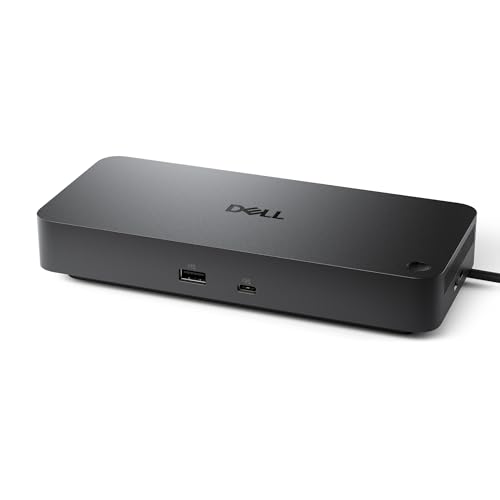
- Supports up to four high-resolution displays
- Up to 100W USB-C power delivery
- Six USB ports plus Ethernet
Best For: Managed desks with multiple displays
Best for Dell Desk Setups

- Dual DisplayPort listed
- USB-C laptop connection
- Verify conflicting power specifications
Best For: Dell-oriented desks using DisplayPort monitors
Best for Flexible Video Ports

- Dual HDMI plus DisplayPort and VGA
- Up to 87W laptop charging
- macOS external displays duplicate
Best For: Video-capable USB-C laptops needing varied monitor ports
Best for Legacy USB
Plugable UD-3900 Dual HDMI Dock

- Dual HDMI up to 1920×1200 at 60Hz
- Connects via USB 3.0 or USB-C
- Six USB ports; no laptop charging
Best For: Dual-HD office setups on USB 3.0 laptops
Best for Windows Triple Displays

- Two HDMI ports plus DisplayPort
- Up to 100W laptop charging
- Mac displays mirror rather than extend
Best For: Windows desks that may expand from two monitors to three
Best for Mixed-OS Workstations
Plugable Triple HDMI USB-C Dock

- Up to three extended HDMI displays
- Up to 100W USB-C laptop charging
- Mac setup requires a driver
Best For: Shared Windows and Mac multi-monitor desks
Best for Mixed Laptop Fleets – WAVLINK DisplayLink Dual 4K Dock
Among lapdocking stations for dual monitors, this WAVLINK dock stands out for connecting through USB-A, USB-C, or Thunderbolt. DisplayLink supports two external 4K@60Hz monitors on compatible systems, with HDMI and DisplayPort options for each screen.
Best For: Home offices sharing a dock between Windows, macOS, or ChromeOS laptops with different USB ports.
Pros:
- Supports two 4K@60Hz external displays on compatible systems.
- Offers two HDMI and two DisplayPort outputs, plus six USB-A ports, Gigabit Ethernet, and audio.
- Works with USB-A laptops as well as USB-C and Thunderbolt models.
Cons:
- Requires a DisplayLink driver for video output and does not support Linux.
- Does not charge the laptop; it is not intended for gaming or DRM-protected streaming.
Choose this one when broad laptop compatibility and flexible monitor cabling matter more than one-cable charging. Check that you can install the DisplayLink driver on every laptop you plan to use.
Best Compact 4K Hub – Acer 9-in-1 Dual HDMI Dock
If you are comparing lapdocking stations for dual monitors and want a compact USB-C hub, this Acer model pairs two HDMI outputs with USB ports, card readers, and power pass-through. Its dual 4K@60Hz capability depends on a compatible host and display setup.
Best For: Windows laptop users who want dual HDMI connections, SD and microSD access, and laptop charging through one hub.
Pros:
- Provides two HDMI outputs rated for up to 4K@60Hz on compatible systems.
- Includes three 5Gbps USB-A ports, one 5Gbps USB-C data port, and SD/microSD slots.
- Accepts up to 100W USB-C PD input and can deliver up to 90W to the laptop.
Cons:
- Needs a full-featured USB-C laptop port that supports video output.
- On macOS, the external monitors mirror the same content rather than showing two independent desktops.
- A power adapter is not included.
This is a tidy choice for a compatible Windows desk setup, especially if you regularly transfer photos or files from cards. Mac users seeking two distinct external desktops should choose a different display approach.
Best for Extra USB-C Data Ports – UANTIN 10-in-1 Dual HDMI Hub
For shoppers comparing lapdocking stations for dual monitors, the UANTIN hub makes room for two HDMI screens while keeping two USB-C data ports available for storage and accessories. On compatible Windows laptops, the external monitors can show separate extended desktops; each HDMI output is rated up to 4K@30Hz.
Best For: Windows users who want a portable dual-monitor hub with extra USB-C data connections.
Pros:
- Supports independent extended displays on compatible Windows laptops without a driver.
- Includes two 5Gbps USB-C data ports, three USB-A ports, and SD/microSD slots.
- Supports up to 100W PD input, delivering up to 85W to the laptop.
Cons:
- HDMI output tops out at 4K@30Hz.
- On macOS, the two external monitors mirror rather than extend independently.
- The two USB-C data ports do not provide charging or video output.
The additional USB-C data ports are the reason to pick this over a simpler HDMI hub. Confirm that your laptop’s USB-C port supports video output, and look elsewhere if 4K@60Hz is essential.
Best for Port Variety – MOKiN 14-in-1 Multi-Display Dock
Among lapdocking stations for dual monitors, this MOKiN dock offers more display-cable choices than a basic two-HDMI hub: it has two HDMI and two DisplayPort outputs. Ethernet, USB connections, and card slots make it a practical way to consolidate a busy desk.
Best For: Windows users building a wired workstation with HDMI or DisplayPort monitors and several peripherals.
Pros:
- Offers two HDMI and two DisplayPort connections for flexible monitor setups.
- Adds Gigabit Ethernet, USB-A and USB-C data ports, and SD/microSD slots.
- Includes a USB-C PD pass-through port rated up to 100W input and a screen lock button.
Cons:
- On macOS, connected external monitors show the same mirrored display.
- A charging adapter is not included.
- Multi-monitor output requires a compatible video-capable USB-C laptop port.
Its port selection is the main draw if your desk mixes HDMI and DisplayPort screens. Verify your laptop’s display support before counting on a particular multi-screen arrangement, especially if you use a Mac.
Best for Managed Offices – Dell Pro Dock WD25
For shoppers comparing lapdocking stations for dual monitors, the Dell Pro Dock WD25 offers room to grow: Dell specifies native support for up to four high-resolution displays. Its USB-C connection can deliver up to 100W to compatible Dell and non-Dell PCs.
Best For: Managed workspaces that need a dual-monitor setup with additional display capacity.
Pros:
- Native support for up to four high-resolution displays.
- Six USB ports plus DisplayPort, HDMI, and Ethernet connectivity.
- USB-C cable can route to either side of the desk.
Cons:
- Check your laptop’s display capabilities before planning a multi-monitor setup.
- At 8.07 inches long, it takes more desk space than a compact hub.
The WD25 is a strong fit when display expansion, charging, and IT-oriented manageability matter more than keeping the dock tiny.
Best for Dell Desk Setups – Dell WD19S 180W Dock
Dell WD19S 180W Docking Station (130W Power Delivery) USB-C, HDMI, Dual DisplayPort, Black
Check Price On AmazonThe Dell WD19S is worth considering among lapdocking stations for dual monitors if you want a USB-C dock with dual DisplayPort and HDMI connections. The supplied title also specifies a 180W power adapter and 130W power delivery.
Best For: Dell-oriented desk setups that need DisplayPort options for two external monitors.
Pros:
- Dual DisplayPort outputs and an HDMI connection are listed in the product title.
- USB-C docking keeps the laptop connection straightforward.
- Six USB ports are listed for peripherals.
Cons:
- The supplied specifications conflict on power delivery and HDMI port count; confirm the exact configuration before buying.
- Compatibility information does not establish support for every USB-C laptop.
This is a practical Dell-focused option, but verify your laptop’s charging requirements and monitor connections against the seller’s listing.
Best for Flexible Video Ports – HoDo 8-in-1 USB-C Dock
If your search for lapdocking stations for dual monitors calls for different display connectors, this HoDo 8-in-1 hub provides two HDMI ports, DisplayPort, and VGA. The listed HDMI outputs support up to 4K at 60Hz and 4K at 30Hz, respectively, subject to your laptop’s capabilities.
Best For: Laptops with video-capable USB-C ports that need a choice of monitor connections.
Pros:
- Two HDMI ports, DisplayPort, and VGA offer flexible display hookups.
- Three USB 2.0 ports accommodate a keyboard, mouse, and other peripherals.
- Supports up to 87W laptop charging with a suitable USB-C power adapter.
Cons:
- A power adapter is not included.
- On macOS, external monitors show the same image rather than separate extended desktops.
- Connecting VGA limits all displays to 1080p, according to the supplied notes.
Choose this hub for connector variety, but confirm your USB-C port supports DisplayPort Alternate Mode and check the display limitations before buying.
Best for Legacy USB – Plugable UD-3900 Dual HDMI Dock
For shoppers comparing lapdocking stations for dual monitors, the Plugable UD-3900 is a practical pick when your laptop has USB 3.0 rather than a full-featured USB-C video port. Its hybrid cable also connects to USB-C, and its two HDMI outputs support separate productivity displays up to 1920×1200 at 60Hz with the required driver.
Best For: Office workstations that need two HD monitors and plenty of peripheral ports without relying on USB-C video output.
Pros:
- Connects through USB 3.0 or USB-C with the included hybrid cable.
- Provides two HDMI outputs, Gigabit Ethernet, audio jacks, and six USB ports.
- Supports Windows 10/11, macOS 14 or later with manual DisplayLink installation, and ChromeOS 100 or later.
Cons:
- Does not charge the host laptop or support 4K displays.
- Not suitable for gaming, HDCP-protected streaming, or Linux.
Choose this dock for everyday documents and browser-based work, not high-resolution entertainment. Mac users should plan for driver installation, while Windows users can obtain the driver through Windows Update.
Best for Windows Triple Displays – Acer 13-in-1 USB-C Dock
Among lapdocking stations for dual monitors, this Acer dock offers room to add a third screen: it has two HDMI ports and one DisplayPort output. Compatible Windows laptops can run three independent displays through MST, while the included 110W adapter supplies up to 100W of USB-C laptop charging.
Best For: Windows users who want two monitors now, the option for a third, and charging through one USB-C dock.
Pros:
- Offers two HDMI outputs plus DisplayPort for a three-monitor Windows setup.
- Includes a 110W adapter and USB4 Type-C cable, with up to 100W host charging.
- Adds Gigabit Ethernet, audio, USB connections, and SD/TF card readers.
Cons:
- macOS supports mirroring across multiple connected displays, not an extended desktop.
- Triple 4K at 30Hz requires a compatible Windows host and GPU with Display Stream Compression.
Its display flexibility makes the most sense for a Windows desk setup. Before buying for three high-resolution monitors, confirm that your laptop’s USB-C port and graphics hardware meet Acer’s requirements.
Best for Mixed-OS Workstations – Plugable Triple HDMI USB-C Dock
If you’re evaluating lapdocking stations for dual monitors across Windows and Mac laptops, this Plugable USB-C dock can drive two extended HDMI displays and leave a third HDMI output available. Its stated three-screen configuration combines one 4K at 30Hz display through USB-C Alt Mode with two 1080p at 60Hz displays through DisplayLink.
Best For: Shared Windows and Mac workstations that need extended monitors, wired networking, peripherals, and laptop charging.
Pros:
- Supports up to three extended HDMI monitors, including on supported Apple Silicon MacBooks.
- Provides up to 100W USB-C Power Delivery, Gigabit Ethernet, and six USB 3.0 ports.
- Works with compatible USB-C, USB4, and Thunderbolt laptops running Windows, macOS, or ChromeOS.
Cons:
- macOS 11 or later requires driver installation.
- Requires a host with USB-C Alt Mode and Power Delivery; Linux and HDCP-protected content are not supported.
This is the stronger fit when extended displays on a Mac matter more than a driver-free setup. Check your laptop’s USB-C capabilities and plan for the stated 4K/1080p split if you intend to use all three outputs.
How We Picked the Best Lapdocking Stations for Dual Monitors
We selected 10 options spanning portable USB-C hubs, powered USB-C docks, and USB or DisplayLink-based docks. The comparison focuses on the questions that matter at checkout: whether a dock can run two separate external displays with your laptop, which video connections it provides, how it handles charging, and whether its other ports suit your desk. Listed display capabilities are a starting point, not a guarantee for every laptop and monitor combination.
Quick Comparison: Which Dock Type Fits?
Compact USB-C hubs are useful when portability and basic ports matter most, but they may need a separate USB-C charger and often depend on the laptop’s native video capabilities. Powered USB-C docks suit a fixed desk where one cable should connect monitors, accessories, and power. DisplayLink or USB graphics docks can be worth considering when native dual-display output is limited, though they generally require software and may not suit gaming or other graphics-sensitive work.
If you expect to add a third screen later, consider one of the listed triple-display models—but verify that your specific laptop and operating system can use all three outputs independently.
Key Buying Factors for Lapdocking Stations for Dual Monitors
Confirm Two Independent Displays
Check the dock’s supported display modes alongside your laptop’s specifications. Some USB-C connections carry video through DisplayPort Alt Mode; others do not. Multi-Stream Transport (MST) support also varies by operating system, so a dock with two HDMI ports may mirror rather than extend displays on a particular Mac. DisplayLink can offer another route, but check driver requirements and any workplace software restrictions before buying.
Match Resolution, Refresh Rate, and Connectors
Confirm the dock supports your intended two-monitor configuration, not just the maximum resolution of a single port. Two 4K screens at 60 Hz demand more from the dock and host connection than two 1080p screens. Match HDMI and DisplayPort outputs to your monitors, and account for adapters only when the manufacturer supports their use. If high refresh rates are essential, verify them for both screens simultaneously.
Check Power and Everyday Ports
A power-delivery rating tells you how much charging a dock may offer, but the laptop, cable, and power supply must also be compatible. Higher-wattage Dell docks deserve particular scrutiny if you use a non-Dell laptop: advertised charging figures may not apply across brands. Also check for the USB-A, USB-C, Ethernet, and audio connections you actually need. A powered dock is often more convenient than a bus-powered hub for a permanent workstation.
Who Should Buy Which Lapdocking Stations for Dual Monitors?
Choose a compact USB-C option if you travel and have already confirmed your laptop supports the desired dual-display mode. Pick a powered dock if you want a tidy, one-cable desk setup with charging and peripherals. Consider a DisplayLink-based option if native display support is your obstacle and installing drivers is acceptable. If you use a Mac, start by checking your exact model’s external-display limits; if you use a Dell laptop, compare its supported charging wattage and dock compatibility before choosing between the Dell models. For any setup, confirm your laptop model, operating system, monitor inputs, and desired resolutions against the dock’s current compatibility documentation before ordering.
