
If you want one setup to control two computers and two displays, the right switch can save time and cut cable clutter fast.
This roundup focuses on practical options for productivity, gaming, and hybrid work, with attention to video standards, USB sharing, and ease of use.
Best 10 Kvm Switch for Dual Computers and Dual Monitors Picks for 2026
Best High-Refresh Pick
DisplayPort KVM Switch for 2 PCs, 2 Monitors

- 4K@144Hz dual-monitor support
- 4 USB 3.0 ports for shared devices
- Extended and mirror display modes
Best For: Dual-PC setups that need fast switching, high refresh rates, and shared dual displays.
Best Dual-Monitor Sharing
HDMI KVM Switch for 2 Computers
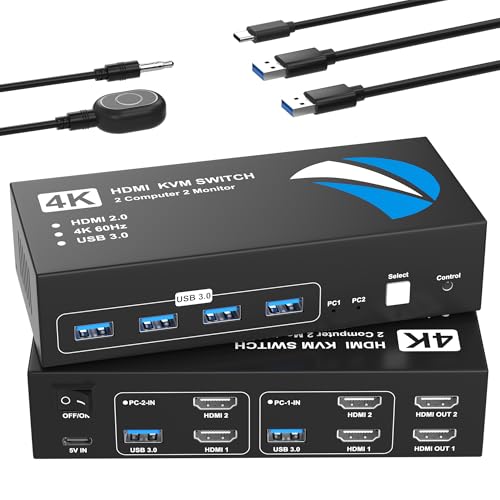
- Two computers share two HDMI monitors
- Supports 4K@60Hz plus mirror/extended modes
- Four USB 3.0 ports for peripherals and storage
Best For: Dual-PC setups that need shared dual monitors and USB devices with simple switching.
Best for High-Refresh Dual-Monitor Setups

- Dual-monitor switching with extended and mirror modes
- Up to 4K@144Hz and 8K@60Hz support
- USB 3.0 sharing for four peripherals
Best For: Users with two DisplayPort PCs and dual monitors who want fast refresh performance and desktop controller convenience.
Best for Dual-4K Workstations
Heravo USB 3.0 HDMI KVM Switch
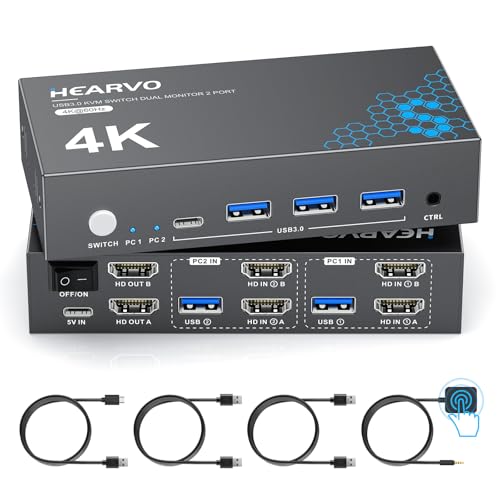
- 2 computers share 2 monitors at 4K@60Hz
- 4 USB 3.0 ports for peripherals and storage
- EDID support helps stabilize display switching
Best For: Dual-monitor home offices and remote work setups that need reliable 4K sharing.
Best for Dual-4K Desk Sharing
HDMI KVM Switch for 2 PCs, 2 Monitors

- 2 computers, 2 monitors, and 4 USB 3.0 ports
- Supports up to 4K@60Hz when all gear is compatible
- Switch with front button or wired remote
Best For: People who want a simple dual-monitor KVM for two computers with shared USB peripherals.
Best with Extra Features
4K@120Hz Dual-Monitor KVM Switch

- Dual computers, dual monitors, and extended/copy mode
- Up to 4K@120Hz with 4 USB 3.0 shared ports
- Button or wired-controller switching; no hotkeys
Best For: Users who want a dual-monitor KVM with high refresh support and simple physical switching.
Best for Single-Cable Dual-Display PC Setups – Unitek DP KVM Switch 2 Computers 2 Monitors
If you want a practical kvm switch for dual computers and dual monitors without running extra video cables to each screen, the Unitek DisplayPort model is a strong fit. It lets one keyboard and mouse control two desktops while sharing two monitors, with 4K@60Hz support and handy USB 3.0 expansion for peripherals.
Best For: Desktop users who want a tidy dual-monitor workstation for Windows, macOS, or Linux systems with DisplayPort output only.
Pros:
- Uses one DisplayPort per computer to drive two monitors, reducing cable clutter
- Supports 4K@60Hz plus 2K/1080p for flexible display setups
- Includes 4 USB 3.0 ports for shared accessories like drives, printers, and webcams
- Fast switching via front button or wired remote with no driver installation
Cons:
- Not compatible with laptops
- DisplayPort-only design limits use with HDMI-only devices
- macOS does not fully support MST, so expanded dual-display behavior is limited
For buyers who need a straightforward kvm switch for dual computers and dual monitors and already have DisplayPort desktops, this Unitek unit focuses on clean wiring, strong refresh/resolution support, and easy daily switching rather than broad device compatibility.
Best High-Refresh Pick – DisplayPort KVM Switch for 2 PCs, 2 Monitors
This kvm switch for dual computers and dual monitors is built for users who want sharp 4K output, smooth high-refresh performance, and support for two shared screens plus USB peripherals. It’s a practical fit if your setup uses DisplayPort on both machines and you need easy switching without sacrificing image quality.
Best For: Dual-PC workstations, gaming desks, or productivity setups that need 2 monitors, 4 USB devices, and 4K@144Hz support.
Pros:
- Supports dual DisplayPort monitors with extended or mirror mode
- Up to 4K@144Hz for high-end displays and smoother motion
- Includes 4 USB 3.0 ports for keyboard, mouse, and other peripherals
- External controller and front button make switching simple
Cons:
- Requires two DisplayPort outputs per computer
- No hotkey switching support
- DisplayPort cables are not included
For buyers comparing a kvm switch for dual computers and dual monitors, this model stands out for its 4K@144Hz support and straightforward dual-screen sharing. Just make sure both PCs and monitors are compatible with the required DisplayPort connections before buying.
Best Dual-Monitor Sharing – HDMI KVM Switch for 2 Computers
If you need a kvm switch for dual computers and dual monitors, this model is built for exactly that workflow: two PCs can share two HDMI displays plus four USB peripherals, with support for 4K@60Hz and simple button-based switching. It’s a practical fit for desk setups where you want one keyboard, mouse, printer, and flash drive to move between systems without constant cable swapping.
Best For: Dual-PC workstations that need two monitors, USB sharing, and straightforward manual switching in an office or home setup.
Pros:
- Supports two computers on two monitors with mirror and extended modes
- Offers crisp 4K@60Hz output for compatible monitors and cables
- Shares up to four USB 3.0 devices at speeds up to 5Gbps
- Includes a desktop controller for easy switching
Cons:
- Each computer must have two HDMI ports and one USB-A port
- Docking stations and extra adapter cables are not supported
- Needs full 4K@60Hz support across the PC, cables, and monitors
For buyers comparing a kvm switch for dual computers and dual monitors, this one stands out for its combination of dual-screen support, USB 3.0 sharing, and broad OS compatibility. Just make sure your computers already have the required ports, because the setup is more direct than flexible.
Best for High-Refresh Dual-Monitor Setups – 4K@144Hz DP KVM Switch
If you need a kvm switch for dual computers and dual monitors with high refresh support, this DisplayPort model stands out for 4K@144Hz operation and up to 8K@60Hz compatibility. It’s built for users who want to share two monitors, a keyboard, a mouse, and several USB peripherals between two desktops while keeping an extended or mirrored desktop layout.
Best For: Desktop users with two DisplayPort-equipped PCs and dual monitors who want smooth high-refresh switching for gaming, productivity, or multi-window work.
Pros:
- Supports dual monitors with extended and mirror modes
- High refresh capability up to 4K@144Hz and 8K@60Hz
- USB 3.0 sharing for up to four peripherals
- Includes a desktop controller for easy switching
Cons:
- Requires two DP outputs on each computer and DP inputs on both monitors
- No HDMI adapters or conversion cables supported
- Not recommended for Mac setups
This is a strong pick if your setup already matches the DisplayPort-only requirements and you want a kvm switch for dual computers and dual monitors that can handle demanding refresh rates without sacrificing desk organization. The tradeoff is strict compatibility, but for the right hardware it offers a clean, capable two-PC workflow.
Best for Dual-4K Workstations – Heravo USB 3.0 HDMI KVM Switch
If you need a kvm switch for dual computers and dual monitors that can handle everyday office work without adding much complexity, the Heravo S7232H2 is a solid pick. It supports two HDMI displays at up to 4K@60Hz, shares four USB 3.0 ports, and includes EDID help for more stable monitor recognition when switching between systems.
Best For: Dual-monitor home offices, remote work setups, and IT users who want smooth 4K sharing with multiple USB peripherals.
Pros:
- Supports 2 computers sharing 2 monitors at 4K@60Hz
- Four USB 3.0 ports make it easy to share keyboards, printers, webcams, and drives
- Adaptive EDID helps reduce resolution and display handshake issues
- Button and wired remote switching keep desk setup flexible
Cons:
- Requires six HDMI 2.0 cables for a full dual-monitor setup
- Not a simple one-cable dock, so initial wiring takes some planning
- Best suited to HDMI-based systems rather than mixed video inputs
For buyers comparing a kvm switch for dual computers and dual monitors, this model stands out for its 4K60 output, broader USB sharing, and EDID support that helps keep switching smooth in practical work environments.
Best for High-Refresh Dual Displays – 8K HDMI KVM Switch for 2 Computers
If you need a kvm switch for dual computers and dual monitors that can handle sharp image quality and fast refresh rates, this 8K HDMI model is built for that job. It supports both mirror and extended display modes, so it works well for productivity setups where one PC is used across two screens.
Best For: Users who want dual-monitor switching with 4K@120Hz support, USB 3.0 sharing, and external power for a stable desktop setup.
Pros:
- Supports dual monitors in both copy and extended display modes
- Up to 8K@60Hz and 4K@120Hz for high-end visuals
- Four USB 3.0 ports let you share peripherals and accessories
- Includes external power for more stable USB device performance
Cons:
- Requires each computer to have two HDMI outputs
- Hotkey switching is not supported
- High-power USB devices need the included 12V adapter
This is a strong pick if your kvm switch for dual computers and dual monitors needs modern resolution support and peripheral sharing without sacrificing desktop flexibility. Just make sure your PCs already support dual HDMI output before buying.
Best for Dual-4K Desk Sharing – HDMI KVM Switch for 2 PCs, 2 Monitors
If you need a kvm switch for dual computers and dual monitors that can keep two workstations and two displays in sync, this model is built for a practical desk setup. It supports two HDMI outputs per PC, shares four USB 3.0 peripherals, and offers 4K@60Hz performance when your computers, cables, and monitors all support it.
Best For: Users who want one switch to run dual-monitor setups between two computers with USB accessory sharing.
Pros:
- Supports 2 computers, 2 monitors, and 4 USB 3.0 peripherals
- Up to 4K@60Hz output for sharp, smooth display quality
- Includes both front-panel switching and a wired remote controller
- Metal case helps with durability and heat management
Cons:
- Each computer must have 2 HDMI ports and 1 USB-A port
- Not compatible with dock-based or adapter-based dual-monitor setups
- No keyboard hotkey switching support
This is a solid pick if your setup matches its requirements and you want a straightforward kvm switch for dual computers and dual monitors without extra hubs or complicated software. It’s most appealing for clean dual-screen desk sharing where stable video and basic USB expansion matter more than advanced switching features.
Best with Extra Features – 4K@120Hz Dual-Monitor KVM Switch
If you want a kvm switch for dual computers and dual monitors that can also handle fast gaming or creator workflows, this model stands out for its 4K@120Hz support and dual-monitor sharing. It lets two computers share two displays, a keyboard, a mouse, and up to four USB 3.0 devices, with both extended and mirror modes for more flexible desk setups.
Best For: Users who need a dual-monitor KVM with high refresh rate support, multiple USB peripherals, and simple push-button switching.
Pros:
- Supports dual computers and dual monitors with extended or copy mode
- Up to 4K@120Hz output for sharp, smooth visuals when your gear supports it
- Four USB 3.0 ports make it easy to share peripherals and storage devices
- Includes both panel-button and wired controller switching options
Cons:
- No hotkey switching, so you must use the button or wired controller
- Each computer needs two HDMI outputs and compatible multi-monitor support
- 4K@120Hz requires HDMI cables, PC, and monitors that all support it
This is a strong pick if you need a kvm switch for dual computers and dual monitors with better-than-average video performance and straightforward physical switching. It’s especially appealing for users who want one desk setup for work and play without giving up high-resolution display quality.
Best for High-Resolution Dual-Display Switching – HDMI KVM Switch for 2 PCs, 2 Monitors
If you need a kvm switch for dual computers and dual monitors that keeps both screens running in 4K, this HDMI model is a practical pick. It handles two PCs, two displays, and a shared set of USB peripherals, making it a straightforward way to clean up a multi-device desk without giving up image quality.
Best For: Users who want dual-monitor 4K switching with USB device sharing for work, gaming, or home office setups.
Pros:
- Supports two computers and two HDMI monitors in one switch
- 4K at 60Hz output keeps text, media, and visuals sharp
- Includes 4 USB 3.0 ports for peripherals and accessories
- Simple switching via button or included external controller
Cons:
- No hotkey switching support
- Requires HDMI-based devices for both displays
- May be more than needed for basic single-monitor setups
For shoppers comparing a kvm switch for dual computers and dual monitors, this one stands out for its 4K60Hz support and built-in USB expansion. It’s a solid fit if you want a clean, centralized setup without extra hubs or complicated software.
Best for 8K Dual-Monitor Setups – 8K HDMI KVM Switch for 2 PCs
If you need a kvm switch for dual computers and dual monitors with serious resolution support, this 8K HDMI model is built for high-end desktop setups. It lets you run two PCs on two displays while sharing a keyboard, mouse, and USB peripherals, making it a practical fit for workstations, content creation, and multi-device offices.
Best For: Users who want an 8K-capable dual-monitor KVM with simple switching and USB 3.0 peripheral sharing.
Pros:
- Supports dual monitors for two computers with up to 8K@60Hz output
- Includes 3 USB 3.0 ports for fast sharing of accessories and storage
- EDID adaptation helps keep display handoff stable and reduce glitches
- Button and wired controller switching make it easy to move between PCs
Cons:
- No hotkey switching, so changing inputs is less flexible than some competitors
- 8K performance depends on high-quality HDMI 2.1 cables
- May be more than some buyers need if they only use 1080p or 1440p monitors
For buyers comparing a kvm switch for dual computers and dual monitors, this one stands out for headline resolution support and straightforward plug-and-play operation. It is best suited to users who value display quality and stable daily switching over advanced shortcut controls.
How We Picked the Best Kvm Switch for Dual Computers and Dual Monitors
For this roundup of the best Kvm Switch for Dual Computers and Dual Monitors options, we prioritized real-world compatibility, display performance, USB expansion, and how well each unit supports everyday switching between two PCs or laptops. We also weighed whether a model is better suited to office work, creative use, or high-refresh gaming.
Quick Comparison
The main differences usually come down to connector type, supported resolution and refresh rate, number of shared USB ports, and whether the switch supports extended or mirrored display modes. HDMI models are often simpler for mainstream monitors, while DisplayPort options are better for higher refresh rates and many gaming monitors.
Key Buying Factors for a Kvm Switch for Dual Computers and Dual Monitors
Video Standard and Refresh Rate
Match the switch to your monitors first. If you use 4K displays at 60Hz, most buyers will be fine with a standard 4K/60Hz model. If you game or edit on high-refresh panels, look for 4K/120Hz, 4K/144Hz, or 8K-rated hardware so you do not bottleneck the signal.
HDMI Vs. DisplayPort
Choose HDMI for broad compatibility and simpler everyday office use. Choose DisplayPort if your monitors and graphics cards support it and you want better odds of higher refresh rates, adaptive sync support, or stronger PC-monitor pairing.
USB Sharing and Peripherals
A good Kvm Switch for Dual Computers and Dual Monitors should handle your keyboard and mouse without lag, but extra USB 3.0 ports are especially useful if you also share a webcam, printer, headset dock, or external drive.
Switching Modes and Display Behavior
Check whether the unit supports extended desktop, copy/mirror mode, or both. Extended mode is ideal for productivity, while mirrored mode can help presentations and simple sharing setups.
Who Needs Which Type
Office users and remote workers should favor stable 4K/60Hz models with enough USB ports for daily accessories. Gamers and power users should look for higher bandwidth DisplayPort or HDMI models with 120Hz or 144Hz support. If you mainly want a clean workstation and easy monitor sharing, a well-rated 4K/60Hz unit is usually the safest buy.
Who Should Buy Which Kvm Switch for Dual Computers and Dual Monitors?
Choose a basic 4K/60Hz switch if your priority is dependable switching and better desk organization. Step up to a high-refresh model if you want smoother gameplay or sharper motion on a fast monitor. If you run mixed devices, pick the switch that matches the ports on both computers and monitors rather than chasing the highest spec alone.
