
If you want smoother, cleaner game capture, an internal card can be a major upgrade over a USB-only setup. The best options for a streaming PC deliver low latency, strong passthrough, and reliable recording quality.
Below, you’ll find 10 standout picks chosen for resolution support, platform compatibility, and overall value so you can match the right card to your build and stream goals.
Best 10 Internal Capture Card for Streaming PC Picks for 2026
Flagship PCIe Pick
Elgato 4K Pro Internal Capture Card

- 8K60 passthrough with 4K60 HDR10 capture
- HDMI 2.1 and up to 1080p240 recording
- VRR passthrough and ultra-low latency
Best For: Premium dual-PC and high-refresh streaming setups
Value Hybrid Choice

- Captures in 4K30 or 1080p120
- 4K60 HDR/VRR passthrough support
- Works with OBS, Streamlabs, and more
Best For: Flexible streamers who want USB-C convenience
High-FPS Internal Option

- 4K60 passthrough with 4K capture
- 1080p240 recording for high-motion gameplay
- Near-zero latency and wide app compatibility
Best For: PC streamers wanting a simple PCIe card with fast capture
Compact Premium Pick

- 4K60 capture with high-FPS passthrough
- HDR10 support and near-zero latency
- Analog audio input for chat or commentary
Best For: Console creators who want a compact modern capture setup
PCIe 1080p60 Pick

- 1080p60 capture with ultra-low latency
- Uncompressed or compressed recording options
- Driver-free setup with OBS/XSplit support
Best For: Streamers who want a reliable PCIe card for full-HD capture and easy setup
4K HDR Performance Pick

- 4K60 HDR10 capture with zero-lag passthrough
- High-frame-rate recording up to 240 fps
- Works with OBS, Streamlabs, XSplit, Twitch, and YouTube
Best For: Streamers and gamers who want 4K HDR capture and high-frame-rate recording
Cross-Platform Flex Pick

- Plug-and-play setup with no drivers needed
- 1080p60 capture with 4K60 HDR passthrough
- Works across Windows, macOS, and iPadOS
Best For: Creators who want easy setup and cross-platform support with 1080p60 capture
HDMI 2.1 4K60 PCIe

- 4K60 capture with ultra-low latency
- HDMI 2.1 and up to 240Hz support
- Native ultra-wide resolution support
Best For: Streamers who want an internal PCIe card for 4K60 and high-refresh console capture
4K144 Passthrough RGB

- 4K60 capture with HDMI 2.1
- 4K144 HDR/VRR passthrough
- Built-in party chat and 5.1 audio capture
Best For: PC and Mac streamers who want high-end passthrough and party chat support
Drive-Free PCIe 4K60
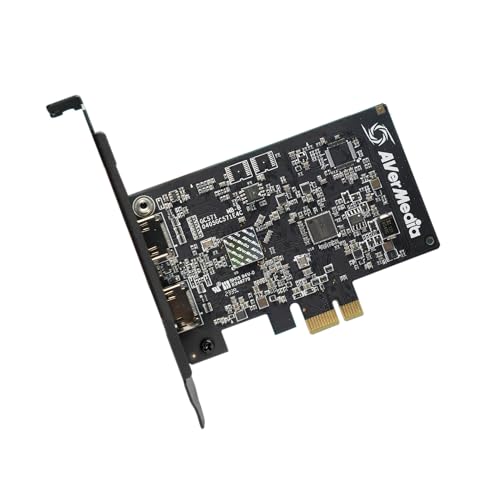
- Drive-free plug-and-play PCIe install
- 4K60 passthrough with 4K30 capture
- 1080p120 and VRR support
Best For: Users who want simple internal capture with easy setup and solid passthrough
Flagship PCIe Pick – Elgato 4K Pro Internal Capture Card
If you want an internal capture card for streaming pc that prioritizes top-end passthrough and clean capture, the Elgato 4K Pro is built for demanding dual-PC and console setups. It supports 8K60 passthrough, 4K60 HDR10 capture, HDMI 2.1, and up to 1080p240 recording, making it a strong fit for high-refresh gameplay and flexible broadcast workflows.
Best For: Streamers who want a premium PCIe card with HDMI 2.1, 4K60 capture, and dual-PC compatibility.
Pros:
- 8K60 passthrough with 4K60 HDR10 capture for high-end gaming rigs
- HDMI 2.1 support and up to 1080p240 recording for high-frame-rate content
- VRR passthrough helps reduce screen tearing during gameplay
- Ultra-low latency is useful for keeping gameplay and broadcast in sync
Cons:
- Requires a Windows 10 PC and a PCIe slot
- May be more card than needed if you only stream at basic settings
This is the most feature-rich option in the group, especially if your setup depends on modern HDMI 2.1 features and smooth dual-PC streaming. It is best suited to users who want a serious internal card rather than a simple plug-and-play solution.
Value Hybrid Choice – 4K USB-C Capture Card for PC
If you need an internal capture card for streaming pc features without committing to a PCIe install, this USB-C model is a versatile budget-friendly route for PC and console capture. It handles 4K30 or 1080p120 capture, includes 4K60 HDR/VRR passthrough, and works with common streaming apps like OBS and Streamlabs.
Best For: Streamers who want flexible console capture, broad software support, and an easier USB-based setup.
Pros:
- Captures in 4K30 or 1080p120 for streaming and recording
- 4K60 HDR/VRR passthrough helps preserve gameplay quality on the main display
- Compatible with OBS, Streamlabs, Twitch Studio, Restream, Zoom, and Teams
- Works across Windows, macOS, and Linux, with USB-C connectivity
Cons:
- Not an internal PCIe card, so it may not suit every streaming PC build
- Captures at 4K30 rather than 4K60
This is a practical middle-ground option if you want strong passthrough and wide app support without the installation requirements of an internal card. It is especially appealing for users who move between consoles and PCs.
High-FPS Internal Option – VIXLW 4K PCIe Capture Card
For buyers seeking an internal capture card for streaming pc with strong console support and fast frame-rate recording, the VIXLW 4K PCIe model covers the essentials well. It offers 4K60 passthrough, 4K capture, 1080p240 recording, and ultra-low latency, making it a fit for single- or dual-PC streaming setups.
Best For: Streamers who want an internal PCIe card with 4K60 passthrough and high-FPS recording.
Pros:
- Dual 4K60 performance for native gameplay and matching capture quality
- 1080p240 recording for fast-action highlights
- Near-zero latency passthrough for smoother gameplay monitoring
- Compatible with OBS, YouTube, Zoom, and Teams
Cons:
- Windows-only support may limit cross-platform use
- Product details are more focused on capture specs than on extra hardware features
If you want a straightforward PCIe card with strong frame-rate capture and low-latency passthrough, this is an appealing contender. The lifetime warranty support also adds peace of mind for long-term use.
Compact Premium Pick – Elgato 4K S Capture Card
The Elgato 4K S is a compact option for buyers who want an internal capture card for streaming pc-style console workflows with modern passthrough and strong capture quality. It supports 4K60 capture, 1440p120 or 1080p240 passthrough, HDR10 support on Windows, and near-zero latency for responsive gameplay monitoring.
Best For: Gamers who want a small, modern capture card for PS5, Xbox Series X/S, or Switch 2 setups.
Pros:
- 4K60 capture with high-frame-rate passthrough options
- HDR10 support on Windows with tone mapping
- Near-zero latency helps keep gameplay and stream aligned
- Analog audio input supports in-game chat or commentary capture
Cons:
- Built around USB-C rather than a PCIe internal install
- Best feature support depends on Windows 11 or compatible modern devices
This model is a strong choice if you want Elgato’s polished feature set in a compact form factor. It suits console creators who value quality capture, modern passthrough, and audio flexibility.
PCIe 1080p60 Pick – AVerMedia Live Gamer HD 2
If you want an internal capture card for streaming pc setups with a straightforward PCIe install, the AVerMedia Live Gamer HD 2 is built around 1080p60 recording with ultra-low latency. It suits creators who want uncompressed or compressed capture options, broad console and PC compatibility, and simple software support through UVC/UAC-compliant apps like OBS and XSplit.
Best For: Streamers who want a reliable PCIe card for full-HD capture, low latency, and easy setup.
Pros:
- Captures in full HD 1080p60 with ultra-low latency.
- Supports raw uncompressed or compressed recording.
- Offers multiple 3.5 mm L/R audio inputs for extra devices.
- Driver-free setup and compatibility with OBS/XSplit-style software.
Cons:
- Top capture resolution is 1080p, not 4K.
- Requires a PCIe x1 slot and internal installation.
Overall, this is a practical internal capture card if your priority is dependable 1080p streaming with flexible audio and minimal setup friction. It makes the most sense for users who do not need 4K features but do want a dedicated PCIe solution.
4K HDR Performance Pick – AVerMedia Live Gamer 4K
For an internal capture card for streaming pc builds that need higher-end video support, the AVerMedia Live Gamer 4K focuses on 4K60 HDR10 capture with zero-lag passthrough. It also supports high-frame-rate recording up to 240 fps, making it a strong fit for creators who want more headroom than standard 1080p capture cards provide.
Best For: Streamers and gamers who want 4K HDR capture, fast passthrough, and high-frame-rate recording.
Pros:
- Captures 4K60 HDR10 with zero-lag pass-through.
- Supports high-frame-rate recording up to 240 fps.
- Works with OBS, Streamlabs, XSplit, Twitch, and YouTube.
- Includes RGB lighting and customizable preview/record settings.
Cons:
- Needs a stronger Windows system for 4K60 HDR or 1080p240 use.
- Designed for Windows 10/11, so it is not the most flexible cross-platform option.
This card is a better match for users who want premium capture quality and next-gen console support in an internal PCIe form factor. If your setup can handle the requirements, it offers a lot of performance in one card.
Cross-Platform Flex Pick – AVerMedia StreamLine MINI+
If you want an internal capture card for streaming pc-style workflows but need more flexibility across devices, the AVerMedia StreamLine MINI+ is a plug-and-play option with HDMI and USB-C connectivity. It captures in 1080p60, offers 4K60 HDR passthrough, and supports Windows, macOS, and iPadOS, so it works well for creators who move between platforms.
Best For: Creators who want easy setup, cross-platform support, and 1080p60 capture with 4K60 HDR passthrough.
Pros:
- Plug-and-play setup with no drivers needed.
- Records smooth 1080p60 while passing through 4K60 HDR.
- Supports Windows, macOS, and iPadOS.
- Compatible with OBS, CameraFi, Camo Studio, and AVerMedia Streaming Center.
Cons:
- Capture resolution tops out at 1080p.
- It is a USB capture solution rather than a true PCIe internal card.
This is the most convenient choice if you value quick setup and broad platform support over internal PCIe installation. It is especially useful for streamers who want a simple capture workflow with flexible format options.
HDMI 2.1 4K60 PCIe – Live Gamer 4K 2.1
If you want an internal capture card for streaming pc setups that can keep up with modern consoles, the Live Gamer 4K 2.1 is built around HDMI 2.1 and PCIe Gen 3 x4 performance. It targets 4K60 capture with ultra-low latency, while also supporting high refresh-rate gameplay and ultra-wide resolutions for players who want flexibility beyond basic capture.
Best For: Streamers and creators who want a PCIe internal capture card with HDMI 2.1, 4K60 capture, and high-refresh passthrough support.
Pros:
- 4K60 capture with ultra-low latency for streaming and recording
- HDMI 2.1 support with refresh rates up to 240Hz
- Native ultra-wide resolution support
- PCIe Gen 3 x4 interface for an internal install
Cons:
- Geared toward users who specifically need an internal PCIe setup
- Feature set is centered on HDMI 2.1 workflows
This is a strong pick if your priority is modern console capture with room for high-refresh gaming features. It balances 4K60 recording with advanced passthrough support, making it a practical upgrade for serious streaming rigs.
4K144 Passthrough RGB – Live Gamer Ultra 2.1
For an internal capture card for streaming pc setups that also needs modern passthrough features, the Live Gamer Ultra 2.1 focuses on 4K60 capture with HDMI 2.1 and 4K144 HDR/VRR passthrough. It is aimed at streamers using OBS, Twitch, or Streamlabs who want smooth gameplay, low latency, and extra convenience features in a compact capture device.
Best For: PC and Mac streamers who want 4K60 capture, 4K144 passthrough, and party chat support.
Pros:
- 4K60 capture with HDMI 2.1 input/output
- 4K144 HDR/VRR passthrough for smooth gameplay
- Low-latency capture designed for OBS, Twitch, and YouTube
- Built-in party chat support plus 5.1 channel audio capture
Cons:
- Requires Windows 10/11 x64 or later for the listed software support
- RGB lighting is a nice extra, not a core capture feature
This model is a good fit if you want strong passthrough performance along with capture features that make streaming easier to manage. The party chat support and HDR/VRR passthrough help it stand out for console-focused creators.
Drive-Free PCIe 4K60 – Live Streamer Ultra HD
If you want an internal capture card for streaming pc use without driver setup, the Live Streamer Ultra HD keeps things straightforward with a drive-free, plug-and-play PCIe design. It supports HDMI 2.0 input sources, offers 4K60 passthrough, and includes 4K30 capture plus 1080p120 support for smoother gameplay footage.
Best For: Buyers who want a simple internal PCIe capture card with plug-and-play setup and 4K passthrough.
Pros:
- Drive-free plug-and-play PCIe installation
- 4K60 passthrough with 4K30 capture
- 1080p120 high frame rate support
- VRR support for a more responsive gaming experience
Cons:
- Uses HDMI 2.0 input sources rather than HDMI 2.1
- Capture tops out at 4K30 rather than 4K60
This is the practical choice for users who value easy installation and broad PCIe slot compatibility. It gives you useful passthrough and high-frame-rate options without making the setup process complicated.
How We Picked the Best Internal Capture Card for Streaming PC
For this roundup of the best Internal Capture Card for Streaming PC options, we focused on the features that matter most in real use: capture resolution, passthrough performance, latency, HDR support, and compatibility with popular consoles and streaming software. We also weighed PCIe installation requirements, because an internal card should fit your system without creating unnecessary setup headaches.
Cards that support 4K60 capture, higher refresh-rate passthrough, or HDMI 2.1 features earned extra attention, especially for streamers using PS5, Xbox Series X/S, or newer consoles. We also considered whether a card is better suited for recording, live streaming, or both.
Quick Comparison
If you mostly stream at 1080p, a well-tuned PCIe card with stable 60 fps capture is often enough and can be the most affordable choice. If you want sharper footage, smoother gameplay monitoring, or future-proofing for modern consoles, look for 4K60 capture and high-refresh passthrough such as 1440p120 or 1080p240. HDMI 2.1 support is especially useful if you want to preserve advanced console output features while capturing from a second PC.
In short: choose by your output display, target stream resolution, and whether passthrough or raw capture matters more to your workflow.
Key Buying Factors for an Internal Capture Card for Streaming PC
Capture Resolution and Frame Rate
Match the card to your actual content. 1080p60 remains the baseline for most streams, but 4K60 capture gives you more flexibility for editing, archival recording, and higher-end production. If you plan to play fast competitive games, passthrough support at 120 Hz or higher can make a noticeable difference.
Passthrough and HDMI Version
Passthrough determines what you see on your gaming monitor while the card is capturing. HDMI 2.1 models are better suited to modern consoles and high-refresh displays, while HDMI 2.0 cards may be perfectly adequate for more modest setups. Make sure the passthrough spec matches your monitor and console settings.
Latency and Software Stability
Low latency matters if you monitor gameplay through the card or run a dual-PC streaming setup. Just as important is driver and software reliability, since a stable capture card can save you time during long streams and recordings.
System Compatibility
Check PCIe slot availability, case clearance, and motherboard support before buying. Some internal cards are designed specifically for Windows streaming rigs, while others focus on broader console compatibility.
Who Should Buy Which Internal Capture Card for Streaming PC?
If you’re a beginner streamer building on a budget, a solid 1080p capture card is usually the easiest place to start. If you stream console games and want clean 4K output with modern passthrough features, step up to a 4K60 or HDMI 2.1 model.
For creators who record content for YouTube, edit gameplay clips, or want a setup that stays relevant longer, a premium internal card with stronger passthrough and HDR support is the smarter long-term buy. The best choice is the one that fits both your current stream quality and the monitor, console, and PC hardware you already own.
