
Choosing the right capture card can make your OBS streams look cleaner, run smoother, and feel more responsive. The best options balance video quality, passthrough support, latency, and compatibility with your setup.
Below, we’ve narrowed the field to 10 strong picks for creators who want dependable performance for gaming, teaching, conferencing, or multi-device recording.
Best 10 Internal Capture Card for Obs Picks for 2026
Premium Internal 4K HDR Capture

- 4K60 HDR10 capture with zero-lag pass-through
- Up to 240 fps recording support
- Works with OBS, Streamlabs, XSplit, Twitch, and YouTube
Best For: Creators who want 4K60 HDR10 capture in an internal PCIe card
Budget USB Streaming Capture

- Captures up to 1080p60 or 2K30
- 4K 60Hz HDMI input with loop-out
- Mic-in support and broad software compatibility
Best For: Budget-conscious streamers needing simple OBS capture with mic commentary
High-End HDMI 2.1 Internal Capture

- 8K60 passthrough and 4K60 HDR10 capture
- Up to 1080p240 recording with HDMI 2.1
- VRR passthrough and low-latency design
Best For: Advanced streamers building a premium HDMI 2.1 setup
Flexible USB OBS Capture

- Up to 1080p60 capture with 2K30 support
- 4K60 HDMI pass-through with low latency
- Mic input plus audio out and monitoring ports
Best For: Creators who want a compact USB capture card with commentary support
PCIe 4K powerhouse
VIXLW 4K Internal Capture Card for OBS

- 4K60 passthrough for smooth gameplay monitoring
- Up to 1080p240 recording for fast-action content
- Works with OBS, YouTube, Zoom, and Teams
Best For: Windows streamers who want a low-latency internal PCIe capture card
Portable USB pick
Guermok 4K USB3.0 Capture Card for OBS
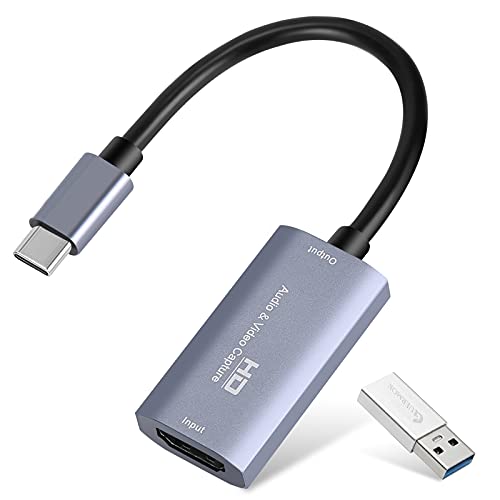
- Up to 1080p60 capture with 4K30 input support
- Plug-and-play design with no external power needed
- Works with OBS, Zoom, and major platforms
Best For: Portable creators who want an easy USB capture setup for OBS
Premium USB-C option
Elgato 4K S Capture Card for OBS

- 4K60 capture with HDR10 support on Windows
- 1440p120 or 1080p240 passthrough for smooth play
- Includes analog audio input for commentary or chat
Best For: Creators who want a premium USB-C capture card with high-frame-rate passthrough
Multi-Input PCIe Pick
ACASIS 4K HDMI PCIe Capture Card

- Captures 4 HDMI sources at once
- PCIe internal design with ultra-low latency
- Built-in fan helps manage heat
Best For: OBS streamers building a multicam desktop setup
Plug-and-Play USB Pick
USB Capture Card for Streaming, YUY2 1080P 60FPS

- USB 3.0 plug-and-play with no drivers
- YUY2 1080p60 capture and 4K@30 pass-through
- Includes a 3.5mm audio port
Best For: Creators who want easy OBS capture with built-in audio input
Portable USB Streaming Pick
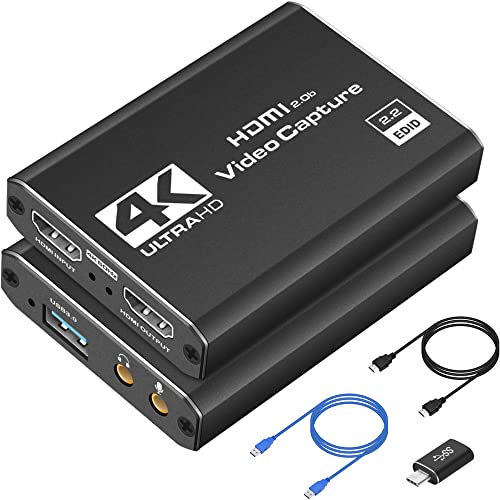
- USB 3.0 plug-and-play setup
- HDMI loop-out for passthrough gaming
- Works with consoles, PCs, and DSLRs
Best For: Portable OBS streaming from consoles and cameras
Premium Internal 4K HDR Capture – AVerMedia Live Gamer 4K
If you want an internal capture card for OBS that is built for high-end gameplay recording, the AVerMedia GC573 is aimed squarely at 4K HDR setups. It supports 4K60 HDR10 capture with zero-lag pass-through, and it’s also designed for high-frame-rate recording when you need smooth motion for competitive content.
Best For: Streamers and creators who want 4K60 HDR10 capture with internal PCIe installation and next-gen console support.
Pros:
- 4K60 HDR10 capture with zero-lag pass-through
- Supports up to 240 fps recording for high-frame-rate workflows
- Works with OBS, Streamlabs, XSplit, Twitch, and YouTube
- Includes RGB lighting and customization via AVerMedia Gaming Utility
Cons:
- Requires a compatible Windows 10/11 system and PCIe x4 slot
- Higher system requirements for 4K60 HDR or 1080p240 use
This is a strong pick if you want an internal solution focused on premium image quality and ultra-low latency. It fits best in a performance-oriented PC build where 4K HDR capture and smooth pass-through matter most.
Budget USB Streaming Capture – XIIXMASK 4K Loop-Out Card
The XIIXMASK capture card is a practical option if you need an affordable internal-capture-card-style workflow for OBS, but with the convenience of USB 3.0. It supports 4K HDMI input and loop-out, while capturing up to 1080p60 or 2K30, making it useful for live streaming, recording, and online meetings.
Best For: Streamers who want a low-cost USB capture solution with mic-in support and broad device compatibility.
Pros:
- 4K 60Hz HDMI input and loop-out with 1080p60 / 2K30 capture
- Mic-in support for commentary and voice recording
- Works with OBS Studio, Streamlabs, Zoom, VLC, and more
- Wide compatibility across Windows, macOS, Linux, Android, and common game consoles
Cons:
- Capture resolution is limited to 1080p60 or 2K30 rather than 4K recording
- Mic support does not include party chat recording
For OBS users who mainly need dependable 1080p capture and simple setup, this model covers the basics well. It is especially appealing if you want loop-through monitoring, commentary input, and broad device support without paying for a premium internal card.
High-End HDMI 2.1 Internal Capture – Elgato 4K Pro
The Elgato 4K Pro is a high-end internal capture card for OBS users who want modern HDMI 2.1 features and premium passthrough performance. It supports 8K60 passthrough, 4K60 HDR10 capture, VRR passthrough, and up to 1080p240 recording, making it a strong fit for advanced console and PC setups.
Best For: High-performance streamers who want HDMI 2.1 passthrough, VRR support, and dual-PC compatibility.
Pros:
- 8K60 passthrough with 4K60 HDR10 capture
- HDMI 2.1 in/out with up to 1080p240 recording
- VRR passthrough helps reduce screen tearing
- Works with OBS, Streamlabs, Twitch Studio, Restream, Zoom, and Teams
Cons:
- Requires a Windows 10 system and PCIe slot
- Its feature set is more than casual 1080p-only users may need
If you are building a top-tier streaming rig, this card is designed to keep pace with modern gaming hardware. It stands out for its HDMI 2.1 connectivity, high refresh support, and low-latency design for polished OBS workflows.
Flexible USB OBS Capture – Guermok 1080p60 HDMI Card
The Guermok capture card is a flexible USB 3.0 option for OBS users who want 1080p60 capture with simple plug-and-play operation. It supports 4K60 HDMI pass-through, offers mic and audio ports for commentary setups, and is positioned for streaming, recording, and live production across a wide range of devices.
Best For: Streamers and creators who want a compact USB capture card with audio inputs and wide compatibility.
Pros:
- Captures up to 1080p60 and 2K30
- 4K60 HDMI pass-through with ultra-low latency
- Mic input, audio in, headphone monitoring, and speaker output ports
- Compatible with OBS Studio, Streamlabs, VLC, XSplit, Zoom, and Teams
Cons:
- Capture performance depends on software and USB bandwidth
- Mic input supports standard 3.5mm TRS microphones only
This is a sensible choice if you want a capture device that handles commentary and monitoring cleanly without complicated setup. Its broad compatibility and low-latency pass-through make it useful for gaming, meetings, and general content creation.
PCIe 4K powerhouse – VIXLW 4K Internal Capture Card for OBS
If you want an internal capture card for OBS that prioritizes smooth passthrough and high-end capture specs, the VIXLW PCIe model is built for serious streaming and recording. It supports 4K60 passthrough, 4K capture, and up to 1080p240 recording, making it a strong fit for creators who want responsive gameplay monitoring and flexible output options in Windows-based setups.
Best For: Streamers and dual-PC users who want 4K60 passthrough with very low latency and high-frame-rate capture.
Pros:
- 4K60 passthrough lets you play in native 4K while capturing at 4K60.
- 1080p240 recording is useful for high-motion gameplay and fast-action clips.
- Near-zero latency passthrough helps keep gameplay and broadcast in sync.
- Works with OBS, YouTube, Zoom, and Teams for broad creator use.
Cons:
- Windows-only support may limit use for non-Windows builds.
- Focuses on HDMI-based console and PC capture rather than broader device types.
Overall, this is a compelling internal capture card for OBS if your priority is strong passthrough performance and high capture headroom. The lifetime warranty support also adds peace of mind for a permanent streaming setup.
Portable USB pick – Guermok 4K USB3.0 Capture Card for OBS
If you need an internal capture card for OBS performance without a permanent install, the Guermok USB capture card offers a simple plug-and-play path for recording and streaming. It supports up to 1080p60 capture, 2K30 output, and broad device compatibility, so it works well for quick setups, travel use, and casual live production.
Best For: Portable streaming and recording setups that need easy OBS compatibility and wide device support.
Pros:
- Plug-and-play design with no external power or driver install required.
- Supports 1080p60 capture and up to 4K30 input.
- Compatible with OBS Studio, Zoom, and major streaming platforms.
- Small, lightweight build makes it easy to carry for mobile use.
Cons:
- One-way HDMI-to-USB-C transmission only.
- Requires capture software and is not meant for direct monitor passthrough use.
- OBS audio may require a software restart after setup.
This is a practical budget-friendly choice if your OBS workflow values portability and flexibility over internal PCIe installation. Just be aware that it is designed for capture workflows rather than direct display use.
Premium USB-C option – Elgato 4K S Capture Card for OBS
For buyers looking for a premium internal capture card for OBS-style recording workflows with modern console support, the Elgato 4K S is positioned around high-quality capture and flexible passthrough. It records in 4K60, supports 1440p120 or 1080p240 passthrough, and includes HDR10 support on Windows, making it a polished option for newer gaming setups.
Best For: Console and PC creators who want 4K60 capture, high-frame-rate passthrough, and HDR support in a compact USB-C design.
Pros:
- 4K60 capture delivers sharp footage for modern game recordings.
- Supports 1440p120 and 1080p240 passthrough for high-refresh gameplay.
- HDR10 support on Windows adds better tone-mapped capture options.
- Analog audio input can help bring in chat or commentary.
Cons:
- Requires fairly modern system specs, especially on Windows and macOS.
- Captured video resolution is listed as 1080p in the product details, so buyers should check their exact workflow needs.
This is a strong pick if you want a refined capture solution with modern passthrough and audio features. It is especially appealing for users who want a compact USB-C device and already meet the stated system requirements.
Multi-Input PCIe Pick – ACASIS 4K HDMI PCIe Capture Card
If you want an internal capture card for OBS with serious input flexibility, this ACASIS PCIe model is built around multicam capture and low-latency recording. It supports up to four 1080p60 HDMI inputs at once, and the direct PCIe connection is designed for stable, no-compression video workflows.
Best For: OBS users who need multi-camera HDMI capture inside a desktop PC.
Pros:
- Captures up to 4 HDMI sources simultaneously at 1080p60
- PCIe x4 design aims for ultra-low latency and stable performance
- Built-in turbo fan helps with heat dissipation during long sessions
- Compatible with OBS-adjacent workflows and software like vMix, Wirecast, and VLC
Cons:
- Requires a compatible PCIe x4, x8, or x16 desktop slot
- Limited to 1080p capture despite 4K HDMI input support
- Best suited to Windows-based desktop setups, with Linux support listed as well
For creators who need a true internal capture card for OBS and want to expand into multicam streaming, this ACASIS model stands out for its four-input design. It is less about portability and more about dependable, always-installed capture performance.
Plug-and-Play USB Pick – USB Capture Card for Streaming, YUY2 1080P 60FPS
This USB capture card for OBS is a straightforward choice if you want clean 1080p60 capture without installing drivers. It uses USB 3.0, supports YUY2 uncompressed recording, and adds 4K@30Hz pass-through plus a built-in 3.5mm audio port for simpler streaming setups.
Best For: Streamers and creators who want a simple external OBS capture setup with audio input.
Pros:
- USB 3.0 plug-and-play setup with no drivers or extra power supply
- YUY2 1080p60 capture for uncompressed recording
- 4K@30Hz HDMI input and pass-through for real-time viewing
- Built-in 3.5mm audio port for microphone, headphone, or instrument input
Cons:
- Windows-focused details are listed, even though Mac compatibility is mentioned
- Capture resolution tops out at 1080p
- Not an internal card, so it is less ideal for a fully built-in PC workflow
If you need an internal capture card for OBS in function but prefer the simplicity of USB, this model keeps setup fast and flexible. It is especially useful for creators who want HDMI capture plus basic audio handling in one compact device.
Portable USB Streaming Pick – 4K HDMI Capture Card USB 3.0
This 4K HDMI capture card is a practical external option for OBS users who want quick setup, broad device support, and low-latency recording. It captures up to 1080p60, offers HDMI loop-out for passthrough, and works with OBS Studio, Streamlabs, and XSplit right out of the box.
Best For: Gamers and content creators who want a portable OBS capture card for consoles and PCs.
Pros:
- Plug-and-play USB 3.0 design with no drivers needed
- HDMI loop-out supports passthrough while you play
- Compatible with PS5, PS4, Xbox, Switch, DSLRs, and PCs
- Compact and lightweight for travel or event setups
Cons:
- Actual capture resolution is listed as 1080p, not true 4K recording
- External USB format may not suit users specifically looking for an internal capture card for OBS
- Minimum system requirement includes a USB 3.0 port
For most streaming and recording tasks, this model offers the easiest balance of portability, compatibility, and low-latency capture. It is a strong fit if you value a simple external workflow over an internal PCIe installation.
How We Picked the Best Internal Capture Card for Obs
For this roundup of Internal Capture Card for Obs options, we focused on real buyer priorities: capture resolution and frame rate, passthrough capabilities, latency, HDR support, PCIe or USB connectivity, and broad compatibility with common source devices like PS5, Xbox Series X/S, Nintendo Switch, and cameras. We also looked at ease of setup in OBS, especially for creators who want a more reliable workflow with fewer sync issues.
Quick Comparison
Not every creator needs the same feature set. PCIe models are generally the better fit for desktop rigs and higher-end streaming workflows, while USB capture cards are more flexible for laptops, compact setups, and travel. If you game at high refresh rates, look closely at passthrough and refresh support; if you record tutorials or meetings, prioritize stable 1080p capture and simple audio handling.
Key Buying Factors for Internal Capture Card for Obs
Capture and Passthrough Match Your Display Needs
Check both the capture resolution and passthrough resolution. A card may record at 4K60 while supporting even higher passthrough for smooth gameplay on a main monitor. Make sure the passthrough matches your display and console settings so you don’t sacrifice your gaming experience.
Latency and Sync Matter in OBS
Low latency is important if you monitor gameplay, use live commentary, or switch sources often. Look for cards marketed with ultra-low or near-zero latency, and confirm OBS support for your preferred resolution and frame rate.
Choose PCIe or USB Based on Your System
If you have a desktop PC with open expansion slots, an internal PCIe card can offer a cleaner setup and better stability. USB cards are easier to install and move between systems, which is useful if you stream from a laptop or alternate between work and play.
Audio and HDR Support Can Improve Flexibility
Some cards include mic input, audio output, or HDR10 support. These features are helpful if you want more control over commentary, console audio, or color-rich gameplay footage. Not every user needs them, but they can reduce extra adapters and workarounds.
Who Should Buy Which Internal Capture Card for Obs?
Competitive gamers and high-refresh-rate users should lean toward cards with strong passthrough and 4K60-or-better capture. Creators building a permanent streaming PC usually benefit most from an internal PCIe model. If you’re just getting started, need portability, or plan to capture from multiple devices, a USB-based option may be the smarter buy.
For most OBS users, the best choice comes down to your source device, your monitor’s refresh rate, and whether you value installation simplicity or maximum desktop integration.
