
Building a dual-PC streaming rig? The right internal capture card can make gameplay capture cleaner, reduce system strain, and keep your stream smooth.
Below, we focus on cards that balance latency, passthrough, resolution support, and real-world compatibility so you can pick the best fit fast.
Best 10 Internal Capture Card for Dual PC Setup Picks for 2026
Premium PCIe 4K Capture Pick
Elgato 4K Pro for Dual PC Setup

- 4K60 HDR10 capture with 8K60 passthrough
- HDMI 2.1 plus VRR passthrough support
- Works with OBS, Streamlabs, Zoom, Teams, and more
Best For: High-end dual PC streamers who want 4K60 capture and modern passthrough
Budget PCIe Capture Option

- 4K30 capture with zero-delay HDMI loop-out
- PCIe x1 support with plug-and-play setup
- Compatible with OBS, VLC, and multiple OSes
Best For: Budget users who want a simple internal capture card for a dual PC setup
Dual PC Streaming Card

- 4K60 passthrough and 4K60 capture
- 1080p240 recording for fast action
- Near-zero latency and broad software support
Best For: Dual PC streamers who want 4K60 capture with strong high-frame-rate support
Dual HDMI Creator Card
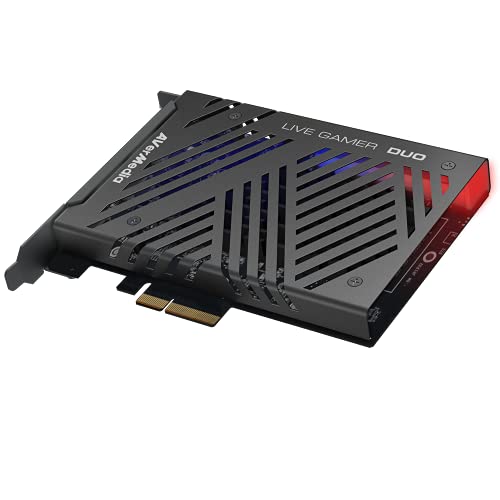
- Dual HDMI inputs in one PCIe x4 slot
- Uncompressed 1080p60 capture from both inputs
- Zero-lag pass-through with onboard processing
Best For: Creators who need dual HDMI inputs for a PC setup plus a camera or console
Portable Plug-and-Play
AVerMedia StreamLine MINI+ GC311G2

- USB-C capture device with plug-and-play setup
- 4K60 HDR passthrough and 1080p60 recording
- Works with OBS and AVerMedia Streaming Center
Best For: Streamers wanting an easy external capture option
PCIe Dual-PC Choice
AVerMedia Live Gamer HD 2 GC570

- Internal PCIe card for dual-PC setups
- 1080p60 capture with low-latency passthrough
- RECentral 4 adds overlays and editing tools
Best For: Dual-PC streamers needing an internal 1080p60 PCIe card
HDMI 2.1 Premium
AVerMedia Live Gamer Ultra 2.1 GC553G2

- External HDMI 2.1 capture with 4K60 recording
- 4K144/4K120 HDR/VRR passthrough
- Party chat support plus RGB lighting
Best For: Gamers wanting a premium external 4K60 capture card
Premium 4K HDR Internal Pick

- 4K60 HDR10 capture with zero-lag pass-through
- Up to 240 fps recording support
- OBS, Streamlabs, XSplit, Twitch, and YouTube compatible
Best For: High-end dual-PC streaming with 4K HDR and fast-motion capture
Value 4K Pass-Through Choice
AVerMedia Live Streamer Ultra HD
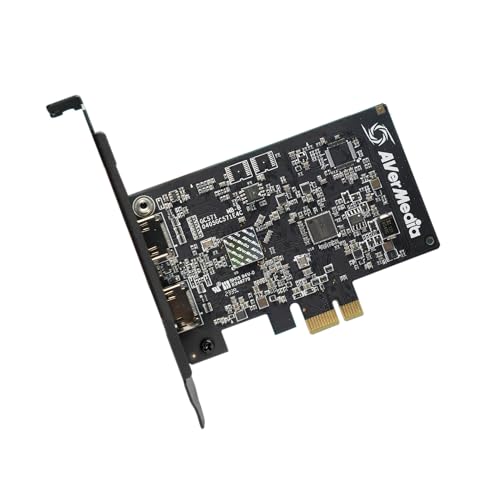
- 4K60 pass-through with 4K30 capture
- VRR support and 1080p120 capture
- Drive-free plug-and-play PCIe install
Best For: Budget-conscious dual-PC setups focused on pass-through and ease of use
HDMI 2.1 Performance Upgrade

- HDMI 2.1 with 4K144 HDR pass-through
- Up to 240Hz refresh rate support
- 1080p240 and 1440p120 capture modes
Best For: High-refresh dual-PC setups that need HDMI 2.1 and 4K144 pass-through
Premium PCIe 4K Capture Pick – Elgato 4K Pro for Dual PC Setup
If you want an internal capture card for dual pc setup that keeps pace with high-end gaming, the Elgato 4K Pro is built for that job. It supports HDMI 2.1, 8K60 passthrough, 4K60 HDR10 capture, VRR passthrough, and ultra-low latency, so it fits a modern gaming PC plus streaming PC workflow without forcing compromises on play quality.
Best For: High-end dual PC streamers who want 4K60 capture, HDMI 2.1 passthrough, and broad app support.
Pros:
- Captures up to 4K60 HDR10 while passing through up to 8K60.
- HDMI 2.1 support with up to 1080p240 recording for high-frame-rate setups.
- VRR passthrough helps reduce screen tearing during gameplay.
- Works with apps like OBS, Streamlabs, Twitch Studio, Zoom, Teams, and more.
Cons:
- Requires a Windows 10 PC and a PCIe slot.
- May be more card than needed if you only stream at 1080p.
For creators building a serious streaming rig, this card stands out because it combines modern passthrough specs with low-latency capture and wide software support. It is a strong match if your priority is keeping gameplay smooth while recording a polished broadcast feed.
Budget PCIe Capture Option – MYPIN 4K30 HDMI Internal Card
This internal capture card for dual pc setup is a straightforward PCIe option for basic streaming and recording. It captures up to 4K at 30fps, includes zero-delay HDMI loop-out, and supports common tools like OBS and VLC, making it a practical choice when you want a simple wired setup without extra drivers.
Best For: Budget-minded users who need a simple PCIe capture card for streaming or recording at 4K30.
Pros:
- 4K30 capture output for clearer video and smoother motion than lower-res options.
- Zero-delay HDMI loop-out helps with responsive gameplay monitoring.
- PCIe high-speed transmission is positioned as faster than USB 3.0.
- Driver-free plug-and-play setup with broad software compatibility.
Cons:
- Capture resolution tops out at 1080p in the listed product details.
- Not as feature-rich as HDMI 2.1 or high-frame-rate capture cards.
If you mainly need a dependable internal card for basic game streaming, this model keeps the setup simple and compatible across several operating systems. It is best viewed as a practical entry-level option rather than a premium feature card.
Dual PC Streaming Card – VIXLW 4K PCIe Capture Card
The VIXLW card is aimed squarely at creators looking for an internal capture card for dual pc setup with modern passthrough and low latency. It offers 4K60 passthrough, 4K60 capture, 1080p240 recording, and broad compatibility with software like OBS and Zoom, so it can handle both gaming and general streaming tasks.
Best For: Streamers who want 4K60 capture and 240fps recording in a dual PC setup.
Pros:
- Supports 4K60 passthrough and 4K60 capture.
- Records up to 1080p240 for high-motion content.
- Near-zero latency passthrough is designed for responsive gameplay.
- Compatible with OBS, Zoom, Teams, and other software.
Cons:
- Less established brand support than some major capture-card names.
- Product notes do not list operating-system requirements in detail.
For a dual PC streaming build, this card delivers the core features most creators care about: high-resolution passthrough, strong capture specs, and low-latency monitoring. The lifetime warranty and 24-hour customer service add some extra reassurance for buyers who want long-term use.
Dual HDMI Creator Card – AVerMedia Live Gamer Duo
If your internal capture card for dual pc setup also needs to handle a camera or second HDMI source, the AVerMedia Live Gamer Duo is built for that workflow. It offers dual HDMI inputs, zero-lag pass-through, and onboard processing that can downscale 4K to 1080p and convert frame rates to 60 FPS before the signal reaches your PC.
Best For: Creators who want dual HDMI capture for streaming a PC plus a camera or console.
Pros:
- Dual HDMI inputs in a single PCIe x4 card.
- Captures both inputs in uncompressed Full HD 1080p60.
- Zero-lag pass-through supports responsive gameplay up to FHD 240fps or 4K HDR viewing.
- Onboard processing handles HDR-to-SDR tone mapping and 4K-to-1080p downscaling.
Cons:
- Capture resolution is limited to 1080p rather than 4K.
- Listed compatibility is Windows 10 or later, so it is less flexible than cross-platform options.
This card makes the most sense when your stream needs more than one HDMI source, not just a single game feed. It is a strong production-focused choice for streamers who want dual-input versatility and clean, uncompressed 1080p capture.
Portable Plug-and-Play – AVerMedia StreamLine MINI+ GC311G2
If you want an internal capture card for dual pc setup, this model is not the right fit because it is a USB capture device rather than a PCIe card. That said, it is still a practical pick for streaming gameplay to a second PC thanks to its plug-and-play setup, 4K60 HDR passthrough, and smooth 1080p60 recording. It is designed for quick setup with OBS, AVerMedia Streaming Center, and other popular apps.
Best For: Streamers who want an easy external capture solution with low-latency passthrough and simple setup.
Pros:
- 4K60 HDR passthrough with ultra-low latency for real-time gameplay
- Records in 1080p60 while supporting flexible format options like NV12, YUY2, and MJPEG
- Plug-and-play USB-C capture with no driver installation required
- Works with OBS, CameraFi, Camo Studio, and AVerMedia Streaming Center
Cons:
- Not an internal PCIe card for a true dual-PC install
- Capture resolution tops out at 1080p, even though passthrough goes higher
- Best suited to users who are comfortable with an external USB workflow
For buyers comparing an internal capture card for dual pc setup, this one makes the most sense only if you are open to an external alternative. Its strength is simple setup and solid passthrough performance, not internal installation.
PCIe Dual-PC Choice – AVerMedia Live Gamer HD 2 GC570
This internal capture card for dual pc setup is a straightforward PCIe option for 1080p60 streaming and recording. It supports low-latency HDMI passthrough, plug-and-play operation on supported Windows systems, and multi-card support for up to four cards on one gaming PC. The included RECentral 4 software adds live editing, quality controls, and overlay tools.
Best For: Dual-PC streamers who want an internal PCIe card with 1080p60 capture and multi-card flexibility.
Pros:
- Internal PCIe design built for dual-PC capture setups
- Captures and records 1080p60 gameplay with low-latency HDMI passthrough
- Supports up to four cards on one gaming PC
- Includes RECentral 4 for editing, overlays, and quality customization
Cons:
- Capped at 1080p60 capture instead of 4K
- Windows-focused compatibility limits flexibility for other platforms
- Older design compared with newer HDMI 2.1 capture cards
If your priority is an internal capture card for dual pc setup, this is the most directly relevant option in the group. It is best when you want a simple PCIe install, dependable 1080p60 capture, and software tools without paying for 4K features you may not need.
HDMI 2.1 Premium – AVerMedia Live Gamer Ultra 2.1 GC553G2
For an internal capture card for dual pc setup, this model is not the right type because it is an external HDMI 2.1 capture device. Still, it is a strong option if your setup needs 4K60 capture, 4K144/4K120 passthrough, and low-latency gameplay on PS5, Xbox, or PC. It also adds party chat support and customizable RGB lighting.
Best For: Gamers who want a high-end external capture card with HDMI 2.1 passthrough and 4K60 capture.
Pros:
- Captures in 4K60 with HDMI 2.1 passthrough up to 4K144 HDR/VRR
- Low-latency design for real-time gameplay and streaming
- Built-in party chat support with 5.1 channel audio capture
- Customizable RGB lighting for setup personalization
Cons:
- Not an internal PCIe capture card for dual-PC installation
- Requires Windows 10 x64 / 11 x64 or later
- May be more capture card than needed for users who only want 1080p streaming
This is a premium external capture solution rather than the internal card most dual-PC builders are after. Choose it if you want the newest passthrough features and 4K capture, but skip it if your build specifically requires an internal PCIe model.
Premium 4K HDR Internal Pick – AVerMedia GC573 Live Gamer 4K
If you want an internal capture card for dual pc setup that can handle high-end console and PC workflows, the AVerMedia GC573 is built around 4K60 HDR10 capture with ultra-low latency. It also supports high-frame-rate recording up to 240 fps, making it a strong fit when you need smooth footage and a clean pass-through experience in OBS, Streamlabs, XSplit, Twitch, or YouTube.
Best For: Streamers and creators who want 4K60 HDR10 capture with high-frame-rate support in a Windows dual-PC streaming rig.
Pros:
- 4K60 HDR10 capture with zero-lag pass-through
- Supports high-frame-rate recording up to 240 fps
- Works with OBS, Streamlabs, XSplit, Twitch, and YouTube
- Includes RGB lighting and AVerMedia Gaming Utility customization
Cons:
- Requires a Windows 10/11 system and PCIe x4 slot
- Higher-end system requirements for 4K60 HDR or 1080p240 use
For a dual PC setup where capture quality matters as much as smooth pass-through, the GC573 stands out as the most feature-rich option in this group. It is especially appealing if you plan to record next-gen console gameplay or want more headroom for high-frame-rate content.
Value 4K Pass-Through Choice – AVerMedia Live Streamer Ultra HD
The AVerMedia Live Streamer Ultra HD is a practical internal capture card for dual pc setup if you want 4K60 pass-through without stepping up to a more expensive flagship model. It captures at up to 4K30 or 1440p60, adds VRR support, and offers 1080p120 high-frame-rate capture for smoother-looking gameplay footage.
Best For: Dual-PC streamers who want 4K60 pass-through, VRR support, and straightforward PCIe installation.
Pros:
- 4K60 pass-through with 4K30 capture support
- VRR support for a more responsive gaming experience
- 1080p120 high-frame-rate capture
- Drive-free plug-and-play PCIe installation
Cons:
- Capture tops out at 4K30 rather than 4K60
- Listed Windows support is Windows 11, with minimum Windows 10×64/11×64 or later
This model makes sense if your priority is smooth pass-through and flexible compatibility rather than top-tier capture resolution. For many dual-PC streaming builds, the plug-and-play PCIe approach and VRR support make it an easy, low-friction choice.
HDMI 2.1 Performance Upgrade – AVerMedia Live Gamer 4K 2.1
If your internal capture card for dual pc setup needs HDMI 2.1 support and higher refresh-rate flexibility, the AVerMedia Live Gamer 4K 2.1 is the most advanced option here. It supports 4K144 HDR pass-through, refresh rates up to 240Hz, ultra-wide resolutions, and capture modes listed at 1080p240 and 1440p120.
Best For: Dual-PC gamers who want HDMI 2.1 features, 4K144 HDR pass-through, and very high refresh-rate support.
Pros:
- HDMI 2.1 with 4K144 HDR pass-through
- Supports refresh rates up to 240Hz
- Capture modes include 1080p240 and 1440p120
- Plug-and-play installation with ultra-low latency capture
Cons:
- Requires Windows 10/11 x64 or later
- Best suited to users who can take advantage of higher-end HDMI 2.1 features
For a future-facing dual-PC build, this card is the clear performance leader in the lineup. It is the strongest match if you want modern console support, high refresh rates, and room to grow into more demanding capture setups.
How We Picked the Best Internal Capture Card for Dual PC Setup
For an Internal Capture Card for Dual PC Setup, the most important factors are passthrough quality, capture resolution and frame rate, latency, software stability, and PCIe compatibility. We favored cards that can handle modern consoles and high-refresh gaming while staying practical for streaming and recording.
We also looked for features that matter in a two-PC workflow, including reliable HDMI passthrough, strong HDR support where available, and enough performance headroom to avoid bottlenecks during live production.
Quick Comparison
In general, choose a 4K60 card if you want strong all-around value and modern console support, especially if you stream from a gaming PC to a separate production PC. Step up to HDMI 2.1 models if you need higher-refresh passthrough for 120Hz or 144Hz gaming. If your workflow is mostly 1080p streaming, a simpler PCIe card can still be a smart budget pick.
Key Buying Factors for an Internal Capture Card for Dual PC Setup
Passthrough and Refresh Rate
Passthrough determines what you see on your gaming monitor. Look for the highest refresh rate your display and console or GPU can support, especially if you care about 4K120 or 1440p high-refresh gameplay.
Capture Resolution and Frame Rate
For most streamers, 1080p60 capture is the baseline. If you want sharper archives, editing flexibility, or more future-proofing, 4K60 capture is the better long-term choice.
Latency and Stability
Low latency matters in a dual-PC setup because the capture path should not interfere with gameplay feel or add sync issues. Prioritize cards known for stable drivers and dependable software.
System Compatibility
Check PCIe slot availability, motherboard lane layout, and OS support before buying. Some cards need a specific slot configuration or work best when installed on a dedicated capture machine rather than alongside other bandwidth-heavy devices.
Audio and Workflow Features
Some users need clean audio passthrough, multi-card support, or better integration with streaming software. If you run a complex scene setup, these details can save setup time every week.
Who Should Buy Which Internal Capture Card for Dual PC Setup?
If you want the best overall performance and the most future-proof option, look at high-end 4K60 or HDMI 2.1 models. If your goal is dependable streaming on a budget, a 1080p60 internal card is often enough. For console-first setups, choose the card that matches your TV or monitor’s passthrough needs. For creators using cameras, DSLR inputs, or mixed sources, prioritize cards with broader device compatibility and stable low-latency capture.
The best Internal Capture Card for Dual PC Setup is the one that matches your resolution targets, refresh-rate goals, and motherboard layout without adding unnecessary complexity.
