
Great wide-angle lenses can transform landscapes, interiors, travel, and video by fitting more into the frame without sacrificing clarity.
In this roundup, we focus on high-performance wide-angle camera lenses that balance image quality, autofocus, aperture, stabilization, and value across popular DSLR and mirrorless systems.
Best 10 High-Performance Wide-Angle Camera Lenses Picks for 2026
Compact Ultra-Wide Prime
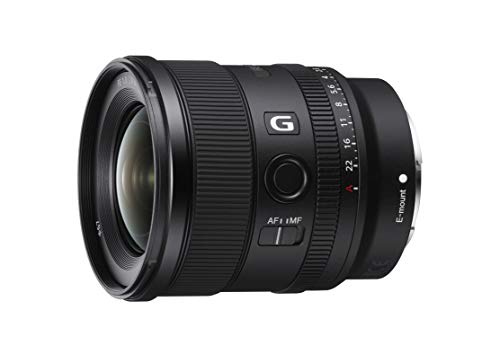
- F1.8 aperture for low-light and depth control
- Compact full-frame ultra-wide prime design
- Fast XD linear autofocus motors
Best For: Full-frame or APS-C photographers wanting a lightweight ultra-wide prime
Versatile DX Zoom

- 10-24mm range suits landscapes and interiors
- SWM autofocus is fast, accurate, and quiet
- Aspherical elements and coating aid image quality
Best For: Nikon DX shooters needing a flexible wide-angle zoom
Manual Ultra-Wide Prime
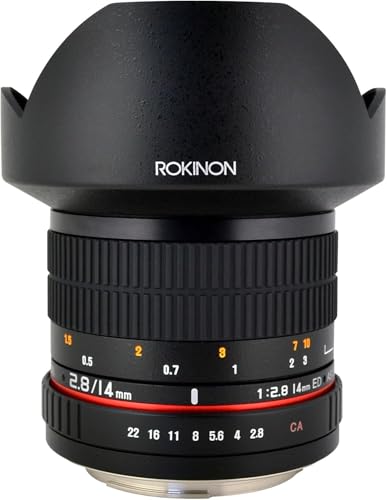
- 14mm ultra-wide view with 115.7° angle
- Fast f/2.8 aperture for low-light scenes
- Manual focus with aspherical optical design
Best For: Canon EF shooters wanting a manual ultra-wide prime
Bright Wide Zoom

- Constant f/3.5 aperture across 10-20mm
- HSM autofocus is silent and fast
- Coating and aspherical elements reduce artifacts
Best For: Nikon DSLR users wanting a constant-aperture wide zoom
Canon APS-C Zoom Pick
Compact Wide-Angle Zoom for Canon APS-C

- 10-18mm ultra-wide zoom for landscapes and interiors
- Optical image stabilization supports steadier handheld shots
- STM autofocus is geared toward quieter video use
Best For: Canon APS-C shooters who want a compact stabilized ultra-wide zoom
Canon RF Mirrorless Pick
Mirrorless Ultra-Wide Zoom for Canon R APS-C

- 10-18mm range suits landscapes, travel, and tight interiors
- 4.0 stops of shake reduction helps handheld shooting
- Compact RF-S design is optimized for mirrorless bodies
Best For: Canon RF APS-C users who want a compact stabilized ultra-wide zoom
Ultra-Wide APS-C Zoom

- 10-18mm APS-C zoom covers 15-27mm equivalent
- Constant f/4 aperture keeps exposure steady
- OSS and close focus help with handheld wide shots
Best For: Sony APS-C users needing a versatile ultra-wide zoom
Best Heavy-Duty Pick

- 16mm full-frame ultra-wide prime for EOS R
- Bright f/2.8 aperture in a lightweight body
- Quiet STM autofocus suits video use
Best For: Canon EOS R users wanting a small ultra-wide prime
Weather-Ready Wide Zoom

- 17-40mm full-frame zoom for wide scenes
- Weather-resistant build with 77mm filter support
- Ring-type USM delivers fast, quiet autofocus
Best For: Canon EF full-frame shooters needing a durable wide zoom
Compact Ultra-Wide Prime – Sony FE 20mm F1.8 G
If you want a strong option in high-performance wide-angle camera lenses, this Sony FE 20mm F1.8 G is built for sharp, wide-open shooting in a compact package. The 20mm focal length, F1.8 aperture, and fast XD linear motors make it a practical choice for handheld landscapes, interiors, and low-light work.
Best For: Full-frame or APS-C shooters who want a lightweight ultra-wide prime with fast autofocus and strong low-light capability.
Pros:
- F1.8 max aperture supports low-light shooting and shallow depth of field.
- Compact, lightweight design is easy to carry for travel and field work.
- Advanced aspheric elements are designed for natural, high-resolution image quality.
- Two XD Extreme Dynamic Linear motors provide fast, precise autofocus.
Cons:
- Prime design means no zoom flexibility.
- No image stabilization is listed.
Overall, this lens is a strong fit if you value image quality, portability, and fast autofocus over zoom convenience. It’s especially appealing when you want a wide angle of view with a bright aperture for more demanding shooting conditions.
Versatile DX Zoom – Nikon 10-24mm Wide-Angle Zoom
Nikon 10-24mm f/3.5-4.5G ED AF-S DX Nikkor Wide-Angle Zoom Lens for Nikon Digital SLR Cameras
Check Price On AmazonFor buyers comparing high-performance wide-angle camera lenses, this Nikon 10-24mm zoom offers a useful range for landscapes, interiors, architecture, and city scenes. Its 10-24mm span and quiet SWM autofocus make it a practical everyday wide-angle option for Nikon DX shooters.
Best For: Nikon DSLR users who want a flexible wide-angle zoom for travel, interiors, and architectural work.
Pros:
- 10-24mm zoom range covers a broad wide-angle perspective.
- SWM autofocus is designed to be fast, accurate, and quiet.
- Aspherical elements help reduce coma and other aberrations.
- Super Integrated Coating is included to help improve image quality.
Cons:
- Maximum aperture drops to f/4.5 at the long end.
- No image stabilization is listed.
This lens makes sense if you want zoom flexibility more than a fixed prime’s brightness. It’s especially appealing for DX users who need one lens that can cover a lot of common wide-angle subjects without changing lenses.
Manual Ultra-Wide Prime – Rokinon 14mm F2.8 Canon
If you’re shopping for high-performance wide-angle camera lenses and want an ultra-wide view, this Rokinon 14mm F2.8 delivers a strong manual-focus option for Canon EF users. The 14mm focal length, 115.7° angle of view, and fast f/2.8 aperture make it well suited to landscapes, real estate, and astrophotography.
Best For: Canon EF photographers who want an ultra-wide manual prime for landscapes, real estate, and low-light scenes.
Pros:
- 14mm focal length provides an expansive 115.7° angle of view.
- F2.8 aperture supports brighter low-light shooting.
- Aspherical elements are designed to reduce distortion and aberrations.
- Built-in petal-type lens hood is included.
Cons:
- Manual focus only, so it lacks autofocus convenience.
- No image stabilization is listed.
- Large, heavy build may be less travel-friendly.
In practice, this is a good pick for shooters who are comfortable focusing manually and want a dramatic ultra-wide look. It offers a strong mix of brightness and optical design for demanding wide-angle scenes.
Bright Wide Zoom – Sigma 10-20mm f/3.5 Nikon
Sigma 10-20mm f/3.5 EX DC HSM ELD SLD Aspherical Super Wide Angle Lens for Nikon Digital SLR Cameras
Check Price On AmazonThis Sigma zoom stands out among high-performance wide-angle camera lenses for Nikon users who want a bright, flexible wide field of view. With a constant f/3.5 aperture, 10-20mm range, and HSM autofocus, it is built for landscapes, interiors, and general wide-angle shooting where consistent exposure matters.
Best For: Nikon DSLR owners looking for a constant-aperture wide-angle zoom with quiet autofocus and strong edge-to-edge performance.
Pros:
- Constant f/3.5 aperture is useful for consistent exposure across the zoom range.
- HSM autofocus is designed for silent, high-speed operation.
- Super multi-layer coating helps reduce flare and ghosting.
- Aspherical elements are intended to correct coma aberration.
Cons:
- Designed for Nikon F-mount DSLR bodies, not all Nikon cameras.
- No optical image stabilization is listed.
- Maximum aperture is bright, but not as wide as an f/2.8 lens.
Overall, this is a solid wide-angle zoom for photographers who want dependable optical performance and a constant aperture. It is especially attractive if quiet autofocus and broad compatibility with supported Nikon DSLR bodies matter to your workflow.
Canon APS-C Zoom Pick – Compact Wide-Angle Zoom for Canon APS-C
If you want high-performance wide-angle camera lenses for Canon APS-C shooting without adding much bulk, this 10-18mm zoom is a practical choice. It covers an ultra-wide field of view with optical image stabilization and STM autofocus, making it useful for landscapes, interiors, and steady video work.
Best For: Canon EOS APS-C photographers and video shooters who want an affordable ultra-wide zoom for landscapes, interiors, and stabilized handheld footage.
Pros:
- 10-18mm range gives an ultra-wide perspective for tight spaces and scenic shots
- Optical image stabilization helps handheld shooting stay steadier
- STM stepping motor is designed for quieter autofocus during video
- Compact wide-angle zoom design is easy to carry and use on Canon EF-S bodies
Cons:
- Maximum aperture is f/4.5-5.6, so it is not a low-light specialty lens
- Only compatible with Canon EF/EF-S mount cameras
- Not the best pick if you want a fast prime for shallow depth of field
Overall, this lens is a solid travel-friendly option if you need a straightforward ultra-wide zoom for general wide-angle work and smoother video capture. It balances reach, stabilization, and quiet operation well for everyday APS-C use.
Sony Vlogging Prime – Fast Ultra-Wide Prime for Sony APS-C
Among high-performance wide-angle camera lenses for Sony APS-C, this 11mm prime stands out for its bright f/1.8 aperture and compact build. It is aimed at creators who want a sweeping view, quick autofocus, and a lens that stays balanced while focusing for stills, vlogging, and video.
Best For: Sony APS-C and Super35 E-mount creators who want a bright ultra-wide prime for vlogging, content creation, and fast-moving subjects.
Pros:
- 11mm focal length delivers a very wide 104-degree angle of view
- F1.8 aperture is useful for brighter shots and background separation
- Two linear motors provide fast, precise, quiet autofocus and tracking
- Compact, lightweight design is well suited to small APS-C E-mount cameras
Cons:
- Prime design means no zoom flexibility
- Made for Sony E-mount APS-C cameras, so compatibility is limited
- Minimum aperture of f/16 means it is not intended for extreme depth-of-field control at the stopped-down end
This is a strong choice if you value image quality, speed, and portability over zoom versatility. The wide field of view and bright aperture make it especially appealing for handheld video and creator-focused shooting.
Canon RF Mirrorless Pick – Mirrorless Ultra-Wide Zoom for Canon R APS-C
If you are shopping for high-performance wide-angle camera lenses for Canon RF mirrorless APS-C bodies, this RF-S 10-18mm zoom is built for modern compact shooting. It offers an ultra-wide 10-18mm range, shake reduction, and a mirrorless-optimized optical design for video, travel, interiors, and vlogging.
Best For: Canon EOS R Series APS-C users who want a compact ultra-wide zoom for vlogging, selfies, travel, and tight indoor spaces.
Pros:
- 10-18mm focal range is ideal for wide scenes and cramped shooting spaces
- Wide angle of view works well for vlogging and selfies
- Optical image stabilization provides 4.0 stops of shake reduction
- Compact, lightweight mirrorless design is easy to carry on the go
Cons:
- Maximum aperture of f/4.5-6.3 is modest for low-light work
- Designed for Canon RF-mount mirrorless APS-C cameras only
- Not a fast prime if you want the brightest possible wide-angle option
For mirrorless Canon shooters, this lens offers a very practical mix of reach, stabilization, and portability. It is especially appealing when you want an ultra-wide view without carrying a bulky setup.
Ultra-Wide APS-C Zoom – Sony E 10-18mm F4 OSS
If you want a flexible option for high-performance wide-angle camera lenses on Sony APS-C bodies, the E 10-18mm F4 OSS gives you a strong mix of reach and control. Its 10-18mm range covers an 109° to 76° angle of view, and the constant f/4 aperture keeps exposure behavior consistent across the zoom range.
Best For: APS-C Sony shooters who want a compact wide zoom for travel, interiors, and everyday ultra-wide framing.
Pros:
- 10-18mm range delivers a 15-27mm full-frame equivalent field of view.
- Constant f/4 maximum aperture for predictable shooting.
- Minimum focus distance of 0.82 feet helps with close foreground compositions.
- Includes lens hood, front cap, and rear cap in the box.
Cons:
- Designed for APS-C cameras, so it is not a full-frame wide-angle option.
- Maximum aperture is f/4, which is not as bright as faster wide primes.
Overall, this lens is a practical choice when you need a wide zoom that stays compact and offers consistent framing flexibility. The built-in OSS also adds another layer of usability for handheld wide-angle work.
Best Heavy-Duty Pick – Canon RF 16mm F2.8 STM
The Canon RF16mm F2.8 STM is a straightforward pick if you want high-performance wide-angle camera lenses in a small, bright prime. It offers an ultra-wide fixed 16mm focal length, a bright f/2.8 maximum aperture, and a lightweight build that makes it easy to carry with EOS R series mirrorless cameras.
Best For: EOS R shooters who want a compact ultra-wide prime for travel, video, and general wide scenes.
Pros:
- Ultra-wide 16mm fixed focal length for full-frame EOS R bodies.
- Bright f/2.8 aperture for a prime in this class.
- Gear-type STM offers smooth, quiet continuous AF during video recording.
- Very lightweight and compact, making it easy to pack and use.
Cons:
- Fixed focal length means no zoom flexibility.
- Minimum focusing distance is 5.11 inches, so close-up framing is limited by prime design.
This lens makes sense when size and simplicity matter more than zoom versatility. If you want an affordable-feeling ultra-wide option that stays small on the camera, it fits that job well.
Weather-Ready Wide Zoom – Canon EF 17-40mm f/4L USM
For photographers comparing high-performance wide-angle camera lenses, the Canon EF 17-40mm f/4L USM is a classic full-frame zoom with strong practical range. Its 17-40mm coverage, f/4 maximum aperture, and weather-resistant construction make it a dependable choice for wide scenes where durability and consistent handling matter.
Best For: Full-frame Canon EF shooters who want a weather-resistant wide zoom for weddings, landscapes, and general use.
Pros:
- 17-40mm zoom range gives useful wide-angle flexibility on full-frame bodies.
- 3 aspherical elements plus a super UD glass element are designed for superior optics.
- Ring-type USM provides fast and silent autofocus.
- Weather-resistant construction and support for 77mm screw-in filters add practical utility.
Cons:
- Maximum aperture is f/4, so it is not the brightest wide zoom.
- Notably a full-frame EF lens, so it is not aimed at RF-mount bodies without an adapter.
This lens is best viewed as a workhorse wide zoom that balances image quality, autofocus speed, and ruggedness. If you need a dependable Canon option for broad scenes, it remains a solid pick.
How We Picked the Best High-Performance Wide-Angle Camera Lenses
We prioritized lenses that deliver strong edge-to-edge sharpness, dependable autofocus, useful focal ranges, and practical build quality. For High-Performance Wide-Angle Camera Lenses, the best choices also need low distortion control, solid flare resistance, and the right mount compatibility for the shooter’s system.
We also weighed real-world usability: how easy each lens is to carry, whether it works well for handheld video, and if the aperture or stabilization makes sense for low light and run-and-gun shooting.
Quick Comparison
Prime lenses usually offer better maximum aperture, smaller size, and stronger low-light potential. Zooms give more framing flexibility, which is often the better choice for travel, vlogging, events, and general-purpose shooting. APS-C lenses are typically lighter and more affordable, while full-frame options better suit users who want broader system flexibility and larger sensors.
Key Buying Factors for High-Performance Wide-Angle Camera Lenses
Focal Length
For landscapes and architecture, ultra-wide focal lengths around 10mm to 18mm on APS-C, or 14mm to 20mm on full frame, create a dramatic field of view. If you want a more natural perspective with less distortion, a 16mm to 24mm full-frame range can be easier to control.
Aperture
A wider aperture such as f/1.8, f/2.8, or f/4 helps in low light and can improve subject separation. Slower zooms are still useful if you rely on image stabilization or shoot mostly in daylight.
Stabilization and Autofocus
Built-in optical stabilization is especially valuable for handheld video and slower shutter speeds. Fast, quiet autofocus matters for content creators, while manual-focus users may care more about smooth focus rings and accurate distance marks.
Image Quality and Distortion
The best High-Performance Wide-Angle Camera Lenses keep straight lines straighter, reduce color fringing, and stay sharp near the edges. This matters most in architecture, interiors, and stitched panoramic work.
Who Should Buy Which High-Performance Wide-Angle Camera Lenses?
If you shoot video or want the most flexible everyday option, choose a zoom with stabilization and a useful wide-end range. If you prioritize low light, shallow depth of field, or maximum sharpness, a fast prime is usually the smarter pick. APS-C shooters should look at compact ultra-wide lenses for portability, while full-frame users may prefer premium primes or pro-grade zooms for broader creative control.
For most buyers, the best lens is the one that matches the camera mount, shooting style, and subjects you photograph most often. Narrow your shortlist by balancing field of view, aperture, stabilization, and size before you buy.
