
Choosing among high-performance OLED reference monitors means balancing accurate color, HDR performance, resolution, refresh rate, and long-term usability. OLED panels deliver exceptional contrast and response times, but each display is tuned for a different mix of creative work, gaming, and everyday productivity.
We selected 10 standout models across professional and gaming categories, including 4K QD-OLED displays, ultrawide panels, high-refresh options, and monitors with USB-C connectivity. Use the guide below to narrow the list by workflow, desk setup, and performance priorities.
Best 10 High-Performance OLED Reference Monitors Picks for 2026
Color-Accurate Creator Pick
ASUS ProArt 27-inch 4K QD-OLED

- 4K QD-OLED with 99% DCI-P3 and Delta E < 1.5
- 120Hz refresh rate with 0.1ms response time
- 96W USB-C, Auto KVM, and ergonomic stand
Best For: Color-critical editing and Mac-based creative workflows
Ultrawide Speed Leader
MSI MAG 341CQP 34-inch QD-OLED

- 34-inch UWQHD curved QD-OLED display
- 280Hz refresh rate and 0.03ms response time
- 1300-nit peak brightness with True Black 500 HDR
Best For: Ultrawide gaming and immersive multitasking
High-Refresh Gaming Value
Samsung Odyssey OLED G6 27-inch

- QHD QD-OLED panel with 240Hz refresh rate
- 0.03ms response time and FreeSync Premium
- Glare Free viewing and OLED Safeguard technology
Best For: Competitive gaming in a compact 27-inch format
Immersive Desktop All-Rounder

- 31.6-inch 4K QD-OLED with 99% DCI-P3
- 120Hz, 0.03ms, Dolby Vision, and True Black 400 HDR
- 90W USB-C power delivery and spatial audio speakers
Best For: 4K desktop work, media, and home-office setups
Top-Tier 4K OLED Speed

- 4K QD-OLED with 240Hz and 0.03ms response
- True 10-bit, 99% DCI-P3, Delta E < 2
- OLED Care Pro and three-year burn-in coverage
Best For: Gamers and creators needing fast 4K color performance
Balanced Creative Workstation
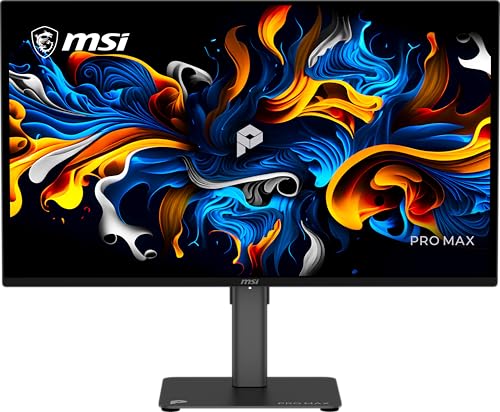
- 27-inch 4K QD-OLED with 120Hz refresh
- Delta E < 2 and DisplayHDR True Black 400
- USB-C, ergonomic stand, and built-in speakers
Best For: Creative work and flexible desktop setups
High-Refresh QHD Value

- 27-inch QHD QD-OLED at 240Hz
- 0.03ms response with HDR400 True Black
- G-SYNC Compatible and wide listed color gamut
Best For: Competitive gaming and vivid QHD visuals
High-Refresh QD-OLED Pick

- 4K 240Hz QD-OLED panel
- 0.03ms response and 99% DCI-P3
- HDMI 2.1, USB-C, and KVM
Best For: PC and console gamers wanting fast, colorful QD-OLED performance
Dual-Mode Glossy OLED

- 4K OLED at 165Hz
- Full HD mode reaches 330Hz
- G-SYNC and FreeSync Premium Pro
Best For: Gamers switching between cinematic 4K and competitive high-refresh play
Extreme Dual-Mode Speed
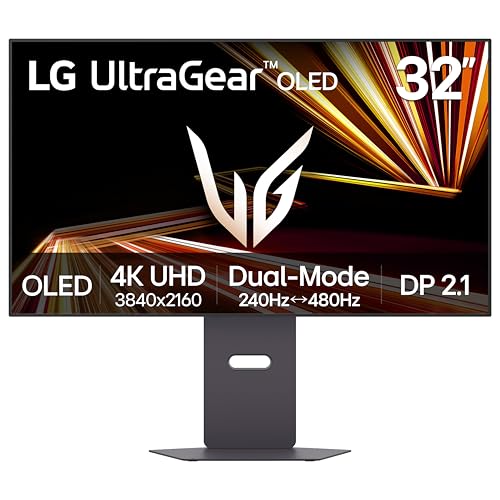
- 4K OLED at 240Hz
- Full HD mode reaches 480Hz
- Up to 1300-nit peak brightness
Best For: Competitive gamers demanding exceptional refresh-rate flexibility
Color-Accurate Creator Pick – ASUS ProArt 27-inch 4K QD-OLED
For creators seeking high-performance OLED reference monitors, the ASUS ProArt PA279CDV combines 4K resolution, a 120Hz refresh rate, wide-gamut color, and factory calibration in a practical 27-inch design. Its USB-C connectivity and ergonomic stand also suit modern editing and hybrid-work setups.
Best For: Photo and video editors, Mac users, and color-focused professionals who need accurate 4K output.
Pros:
- 4K QD-OLED panel with 99% DCI-P3, 100% sRGB, and Delta E < 1.5 color accuracy
- 120Hz refresh rate and 0.1ms response time support smooth previews and motion
- USB-C provides up to 96W power delivery, with Auto KVM and a built-in USB hub
- Calman Verified factory calibration and a fully adjustable ergonomic stand
Cons:
- 27-inch screen provides less workspace than larger ultrawide or 32-inch alternatives
- Designed primarily around professional color work rather than maximum gaming refresh rates
The PA279CDV is the most workflow-oriented option here, pairing dependable color credentials with strong laptop connectivity. It is a compelling choice when accurate 4K presentation matters more than an oversized canvas.
Ultrawide Speed Leader – MSI MAG 341CQP 34-inch QD-OLED
The MSI MAG 341CQP is a high-performance OLED reference monitor for users who want an expansive ultrawide workspace without sacrificing speed. Its 34-inch curved QD-OLED panel combines UWQHD resolution, 280Hz performance, and strong HDR specifications.
Best For: Competitive gamers, immersive entertainment, and multitaskers who prefer a curved 21:9 display.
Pros:
- 34-inch 3440 × 1440 QD-OLED panel with a fast 280Hz refresh rate
- 0.03ms response time, ClearMR 15000 certification, and adaptive-sync support
- Up to 1300 nits peak brightness with DisplayHDR True Black 500
- RGB Stripe layout, DarkArmor Film, and uniform-luminance features target image quality and durability
Cons:
- UWQHD resolution is less detailed than a 4K monitor for fine creative work
- Curved 21:9 format may not suit every desk or application layout
Choose the MAG 341CQP when motion clarity and immersive width are priorities. Its refresh rate is exceptional for gaming, while the QD-OLED panel and HDR capability keep visuals rich for broader media use.
High-Refresh Gaming Value – Samsung Odyssey OLED G6 27-inch
The Samsung Odyssey OLED G6 is a high-performance OLED reference monitor aimed at fast-paced gaming. Its QHD QD-OLED display delivers a 240Hz refresh rate, 0.03ms response time, glare-free viewing, and adaptive-sync support in a compact 27-inch format.
Best For: Competitive gamers who want rapid motion response, OLED contrast, and a flexible ergonomic stand.
Pros:
- 240Hz refresh rate and 0.03ms response time support responsive gameplay
- QD-OLED panel provides a 1,000,000:1 contrast ratio and HDR10 support
- Pantone Validated color reproduction covers more than 2,100 colors and 110 skin-tone shades
- Glare Free technology, OLED Safeguard, and height, pivot, tilt, and swivel adjustments
Cons:
- QHD resolution offers less workspace and detail than the 4K models in this roundup
- Listed features and use case are focused primarily on gaming
The Odyssey OLED G6 makes a strong case for gamers who value speed above 4K resolution. Its 240Hz panel and extremely low response time are the headline advantages, while the glare-free finish and adjustable stand improve everyday usability.
Immersive Desktop All-Rounder – Dell 32 Plus 4K QD-OLED
The Dell 32 Plus S3225QC is a high-performance OLED reference monitor for users who want detailed 4K visuals alongside desktop-friendly features. Its 31.6-inch QD-OLED panel adds Dolby Vision, True Black HDR, USB-C power delivery, and AI-enhanced spatial audio.
Best For: Home offices, media consumption, and desktop users who want a large 4K screen with integrated speakers.
Pros:
- 31.6-inch 4K QD-OLED display with 99% DCI-P3 coverage
- 120Hz refresh rate, 0.03ms response time, Dolby Vision, and True Black 400 HDR
- USB-C connection supports up to 90W power delivery for a simplified desk setup
- Five 5W speakers provide AI-enhanced 3D spatial audio with head tracking
Cons:
- One-year Advanced Exchange and Premium Panel Exchange warranty is shorter than several alternatives here
- Its 120Hz refresh rate is lower than the 240Hz and 280Hz gaming-focused models
The S3225QC stands out as a polished all-purpose display rather than a specialist esports monitor. It is particularly attractive for users who value 4K OLED image quality, one-cable connectivity, and built-in audio in a clean desktop setup.
Top-Tier 4K OLED Speed – ASUS ROG XG27UCDMG
For shoppers seeking high-performance OLED reference monitors that also excel at gaming, the ASUS ROG XG27UCDMG combines a 26.5-inch 4K QD-OLED panel with a 240Hz refresh rate and 0.03ms response time. Its true 10-bit color, 99% DCI-P3 coverage, and Delta E < 2 rating also make it suitable for photo and video editing.
Best For: Gamers and creators who want high-resolution speed, wide-gamut color, and premium OLED protection features.
Pros:
- 4K QD-OLED resolution with 240Hz refresh rate and 0.03ms response time
- True 10-bit color, 99% DCI-P3 coverage, and Delta E < 2 color accuracy
- OLED Care Pro with Neo Proximity Sensor and a custom heatsink
- Three-year warranty with accident replacement and burn-in coverage
Cons:
- Its gaming-focused 240Hz specification may exceed the needs of office-only users
- The 26.5-inch panel is smaller than many 27-inch-class alternatives
The XG27UCDMG is the most performance-oriented option here, pairing 4K detail with an unusually fast refresh rate. Its color specifications and burn-in coverage add useful reassurance for demanding mixed gaming and creative workloads.
Balanced Creative Workstation – MSI PRO MAX 271UPX12G
The MSI PRO MAX 271UPX12G is a practical choice among high-performance OLED reference monitors for users who prioritize 4K sharpness, accurate color, and everyday connectivity. Its 27-inch QD-OLED panel supports 120Hz, Delta E < 2 accuracy, DisplayHDR True Black 400, and USB-C connectivity with 15W power delivery.
Best For: Creative professionals and hybrid workers who want an ergonomic 4K OLED display with Mac-friendly connectivity.
Pros:
- 27-inch 4K UHD QD-OLED panel with deep contrast and vibrant color
- Delta E < 2 accuracy and DisplayHDR True Black 400 certification
- USB-C, HDMI, and DisplayPort connectivity for flexible setups
- Height-adjustable stand, TÜV-certified eye care features, and built-in speakers
Cons:
- Its 120Hz refresh rate is lower than the 240Hz options in this roundup
- USB-C power delivery is limited to 15W
This MSI model favors balanced productivity over maximum gaming speed. The 4K QD-OLED panel, accurate color, ergonomic stand, and broad connectivity make it a well-rounded workstation display for editing, desktop work, and entertainment.
High-Refresh QHD Value – AOC Q27GAZD
The AOC Q27GAZD targets buyers who want high-performance OLED reference monitors with a strong gaming emphasis without moving to 4K. Its 27-inch QHD QD-OLED panel delivers 240Hz performance, a 0.03ms response time, HDR400 True Black, and broad listed color coverage for gaming and photo-video work.
Best For: Competitive gamers and users who prefer high-refresh QHD performance with vivid QD-OLED color.
Pros:
- 240Hz refresh rate and 0.03ms response time for fluid motion
- QD-OLED panel with HDR400 True Black and 1,500,000:1 contrast
- Listed coverage of 147.6% sRGB and 110.2% DCI-P3
- G-SYNC Compatible Adaptive-Sync and three-year manufacturer warranty
Cons:
- QHD resolution provides less workspace detail than the 4K models
- Connectivity is limited to DisplayPort and HDMI in the supplied specifications
The Q27GAZD is the straightforward speed-focused pick. It gives competitive gaming smoothness and striking QD-OLED contrast, while its wide listed gamut also supports photo and video editing, provided QHD resolution fits your workflow.
High-Refresh QD-OLED Pick – MSI MPG 321URX
The MSI MPG 321URX is a strong choice for shoppers seeking high-performance OLED reference monitors with both 4K detail and exceptionally fast motion handling. Its 31.5-inch QD-OLED panel combines a 240Hz refresh rate, 0.03ms response time, 10-bit color, and 99% DCI-P3 coverage, while HDMI 2.1, DisplayPort, and USB-C support broaden connectivity.
Best For: PC and console gamers who want vibrant QD-OLED image quality, very high refresh rates, and flexible connectivity.
Pros:
- 4K QD-OLED panel with 10-bit color, 99% DCI-P3 coverage, and Delta E ≤2 accuracy.
- 240Hz refresh rate and 0.03ms GtG response time support fluid, low-latency gameplay.
- USB-C, HDMI 2.1, DisplayPort, KVM, PiP/PbP, and Console Mode provide useful setup flexibility.
- OLED Care 2.0 and a four-way adjustable stand add practical convenience.
Cons:
- The display is designed specifically around gaming rather than general office use.
- Its glossy finish may be less suitable for rooms with strong reflections.
Choose this MSI when accurate wide-gamut color and competitive-speed performance matter equally. It is particularly compelling for a multi-device gaming setup, though buyers should account for the glossy screen finish.
Dual-Mode Glossy OLED – LG UltraGear 32GX850A-B
The LG UltraGear 32GX850A-B brings high-performance OLED reference monitor capabilities to a 32-inch 4K display with a useful dual-mode design. It runs at up to 165Hz in 4K or switches to Full HD at up to 330Hz, pairing a 0.03ms response time with G-SYNC compatibility, FreeSync Premium Pro, and a glossy OLED presentation.
Best For: Gamers who want detailed 4K visuals for cinematic titles and a higher-refresh Full HD mode for competitive play.
Pros:
- Glossy 4K OLED display delivers sharp detail, deep blacks, and a 1.5M:1 contrast ratio.
- Dual mode offers 4K at up to 165Hz or Full HD at up to 330Hz.
- Micro Lens Array+ technology provides typical 275-nit brightness and improved viewing angles.
- Includes G-SYNC compatibility, FreeSync Premium Pro, and a height-, tilt-, swivel-, and pivot-adjustable stand.
Cons:
- The 330Hz mode reduces output to Full HD resolution.
- The glossy finish can show more reflections than a matte panel.
This LG is a versatile option for players who alternate between visually rich 4K games and fast competitive titles. Its dual-mode flexibility is the main buying advantage, while the glossy surface is worth considering for brightly lit rooms.
Extreme Dual-Mode Speed – LG UltraGear 32GX870A-B
The LG UltraGear 32GX870A-B is aimed at buyers who want high-performance OLED reference monitors with unusually high refresh-rate flexibility. Its 4K OLED mode reaches 240Hz, while a hotkey-accessible Full HD mode reaches 480Hz; Micro Lens Array+ technology also supports up to 1300 nits peak brightness, and the matte anti-glare finish helps reduce reflections.
Best For: Competitive gamers who want maximum refresh-rate headroom without giving up 4K OLED image quality.
Pros:
- Dual mode combines 4K at up to 240Hz with Full HD at up to 480Hz.
- 0.03ms response time, G-SYNC compatibility, and FreeSync Premium Pro support fast, smooth action.
- Micro Lens Array+ technology offers 275-nit typical brightness and up to 1300 nits peak brightness.
- USB-C, DisplayPort 2.1, built-in speakers, OLED care tools, and a two-year limited warranty add useful extras.
Cons:
- The 480Hz setting operates at Full HD rather than 4K resolution.
- Its competitive-gaming feature set may be more than casual users need.
This is the strongest fit in the group for players prioritizing speed, especially those who can take advantage of a 480Hz Full HD mode. It remains versatile for high-detail gaming through its 4K 240Hz setting, while the matte finish suits setups where reflections are a concern.
How We Picked the Best High-Performance OLED Reference Monitors
We evaluated these displays by comparing the specifications that matter most in demanding visual workflows: panel type, resolution, color coverage, stated color accuracy, HDR support, refresh rate, response time, adaptive sync, connectivity, and ergonomic flexibility. Professional-oriented features such as Calman verification, USB-C connectivity, power delivery, and uniform-luminance modes received additional consideration.
Because “reference monitor” can mean different things to different buyers, this list includes both creator-focused displays and gaming monitors with image quality suitable for serious content consumption or production. Buyers who need guaranteed broadcast or cinema mastering should still verify the manufacturer’s calibration workflow, supported color spaces, and measurement results before purchase.
Quick Comparison
| Priority | Look for | Best fit in this roundup |
|---|---|---|
| Color-accurate creative work | Wide gamut, low Delta E, calibration credentials | ASUS ProArt PA279CDV |
| 4K OLED gaming | 240Hz refresh, adaptive sync, low response time | ASUS ROG XG27UCDMG or MSI MPG 321URX |
| Ultrawide immersion | 21:9 resolution, curved panel, high refresh rate | MSI MAG 341CQP |
| Large-screen 4K versatility | 32-inch panel, HDR, productivity features | Dell S3225QC or LG UltraGear models |
| Value-focused OLED gaming | QD-OLED contrast, 1440p or 4K, adaptive sync | Samsung Odyssey OLED G6, AOC Q27GAZD, or MSI PRO MAX 271UPX12G |
Key Buying Factors for High-Performance OLED Reference Monitors
Resolution, Size, and Pixel Density
Choose 4K for detailed editing, sharp text, and large canvases; 1440p can deliver higher frame rates at a lower graphics burden. A 27-inch 4K screen is especially crisp, while 32-inch 4K models provide more comfortable workspace. Ultrawide displays suit timeline-heavy editing and immersive gaming but may require software that handles 21:9 layouts well.
Color, HDR, and Calibration
Check coverage of DCI-P3 or other required color spaces, Delta E claims, factory calibration, and HDR certification. OLED’s pixel-level contrast is excellent for HDR, but brightness behavior, tone mapping, and uniform-luminance modes can affect real-world results. For paid color-critical work, use a calibration probe and confirm the monitor’s supported presets.
Refresh Rate and Motion Performance
High refresh rates from 120Hz to 280Hz make scrolling, gaming, and animation feel smoother. A 240Hz or faster model is most useful with a powerful GPU and competitive gaming priorities; creators may prefer accurate 4K output, USB-C convenience, and consistent brightness over maximum speed.
Connectivity, Ergonomics, and OLED Care
USB-C with power delivery can simplify laptop setups, while HDMI and DisplayPort determine compatibility with computers and consoles. Check stand adjustment, VESA support, KVM or hub features, and warranty terms. Use the monitor’s pixel-refresh and panel-care functions, avoid leaving static elements onscreen for long periods, and review burn-in coverage before buying.
Who Should Buy Which High-Performance OLED Reference Monitors?
Choose the ASUS ProArt PA279CDV if color accuracy, calibration confidence, and USB-C workflow integration are your priorities. The ASUS ROG XG27UCDMG and MSI MPG 321URX are stronger choices for buyers who want 4K QD-OLED image quality alongside very high gaming refresh rates. The MSI MAG 341CQP is the natural fit for immersive ultrawide gaming and multitasking.
For a larger all-purpose screen, consider the Dell S3225QC or one of the 32-inch LG UltraGear models. The Samsung Odyssey OLED G6 and AOC Q27GAZD suit gamers who favor fast QHD performance, while the MSI PRO MAX 271UPX12G is a practical option for buyers seeking a compact 4K OLED with modern connectivity. Match the panel to your workflow rather than buying solely on refresh rate or HDR branding.
