
If you want faster response times, deep contrast, and elite motion clarity, high-performance OLED gaming monitors are hard to beat. They can make competitive shooters feel sharper and story-driven games look far more immersive.
This roundup highlights 10 strong options across 1440p and 4K, with picks for esports speed, console-friendly versatility, and premium all-around gaming.
Best 10 High-Performance OLED Gaming Monitors Picks for 2026
Glossy 1440p Speed Pick
ASUS ROG XG27AQDMG 27" 240Hz OLED

- 240Hz QHD WOLED with 0.03ms response time
- Third-gen panel improves whites and text clarity
- OLED Care and G-SYNC Compatible support
Best For: Competitive gamers who want a fast 27-inch OLED with protection features
Dual-Mode Big Screen Pick
LG 32GX870A-B 32" 4K/480Hz OLED
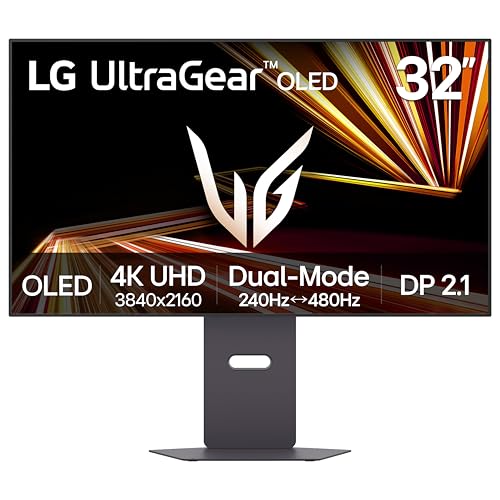
- Switch between 4K 240Hz and FHD 480Hz
- Up to 1300 nits peak brightness with MLA+
- G-SYNC Compatible and FreeSync Premium Pro
Best For: Players who want a large OLED that can handle both cinematic and esports gaming
Competitive QD-OLED Value Pick

- 280Hz QD-OLED with 0.03ms response time
- HDMI 2.1 and DisplayPort for PC and console use
- Height, tilt, and pivot stand adjustments
Best For: Competitive players who want a fast 27-inch OLED with broad device compatibility
MSI Pick
MSI MAG 274QP QD-OLED X24 27-Inch QHD Gaming Monitor

- 240Hz refresh and 0.03ms response
- QD-OLED with 99% DCI-P3 color
- OLED Care 2.0 and HDMI 2.1 support
Best For: Competitive gamers who want fast OLED performance with useful protection features
ASUS ROG Pick
ASUS ROG XG27AQDMGR 27-Inch 1440p 240Hz Glossy OLED

- 240Hz WOLED panel with 0.03ms response
- 99% DCI-P3, 10-bit color, Delta E < 2
- OLED Care Pro with burn-in coverage
Best For: Gamers who want premium speed, glossy OLED contrast, and advanced panel protection
Elite 1440p Speed Pick
AOC 27" QD-OLED 240Hz QHD Gaming Monitor

- 240Hz refresh rate with 0.03ms response time
- QD-OLED panel with true blacks and vivid color
- HDMI 2.1 plus DisplayPort for PC and console use
Best For: Competitive gamers wanting a fast 27-inch QHD OLED
4K Creator-Grade Choice
ASUS ROG 27" 4K 240Hz QD-OLED Monitor

- 4K 240Hz QD-OLED with 0.03ms response time
- 4th-gen panel with sharper text and strong color accuracy
- OLED Care Pro, anti-flicker, and burn-in coverage
Best For: Gamers and creators who want 4K OLED speed and accuracy
Big-Screen Dual-Mode Pick
LG 32" 4K Glossy OLED Dual-Mode Gaming Monitor

- 32-inch 4K glossy OLED with strong contrast
- Dual Mode: 4K 165Hz or Full HD 330Hz
- 0.03ms response time with G-SYNC and FreeSync Premium Pro
Best For: Gamers who want a 32-inch OLED with both cinematic and esports modes
Glossy 1440p Speed Pick – ASUS ROG XG27AQDMG 27" 240Hz OLED
If you want high-performance OLED gaming monitors that balance fast motion with a sharp QHD image, this ASUS ROG model is built around speed, clarity, and panel protection. Its glossy WOLED panel, 240Hz refresh rate, and 0.03ms response time make it a strong fit for competitive play, while the 27-inch 1440p format stays practical for everyday gaming and desktop use.
Best For: Players who want a fast 1440p OLED with strong motion clarity, bright whites, and built-in burn-in safeguards.
Pros:
- 240Hz refresh rate and 0.03ms response time support very smooth competitive gaming.
- Third-generation WOLED panel improves brighter full white windows and clearer text.
- ASUS OLED Care, custom heatsink, and airflow design help reduce burn-in risk.
- 99% DCI-P3 coverage and G-SYNC Compatible support add color and gameplay smoothness.
Cons:
- Glossy finish may not suit buyers who prefer a more muted screen surface.
- 27-inch QHD may feel smaller than 32-inch alternatives for some setups.
This is a well-rounded choice if you want a responsive OLED monitor that still pays attention to long-term panel care. It leans hard into gaming performance, but the improved text clarity and color coverage also make it versatile beyond fast-action titles.
Dual-Mode Big Screen Pick – LG 32GX870A-B 32" 4K/480Hz OLED
Among high-performance OLED gaming monitors, this LG UltraGear stands out for dual-mode flexibility and a big 32-inch canvas. You can game at 4K UHD up to 240Hz for story-driven titles or switch to Full HD at up to 480Hz for faster genres, all backed by a 0.03ms response time and wide HDR support.
Best For: Gamers who want one monitor for both immersive 4K play and ultra-high-refresh competitive sessions.
Pros:
- Dual Mode lets you choose 4K/240Hz or Full HD/480Hz via hotkey.
- 0.03ms response time helps reduce ghosting and lag.
- Micro Lens Array+ and up to 1300 nits peak brightness make it LG’s brightest OLED gaming display.
- G-SYNC Compatible, FreeSync Premium Pro, and True Black 400 support smooth, rich-looking gameplay.
Cons:
- 32-inch size takes up more desk space than smaller OLED alternatives.
- Its feature set may be more than needed if you mainly play one type of game.
This monitor is especially appealing if you do not want to choose between image quality and refresh rate. The dual-mode design gives it unusual range, and the brightness and HDR specs help it remain convincing for both dark scenes and vivid highlights.
Competitive QD-OLED Value Pick – INNOCN 27" 280Hz QHD OLED
If your priority is fast response and vivid contrast in high-performance OLED gaming monitors, this INNOCN 27-inch QD-OLED is aimed squarely at competitive play. Its 1440p resolution, 280Hz refresh rate, and 0.03ms response time make it a compelling fit for PC gaming, while HDMI 2.1 support also keeps it relevant for consoles.
Best For: Fast-paced gamers who want a 27-inch QD-OLED with strong motion performance and console-ready inputs.
Pros:
- 280Hz refresh rate and 0.03ms response time support ultra-smooth motion.
- QD-OLED panel delivers perfect blacks and vibrant colors for games and HDR content.
- HDMI 2.1 and DisplayPort make it flexible for PCs and next-gen consoles.
- Height, tilt, and pivot adjustments improve comfort for long sessions.
Cons:
- It does not list the same premium burn-in care or warranty depth as some rivals.
- Built-in speakers are included, but audio-focused buyers may still want external sound.
This model is a practical pick if you want competitive refresh rates without moving up to a larger or more expensive setup. The QD-OLED panel and console-friendly connectivity add flexibility, making it a balanced choice for mixed gaming environments.
Premium Glossy Dual-Mode Pick – ASUS ROG XG32UCWMG 32" 4K OLED
For shoppers comparing high-performance OLED gaming monitors with premium build features, this ASUS ROG model brings a 32-inch 4K glossy WOLED panel, dual-mode speed, and a strong focus on image quality. It can run at 4K 240Hz or FHD 480Hz, while the true black glossy surface and 10-bit color aim to keep games looking sharp and clean.
Best For: Gamers and creators who want a premium 32-inch OLED with both elite gaming speed and accurate color.
Pros:
- Dual mode supports 4K at 240Hz or FHD at 480Hz for flexible play styles.
- TrueBlack Glossy panel delivers a zero-haze surface and exceptionally sharp imagery.
- OLED Care Pro with Neo Proximity Sensor helps reduce burn-in risk when you step away.
- 99% DCI-P3, true 10-bit color, and Delta E < 2 support strong color accuracy.
Cons:
- Premium feature set may be overkill if you only need a basic gaming display.
- 32-inch 4K is better suited to larger desks and more powerful systems.
This monitor stands out when you want both presentation and performance in one screen. It is especially attractive for users who care about glossy image sharpness, burn-in protections, and color accuracy as much as they care about refresh rate.
MSI Pick – MSI MAG 274QP QD-OLED X24 27-Inch QHD Gaming Monitor
If you want a high-performance OLED gaming monitor that blends speed, color, and practical features, the MSI MAG 274QP QD-OLED X24 is an easy contender. Its QD-OLED panel pairs 240Hz motion handling with a 0.03ms response time, while the 10-bit Quantum Dot layer and wide DCI-P3 coverage aim for strong image quality in both games and everyday use.
Best For: Competitive gamers who also want rich OLED contrast and strong color accuracy.
Pros:
- 240Hz refresh rate with 0.03ms response time for fast, clean motion
- QD-OLED panel with 10-bit color, 99% DCI-P3, and a 1,500,000:1 native contrast ratio
- OLED Care 2.0, AI Crosshair, and other gaming tools for practical in-game support
- HDMI 2.1 and DisplayPort 1.4a connectivity with a height-adjustable stand
Cons:
- Glossy screen finish may not suit every lighting setup
- 27-inch QHD format may feel small if you want a larger cinematic display
- Peak brightness is listed up to 400 nits, which is solid but not class-leading for bright rooms
The MSI stands out as a well-rounded pick for players who want fast OLED performance without giving up useful extras like burn-in protection and console-ready inputs. It is especially appealing if you value sharpness, color depth, and a sturdy feature set over pure size.
Samsung Choice – Samsung 27” Odyssey OLED G5 QD-OLED Gaming Monitor
The Samsung Odyssey OLED G5 is a practical pick in the high-performance OLED gaming monitors category if you want strong contrast, accurate color, and a matte finish that handles reflections well. Its QD-OLED panel, 1440p resolution, 180Hz refresh rate, and 0.03ms response time give you the core speed and clarity most gamers are after, while the console-like device switching adds convenience.
Best For: Gamers who want OLED contrast and color accuracy with a glare-resistant screen.
Pros:
- QD-OLED panel with QHD resolution for sharp visuals and deep contrast
- 180Hz refresh rate and 0.03ms response time for quick gameplay
- Glare Free matte screen helps reduce distracting reflections
- Pantone Validation and HDR10 support add confidence for color and shadow detail
Cons:
- 180Hz is lower than some competing 240Hz OLED gaming monitors
- Brightness is listed at 280 cd/m², which may be limiting in very bright rooms
- Only one HDMI port is listed, so multi-device setups may be less flexible
This model makes sense if your priority is a clean image with low reflections rather than the absolute fastest refresh rate. It is a balanced option for gaming, and its burn-in prevention system plus easy input switching make it more convenient for mixed-use desks.
ASUS ROG Pick – ASUS ROG XG27AQDMGR 27-Inch 1440p 240Hz Glossy OLED
For buyers focused on premium motion clarity, the ASUS ROG XG27AQDMGR is a strong fit among high-performance OLED gaming monitors. It combines a 240Hz refresh rate with a 0.03ms response time, plus a TrueBlack glossy WOLED panel, so fast action stays sharp while HDR and color accuracy remain a major selling point.
Best For: Players who want top-tier speed, glossy OLED contrast, and robust burn-in protection.
Pros:
- 240Hz refresh rate and 0.03ms response time for ultra-smooth gameplay
- 99% DCI-P3, true 10-bit color, and Delta E < 2 for accurate images
- OLED Care Pro with Neo Proximity Sensor helps reduce burn-in risk
- 3-year warranty includes ARR and burn-in coverage for added peace of mind
Cons:
- Glossy finish may show more reflections than matte alternatives
- Only one HDMI port is listed, which may limit some multi-device setups
- Designed primarily around gaming, so it is less focused on broad productivity extras
This ASUS model is the most premium-feeling speed-first option in the group, especially if you want glossy OLED punch and advanced protection tools. It is best suited to users who care about both competitive responsiveness and long-term panel care.
Elite 1440p Speed Pick – AOC 27" QD-OLED 240Hz QHD Gaming Monitor
If you want a high-performance OLED gaming monitor that prioritizes fast 1440p play, this AOC 27-inch QD-OLED is built around speed and clarity. Its 240Hz refresh rate, 0.03ms response time, and QHD resolution make it a strong fit for competitive gaming while the QD-OLED panel adds the deep blacks and vivid color OLED buyers expect.
Best For: Competitive PC and console gamers who want a fast 27-inch QHD OLED with strong color and adaptive sync.
Pros:
- 240Hz refresh rate with 0.03ms response time for smooth, low-blur gameplay.
- QD-OLED panel delivers true blacks, infinite contrast, and wide color coverage.
- HDMI 2.1 and DisplayPort 1.4 support high-refresh gaming on PC, PS5, and Xbox Series X.
- Ergonomic stand, USB 3.2 hub, and VESA mount support add setup flexibility.
Cons:
- 1440p resolution is less detailed than 4K options.
- 27-inch size may feel compact for users who prefer larger OLED screens.
This model makes the most sense if you care more about responsiveness than maximum resolution. For fast-paced play, it combines the core advantages of high-performance OLED gaming monitors with practical connectivity and an adjustable stand.
4K Creator-Grade Choice – ASUS ROG 27" 4K 240Hz QD-OLED Monitor
The ASUS ROG XG27UCDMG is a premium high-performance OLED gaming monitor for buyers who want 4K detail without giving up speed. With a 240Hz refresh rate, 0.03ms response time, and 4th-generation QD-OLED technology, it aims at smooth gaming, sharper text, and more polished image quality for work and play.
Best For: Gamers and creators who want a 27-inch 4K OLED with top-tier speed, color accuracy, and burn-in protection features.
Pros:
- 4K 240Hz QD-OLED panel delivers high detail and ultra-fast motion handling.
- 4th-generation QD-OLED promises sharper imagery and clearer text.
- OLED Anti-Flicker 2.0 and ASUS OLED Care Pro help improve comfort and reduce burn-in risk.
- Strong color specs include 99% DCI-P3, true 10-bit color, and Delta E < 2.
Cons:
- Premium feature set likely places it at the high end of the price range.
- 26.5-inch size may feel small for users expecting a larger 4K panel.
If you want one of the most balanced premium OLED gaming displays, this ASUS stands out for combining 4K sharpness, esports-level refresh, and creator-friendly accuracy. The included warranty coverage and thermal design add extra peace of mind for long-term use.
Big-Screen Dual-Mode Pick – LG 32" 4K Glossy OLED Dual-Mode Gaming Monitor
The LG 32GX850A-B is aimed at buyers who want a larger high-performance OLED gaming monitor with flexible speed modes. Its 32-inch 4K glossy OLED panel pairs with Dual Mode operation, letting you choose 165Hz at UHD for sharp visuals or 330Hz at Full HD when you want maximum responsiveness.
Best For: Players who want a larger 32-inch OLED with a 4K cinematic mode and a faster competitive mode.
Pros:
- Dual Mode lets you switch between 4K 165Hz and Full HD 330Hz.
- 32-inch glossy OLED panel offers sharp visuals and rich contrast.
- 0.03ms response time helps reduce lag and ghosting.
- G-SYNC Compatible and FreeSync Premium Pro support smoother, tear-free gameplay.
Cons:
- 4K mode is limited to 165Hz rather than 240Hz.
- Glossy finish may not suit users who prefer a matte screen.
This LG is a strong choice if you want OLED immersion with more screen space and a flexible performance profile. It is especially appealing for gamers who play both story-driven 4K titles and faster genres that benefit from the 330Hz mode.
How We Picked These High-Performance OLED Gaming Monitors
We focused on the features that matter most to gamers: refresh rate, response time, panel type, resolution, VRR support, and connectivity. We also considered whether a monitor is tuned for competitive play, high-end PC builds, or mixed-use gaming setups.
Since OLED performance can vary by model, we gave extra weight to brightness behavior, glossy versus matte finishes, and dual-mode designs that let you trade resolution for higher frame rates when needed.
Quick Comparison: What Matters Most
In this category, 1440p 240Hz models usually offer the best balance of speed and affordability, while 4K 240Hz displays target gamers who want maximum detail without giving up fluidity. Dual-mode monitors are especially useful if you play both competitive titles and cinematic single-player games.
QD-OLED panels can deliver vivid color and strong highlights, while WOLED options often appeal to buyers who want a different balance of clarity, brightness tuning, and panel behavior.
Key Buying Factors for High-Performance OLED Gaming Monitors
Resolution and Refresh Rate
Choose 1440p if you want high frame rates with less GPU strain. Choose 4K if image detail is a priority and your system can keep up. For refresh rate, 240Hz is the sweet spot for most serious gamers, while higher dual-mode modes can be valuable for esports.
Response Time and Motion Clarity
OLED’s near-instant pixel response is a major advantage, but motion clarity also depends on overdrive behavior, input lag, and how well the monitor handles its highest refresh modes.
Panel Finish and Burn-In Care
Glossy screens can look more vivid and punchy, but they reflect more light. OLED panels also benefit from built-in protection features, so check for pixel shifting, screen refresh tools, and warranty coverage related to burn-in.
Ports and Console/PC Compatibility
Make sure the monitor includes the inputs you need, especially HDMI 2.1 for modern consoles and high-bandwidth PC use. Adaptive sync support, such as G-SYNC Compatible or FreeSync Premium Pro, is also important for smooth gameplay.
Who Should Buy Which High-Performance OLED Gaming Monitors?
Competitive PC players should prioritize 27-inch 1440p models with 240Hz or higher. If you want a more cinematic setup, a 32-inch 4K OLED makes more sense. Buyers who switch between genres should look closely at dual-mode displays, since they offer flexibility without forcing you to compromise on either speed or detail.
If you are shopping for High-Performance OLED Gaming Monitors in 2026, the best choice is the one that matches your GPU power, desk space, and play style. Focus on the right balance of resolution, refresh rate, and panel features, and you will get a display that feels fast today and stays relevant longer.
