
The best high-performance network switches make it easier to move large files, connect access points, segment traffic, and expand a wired network without creating bottlenecks.
This roundup compares 10 options across 10GbE, multi-gig, managed, PoE, rackmount, and compact designs so you can match features to your network and budget.
Best 10 High-Performance Network Switches Picks for 2026
Rackmount 10G Core

- 12-port 10G-capable configuration
- 1U metal rackmount design
- Ethernet and SFP+ interfaces
Best For: Rack-based 10G networks needing flexible connectivity
Managed 2.5G Upgrade

- Eight 2.5G RJ45 ports
- Two 10G SFP+ uplink slots
- Omada cloud and app management
Best For: Managed 2.5G networks with 10G uplinks
Compact 10G Edge

- Four 10G Ethernet ports
- Compact 0.7 kg metal chassis
- Silent operation and multiple powering options
Best For: Small 10G setups with limited device counts
Secure Business Access
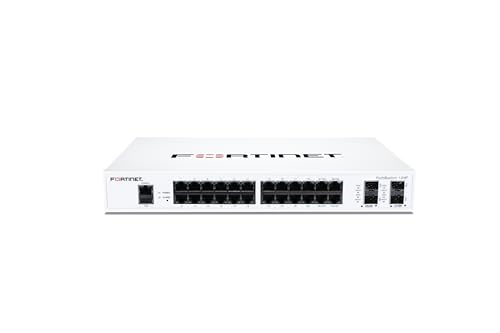
- 24 Gigabit Ethernet ports
- Four SFP+ interfaces
- Fanless FortiLink-managed Layer 2 design
Best For: Fortinet-based business access networks
Best Plug-and-Play 10G Switch

- Eight 10G/multi-gig RJ45 ports
- Up to 160 Gbps switching capacity
- Plug-and-play desktop or rackmount design
Best For: Simple high-speed home and small-office networks
Best Managed 10G-Uplink Switch

- 24 Gigabit RJ45 access ports
- Four 10G SFP+ uplinks
- L2+ routing and advanced security features
Best For: Managed small-business and multi-site networks
Best PoE UniFi Switch

- 24-port Gigabit Ethernet design
- PoE+ support for compatible devices
- SFP, RJ45, and metal construction
Best For: UniFi access networks with cameras, phones, and access points
Best Managed Capacity

- 24 Gigabit ports for expanding wired networks
- Four 10G SFP+ uplink slots
- QoS, VLAN, routing, and port-security controls
Best For: Growing offices and surveillance networks needing fast uplinks
Best PoE Flexibility

- 24 Gigabit ports with flexible PoE output
- Four 10Gbps SFP+ connectivity options
- Dual-boot RouterOS and SwOS support
Best For: Rack networks powering multiple PoE endpoints
Best High-Density PoE

- 48 PoE+ Gigabit ports with a 384W budget
- Omada SDN and cloud management support
- Layer 2+ security and static routing features
Best For: Business networks with many powered devices
Rackmount 10G Core – MikroTik CRS312 10G L3 Switch
MikroTik CRS312-4C+8XG-RM – Network Switch L3, 10G, Ethernet (100/1000/10000), 1U, White
Check Price On AmazonThe MikroTik CRS312-4C+8XG-RM is a high-performance network switch for rackmount installations that need a mix of 10G Ethernet and SFP+ connectivity. Its metal 1U design and 12-port configuration suit demanding wired networks, although the supplied specifications do not include a warranty.
Best For: Rack-based networks needing multiple 10G connections and flexible Gigabit Ethernet or SFP+ interfaces.
Pros:
- 12 total ports support a broad range of Ethernet-connected devices.
- Supports Ethernet speeds up to 10,000 Mbps.
- Metal 1U rackmount construction.
- Wide stated operating temperature range of 1°C to 70°C.
Cons:
- No warranty is listed in the supplied details.
- The 2.3 kg rackmount design may be more equipment than a small desktop network needs.
Choose the CRS312 when port density, 10G capability, and rack installation matter most. It is a substantial option for a wired core or aggregation role rather than a basic home switch.
Managed 2.5G Upgrade – TP-Link Omada SG3210X-M2
The TP-Link Omada SG3210X-M2 is a high-performance network switch for desktops, gaming systems, cameras, and other devices that benefit from 2.5G wired connections. It combines eight 2.5G RJ45 ports with two 10G SFP+ slots and supports centralized Omada management.
Best For: Small offices, workspaces, and advanced home networks building a managed 2.5G access layer with 10G uplinks.
Pros:
- Eight 2.5G RJ45 ports provide high-speed device connections.
- Two 10G SFP+ slots support high-bandwidth uplinks.
- Omada cloud management, app access, and zero-touch provisioning are supported.
- Includes L2/L3/L4 QoS and IGMP snooping features.
Cons:
- Its stated upper temperature rating is 40°C, lower than some alternatives.
- The plastic case may be less rugged than a metal switch chassis.
For buyers moving beyond Gigabit Ethernet, the SG3210X-M2 offers a practical combination of 2.5G access ports, 10G expansion, and centralized management. The five-year manufacturer warranty is an added advantage for managed deployments.
Compact 10G Edge – MikroTik CRS304-4XG-IN
The MikroTik CRS304-4XG-IN is a compact high-performance network switch with four 10G Ethernet ports and a stated 40 Gbps data transfer rate. Its metal construction, multiple powering options, and silent operation make it suitable where fast connections are needed without a larger rackmount chassis.
Best For: Small high-speed networks connecting a few 10G desktops, laptops, gaming systems, or printers.
Pros:
- Four 10G Ethernet ports deliver fast wired connectivity.
- Compact metal design weighs 0.7 kg.
- Offers versatile mounting and multiple powering options.
- Designed for silent operation and powered by a dual-core ARM CPU.
Cons:
- Only four ports are available, limiting expansion.
- The listed manufacturer warranty is one year.
The CRS304-4XG-IN is a focused choice for a small 10G segment rather than a port-dense network. Its compact footprint and silent design are especially useful for workspaces where a rackmount switch would be excessive.
Secure Business Access – Fortinet FortiSwitch 124F
Fortinet FortiSwitch - 124F Performance L2 Switch - 24 GE, 4 SFP+, Fanless (FS-124F)
Check Price On AmazonThe Fortinet FortiSwitch 124F is a high-performance network switch designed for business access networks requiring 24 Gigabit Ethernet ports and four SFP+ interfaces. Its fanless construction and FortiLink integration make it a strong fit for organizations already using FortiGate and the Fortinet Security Fabric.
Best For: Fortinet-based business networks needing managed Layer 2 access, visibility, and 10G-capable SFP+ connectivity.
Pros:
- Provides 24 Gigabit Ethernet ports for connected devices.
- Includes four SFP+ ports for higher-bandwidth connections.
- Fanless design can reduce mechanical noise.
- FortiLink enables management through a FortiGate interface.
Cons:
- No warranty is listed in the supplied details.
- Its FortiLink advantages are most relevant to networks already invested in Fortinet equipment.
- It is a Layer 2, non-PoE switch, so it is not specified for powering endpoints.
The FortiSwitch 124F makes the most sense as part of a Fortinet-managed deployment, where centralized visibility and control are priorities. Its 24-port layout and four SFP+ interfaces also provide useful room for business access and aggregation links.
Best Plug-and-Play 10G Switch – TP-Link TL-SX1008
The TP-Link TL-SX1008 is a practical choice for high-performance network switches when you need several fast wired connections without complex setup. Its eight multi-gig RJ45 ports automatically negotiate between 100 Mbps, 1G, 2.5G, 5G, and 10G, making it suitable for mixed-speed devices such as NAS hardware, servers, Wi-Fi 6 access points, and gaming PCs.
Best For: Homes, studios, and small offices upgrading to 10G or multi-gig Ethernet with minimal configuration.
Pros:
- Eight 10G/multi-gig ports with up to 160 Gbps of switching capacity.
- Automatic five-speed negotiation supports a wide range of compatible devices.
- Plug-and-play setup, sturdy metal casing, and desktop or rackmount placement.
- Smart fan speed adjustment helps limit operating noise.
Cons:
- Unmanaged design does not provide VLANs, ACLs, or other advanced network controls.
- Uses RJ45 ports rather than SFP+ fiber uplinks.
Choose the TL-SX1008 if raw multi-gig throughput and simple installation matter more than centralized management. It is especially compelling for connecting several 10G-capable devices on one local network.
Best Managed 10G-Uplink Switch – Omada SG3428X
The Omada SG3428X is one of the more flexible high-performance network switches for a managed network that combines many standard Ethernet devices with high-speed uplinks. It provides 24 Gigabit RJ45 ports plus four 10G SFP+ slots, along with L2+ features such as static routing, VLANs, ACLs, QoS, and centralized Omada management.
Best For: Small businesses and multi-device networks that need centralized administration, segmentation, security controls, and 10G uplinks.
Pros:
- Twenty-four 10/100/1000 Mbps RJ45 ports accommodate numerous wired devices.
- Four 10 Gbps SFP+ slots provide fast uplink connectivity and non-blocking switching.
- Omada SDN supports hardware, software, cloud-based, and standalone management options.
- Includes security features such as VLANs, ACLs, port security, DHCP snooping, and 802.1X.
Cons:
- Most access ports are Gigabit rather than multi-gig RJ45.
- Some cloud-controller features are listed as coming soon and may involve additional fees.
The SG3428X is a strong fit when network oversight and policy controls are as important as throughput. Its 10G SFP+ uplinks make it easier to connect servers or backbone links without requiring every endpoint to use 10G.
Best PoE UniFi Switch – Ubiquiti UniFi USW-24-POE
The Ubiquiti UniFi USW-24-POE is a sensible option for networks that need a 24-port Gigabit switch with PoE+ support. While it is not a 10G switch, it can serve as a practical access-layer component alongside higher-speed core hardware, connecting devices such as IP cameras, VoIP phones, access points, servers, and network storage.
Best For: UniFi deployments needing many Gigabit connections and PoE+ support for powered network devices.
Pros:
- Twenty-four ports provide substantial capacity for wired endpoints.
- PoE+ support can simplify connections for compatible cameras, phones, and access points.
- SFP and RJ45 interfaces support common network connectivity options.
- Metal construction is suited to a business or equipment-room installation.
Cons:
- Gigabit data transfer is significantly slower than dedicated 10G switches.
- Only a one-year manufacturer warranty is listed.
- The supplied notes do not specify advanced Layer 3 routing features.
The USW-24-POE makes the most sense as a reliable PoE access switch rather than a standalone high-speed backbone. Consider it when device power and port count are priorities, and pair it with faster uplink equipment if your network carries heavy local transfers.
Best Managed Capacity – 24-Port 10G Uplink Switch
The Linksys LGS328C is a practical choice among high-performance network switches when you need 24 Gigabit ports, managed controls, and faster connections back to a core network. Its four 10G SFP+ uplinks, VLAN support, QoS, static routing, and metal housing suit expanding office, surveillance, or access-control networks.
Best For: Small and midsize networks that need managed Gigabit access ports with 10G uplink capacity.
Pros:
- Four 10G SFP+ uplink slots support high-speed core connections.
- Managed features include QoS, VLAN, static routing, IGMP, and MAC-based port security.
- 24 ports provide room for cameras, access points, computers, and other devices.
- Metal housing and included mounting hardware support desktop or wall installation.
Cons:
- The SFP+ uplinks require compatible modules or cabling, which are not specified as included.
- It does not list PoE output, so connected devices need separate power.
Choose this Linksys model if uplink speed and straightforward managed-network controls matter more than integrated PoE. Its 24-port layout and four 10G slots create a useful balance for growing wired networks.
Best PoE Flexibility – 24-Port MikroTik 10G Switch
The MikroTik CRS328-24P-4S+RM stands out among high-performance network switches for combining 24 Gigabit ports, flexible PoE output, and four 10Gbps SFP+ ports. Its rackmount design, 500W power supply, and RouterOS or SwOS dual-boot choice make it suited to equipment rooms that need both connectivity and device power.
Best For: Rack-mounted networks powering compatible access points, cameras, phones, or other PoE devices.
Pros:
- Supports passive PoE, low-voltage PoE, and 802.3af/at PoE output with auto-sensing.
- Each Ethernet port can provide up to 30W, with up to 450W reserved for PoE devices.
- Four SFP+ ports provide up to 10Gbps connectivity through compatible modules.
- Dual boot lets users choose RouterOS or SwOS.
Cons:
- Optical fiber or Ethernet modules for the SFP+ ports are not included.
- Its 1U rackmount format is less convenient for basic desktop installations.
- The supplied details list no warranty.
This MikroTik is the stronger fit when PoE power and configuration flexibility are central requirements. Verify your devices’ PoE standards and power needs before installation, especially when using multiple high-draw endpoints.
Best High-Density PoE – 48-Port Omada Managed Switch
The TP-Link TL-SG3452P is a high-density option among high-performance network switches, pairing 48 Gigabit PoE+ ports with a 384W power budget and four Gigabit SFP slots. Omada SDN integration, cloud access, Layer 2+ controls, and static routing make it appropriate for managed business networks with many powered endpoints.
Best For: Offices, campuses, and multi-device deployments that need centralized management and substantial PoE capacity.
Pros:
- 48 PoE+ ports provide up to 30W per port within a 384W total budget.
- Omada SDN supports centralized hardware, software, and cloud management.
- Security features include VLANs, ACLs, port security, DHCP snooping, 802.1X, and storm control.
- Static routing and Layer 2+ management support more structured network designs.
Cons:
- The four uplinks are Gigabit SFP rather than 10G SFP+.
- Its 1.73-inch rack-oriented chassis may be excessive for small networks.
- PoE capacity is shared across ports, so simultaneous endpoint loads must stay within 384W.
Choose the TP-Link when port count, PoE density, and centralized administration are priorities. It offers broad management and security controls, but networks requiring 10Gbps uplinks should consider a different model.
How We Picked the Best High-Performance Network Switches
We selected switches that cover the main needs of demanding home, small-business, lab, and enterprise networks. The lineup includes unmanaged models for simple plug-and-play expansion, managed Layer 2 and Layer 2+ switches for VLANs and traffic control, PoE models for powering devices, and 10GbE or multi-gig options for high-throughput links.
We also considered port count, uplink options, management ecosystems, rack compatibility, power delivery, cooling, and upgrade flexibility. Because network requirements vary widely, the right choice depends less on maximum specifications than on the devices you need to connect and the features you will actually configure.
Quick Comparison
- Best for compact 10GbE expansion: MikroTik CRS304-4XG-IN.
- Best for several 10GbE devices: MikroTik CRS312-4C+8XG-RM.
- Best simple multi-gig option: TP-Link TL-SX1008.
- Best for PoE-powered networks: MikroTik CRS328-24P-4S+RM or TP-Link TL-SG3452P.
- Best for UniFi environments: Ubiquiti UniFi USW-24-POE.
- Best for 24-port managed networks: Linksys LGS328C or Omada SG3428X.
Key Buying Factors for High-Performance Network Switches
Port Speed and Uplinks
Gigabit ports remain suitable for desktops, printers, cameras, and many access points, while 2.5GbE is useful for newer Wi-Fi hardware and faster workstations. Choose 10GbE when connecting servers, NAS devices, editing systems, or switch-to-switch links. Check whether uplinks use RJ45, SFP+, or both, and confirm cable and transceiver compatibility.
Managed Features
Managed switches support VLANs, QoS, link aggregation, monitoring, and access controls. Layer 2+ features may add static routing and other controls without requiring a full Layer 3 platform. Unmanaged switches are easier to deploy but offer little visibility or traffic segmentation.
PoE Requirements
For cameras, VoIP phones, and wireless access points, verify PoE standard, per-port output, and the total power budget. Leave headroom for future devices rather than sizing the switch exactly to today’s demand.
Deployment and Noise
Rackmount models suit wiring closets and structured installations, while compact fanless switches are often better for offices, studios, and home labs. Review dimensions, ventilation, power consumption, and fan noise before buying.
Who Should Buy Which High-Performance Network Switches?
Choose an unmanaged TP-Link model if you need more ports with minimal setup. Pick a MikroTik 10GbE switch for dense high-speed links and advanced configuration. Omada, Linksys, and Fortinet models are better suited to managed business networks requiring VLANs, monitoring, and policy controls. Choose a UniFi switch when centralized UniFi management is a priority. For installations with many powered endpoints, select a PoE model after calculating total wattage and future expansion.
