
The best high-performance camera cranes give filmmakers smooth vertical movement, elevated perspectives, and more controlled camera placement than a standard tripod can provide. This roundup compares 10 jib systems for DSLR, cinema camera, gimbal, and pan-tilt-head setups.
From compact carbon-fiber mini jibs to full-size telescopic cranes with tripods and dollies, these options vary widely in reach, payload, portability, and operating requirements. Use the guide below to narrow the field before choosing a model.
Best 10 High-Performance Camera Cranes Picks for 2026
Best Professional Wave Jib

- 55lb maximum payload
- Dual-rail telescopic design
- Supports 75mm/100mm heads and gimbals
Best For: Professional production crews needing a stable, versatile jib
Best Long-Reach Carbon Jib

- Extends to 16 feet
- 20lb maximum load
- Carbon-fiber construction for a 15lb arm
Best For: Gimbal operators seeking long reach with lower overall arm weight
Best Full-Size Production Jib

- 10-foot telescopic arm
- Includes 100mm bowl and 75mm adapter
- Designed for sweeping and overhead shots
Best For: Production crews needing long reach and broad head compatibility
Best Compact Carbon Jib

- 33lb maximum load
- 85-inch extendable reach
- Compact 13.2lb carbon-fiber design
Best For: Portable productions needing flexible camera angles and accessory mounting
Best Complete System

- 6–10-foot telescopic arm
- 25 kg / 55 lb payload
- Tripod and dolly included
Best For: Professional productions wanting a complete, high-capacity crane package
Best Compact Jib
Konova S1200 SUNJIB Mini Crane
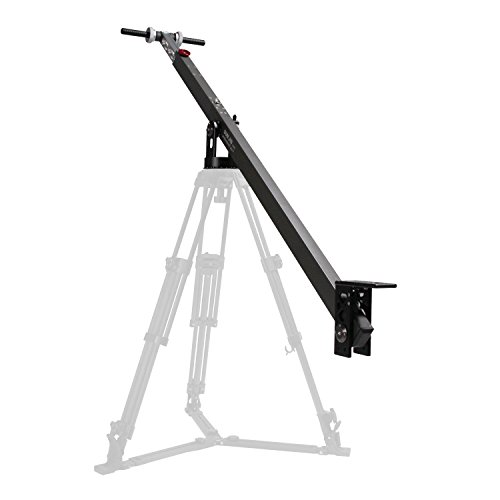
- 20 kg maximum payload
- Concealed balancing system
- Assembles in about four minutes
Best For: Compact DSLR and cinema-camera setups requiring flexible head compatibility
Best Mid-Size Setup

- 4.1–7-foot telescopic arm
- 25 kg / 55 lb payload
- Tripod and dolly included
Best For: Production crews needing a capable crane with moderate reach and mobility
Extended-Reach Pick

- Supports rigs up to 8kg/17.6lb
- Configures to 14ft or 10ft
- 270-degree platform tilt range
Best For: Long, sweeping crane shots with heavier camera rigs
Heavy-Duty Folding Pick

- Carries up to 15kg/33lb
- Extends from 5.2ft to 7.2ft
- Folds to about 2.5ft
Best For: High-payload shoots requiring portable overslung or underslung setups
Compact Studio Pick

- Supports up to 8kg/17lb
- Compact 4ft reach for tight spaces
- Works with tripod or jib stands
Best For: Small studios and DSLR video setups needing smooth jib movement
Best Professional Wave Jib – Proaim 7' Wave-2
For demanding high-performance camera cranes, the Proaim 7′ Wave-2 combines a dual-rail arm with a 55-pound payload rating. Its telescopic design, 360° panning range, and support for 75mm or 100mm fluid heads make it a versatile choice for controlled sweeping shots.
Best For: Professional filmmakers and production teams needing a sturdy jib for cameras, gimbals, and pan-tilt heads in indoor or outdoor setups.
Pros:
- Supports payloads up to 25kg/55lb.
- Dual-rail construction is designed for strength and stability.
- Quick, tool-free setup includes a storage bag and bubble leveler.
- Compatible with 75mm/100mm fluid heads, gimbals, and remote heads.
Cons:
- At 40 pounds, it is not the lightest option for frequent solo transport.
- Its professional payload capacity may be more than lightweight camera setups require.
The Wave-2 is a strong all-around option when stability, compatibility, and payload capacity matter more than minimizing equipment weight.
Best Long-Reach Carbon Jib – Teris JQ50-II Mini Jib
The Teris JQ50-II stands out among high-performance camera cranes for its combination of a 16-foot maximum extension and lightweight carbon-fiber construction. It supports up to 20 pounds and is designed around handheld gimbal use, making it suited to long-reach moving shots without a heavier full-size arm.
Best For: Gimbal operators who want extended reach, carbon-fiber portability, and compatibility with DJI Ronin-S or RS2 setups.
Pros:
- Extends to an impressive 16 feet.
- Lightweight carbon-fiber arm weighs 15 pounds.
- Supports loads up to 20 pounds.
- Counterweight rod accepts standard weight plates.
Cons:
- Its 20-pound capacity is lower than the Proaim alternatives in this roundup.
- Designed primarily for handheld gimbals rather than a broad range of camera-head configurations.
Choose the JQ50-II when reach and a relatively light carbon-fiber build are priorities, particularly for gimbal-based productions.
Best Full-Size Production Jib – Proaim 10ft Wave-2
For productions that need broad camera movement, the Proaim 10ft Wave-2 provides a long telescopic arm with support for cameras, gimbals, and pan-tilt heads. It is built for rising, lowering, sweeping, overhead, and reveal shots, while the included 100mm bowl and 75mm adapter expand setup compatibility.
Best For: Studios, event videographers, commercial crews, and filmmakers planning wide, dynamic crane movements with professional camera equipment.
Pros:
- 10-foot jib arm supports expansive camera movement.
- Rated to support up to 25kg/55lb according to the product bullets.
- Includes both a 100mm bowl and 75mm adapter.
- Works with 3-axis gimbals, camcorders, cameras, and DSLRs.
Cons:
- The longer arm can require more space than a compact jib setup.
- The supplied details list conflicting payload information, so buyers should verify the specification before purchase.
This Wave-2 is the practical choice for crews prioritizing reach and professional mounting flexibility, provided the available operating space and final payload requirements are confirmed.
Best Compact Carbon Jib – IFOOTAGE M1 III Mini Jib
The IFOOTAGE M1 III is a compact option among high-performance camera cranes, offering an 85-inch reach and a 33-pound maximum load in a 13.2-pound carbon-fiber design. Its adjustable tilt, integrated pan head, and multiple quick-release and thread options support varied camera angles and accessory configurations.
Best For: Camera operators seeking a portable mini jib for low-angle, upside-down, vertical, and horizontal movement shots.
Pros:
- Supports up to 33 pounds while weighing 13.2 pounds.
- 20-layer carbon-fiber square tube is designed for rigidity and stability.
- Provides 85 inches of extendable reach and adjustable tilt up to 25 degrees.
- Includes quick-release options for 60mm/75mm fluid heads plus 1/4-inch and 3/8-inch accessory threads.
Cons:
- Its 85-inch reach is shorter than the 10-foot and 16-foot alternatives.
- As a mini jib, it may be less suitable for very wide, full-size crane movements.
The M1 III offers a strong balance of portability, load capacity, and mounting flexibility for operators who want creative crane-style movement without a larger jib system.
Best Complete System – Proaim Wave-2 10ft Camera Jib
For productions seeking high-performance camera cranes with a ready-to-use support package, the Proaim Wave-2 combines a telescopic 6–10-foot arm, heavy-duty tripod, and portable dolly. Its 25 kg payload suits professional camera bodies, gimbals, pan-tilt heads, and accessories.
Best For: Film crews, broadcasters, studios, and content teams needing a complete crane setup for sweeping or overhead shots.
Pros:
- Complete system includes jib, CST-100 tripod, and portable dolly.
- Adjustable 6–10-foot telescopic arm supports varied shooting environments.
- Supports payloads up to 25 kg / 55 lb.
- Heavy-duty 100mm two-stage tripod provides a stable foundation.
Cons:
- At 99.2 pounds, the system is relatively heavy to transport.
- Its larger 10-foot reach may require more setup space than a compact jib.
The Wave-2 is a strong choice when stability, payload capacity, and included support equipment matter more than minimal weight. The dolly also helps reposition the assembled setup between shots.
Best Compact Jib – Konova S1200 SUNJIB Mini Crane
KONOVA S1200 SUNJIB Camera Jib Arm Mini Crane Single Arm Pocket Jib DSLR RED Plate Bowl Compatible
Check Price On AmazonThe Konova S1200 is a compact option for buyers comparing high-performance camera cranes for DSLR and cinema-camera work. Its concealed balancing system, compatibility with flat-base and ball-head setups, and 20 kg maximum load provide a flexible alternative to larger crane systems.
Best For: Shooters who want a relatively compact, vibration-conscious jib arm that can be assembled and disassembled quickly.
Pros:
- Supports camera payloads up to 20 kg.
- Hidden balance bar helps keep the design compact.
- Compatible with both flat-base and ball-head configurations.
- Designed for one-touch assembly and disassembly in about four minutes.
Cons:
- It is an arm rather than a complete tripod-and-dolly support system.
- The 142 cm size offers less reach than the longer Proaim jib options.
The S1200 stands out for streamlined setup and broad head compatibility. It is best evaluated alongside an appropriate support base, especially if your production needs a complete mobile crane package.
Best Mid-Size Setup – Proaim Wave-2 7ft Camera Jib
The Proaim 7ft Wave-2 offers a practical middle ground for high-performance camera cranes, pairing a telescopic 4.1–7-foot jib with a CST-100 tripod and portable floor dolly. It supports up to 25 kg, making it suitable for professional cameras, gimbals, pan-tilt heads, and production accessories.
Best For: Film, commercial, event, and content crews that need controlled elevated movement without the reach of a full 10-foot jib.
Pros:
- Complete package includes the jib, tripod stand, and floor dolly.
- 25 kg / 55 lb payload accommodates substantial camera configurations.
- Telescopic 4.1–7-foot aluminum arm supports sweeping and rising shots.
- Tripod supports 75mm and 100mm heads.
Cons:
- At 90.4 pounds, it is not a lightweight travel setup.
- Its 7-foot reach is shorter than the 10-foot Wave-2 option.
This model balances professional capacity with a more moderate reach. The included dolly makes repositioning easier, while the robust tripod and reinforced two-arm construction support demanding production use.
Extended-Reach Pick – Proaim 14ft Camera Crane Jib
For filmmakers seeking high-performance camera cranes with sweeping reach, the Proaim 14ft Camera Crane Jib provides a configurable platform for larger camera setups. Its two-arm construction, thrust roller bearings, and 8kg payload support are suited to demanding crane moves.
Best For: Production crews needing long reach, overhead angles, and support for DSLR or mirrorless rigs with gimbals, pan-tilt heads, or fluid heads.
Pros:
- Supports camera rigs up to 8kg/17.6lb.
- Configures to either 14ft or 10ft for different shooting spaces.
- Offers a 270-degree camera-platform tilt range with auto and manual modes.
- Includes an LCD mounting arm and carry bags.
Cons:
- Its 16kg product weight may make transport and setup more demanding.
- The extended 14ft configuration requires substantial working space and support.
- It is not water resistant.
This is the strongest choice here when maximum reach and creative tilt control matter more than portability. The shorter 10ft configuration adds useful flexibility for tighter locations.
Heavy-Duty Folding Pick – Proaim Wave Fold 7.2ft Jib
The Proaim Wave Fold is a practical option among high-performance camera cranes when payload capacity and fast transport are priorities. Its telescoping arm supports up to 15kg and folds to approximately 2.5ft, while its 100mm mount accommodates substantial camera configurations.
Best For: Crews that need a high-capacity jib for overslung or underslung shots and frequent location changes.
Pros:
- Supports cameras and gimbals up to 15kg/33lb.
- Extends from 5.2ft to 7.2ft for adjustable reach.
- Switches between overslung and underslung configurations with a quick dovetail mechanism.
- Folds to 2.5ft for transport and storage.
Cons:
- At 53 pounds, it is relatively heavy to carry between setups.
- The folded length is specified without the 100mm bowl adapter.
- It is not water resistant.
Choose this jib when a heavier payload rating is more valuable than the lightest possible rig. Lockable pan and tilt controls also make it a strong fit for deliberate, repeatable movements.
Compact Studio Pick – Proaim Vega 4ft Jib Crane
For smaller sets and confined locations, the Proaim Vega 4ft Jib offers a compact route into high-performance camera cranes. Its CNC aluminum construction supports up to 8kg and its central fork is designed to help produce smooth pan-and-tilt movements.
Best For: DSLR video production, compact studios, and outdoor crews that need a short jib compatible with a tripod or jib stand.
Pros:
- Supports payloads up to 8kg/17lb.
- Compact 4ft design suits confined studios and location work.
- Can rest on a tripod stand or a jib stand with a junior baby pin.
- CNC aluminum construction and a central fork support stable, smooth operation.
Cons:
- Its 4ft reach is less suitable for large sweeping moves than longer jibs.
- It weighs 5.6kg, so it still requires planning for support and transport.
- The supplied notes do not indicate a foldable design or included carry bags.
The Vega is the sensible choice when space and setup simplicity come first. It delivers a useful 8kg payload in a smaller package, though its shorter arm limits the scale of crane movement.
How We Picked These High-Performance Camera Cranes
We focused on camera cranes that offer meaningful movement control for production work rather than simple support arms. The selection includes compact mini jibs, telescoping cranes, complete crane-and-dolly packages, and models designed specifically for handheld gimbals or pan-tilt heads.
We compared stated payload capacity, maximum reach, construction materials, mounting compatibility, included accessories, and portability. Because a crane’s practical performance depends on the camera package and support system, published specifications should always be checked against your complete rig weight.
Quick Comparison
- Best for maximum reach: The Proaim 14ft Camera Crane Jib Arm suits productions that need broad vertical movement and elevated establishing shots.
- Best for portability: Compact options such as the IFOOTAGE M1 III and KONOVA S1200 are easier to transport and deploy in smaller spaces.
- Best for gimbal workflows: The Teris JQ50-II and compatible Proaim Wave-2 models are built around modern stabilized camera setups.
- Best complete packages: Proaim kits that include a tripod and portable dolly can reduce the need to source support components separately.
Key Buying Factors for High-Performance Camera Cranes
Payload and Balance
Check the crane’s rated capacity, then account for the camera, lens, battery, cage, monitor, gimbal, and any pan-tilt head. A crane should not be operated at its limit if you need smooth movement or frequent repositioning. Counterweights and proper balancing are essential for safe, predictable operation.
Reach and Operating Space
Longer jibs create more dramatic movement but require additional clearance, stronger support, and greater setup time. Measure the shooting area, ceiling height, and required camera path before choosing a 10-, 14-, or 16-foot system. Shorter arms are often more practical for studios, events, and confined locations.
Mounting Compatibility
Confirm whether the crane accepts a 75mm or 100mm fluid head, a bowl mount, a gimbal, or a dedicated pan-tilt head. Compatibility affects both camera control and the amount of equipment you must purchase separately.
Portability and Support
Carbon-fiber mini jibs are easier to carry, while larger aluminum or telescoping systems may need a sturdy tripod, dolly, sandbags, and additional crew. A bundled tripod or dolly can simplify deployment, but verify its capacity and footprint.
Who Should Buy Which High-Performance Camera Cranes?
Choose a compact mini jib if you work in tight interiors, travel frequently, or use a lightweight DSLR, mirrorless camera, or handheld gimbal. Choose a mid-size Wave-2 or Vega-style crane for general film, commercial, event, and studio work where a balance of reach and manageability matters.
Choose a long 10- to 16-foot crane for sweeping establishing shots, elevated camera moves, and larger production environments. If you need faster setup and more predictable mobility, consider a complete tripod-and-dolly package. Regardless of size, prioritize payload headroom, secure counterbalancing, and a support system rated for the fully assembled rig.
