
Choosing from today’s high-performance bike navigation computers is easier when you know what matters most: mapping quality, rerouting, battery life, and readability on the move.
Below, we’ve focused on rider-friendly options that balance navigation accuracy with training tools, smart connectivity, and real-world usability for road, gravel, and e-bike riding.
Best 10 High-Performance Bike Navigation Computers Picks for 2026
Premium Flagship Choice
Garmin Edge 1050, Premium Cycling Computer

- 3.5-inch vivid touchscreen with built-in speaker
- Up to 20 hours, or 60 hours in battery saver mode
- Road hazard alerts, group ride tools, and coaching features
Best For: Riders wanting the most advanced Garmin all-in-one cycling computer
Budget Touchscreen Navigator
iGPSPORT BSC500 GPS Bike Computer

- 3.3-inch touchscreen with button backup
- Dual-band positioning and broad satellite support
- Voice navigation, rerouting, and climb planning
Best For: Value-focused riders who want navigation and climbing tools
Compact Performance Pick
Garmin Edge 840, Compact GPS Cycling Computer
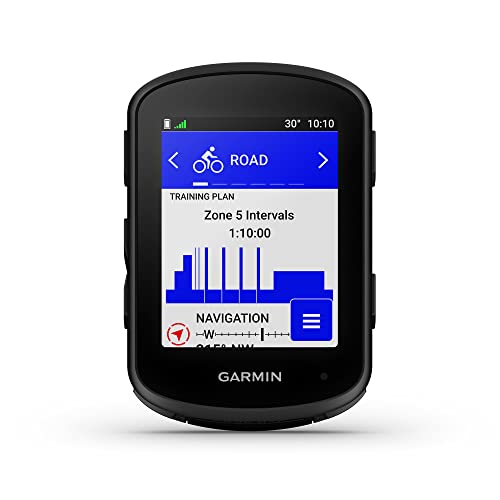
- Compact 2.6-inch unit with touchscreen and buttons
- Multi-band GNSS for improved positioning accuracy
- ClimbPro, power guide, and stamina insights
Best For: Riders who want compact Garmin navigation with training depth
Lightweight Climb Specialist
iGPSPORT BiNavi Air Bike Computer

- 77g lightweight build with slim profile
- Smart rerouting plus turn-by-turn navigation
- iClimb 3.0 with elevation and gradient data
Best For: Climbing-focused riders who want a lightweight navigation computer
Peak Coaching GPS
Garmin Edge 540 Compact GPS Cycling Computer

- Multi-band GNSS for improved positioning accuracy
- Up to 26 hours of battery life; 42 in saver mode
- ClimbPro, stamina, and power guide training tools
Best For: Riders who want reliable navigation plus adaptive training features in a compact button-operated computer.
Touchscreen Route Pro
Hammerhead Karoo Bike Computer

- 3.2-inch touchscreen with button input
- Multi-band GNSS for precise ride tracking
- Works with SRAM AXS, e-bikes, and ANT+ lights
Best For: Cyclists who want a touchscreen GPS computer with accurate navigation and strong connectivity options.
Vivid Training Navigator
Garmin Edge 550 Compact GPS Cycling Computer
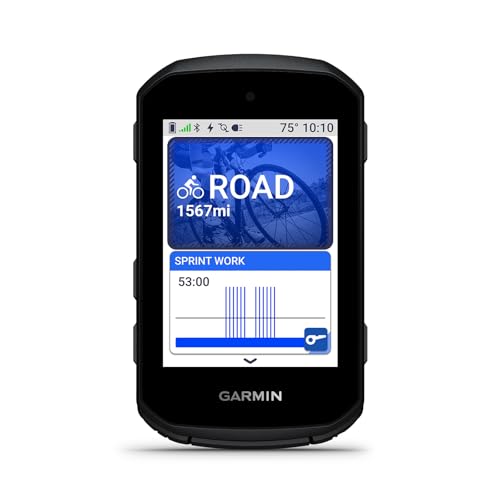
- Vivid color display with button controls
- Multi-band GPS with 5 Hz recording for accuracy
- Trailforks maps, fueling alerts, and ride safety tools
Best For: Riders who want a vivid display, advanced navigation, and training tools with safety features.
All-Round Navigation Pick
iGPSPORT BSC300T Wireless Bike Computer GPS
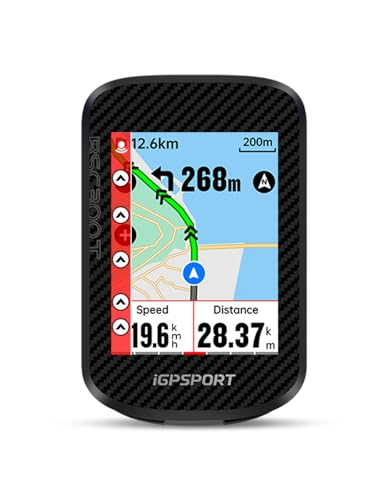
- 2.4-inch touchscreen with 6-button control
- Offline global maps with turn prompts and off-course alerts
- ANT+/Bluetooth 5.0 plus 130+ riding data fields
Best For: Riders who want offline navigation and wide sensor support
Premium Ride-Ready Pick
Garmin Edge 850 Compact GPS Cycling Computer
- Vivid color display with touchscreen and buttons
- Preloaded maps with Trailforks and Forksight mode
- Multi-band GPS plus smart alerts and ride safety features
Best For: Cyclists who want premium navigation and training features
Big-Screen Value Pick
GEOID CC700 Pro 2.8" Color Touchscreen GPS Bike Computer

- 2.8-inch color touchscreen with 3-button control
- Offline maps with turn prompts and re-route planning
- WiFi auto-sync plus FIT export to STRAVA and TrainingPeaks
Best For: Riders who want a larger screen and fast training sync
Premium Flagship Choice – Garmin Edge 1050, Premium Cycling Computer
If you want one of the most feature-rich high-performance bike navigation computers, the Garmin Edge 1050 is built for riders who care about navigation, training, and ride awareness in one unit. Its large 3.5-inch color touchscreen, built-in speaker, and smart connectivity make it especially practical for long road rides, group outings, and structured training.
Best For: Riders who want a premium all-in-one cycling computer with a big display, advanced training tools, and strong ride-awareness features.
Pros:
- Vivid 3.5-inch touchscreen with easy on-device course creation and map details like road surface type.
- Up to 20 hours of battery life, or up to 60 hours in battery saver mode.
- Road hazard alerts, group ride messaging, live locations, incident detection, and climb-related tools.
- Built-in speaker for prompts and a loud on-device bike bell.
Cons:
- Premium feature set may be more than casual riders need.
- Several advanced coaching and power tools depend on compatible sensors and smartphone pairing.
The Edge 1050 stands out if you want top-tier navigation plus deep performance support in a single computer. It is especially compelling for riders who will use the mapping, safety, and coaching features regularly.
Budget Touchscreen Navigator – iGPSPORT BSC500 GPS Bike Computer
The iGPSPORT BSC500 is a practical pick for riders who want high-performance bike navigation computers with touchscreen convenience and broad route support. Its 3.3-inch display, voice navigation, and route import options make it a strong fit for everyday riding, route-following, and training without a steep learning curve.
Best For: Riders who want a value-oriented touchscreen bike computer with navigation, climbing guidance, and training analysis.
Pros:
- 3.3-inch touchscreen plus button control for flexible operation.
- Dual-band positioning with GPS, Beidou, GLONASS, Galileo, and QZSS support.
- Route import from the iGPSPORT app and third-party apps like Strava and Komoot.
- Voice navigation, rerouting, climb planning, and training analysis features.
Cons:
- Battery life is listed at 25 hours, which trails some higher-end rivals.
- The feature set is broader on navigation than on premium training integration.
For riders who want a capable navigation computer without moving into flagship pricing, the BSC500 covers the core needs well. It brings together routing, climb tools, and voice prompts in a straightforward package.
Compact Performance Pick – Garmin Edge 840, Compact GPS Cycling Computer
The Garmin Edge 840 is a compact option for riders who want high-performance bike navigation computers with advanced training and reliable mapping in a smaller body. With touchscreen plus button control, multi-band GNSS, and detailed ride metrics, it suits cyclists who want serious capability without a large front-mounted device.
Best For: Cyclists who want a compact Garmin with accurate navigation, structured training features, and strong ride data support.
Pros:
- Touchscreen and button control in a compact 2.6-inch design.
- Multi-band GNSS for enhanced positioning accuracy in challenging environments.
- ClimbPro on every ride, power guide, stamina insights, and adaptive coaching features.
- Improved ride type-specific maps with searchable points of interest.
Cons:
- Smaller screen than the Edge 1050 and some other large-format competitors.
- Many advanced coaching tools require compatible power meter and heart rate monitor pairings.
The Edge 840 is a strong middle ground for riders who want Garmin’s navigation and training depth in a smaller package. It is especially appealing if you value accuracy and performance metrics over a bigger display.
Lightweight Climb Specialist – iGPSPORT BiNavi Air Bike Computer
The iGPSPORT BiNavi Air is aimed at riders who want high-performance bike navigation computers with lightweight construction and climb-focused routing tools. Its 3.0-inch screen, smart rerouting, and race-grade climb features make it a strong match for climbing, racing, and long days where efficiency matters.
Best For: Riders who want a lightweight GPS bike computer with route planning, rerouting, and climb analytics.
Pros:
- Very light 77g design with a slim 13.8mm profile.
- 3.0-inch touchscreen with outdoor visibility and automatic brightness adjustment.
- Off-course replanning, turn-by-turn guidance, and one-tap route planning.
- iClimb 3.0, accurate elevation and gradient tracking, and indoor training support.
Cons:
- Smaller display than some larger touchscreen rivals.
- Battery life is listed at 30 hours, which may not suit the longest endurance users.
The BiNavi Air is a smart choice if you want a lighter cockpit and more climb-specific data without giving up navigation features. It feels especially well suited to riders focused on hills, racing, and efficient route management.
Peak Coaching GPS – Garmin Edge 540 Compact GPS Cycling Computer
If you want a focused pick among high-performance bike navigation computers, the Garmin Edge 540 stands out for riders who value button control, advanced route guidance, and training support in a compact body. It combines multi-band GNSS positioning, ride-specific maps, and climbing tools with a strong battery life profile for long rides and hard training days.
Best For: Riders who want reliable navigation plus adaptive training features in a compact button-operated computer.
Pros:
- Multi-band GNSS improves positioning accuracy in difficult environments.
- Up to 26 hours of battery life, or up to 42 hours in battery saver mode.
- ClimbPro, stamina insights, and power guide features add useful ride planning data.
- Ride type-specific maps highlight roads, trails, and points of interest.
Cons:
- Button-only control may not suit riders who prefer a touchscreen.
- Several training features depend on a compatible power meter and heart rate monitor.
Overall, the Edge 540 is a strong choice if you want navigation and performance tracking to work together without adding complexity. It is especially appealing for riders who prioritize accuracy, battery life, and structured training tools in one compact device.
Touchscreen Route Pro – Hammerhead Karoo Bike Computer
The Hammerhead Karoo is built for riders who want a modern interface in the high-performance bike navigation computers category, with a touchscreen design and multi-band GNSS for accurate ride tracking. Its large 3.2-inch display, faster map rendering, and broad connectivity make it a practical option for navigation-focused cyclists who also want easy data access on the bike.
Best For: Cyclists who want a touchscreen GPS computer with accurate navigation and strong connectivity options.
Pros:
- Multi-band GNSS supports precise tracking in city and trail environments.
- 3.2-inch display and touchscreen controls make route and data management easier.
- Ample memory storage helps with faster map rendering and longer uptime.
- Connects with SRAM AXS products, e-bikes, ANT+ lights, and more.
Cons:
- Battery life is listed at 15 hours, which is shorter than some rivals.
- Heavier than compact button-only computers.
In practice, the Karoo is a strong fit if you value screen size, touchscreen usability, and device integration alongside navigation accuracy. It is less about extreme battery endurance and more about a polished, connected riding experience.
Vivid Training Navigator – Garmin Edge 550 Compact GPS Cycling Computer
The Garmin Edge 550 is a practical option in high-performance bike navigation computers for riders who want vivid mapping, strong accuracy, and safety-focused ride data. It adds multi-band GPS with 5 Hz recording, Trailforks maps, and smart in-ride alerts, making it well suited to road, gravel, and trail use.
Best For: Riders who want a vivid display, advanced navigation, and training tools with safety features.
Pros:
- Vivid color display with button controls keeps operation simple on the move.
- Multi-band GPS with 5 Hz recording improves tracking on fast descents.
- Preloaded maps and Trailforks Forksight mode add useful route detail.
- Includes smart fueling alerts, radar overlays, and group ride features.
Cons:
- Up to 12 hours of battery life is modest in demanding use cases.
- Several safety and connected features require a compatible smartphone and app.
For riders who want a feature-rich cycling computer with a bright screen and modern ride support, the Edge 550 is a compelling pick. It blends navigation, coaching, and safety tools into a compact format that works well for serious training and everyday riding.
All-Round Navigation Pick – iGPSPORT BSC300T Wireless Bike Computer GPS
If you want a practical option among high-performance bike navigation computers, the iGPSPORT BSC300T focuses on core ride guidance without stripping away training features. Its 2.4-inch touchscreen, 6-button layout, offline global maps, and off-course warnings make it a solid fit for riders who want navigation confidence on road, MTB, or ebike rides.
Best For: Riders who want offline map navigation, multi-satellite positioning, and broad sensor compatibility.
Pros:
- Supports global offline map downloads, route preview, turn prompts, and off-course warnings.
- Uses 5 satellite systems for faster positioning and more accurate ride data.
- Offers 130+ riding data fields plus iGPSPORT app analysis and Strava/Komoot sharing.
- Works with ANT+ and Bluetooth 5.0 sensors, including speed, cadence, heart rate, and smart trainers.
Cons:
- The 2.4-inch screen is smaller than some larger-display rivals.
- Offline map and route features are practical, but not as advanced-looking as premium ecosystem-driven units.
Overall, the BSC300T is a well-rounded navigation computer for riders who value dependable mapping, broad device support, and strong data depth in a compact package.
Premium Ride-Ready Pick – Garmin Edge 850 Compact GPS Cycling Computer
The Garmin Edge 850 is built for riders who want high-performance bike navigation computers with premium navigation, training, and awareness features in one compact unit. Its vivid color display, touchscreen plus button controls, preloaded maps, multi-band GPS, and in-ride alerts make it especially appealing for cyclists who want more guidance on every ride.
Best For: Cyclists who want a premium compact computer with advanced navigation, training, and ride-awareness tools.
Pros:
- Vivid color display with both touchscreen and button input.
- Preloaded road, gravel, and trail maps, plus Trailforks and Forksight mode.
- Multi-band GPS with automatic 5 Hz recording for strong position tracking.
- Includes smart fueling alerts, weather overlays, hazard reports, messaging, and incident detection when paired with a compatible smartphone.
Cons:
- Battery life is up to 12 hours in demanding use, which is modest compared with battery-saver mode.
- Some connected safety and messaging features depend on a compatible smartphone and the Garmin Connect app.
In short, the Edge 850 is a strong pick for riders who want Garmin’s deeper navigation and training ecosystem in a compact cycling computer.
Big-Screen Value Pick – GEOID CC700 Pro 2.8" Color Touchscreen GPS Bike Computer
The GEOID CC700 Pro is a good fit if you want high-performance bike navigation computers with a larger display and practical route tools. Its 2.8-inch color touchscreen, offline map downloads, re-route planning, and quick WiFi syncing make it easy to follow routes and keep ride data moving into your training apps.
Best For: Riders who want a larger touchscreen, offline navigation, and fast syncing for training data.
Pros:
- 2.8-inch color touchscreen with 3-button control for easier operation.
- Offline map navigation with turn prompts, street names, zoom, and dual-perspective views.
- Re-route planning helps recalculate the path when you go off course.
- WiFi auto-sync, AGNSS support, and FIT export with STRAVA and TrainingPeaks compatibility.
Cons:
- Re-route planning requires the bike computer to stay connected to the designated app.
- Indoor training and DJI controls are useful extras, but only matter to specific riders.
Overall, the CC700 Pro blends navigation convenience with fast data transfer, making it a capable option for riders who want a bigger screen and straightforward route guidance.
How We Picked These High-Performance Bike Navigation Computers
We looked for devices that do more than record a ride. The strongest picks offer dependable GPS performance, clear route guidance, fast map rendering, easy controls with gloves or wet hands, and practical training features. We also favored models with useful ecosystem support, reliable wireless syncing, and hardware built for long rides in changing conditions.
Because High-Performance Bike Navigation Computers serve different riders, we also considered screen size, touch responsiveness, button backups, battery life, offline maps, rerouting behavior, and compatibility with accessories such as heart-rate straps, power meters, and radar units.
Quick Comparison
In simple terms, premium Garmin models tend to emphasize polished software, strong navigation, and broad accessory support. Hammerhead leans into a more modern display experience and responsive interface. iGPSPORT and GEOID often appeal to riders who want core navigation features, map support, and training tools at a more approachable price.
If you want the best all-around experience, prioritize smooth rerouting, legible maps, and battery endurance over extra spec sheet extras you may never use.
Key Buying Factors for High-Performance Bike Navigation Computers
Navigation and Map Quality
Look for turn-by-turn guidance, offline maps, rerouting when you miss a turn, and route planning that handles real cycling conditions. If you ride unfamiliar roads or trails often, a computer with strong map detail and clear prompts will save more time than a feature-heavy but confusing interface.
Display and Controls
A bright screen matters in full sun, but so does usability while riding. Touchscreens are convenient for route changes and map panning, while physical buttons can be more dependable in rain, cold, or rough terrain. The best units make both easy to trust.
Battery Life and Ride Length
Short commutes and long endurance rides demand different battery profiles. Check real-world navigation runtime, not just lab claims, especially if you use backlight, live tracking, or full map display frequently.
Connectivity and Training Tools
Most serious riders will want ANT+ and Bluetooth support for sensors, power meters, smart trainers, and phone syncing. If training matters as much as navigation, look for structured workouts, climb data, and post-ride analysis support.
Who Should Buy Which High-Performance Bike Navigation Computers?
Road cyclists who want a premium, full-featured experience should focus on the most advanced models. Gravel and adventure riders should prioritize robust mapping, rerouting, and battery stamina. E-bike riders may value screens, navigation simplicity, and compatibility with ride-specific data. Budget-conscious riders can still get solid route guidance and training features, but should be more selective about display quality and navigation polish.
In short, choose the device that matches how you actually ride. For many buyers, the best High-Performance Bike Navigation Computers are the ones that keep navigation effortless so you can stay focused on the road, trail, or climb ahead.
